The Things You Missed

SinnersEaster Eggs & Hidden Details

Wakanda hides in the church rafters, Howlin' Wolf lives on the juke-joint walls, and Remmick's Dracula-style origin is buried inside Spotify.

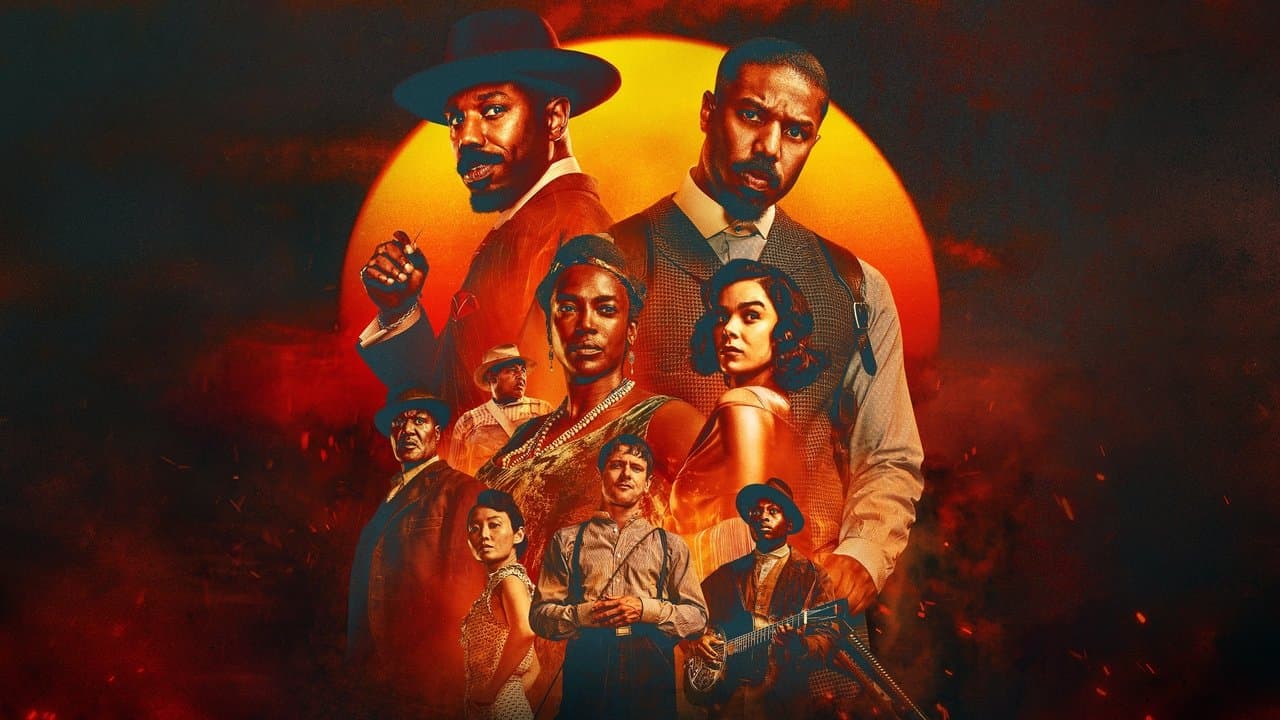
2025 · Film · 138 min · Ryan Coogler

20 eggs catalogued12 confirmed2 post-credit scenesupdated 2026-07-08

The short version

Sinners (2025) hides 20 catalogued easter eggs and hidden details, 12 of them confirmed by official sources. Standouts include the church beams are exactly 33 inches apart, a hidden wakanda forever salute for chadwick boseman and howlin' wolf's 'smokestack lightnin'' painted on the juke-joint wall. Every entry below includes where to look, a spotting difficulty, and sources.

Every egg on this page

  1. The Frame Itself Is a Storytelling Device
  2. The Church Beams Are Exactly 33 Inches Apart
  3. A Hidden Wakanda Forever Salute for Chadwick Boseman
  4. The Twins' Suits Confess Their Chicago Crimes
  5. The Whole Cast Comes From 'Wang Dang Doodle'
  6. The Freshly Mopped 'Killing Floor'
  7. The Chows' Twin Grocery Stores Map Jim Crow
  8. Annie's House Is Painted in Protective Haint Blue
  9. Smoke Runs Blue, Stack Runs Red
  10. A Guitar 'From Charley Patton' — and the Real 1932 Dobro Behind the Score
  11. Howlin' Wolf's 'Smokestack Lightnin'' Painted on the Juke-Joint Wall
  12. The Montage That Pierces the Veil — Every Era in One Room
  13. Remmick Is Modeled on the Wolf From Puss in Boots: The Last Wish
  14. Remmick's Irish Songbook Tells His Whole Story
  15. 'I'll Save You a Room in Hell' Pays Off Backwards
  16. Smoke's Hands, His Cigarettes, and the Name Elijah
  17. Buddy Guy Is Old Sammie — Because of Coogler's Uncle James
  18. The 1992 Epilogue Lands on Candyman's Release Date
  19. Stack Casts No Reflection at Pearline's
  20. Secret Newspaper Clippings Hidden on Spotify Rewrite the Backstory

Ryan Coogler hid one of Sinners' best easter eggs somewhere no filmmaker had really used before: a Spotify artist page. Tap through the film's official soundtrack profile and you'll find scanned newspaper clippings that quietly rewrite the whole backstory — including a 1911 report of an Irish ship called The Celtic Hare found drifting and bloodstained in Boston harbor, a deliberate riff on the Demeter from Bram Stoker's Dracula. That's the level this movie operates on. Nothing in its 1932 Mississippi Delta is set dressing by accident.

The on-screen details run just as deep. Production designer Hannah Beachler spaced the cross beams in Jedidiah's church exactly 33 inches apart — the age of Christ at his death — and angled the rafters above them into a hidden Wakanda Forever salute for Chadwick Boseman. The juke joint's rust-colored wall carries painted bars that are actually an equalizer readout of Howlin' Wolf's "Smokestack Lightnin'," the song that gave the twins their names. Even the villain has a secret pedigree: Coogler has said on record that Remmick's red-eyed menace was modeled on the Wolf from Puss in Boots: The Last Wish.

Below are 20 documented easter eggs and hidden details, ordered roughly as they surface in the film — from the church prologue to the two credits scenes and beyond. Confirmed items come straight from Coogler, Beachler, cinematographer Autumn Durald Arkapaw, and composer Ludwig Göransson; community finds are labeled as such. Heavy spoilers are flagged.

The full catalog

Type
Status
Difficulty

The Frame Itself Is a Storytelling Device

MetaHidden Detail ConfirmedSecond Watch

WHERE TO LOOK · Throughout — watch the top and bottom of the frame expand in IMAX and premium-format presentations

Sinners is the first film ever shot simultaneously on Ultra Panavision 70 (the ultra-wide 2.76:1 format of Ben-Hur and The Hateful Eight) and 15-perf IMAX 65mm (nearly square 1.43:1). Cinematographer Autumn Durald Arkapaw — the first woman to shoot a feature on IMAX film — and Coogler assigned each format a job: the IMAX expansions, about 28 minutes of the runtime, open up during moments of intensity and interiority, like a look behind the curtain into a character's soul. On the right screen, the image literally grows when the film reaches for transcendence.
The Church Beams Are Exactly 33 Inches Apart

Hidden DetailBehind the Scenes ConfirmedWhite Whale

WHERE TO LOOK · Jedidiah's church in the opening and closing scenes — look at the altar wall behind Sammie's father

Behind the altar of Jedidiah's church stand three crosses — Father, Son, and Holy Spirit — and when Sammie and his preacher father stand beneath them, they complete the composition as a living fourth cross. Production designer Hannah Beachler went further than symbolism you can see: she built the rough-sawn beams holding the crosses exactly 33 inches apart, the age of Jesus at his death, as a marker of endings. It's a detail invisible to any audience and knowable only because Beachler put it on the record — pure white-whale territory.

A Hidden Wakanda Forever Salute for Chadwick Boseman

Hidden DetailMeta ConfirmedWhite Whale

WHERE TO LOOK · The upper rafters of Jedidiah's church — the diagonal cross-bracing above the three crosses

Look up in Jedidiah's church: the crossed support beams at the top of the structure form the arms-across-chest Wakanda Forever gesture from Black Panther. Hannah Beachler, who won an Oscar designing Wakanda, confirmed she built the tribute in for Chadwick Boseman — Ryan Coogler's friend and collaborator, who died in 2020. It ties Coogler's most personal film back to the franchise that defined his career, hidden in the architecture of the movie's most sacred space.

The Twins' Suits Confess Their Chicago Crimes

Hidden DetailForeshadowing Community ConsensusFreeze Frame

WHERE TO LOOK · The twins' arrival in Clarksdale and their first scenes around town

Smoke and Stack roll into Clarksdale in tailoring that quotes both Irish and Italian mob styles of the era — a costume-level confession that they robbed both outfits in Chicago before running home to Mississippi. Ruth E. Carter's designs also split the brothers: Stack's suit is precise — three front buttons, slanted pockets, collar bar, tie bar, a deep-red hat sourced from a Melrose Avenue shop — all control and flash, while Smoke's boxier, looser cut (a nod to Don Cheadle's Mouse in Devil in a Blue Dress) exists to conceal weapons.

The Whole Cast Comes From 'Wang Dang Doodle'

Music SecretReference ConfirmedDeep Cut

WHERE TO LOOK · The film's DNA — most audible in how Annie, Slim, and the juke-joint crowd are introduced

Coogler has said the film's roster of characters was seeded by "Wang Dang Doodle," the blues anthem written by Willie Dixon, recorded by Howlin' Wolf and later Koko Taylor. The song calls a rowdy all-night party of dangerous nicknames — Butcher Knife-Toting Annie, Razor-Toting Jim, Fast-Talking Fannie — and Coogler told Variety he wanted exactly that: hard characters with dangerous names gathering for one night, then meeting something even more dangerous. Annie's name and the juke-joint premise itself are lifted straight from the song's world.

The Freshly Mopped 'Killing Floor'

Foreshadowing Community ConsensusSecond Watch

WHERE TO LOOK · The sawmill purchase from Hogwood early in the film; Bert's 'killing floor' line at the juke joint

Spoiler — tap to reveal

The Chows' Twin Grocery Stores Map Jim Crow

Hidden DetailBehind the Scenes ConfirmedDeep Cut

WHERE TO LOOK · The twins' recruiting run through Clarksdale — Bo's store and Grace's store on opposite sides of the street

Bo and Grace Chow run two grocery stores facing each other across the street, and Hannah Beachler designed them as a diagram of segregation: the store serving Black customers is stocked with labor necessities, while the white-facing store carries luxury items and branded goods. It's rooted in real history — Chinese immigrants settled the Mississippi Delta and served Black communities that white businesses refused; by 1940, over 70% of Delta residents shopped at Chinese-owned grocers. One street crossing, an entire caste system.

Annie's House Is Painted in Protective Haint Blue

Hidden DetailReference ConfirmedDeep Cut

WHERE TO LOOK · Annie's cabin under the oak trees, first visited when Smoke comes to see her

The pale blue on Annie's home isn't a pretty period choice — it's haint blue, the protective color tradition of the Gullah Geechee people, descended from enslaved Africans, who painted porches and doorways blue to ward off restless spirits ('haints'). Hannah Beachler confirmed the choice for the hoodoo practitioner's cabin, which she built beneath 1800s oaks at Creedmoor Plantation in Louisiana after Coogler asked for a specific canopy of atmosphere. For the one character who understands the supernatural rules, even the paint is armor.

Smoke Runs Blue, Stack Runs Red

Hidden DetailForeshadowing Community ConsensusSecond Watch

WHERE TO LOOK · Throughout — compare the twins' wardrobe and lighting in any scene they share

Spoiler — tap to reveal

A Guitar 'From Charley Patton' — and the Real 1932 Dobro Behind the Score

Music SecretBehind the Scenes ConfirmedDeep Cut

WHERE TO LOOK · The twins give Sammie the guitar early on; Smoke's correction comes in the film's final stretch

Spoiler — tap to reveal

Howlin' Wolf's 'Smokestack Lightnin'' Painted on the Juke-Joint Wall

Hidden DetailMusic Secret ConfirmedWhite Whale

WHERE TO LOOK · Inside Club Juke — the horizontal painted bars on the rust-colored wall behind the stage and dance floor

The painted lines running across the juke joint's rust-red interior wall aren't abstract decoration — Hannah Beachler designed them as equalizer bars visualizing Howlin' Wolf's "Smokestack Lightnin'," as if the song were playing through the room itself. It's a double signature: the twins' shared nickname is Smokestack, so the venue they build literally wears their theme song. One of the film's best examples of production design encoding music you can't hear.

The Montage That Pierces the Veil — Every Era in One Room

Music SecretMeta ConfirmedSecond Watch

WHERE TO LOOK · The juke-joint centerpiece — Sammie's performance of 'I Lied to You' at Club Juke

When Sammie plays "I Lied to You," the juke joint fills with musicians who can't be there: West African drummers, a Chinese opera performer, an electric-guitar shredder, a turntablist, and hip-hop dancers — ancestors and descendants summoned by music powerful enough to blur past and future, exactly as the film's griot prologue promised. Coogler's crew shot it in a single day on an 80-pound 15-perf IMAX camera rigged to a Steadicam, choreographed by Aakomon Jones, while Göransson's cue "Magic What We Do" gave each tradition its own solo. Arkapaw called it "all of these cultures woven together."

Remmick Is Modeled on the Wolf From Puss in Boots: The Last Wish

ReferenceBehind the Scenes ConfirmedWhite Whale

WHERE TO LOOK · Remmick's arrival at Bert and Joan's farmhouse, and every red-eyed appearance after

Coogler revealed on the Get Rec'd podcast that Remmick's design and menace were directly inspired by Death — the whistling, red-eyed Wolf from Puss in Boots: The Last Wish. The fingerprints are all over Jack O'Connell's vampire: glowing red eyes (custom contact lenses on set), an unhurried stalking presence announced by music before violence, and the same trick of passing as harmless — a folksy Irish traveler — before the reveal. An animated DreamWorks bounty hunter quietly fathered 2025's scariest horror villain.

Remmick's Irish Songbook Tells His Whole Story

Music SecretReference Community ConsensusFreeze Frame

WHERE TO LOOK · Remmick's trio performing outside the juke joint; the 'Rocky Road to Dublin' dance among the turned

Both folk songs Remmick performs are doing narrative work. "Wild Mountain Thyme" is a love song about a simple life rooted in nature — the belonging this centuries-old outsider is starving for — while "Rocky Road to Dublin," which he leads in the film's eeriest dance circle, follows a young emigrant facing hardship and scorn because of where he's from. They map onto Remmick's history as an Irish immigrant whose people were themselves colonized and despised, which is exactly the wound he uses to sell assimilation into his vampire collective as kinship.

'I'll Save You a Room in Hell' Pays Off Backwards

ForeshadowingCallback Community ConsensusSecond Watch

WHERE TO LOOK · Stack and Mary's early confrontation in town; the payoff is their fate at the end of the night

Spoiler — tap to reveal

Smoke's Hands, His Cigarettes, and the Name Elijah

Hidden DetailCallback Community ConsensusFreeze Frame

WHERE TO LOOK · Smoke's cigarette moments throughout; the finale as he faces the Klan and hears Annie

Spoiler — tap to reveal

Buddy Guy Is Old Sammie — Because of Coogler's Uncle James

CameoBehind the Scenes ConfirmedSecond Watch

WHERE TO LOOK · Mid-credits scene — Pearline's club, Chicago, 1992

Spoiler — tap to reveal

The 1992 Epilogue Lands on Candyman's Release Date

ReferenceMeta Community ConsensusDeep Cut

WHERE TO LOOK · Mid-credits scene — the 1992 Chicago epilogue at Pearline's

Spoiler — tap to reveal

Stack Casts No Reflection at Pearline's

Hidden DetailCallback Community ConsensusFreeze Frame

WHERE TO LOOK · Mid-credits scene — watch the mirror behind the bar as Stack and Mary enter Pearline's

Spoiler — tap to reveal

Secret Newspaper Clippings Hidden on Spotify Rewrite the Backstory

MetaReference ConfirmedWhite Whale

WHERE TO LOOK · Not in the film — the 'Sinners Movie' artist page on Spotify, via the official soundtrack playlist

Warner Bros. buried real lore inside the official soundtrack: on Spotify, tapping the "Sinners Movie" artist profile and its Preacher Boy wood-carving image opens a carousel of aged newspaper clippings. A 1911 Boston Daily Journal piece describes the Irish ship The Celtic Hare found bloodied and empty — a deliberate homage to the Demeter from Dracula, revealing how Remmick reached America. A 1924 Clarksdale Herald covers a twin-led bank robbery, and a 1932 Chicago Daily Times details the Irish–Italian mob war the brothers ignited by stealing from both sides. The film's prequel is hiding in a music app.

Is there a post-credit scene in Sinners?

Yes — Sinners has 2 post-credit scenes. Two scenes, and the first is essential. Mid-credits: a full epilogue set in Chicago, 1992, where an elderly Sammie (blues legend Buddy Guy) gets a late-night visit from two familiar faces and we learn what really happened after that dawn — many consider it the film's true ending. Then, after the full credits, a short coda: young Sammie alone in his father's church, playing 'This Little Light of Mine.'

Frequently asked

+How many easter eggs are in Sinners?

We've catalogued 20 documented easter eggs and hidden details in Sinners — 12 of them confirmed on the record by Ryan Coogler or his crew. Production designer Hannah Beachler alone verified the haint blue on Annie's house, the 'Smokestack Lightnin'' equalizer wall, the 33-inch cross-beam spacing, and the hidden Wakanda Forever tribute, while Coogler confirmed Remmick's Puss in Boots inspiration. The remaining eight are widely documented community finds, from Stack's missing mirror reflection to the Candyman release-date epilogue.

+Does Sinners have a post-credits scene?

Yes — two. The mid-credits scene is a substantial epilogue set in Chicago on October 16, 1992, where vampires Stack and Mary visit an elderly Sammie, played by real blues legend Buddy Guy, and reveal Smoke let Stack live in exchange for sparing Sammie. After the full credits, a second, shorter scene shows young Sammie performing 'This Little Light of Mine' in his father's church. Coogler has said the mid-credits scene is essentially the film's real ending, so don't leave early.

+What is the Black Panther easter egg in Sinners?

Production designer Hannah Beachler — who won an Oscar for designing Wakanda — built a tribute to Chadwick Boseman into Jedidiah's church: the crossed support beams in the upper rafters form the arms-over-chest Wakanda Forever salute from Black Panther. She confirmed the detail herself, alongside another invisible touch in the same set: the beams holding the three crosses are spaced exactly 33 inches apart, the age of Jesus at his death.

+What inspired the vampire Remmick in Sinners?

Ryan Coogler said on the Get Rec'd podcast that Remmick was directly inspired by Death, the whistling red-eyed Wolf from Puss in Boots: The Last Wish — hence the custom red contact lenses and the villain's patient, stalking presence. His backstory carries a second homage: hidden newspaper clippings on the film's Spotify artist page reveal Remmick reached America in 1911 aboard The Celtic Hare, a ship found bloodied and empty, mirroring the Demeter from Bram Stoker's Dracula.

+What does the blue paint on Annie's house mean in Sinners?

It's haint blue, a protective color from the Gullah Geechee tradition of the coastal South, where descendants of enslaved Africans painted porches, doors, and ceilings pale blue to ward off restless spirits known as haints. Production designer Hannah Beachler confirmed she chose it deliberately for Annie, the film's hoodoo practitioner and the one character who understands the supernatural threat — meaning her home is wearing spiritual armor before any vampire ever appears.

Last updated 2026-07-08 · Spotted something we missed? Tell us.