Vince Gilligan hid the whole tragedy in plain sight — from episode titles that spelled out a plane crash to a pair of pants that waited five seasons for a callback.
Walter White loses his pants in the first ten minutes of the pilot. Five seasons later, in "Ozymandias," those exact khakis are lying in the same stretch of To'hajiilee desert as Walt rolls a barrel of drug money past them. That's the level Breaking Bad operates on: almost nothing in Vince Gilligan's five-season tragedy is set dressing by accident, and the show rewards freeze-framers more generously than nearly any drama ever made.
Some of its best tricks were engineered years in advance — the four black-and-white Season 2 teasers whose episode titles literally spell out "Seven Thirty-Seven... Down... Over... ABQ", announcing the plane crash months before it happened. Others were happy accidents the writers leaned into, like the half-burned pink teddy bear whose ruined face eerily previews Gus Fring's fate two seasons early. And costume designer Kathleen Detoro ran an entire color-coded language underneath it all, walking Walt's wardrobe from beaten-down beige to Heisenberg black.
This guide collects the eggs that are actually documented — in crew interviews, the Breaking Bad Insider Podcast coverage, IMDb trivia, and years of fan forensics — from the Br/Ba logo hiding on hospital floors to a DVD-exclusive ending that turns the entire series into one of Hal's nightmares from Malcolm in the Middle.
The full catalog
Type
Status
Difficulty
01
The Wardrobe Is a Color-Coded Mood Ring
Hidden DetailMeta✓ ConfirmedSecond Watch
WHERE TO LOOK · Every episode — track Walt's shirts from pilot beige to Heisenberg black, and Marie's near-total commitment to purple
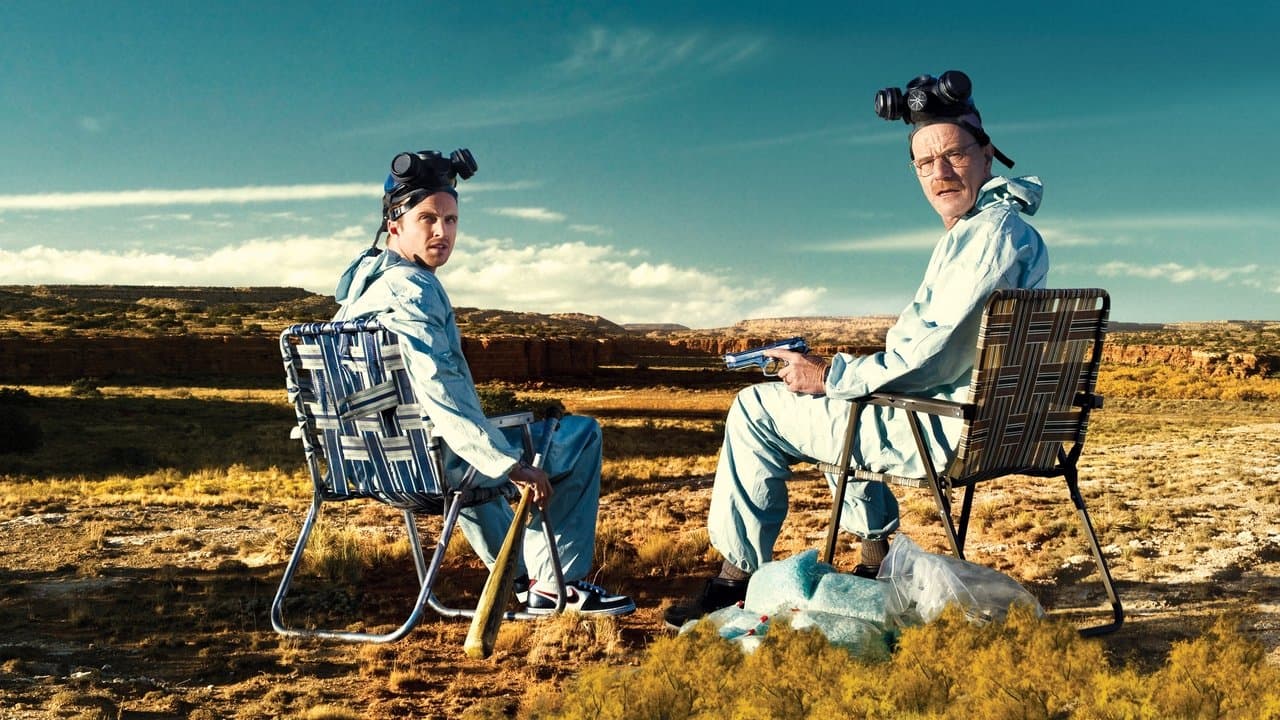
Costume designer Kathleen Detoro built each character's closet around a deliberate palette, and she's on record that "they all meant something to us." Walt starts the series in washed-out khakis and beiges — the invisible, beaten-down teacher — then picks up greens as his drug money (and confidence) grows, before settling into Heisenberg's blacks. Marie is drowning in purple, Skyler shifts through blues, and Jesse cycles through his own black/white/yellow/red streetwear palette. Even the hazmat suits were a color decision: the script said yellow, but Detoro pushed for the now-iconic orange. Once you see the system, every scene reads like a status report on who's winning.
02
The Br/Ba Logo Hides in the Scenery
Hidden DetailMeta◆ Community ConsensusFreeze Frame
WHERE TO LOOK · Hospital corridor floor tiling, and the squares on the wall behind the couch in Walt's rented condo
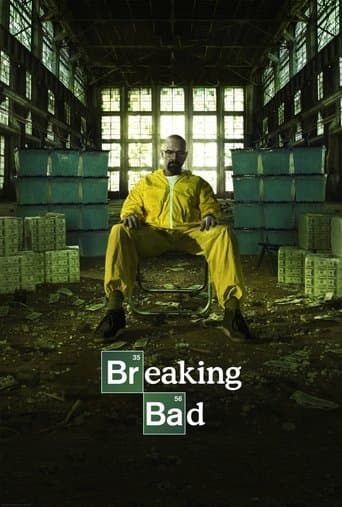
The title card's two green periodic-table squares — bromine (Br) and barium (Ba) — don't stay in the credits. Eagle-eyed viewers have spotted the same diagonal two-green-squares motif built into actual sets: it appears in the flooring of a hospital hallway and in the wall art hanging behind the couch in Walt's condo after Skyler kicks him out. It's the show's own branding smuggled into the production design, the kind of detail you only catch when a paused frame suddenly looks suspiciously like the opening titles.
03
Birthday Bacon: 50 Becomes 52
S1E1
CallbackHidden Detail◆ Community ConsensusSecond Watch
WHERE TO LOOK · Walt's 50th birthday breakfast in the pilot; the Denny's flash-forward that opens S5E1
In the pilot, Skyler arranges veggie bacon into a "50" on Walt's breakfast plate for his 50th birthday — a family tradition. The Season 5 premiere "Live Free or Die" opens with a flash-forward to a Denny's where a bearded, hollowed-out Walt breaks his own bacon strips in half and quietly builds a "52" on the plate, alone, under a fake name. Two numbers, two years apart, and the entire arc of the series sits in the gap between them: family tradition turned into a solitary ritual performed by a fugitive. It's the show's most efficient before-and-after shot, done entirely with breakfast food.
Spoiler — tap to reveal
04
Gray Matter Is Literally Black + White
S1E5
ReferenceBehind the Scenes◆ Community ConsensusDeep Cut
WHERE TO LOOK · Introduced with Gray Matter Technologies and the Schwartzes in "Gray Matter"
Walt's old company with Elliott Schwartz isn't just named for brains. "Schwartz" is German for "black," and black mixed with White — Walt's surname — makes gray. The company name is a compound of its two founders, which stings extra hard given that Walt sold his share for $5,000 and watched the Schwartzes build a multi-billion-dollar empire partly on his research. The show doubles down on meaningful naming everywhere (Walter White's initials echoing Walt Whitman being the other big one), but this bilingual pun is the deepest cut of the bunch.
05
Heisenberg: An Alias That's Also a Thesis Statement
S1E6
ReferenceBehind the Scenes◆ Community ConsensusFreeze Frame
WHERE TO LOOK · Walt introduces himself to Tuco as "Heisenberg" in "Crazy Handful of Nothin'"
When Walt needs a name to scare Tuco, he reaches for Werner Heisenberg, the German physicist behind the uncertainty principle — the idea that you can't pin down a particle's position and momentum at the same time. It's a chemistry teacher's inside joke that doubles as the show's thesis: from this point on, nobody (including Walt) can pin down where Walter White ends and the drug lord begins. It's also pure Walt arrogance — he assumes no cop or cartel soldier will ever get the reference. Bonus grim parallel fans love to point out: the real Heisenberg also died of cancer.
06
The Pink Teddy Bear Wears Gus Fring's Face
S2E1
ForeshadowingHidden Detail◆ Community ConsensusSecond Watch
WHERE TO LOOK · The black-and-white cold opens throughout Season 2; the payoff is Gus's death in S4E13 "Face Off"
The scorched one-eyed teddy bear that falls into Walt's pool after the Wayfarer 515 crash is Season 2's central image — and two seasons later, Gus Fring dies with burn damage on the exact same side of his face, one eye gone, mirroring the bear almost frame-for-frame. Vince Gilligan has confirmed the bear itself was loaded with meaning — he called the recovered eyeball "very, very symbolic," describing it as the eye of God watching and judging Walt. The Gus connection, though, appears to be a legendary happy accident: as ScreenRant notes, Gus hadn't even been cast when the bear was filmed, and the writers only planned him as a minor character at the time.
Spoiler — tap to reveal
07
Season 2's Episode Titles Spell Out the Plane Crash
S2E1
ForeshadowingMeta✓ ConfirmedDeep Cut
WHERE TO LOOK · Episode titles of S2E1, S2E4, S2E10 and S2E13, plus their black-and-white cold opens
Four Season 2 episodes open with black-and-white flash-forward teasers, and their titles — "Seven Thirty-Seven," "Down," "Over," "ABQ" — read in order as a headline: 737 down over Albuquerque, the mid-air collision that ends the season. The premiere's title even double-dips: within the episode, $737,000 is the number Walt calculates he needs to leave his family, while the doomed airliner is a Boeing 737. Gilligan and the writers built the puzzle hoping fans would crack it in real time; almost nobody did until after the finale aired. It remains TV's best-hidden season-long spoiler.
Spoiler — tap to reveal
08
"Lalo Didn't Send You? ... It Was Ignacio!"
S2E8
ReferenceBehind the Scenes◆ Community ConsensusDeep Cut
WHERE TO LOOK · Walt and Jesse kidnap Saul and drive him to the desert in "Better Call Saul"
In Saul Goodman's very first scene, kidnapped and on his knees in the desert, he panics: "It wasn't me, it was Ignacio!" and, crucially, "Lalo didn't send you?" In 2009 those were throwaway names. Six years later, Better Call Saul turned them into Nacho Varga and Lalo Salamanca — two of the prequel's most important characters — retroactively transforming a gag line into a six-season-early easter egg. It also means Saul's single most terrified moment in Breaking Bad was quietly about events fans wouldn't see for over a decade.
09
The Real Plane Crash Had a Walter White Too
S2E13
Behind the Scenes◆ Community ConsensusWhite Whale
WHERE TO LOOK · The Wayfarer 515 disaster in "ABQ" and Donald Margolis at his radar screen
The Season 2 finale's mid-air collision echoes a real disaster: the 1986 Aeroméxico Flight 498 crash over Cerritos, California. The unsettling part is the name attached to it — the air traffic controller on duty during the real crash was named Walter R. White. Gilligan has said he picked "Walter White" for the character simply because it sounded pleasingly bland, which makes the overlap a genuine cosmic coincidence rather than a plant: the fictional Walter White's actions destroy an air traffic controller (Jane's father, Donald Margolis), whose real-world counterpart shared his name.
Spoiler — tap to reveal
10
Mr. Chips Watches Scarface With His Kids
S5E3
ReferenceMeta✓ ConfirmedPlain Sight
WHERE TO LOOK · Living-room movie night in "Hazard Pay," as Skyler walks in mid-massacre
Gilligan pitched Breaking Bad to networks as "Mr. Chips turns into Scarface," so when Walt and Walt Jr. sit on the couch watching Tony Montana's "Say hello to my little friend!" shootout — with baby Holly on Walt's lap and a horrified Skyler looking on — the show is winking at its own logline. Bryan Cranston ad-libbed the scene's chilling capper, "Everyone dies in this movie," which wasn't in the script. The production had to clear the clip with the studio and get Al Pacino's personal permission to use his likeness. And yes: like Tony, Walt eventually goes down alongside a big gun and a pile of money.
11
Leaves of Grass and "The Other W.W."
S5E8
CallbackForeshadowing◆ Community ConsensusSecond Watch
WHERE TO LOOK · Hank's bathroom read in "Gliding Over All"; setup in S4E4 "Bullet Points"
Gale Boetticher's gift of Walt Whitman's Leaves of Grass — inscribed "To my other favorite W.W. It's an honour working with you. Fondly, G.B." — is the slowest-burning time bomb in the series. The initials first surface in S4E4 "Bullet Points," when Hank jokes that the "W.W." in Gale's lab notes could be Walter White, and Walt smirks, "You got me." A season and a half later, Hank finds the book on the Whites' toilet and the joke detonates. The show even telegraphs it within the episode: the camera lingers on the book sitting on the tank earlier in "Gliding Over All," whose title is itself a Whitman poem.
Spoiler — tap to reveal
12
Cradock Marine Bank Comes From The X-Files
ReferenceMeta◆ Community ConsensusWhite Whale
WHERE TO LOOK · References to Mike's hazard-pay and money arrangements in Season 5; the bank name recurs in Better Call Saul
Mike Ehrmantraut's hazard-pay money moves through Cradock Marine Bank — a fictional institution Vince Gilligan first used during his years writing on The X-Files, where it appeared in Fox Mulder's world. The name resurfaces across the Gilligan-verse, including in Better Call Saul, making it a quiet signature the creator carries from show to show. Gilligan's X-Files DNA runs deep in Breaking Bad (Bryan Cranston was cast largely off his one-episode X-Files performance in "Drive," which Gilligan wrote), and this recurring bank is the most freeze-frameable trace of it.
13
The Pilot's Lost Pants Return in "Ozymandias"
S5E14
CallbackHidden Detail✓ ConfirmedFreeze Frame
WHERE TO LOOK · Walt rolls his money barrel through the desert after Hank's death; the pants lie in the sand at frame left
Walt's beige chinos, famously flying off in the pilot's RV panic and left in the To'hajiilee desert, come back 60 episodes later. In "Ozymandias" — set in the same desert where it all began — Walt rolls his last barrel of money right past a pair of weathered khakis half-buried in the sand. The production deliberately planted the pants as a bookend: the man who lost them was a desperate teacher trying to provide for his family; the man walking past them has just lost that family for good. CBR calls it one of the best hidden details in the show's best episode, and it's become the gold standard for long-game prop callbacks.
Spoiler — tap to reveal
14
A Chess Board Announces Checkmate for the White King
S5E14
Hidden DetailForeshadowing✓ ConfirmedDeep Cut
WHERE TO LOOK · The fire station where baby Holly is left, shortly after the truck stop scene
At the fire station where Holly is dropped off in "Ozymandias," a firefighter idly moves a piece on a chess board — and the board is not random. Director Rian Johnson set up the position with writer Tom Schnauz so that the white king stands three moves from checkmate, defended by only two pawns and a knight. The white king is, of course, Walter White: his empire has collapsed, his defenses are nearly gone, and the loss is now mathematically unavoidable. It's a background prop doing the work of an entire episode recap, in an episode named for a poem about a fallen king.
Spoiler — tap to reveal
15
New Hampshire's Motto Predicts the Ending
S5E15
ForeshadowingMeta◆ Community ConsensusDeep Cut
WHERE TO LOOK · Walt's snowbound New Hampshire cabin in "Granite State"; the motto appears on the state's plates
Walt's exile in "Granite State" sends him to New Hampshire, whose license plates carry the state motto: "Live Free or Die." The show had already used that exact phrase as the Season 5 premiere's title, and by the finale it reads as a mission statement for both leads — Walt chooses to die on his own terms rather than rot in a cabin or a cell, while Jesse smashes through the compound gate and lives free. Even the episode title "Granite State" is New Hampshire's nickname, part of a title-naming scheme that had been quietly pointing at the endgame all season.
Spoiler — tap to reveal
16
Fugitive Walt's Fake Name Is Skyler's Maiden Name
S5E1
Hidden DetailBehind the Scenes◆ Community ConsensusDeep Cut
WHERE TO LOOK · The Denny's flash-forward cold open of "Live Free or Die" — check the New Hampshire ID Walt slides across
The New Hampshire driver's license Walt carries in the flash-forwards identifies him as "Mr. Lambert" — and Lambert is Skyler's maiden name (her sister is Marie Lambert before becoming a Schrader). Of all the aliases a fugitive could buy from the vacuum-cleaner man, Walt ends up wearing his wife's family name, a quiet sign that even at the end of the line, stripped of everything, he can't let go of the family he claims he did it all for. It's a blink-and-miss-it detail on a prop ID that most viewers never freeze-frame.
Spoiler — tap to reveal
17
"Felina": An Anagram, a Ballad, and Walt's Whole Fate
S5E16
Music SecretMetaForeshadowing✓ ConfirmedDeep Cut
WHERE TO LOOK · The episode title itself; "El Paso" plays in the stolen car and Walt sings it while building the M60 rig
The finale's title works on multiple confirmed levels. "Felina" is an anagram of "finale," and it's the writers' respelling of Faleena from Marty Robbins' ballad "El Paso" — a song about a cowboy who kills for the woman he loves, flees, and knowingly rides back to die near her. Gilligan discussed the parallel on the Breaking Bad Insider Podcast: swap Faleena for Walt's true love — his blue meth empire — and the song is the episode. "El Paso" plays as Walt steals the snowbound Volvo, and he hums it while rigging his trunk gun. The popular "Fe-Li-Na = blood, meth and tears" periodic-table reading, Snopes notes, is a fan add-on the writers never claimed.
Spoiler — tap to reveal
18
"Baby Blue" Is a Love Song to the Meth
S5E16
Music Secret✓ ConfirmedSecond Watch
WHERE TO LOOK · The final scene — Walt's bloody hand on the stainless tank as police arrive
As Walt dies among the lab equipment, Badfinger's 1972 track "Baby Blue" plays him out — opening with the line "Guess I got what I deserved." Gilligan has explained the choice directly: the song is a love song, and the "baby blue" Walt truly loved was his signature blue methamphetamine, the one thing he was undeniably the best in the world at making. It reframes the finale's last beat as Walt reuniting with his real soulmate. The needle-drop was so perfect it sent the 40-year-old song back up the charts within days of the broadcast.
Spoiler — tap to reveal
19
The DVD Ending Where It Was All Hal's Nightmare
MetaCameo✓ ConfirmedWhite Whale
WHERE TO LOOK · Bonus feature on the Breaking Bad complete-series DVD/Blu-ray box set
The complete-series box set hides the ultimate meta egg: an official alternate ending in which Bryan Cranston's Malcolm in the Middle dad Hal bolts awake next to Lois (Jane Kaczmarek, reprising her role) and babbles about a nightmare where he was a meth-cooking chemist, with a brother-in-law in the DEA, a man-child partner in oversized clothes, and "a guy who never spoke, he just rang a bell." As the scene ends, the camera pans to Heisenberg's black porkpie hat sitting on the bedroom chair. It's a fully produced, officially sanctioned joke that canonizes the fan theory linking Cranston's two most famous roles — if you own the discs.
Spoiler — tap to reveal
Frequently asked
+How many easter eggs are in Breaking Bad?
We've verified 19 documented easter eggs and hidden details across Breaking Bad's five seasons, from the color-coded costumes and the Br/Ba logo hidden in set dressing to the chess board in "Ozymandias" and the DVD-only Malcolm in the Middle ending. Eight of those are confirmed by creators, crew interviews, or official releases; outlets like CBR have catalogued 20-plus candidates, but we only count details with real documentation.
+Did Breaking Bad's episode titles really spoil the ending?
Season 2 did it deliberately: the four episodes with black-and-white teaser openings — "Seven Thirty-Seven," "Down," "Over," "ABQ" — spell out the season-ending plane crash, and Vince Gilligan hoped fans would decode it in real time. Almost nobody did. Fans later theorized the final eight titles ("Live Free or Die," "Granite State," "Felina") sketched Walt's endgame too, though that reading is looser.
+What does the pink teddy bear in Breaking Bad mean?
Vince Gilligan called the bear and its recovered eyeball "very, very symbolic" — the eye of God watching and judging Walt, and a visualization of the collateral damage his choices cause. Its burned face also eerily matches Gus Fring's death wounds two seasons later, but that parallel appears to be a happy accident: Gus hadn't been cast when the Season 2 teasers were filmed.
+What does Felina mean in the Breaking Bad finale?
Three confirmed things at once: it's an anagram of "finale"; it respells Faleena from Marty Robbins' "El Paso," the ballad about a man who returns to his love knowing it will kill him — which plays twice in the episode; and it frames the blue meth as Walt's true love. The popular "Fe-Li-Na = blood, meth and tears" periodic-table theory is a fan invention, per Snopes.
+What do the colors mean in Breaking Bad?
Costume designer Kathleen Detoro built deliberate palettes for every character and said the colors "all meant something" to the production. Walt migrates from powerless beige through money-green to Heisenberg black; Marie lives in purple; Skyler wears shifting blues; Jesse sticks to black, white, yellow and red. Even the lab hazmat suits were changed from scripted yellow to orange for visual impact.
Last updated 2026-07-08 · Spotted something we missed? Tell us.