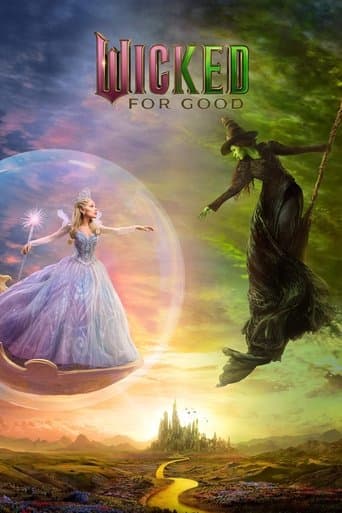
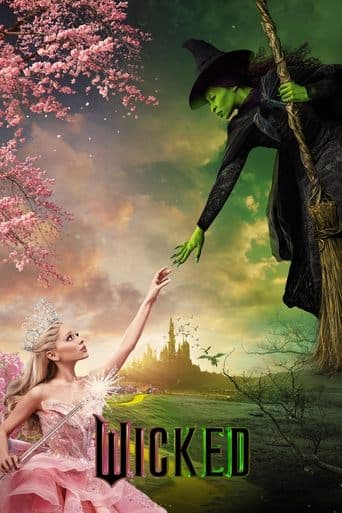
Stephen Schwartz has been sneaking The Wizard of Oz into Wicked since 2003 — he's on record that Elphaba's 'Unlimited' motif is the first seven notes of 'Over the Rainbow' in rhythmic disguise. Jon M. Chu's 2024 film turns that private game into a production-wide philosophy: the Universal logo goes black and white like it's 1939, Munchkinland's flower fields were planted as a literal rainbow of nine million real tulips, and the Ozdust Ballroom's piano is manned by fancy chickens because L. Frank Baum bred show poultry before he ever wrote a word about Oz.
The eggs run on two frequencies at once. For 1939 devotees, the film seeds the future in plain sight — a trembling lion cub in a bicycle basket, poppies that can't touch Fiyero, striped stockings under Nessarose's silver shoes. For Broadway lifers, it's a family reunion: Idina Menzel and Kristin Chenoweth hijack 'One Short Day' with a newly written verse while Schwartz himself guards the Wizard's door, and Chu has teased that some of his plants still haven't been found.
Below is every hidden detail we could verify, ordered by where it lands in the film — from the vintage studio logo to a movie-length allegory hiding in how people get around Oz. Confirmed entries cite the director, composer, or designers on record; the rest are flagged as community finds.
The full catalog
Type
Status
Difficulty
01
The Universal Logo Opens in 1939 Black and White
Hidden DetailReferenceMeta◆ Community ConsensusSecond Watch
WHERE TO LOOK · The very first thing on screen — the studio logo and the title card leading into 'No One Mourns the Wicked.'
Before a single frame of Oz appears, the Universal globe spins in vintage black and white — the studio dug out a period logo so the film could open the way movies did in 1939, the year MGM's The Wizard of Oz premiered. Color floods in only once Oz takes over, echoing that film's famous sepia-to-Technicolor switch, and the title card that follows is lettered in the same ornate style as the 1939 main titles. It's a mission statement before the story even starts: this Oz remembers the old one.
02
Dorothy and Friends Are Already Walking Home
Hidden DetailReference◆ Community ConsensusFreeze Frame
WHERE TO LOOK · The aerial flyover early in 'No One Mourns the Wicked' — look down at the Yellow Brick Road, not at Glinda's bubble.
Wicked opens minutes after The Wizard of Oz ends. As the camera sweeps across Oz toward Munchkinland during 'No One Mourns the Wicked,' you can pick out Dorothy, Toto, the Scarecrow, the Tin Man and the Lion far below, trudging down the Yellow Brick Road with the Witch's confiscated broomstick in tow — a rainbow hanging in the sky for good measure. Blink and the entire 1939 cast is gone, but the timeline stamp is deliberate: Glinda's bubble arrives to announce a death Dorothy just caused.
03
Munchkinland Celebrates in 'Ding Dong!' Rhythms
Music SecretReference◆ Community ConsensusFreeze Frame
WHERE TO LOOK · The Munchkin celebration in 'No One Mourns the Wicked' — listen to the bells and clanging pans under the vocals.
When Munchkinland erupts over news of the Witch's death, children ring bells and bang pots in patterns that echo 'Ding Dong! The Witch Is Dead,' and rhythmic fragments of the 1939 song are stitched into the number's percussion. It's one of several spots where the score smuggles in Harold Arlen's melodies — 'Over the Rainbow' itself drifts through the soundtrack as the camera crosses Munchkinland's rainbow-striped tulip fields. The movie can't sing the old songs outright, so it hums them under its breath.
04
Munchkinland's Nine Million Tulips Form a Real Rainbow
Behind the ScenesHidden DetailReference✓ ConfirmedSecond Watch
WHERE TO LOOK · Aerial and wide shots of Munchkinland's flower fields in the opening number and Elphaba's childhood scenes.
Those endless flower fields around Munchkinland are not CGI. Production designer Nathan Crowley — backed by Jon M. Chu's everything-on-camera mandate — worked with Norfolk farmer Mark Eves to grow roughly nine million real tulips, planted in bands that shift from blues through whites to reds and oranges. Read from the air, the beds form a rainbow: a living tribute to Judy Garland's 'Over the Rainbow.' Crowley was pressured to fake it with visual effects and refused; after the shoot, the bulbs went back into farm rotation for future seasons.
05
Elphaba's Name Is L. Frank Baum's Initials
Behind the ScenesReference◆ Community ConsensusDeep Cut
WHERE TO LOOK · Everywhere — it's her name. Say 'L.F.B.' out loud and the trick reveals itself.
The Wicked Witch of the West never had a name until Gregory Maguire's 1995 novel built one out of her creator's byline: say L. Frank Baum's initials — L, F, B — out loud and you get 'El-pha-ba.' The film inherits the tribute wholesale, which means every classmate sneering 'Elphaba' through the halls of Shiz is unknowingly invoking the man who invented Oz in 1900. It's the deepest-rooted easter egg in the entire franchise, hiding inside the protagonist's own name.
06
Tornado Heels and Striped Socks Mark the Next Witch of the East
Hidden DetailForeshadowing✓ ConfirmedFreeze Frame
WHERE TO LOOK · Nessarose's arrival at Shiz — freeze on her silver shoes and the striped socks whenever her feet are in frame.
Nessarose's magical slippers are silver, not ruby — faithful to Baum's original novel, since the ruby pair was an MGM Technicolor invention this production couldn't use. Costume designer Paul Tazewell went a step further: the heels are sculpted in a spiral tornado shape, quietly pointing at the twister that will one day drop a Kansas farmhouse on their owner. Look down and her striped stockings match the most famous pair of legs in the 1939 film — the ones sticking out from under Dorothy's house.
Spoiler — tap to reveal
07
The Clock of the Time Dragon Watches Over Shiz
Hidden DetailCallbackReference◆ Community ConsensusDeep Cut
WHERE TO LOOK · Establishing shots of the Shiz campus — look at the clockwork architecture rather than the students.
Scan the establishing shots of Shiz University and you'll find the Clock of the Time Dragon — the mechanical, smoke-breathing dragon that looms over the proscenium at every stage performance of Wicked. It originates in Gregory Maguire's novel as a traveling oracle-theater, and the Broadway design implies the whole show unfolds inside the clock's pageant. Its film appearance is a pure handshake to theatre and book fans: the storyteller's machine is still on the premises, even when nobody points a spotlight at it.
08
Morrible Name-Checks Miss Gulch and Professor Mombi
Reference◆ Community ConsensusDeep Cut
WHERE TO LOOK · Early Shiz University scenes — keep an ear on Madame Morrible's throwaway lines about troublesome witches.
Listen closely in the early Shiz scenes and the dialogue name-drops two deep-cut villains. 'Miss Gulch' is Almira Gulch, the bicycle-riding Kansas neighbor who doubles as the Witch in The Wizard of Oz's frame story — a character who technically shouldn't exist inside Oz at all. 'Professor Mombi' is the child-stealing witch from Baum's 1904 sequel The Marvelous Land of Oz. Neither name gets an explanation, which is exactly what makes the drops so satisfying for people who know the source material.
09
'Unlimited' Smuggles In Seven Notes of 'Over the Rainbow'
Music SecretReference✓ ConfirmedDeep Cut
WHERE TO LOOK · Any 'Unlimited' passage — clearest in 'The Wizard and I' and the opening of 'Defying Gravity.'
Every time Elphaba sings the word 'Unlimited' — first in 'The Wizard and I,' climactically in 'Defying Gravity' — she's singing the first seven notes of 'Over the Rainbow' in rhythmic disguise. Composer Stephen Schwartz has confirmed the tribute for years, noting the altered rhythm keeps it an homage rather than a quotation, and has said he tucked Wizard of Oz passages into the score in multiple places. The film's orchestrations keep the motif fully intact, so Judy Garland's anthem quietly haunts Elphaba's biggest moments of hope.
10
Combat Class Rehearses a Fight That Hasn't Happened Yet
ForeshadowingCallback◆ Community ConsensusSecond Watch
WHERE TO LOOK · The combat/PE class sequence during 'What Is This Feeling?' — Elphaba and Glinda paired off with staffs.
'What Is This Feeling?' relocates Elphaba and Glinda's mutual loathing to a physical-education class where the roommates spar with staffs — choreography that deliberately previews the wand-versus-broomstick brawl the two witches have in the story's second act. On stage that scuffle erupts in Act II; on film, the gym class is a promise that Wicked: For Good keeps. Watch their footwork here and you're watching the rematch being blocked out a whole movie early.
11
Fiyero Keeps Auditioning to Be the Scarecrow
ForeshadowingHidden Detail◆ Community ConsensusSecond Watch
WHERE TO LOOK · The Shiz library during 'Dancing Through Life' — watch Fiyero's poses and the corn motifs in the set dressing.
'Dancing Through Life' is wall-to-wall Fiyero foreshadowing. He preaches the gospel of the 'brainless' while striking an arms-out scarecrow pose, and the Shiz library around him is seeded with corn imagery — right down to forbidden 'corn' reading material in the stacks. His whole philosophy about brains being overrated plays very differently once you know which straw-stuffed Oz icon he's destined to become in Wicked: For Good. The number is essentially a costume fitting he doesn't know he's attending.
Spoiler — tap to reveal
12
The Ozdust Piano Is Played by L. Frank Baum's Chickens
Hidden DetailBehind the Scenes✓ ConfirmedWhite Whale
WHERE TO LOOK · Inside the Ozdust Ballroom during 'Dancing Through Life' — look at who's manning the piano.
The Ozdust Ballroom's house piano is pecked at by ornamental fancy chickens, and that is not random whimsy: before L. Frank Baum wrote The Wonderful Wizard of Oz, he bred and exhibited prize show poultry. Director Jon M. Chu confirmed the birds are a deliberate tribute to Baum's pre-Oz life, part of a broader effort to fold the author's real biography and the original book illustrations into the film's design language. It might be the single most obscure confirmed egg in the movie — invisible without a crew interview.
13
A Red Handkerchief Marks Boq's Missing Heart
ForeshadowingHidden Detail◆ Community ConsensusFreeze Frame
WHERE TO LOOK · The Ozdust Ballroom, as Glinda redirects Boq toward Nessarose — watch where she places the red kerchief.
At the Ozdust Ballroom, Glinda tucks a red handkerchief onto Boq's chest — squarely over his heart — as she sweet-talks him into escorting Nessarose instead of her. Earlier, the lovestruck Munchkin literally stands on stacked books to seem taller and smarter for Glinda's benefit. The props sketch his entire future: a heart offered, broken, and eventually bartered away until, like the Tin Man, there's nothing beating in there at all. It's the film's quietest piece of long-game foreshadowing.
Spoiler — tap to reveal
14
Glinda Clicks a Pair of Ruby Slippers in 'Popular'
Hidden DetailReference◆ Community ConsensusPlain Sight
WHERE TO LOOK · Glinda and Elphaba's dorm room during 'Popular' — the shoe parade portion of the makeover.
Mid-makeover in 'Popular,' Glinda produces a pair of glittering ruby-red heels and clicks them together — Dorothy's signature there's-no-place-like-home move — before the shoes are set aside among her other options. It's a cheeky wink at the most famous footwear in film history, which this Oz pointedly can't hand to anyone: the ruby slippers were MGM's Technicolor-era invention, so Wicked keeps its actual magic shoes book-accurate silver and lets Glinda's closet do the referencing instead.
15
The Cowardly Lion's Origin Rides in a Bicycle Basket
ForeshadowingReference◆ Community ConsensusSecond Watch
WHERE TO LOOK · The classroom rescue and the bicycle getaway that follows — cub in the front basket.
The trembling lion cub Elphaba rescues from a cage in the classroom grows up to be the Cowardly Lion — his terrified, caged infancy quietly explaining the cowardice Dorothy encounters years later. The escape itself is staged as a mirror of 1939: Elphaba pedals away with the cub tucked into a bicycle basket, precisely how Miss Gulch carried off Toto in Kansas. One image, two timelines — the film hands the villain's most iconic silhouette to its heroine in her most heroic moment.
Spoiler — tap to reveal
16
Poppies Work on Everyone Except the Future Scarecrow
ForeshadowingReference◆ Community ConsensusFreeze Frame
WHERE TO LOOK · The classroom chaos after the lion cub is revealed — pink poppy pollen fills the room and only Fiyero resists it.
The anaesthetic that knocks out the classroom is a swirl of poppy pollen — the same flower the Wicked Witch weaponizes to put Dorothy's party to sleep outside the Emerald City in 1939. The tell is who stays standing: Fiyero shrugs off the poppies and helps Elphaba free the lion cub, just as the Scarecrow was immune to the poppy field because he had no flesh and blood to drug. The movie is spelling out his future in botanical code, a full film before the transformation happens.
Spoiler — tap to reveal
17
Oscar Diggs of Omaha Is Hiding in Plain Sight
Hidden DetailReferenceForeshadowing◆ Community ConsensusFreeze Frame
WHERE TO LOOK · Throughout 'One Short Day' and the Wizard's palace — check posters, shopfronts and printed ephemera in the background.
Freeze almost any Emerald City frame and the set dressing is confessing the Wizard's secret. Posters, murals and signage repeatedly reference 'Oscar Diggs' and 'Omaha' — the carnival humbug's real name and Nebraska hometown from Baum's book and the 1939 film — long before the story admits its all-powerful ruler is an ordinary man from the American Midwest. The city is literally wallpapered with the truth nobody bothers to read, which is about as elegant as visual foreshadowing gets.
Spoiler — tap to reveal
18
The Original Elphaba and Glinda Crash 'One Short Day'
CameoMusic SecretMeta✓ ConfirmedSecond Watch
WHERE TO LOOK · The Wiz-O-Mania show-within-the-show during 'One Short Day' in the Emerald City.
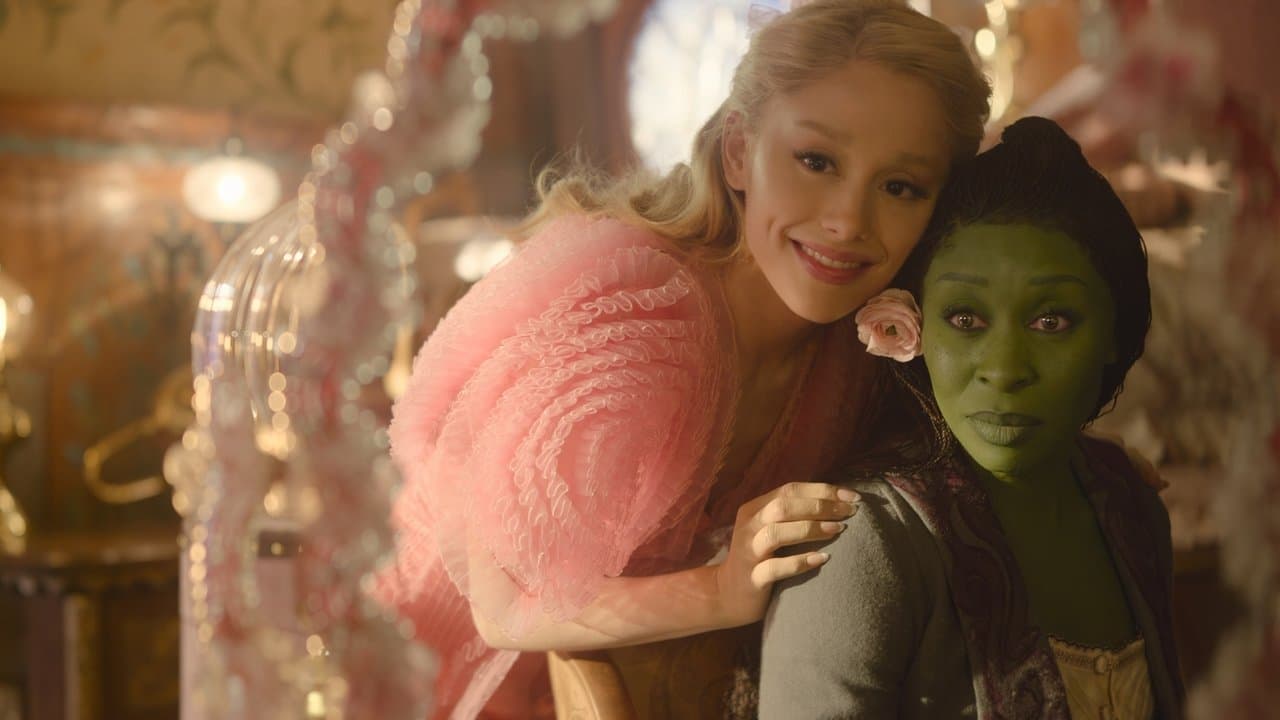
'One Short Day' pauses for Wiz-O-Mania, an Emerald City stage spectacular fronted by two 'Wise Ones' — played by Idina Menzel and Kristin Chenoweth, who originated Elphaba and Glinda on Broadway in 2003. Their newly written verse recounts how the Grimmerie came to Oz, Menzel uncorks her signature 'Defying Gravity' riff, and Chenoweth playfully clamps a hand over Ariana Grande's mouth mid-note — a jab at the rivalry the press once invented between the originals. Composer Stephen Schwartz framed the sequence as one big easter egg, and Cynthia Erivo described Menzel adjusting her witch's hat as 'the passing of the broom.'
19
Wicked's Composer and Writer Hide Inside the Emerald City
CameoMeta✓ ConfirmedDeep Cut
WHERE TO LOOK · The Wizard's palace door for Schwartz; the 'One Short Day' crowds for Holzman — pause liberally.
The people who built the musical are hiding inside its Emerald City. Composer-lyricist Stephen Schwartz plays the palace guard who peers through the door and grants Elphaba and Glinda their audience with the Wizard, while Winnie Holzman, who wrote the show's book, appears among the city crowds during 'One Short Day.' Broadway alumni are scattered nearby too: original-cast Fiyero Michael McCorry Rose fronts the Wiz-O-Mania show, and West End Elphaba Alice Fearn appears earlier in the film as Glinda's mother.
20
The Whole Film Is a Hidden Allegory About Transportation
MetaBehind the ScenesForeshadowing✓ ConfirmedWhite Whale
WHERE TO LOOK · Structural — track every mode of transport from Elphaba's childhood through 'Defying Gravity.'
Jon M. Chu built an escalating technology timeline into the staging and confirmed it while promoting the home release: the film moves from characters 'crawling on the floor in the beginning' to horseback, boats, bicycles, a train, and finally flight, as Elphaba takes to the sky on her broom. Chu describes it as an allegory about progress — The Wizard of Oz was written as an American fairytale, and transportation is how America transformed itself, for better and worse, just like the Wizard's industrialized Oz. Choreographer Christopher Scott adds that even the students' book-slaps and shoulder raises at Shiz encode meaning.
Is there a post-credit scene in Wicked?
No — Wicked has no post-credit scene. Wicked has no mid-credits or post-credits scene — the film simply stops at its 'To be continued' card after 'Defying Gravity,' saving every payoff for Wicked: For Good. The credits do hold one small easter egg for those who stay: Ariana Grande is billed under her full name, 'Ariana Grande-Butera.'
Frequently asked
+How many easter eggs are in Wicked?
We've catalogued 20 verified easter eggs in Wicked (2024), seven of them confirmed on the record by the filmmakers — including Stephen Schwartz's 'Over the Rainbow' notes hidden in 'Unlimited,' Jon M. Chu's piano-playing show chickens honoring L. Frank Baum, and the nine million real tulips planted in a rainbow. The rest are widely documented community finds, and Chu has teased that some of his planted details still haven't been discovered.
+Does Wicked (2024) have a post-credits scene?
No. Wicked has no mid-credits or post-credits scene, so you can leave when the 'To be continued' card appears after 'Defying Gravity.' Universal saved every reveal for the sequel, Wicked: For Good. The only reason to linger is the billing itself: Ariana Grande is credited under her full name, Ariana Grande-Butera, a small personal touch fans spotted immediately.
+Are Idina Menzel and Kristin Chenoweth in the Wicked movie?
Yes. The original Broadway Elphaba and Glinda cameo during 'One Short Day' as the 'Wise Ones' headlining Wiz-O-Mania, the Emerald City's stage spectacular. They sing a newly written verse about the Grimmerie's origins, Menzel delivers her famous 'Defying Gravity' riff, and Chenoweth jokingly covers Ariana Grande's mouth mid-note. Composer Stephen Schwartz has described the entire sequence as one big easter egg for longtime fans.
+Is Dorothy in the Wicked movie?
Briefly, yes. Wicked opens moments after The Wizard of Oz ends, and during the flyover in 'No One Mourns the Wicked' you can spot Dorothy, Toto, the Scarecrow, the Tin Man and the Lion walking the Yellow Brick Road with the Witch's broomstick in tow. It's a distant, blink-and-miss-it moment rather than a speaking role — the film keeps her at arm's length on purpose.
+Why are the slippers silver instead of ruby in Wicked?
Two reasons. In L. Frank Baum's original 1900 novel the magic shoes are silver — ruby was invented by MGM in 1939 to show off Technicolor, and that version's iconography wasn't this production's to borrow. So Nessarose wears book-accurate silver slippers, and costume designer Paul Tazewell sculpted their heels into a spiral tornado shape as a wink at the twister to come. Glinda still sneaks a ruby pair into 'Popular' as a visual gag.
Last updated 2026-07-09 · Spotted something we missed? Tell us.