The Things You Missed

Wicked: For GoodEaster Eggs & Hidden Details

The Cowardly Lion roars in minor key, Margaret Hamilton haunts the clouds, and the Scarecrow's theme is missing exactly one note.

2025 · Film · 137 min · Jon M. Chu

20 eggs catalogued7 confirmedno post-creditsupdated 2026-07-08

The short version

Wicked: For Good (2025) hides 20 catalogued easter eggs and hidden details, 7 of them confirmed by official sources. Standouts include the new song was hiding in part one's overture, the scarecrow's theme is missing exactly one note and the cowardly lion enters on a minor-key mgm melody. Every entry below includes where to look, a spotting difficulty, and sources.

Every egg on this page

  1. The Universal Logo Rides In on a Tornado
  2. 'Every Day More Wicked' Is a Smuggled Part One Megamix
  3. The Gale Force Is Named for a Girl from Kansas
  4. Glinda's Mother Is a West End Elphaba
  5. The 'Thank Goodness' Gown Copies Billie Burke's Silhouette
  6. Elphaba's Skywriting Foreshadows 'Surrender Dorothy'
  7. Margaret Hamilton Haunts the Clouds (and the Poster)
  8. Elphaba Finally Blends In with the Foliage
  9. The New Song Was Hiding in Part One's Overture
  10. The Cowardly Lion Enters on a Minor-Key MGM Melody
  11. Silver Slippers, Striped Stockings, and a Flash of Ruby
  12. Boq Wears His Heart on His Uniform
  13. The Tin Man's Axe Swings Straight into The Shining
  14. The 1939 Wizard's Face Hides Among the Mechanical Heads
  15. Glinda's Wedding Restages Crazy Rich Asians
  16. 'These Things Must Be Done Delicately' Comes Home
  17. The Witch Hunters March to the Winkie Guards' Chant
  18. The Scarecrow's Theme Is Missing Exactly One Note
  19. Dorothy Never Shows Her Face
  20. The Last Shot Recreates the Broadway Poster

Jon M. Chu spent two films arguing that Wicked and The Wizard of Oz are the same story told from opposite ends — and For Good is where they finally collide. A tornado spins through the vintage Universal logo before a single frame of Oz appears. The Wizard's new secret police are named for a farm girl from Kansas who hasn't landed yet. And the music team scored the collision like a heist: composer John Powell slipped a darkened 'If I Were King of the Forest' under the Cowardly Lion's entrance, while music supervisor Stephen Oremus confirmed the Scarecrow's reveal quotes 'If I Only Had a Brain' with exactly one note removed.

Some of the best plants were buried a full film ago. Oremus revealed that the melody of the new song 'No Place Like Home' was hiding in Part One's overture a year before anyone knew the song existed. Meanwhile the 1939 classic seeps in at the edges of frames — Margaret Hamilton's profile drifting through cloud formations, Frank Morgan's face among the Wizard's mechanical heads, silver slippers that flash ruby for exactly one spell — and Chu even restaged his own Crazy Rich Asians wedding for Glinda's big day.

Below is every hidden detail we could actually document, ordered by where it lands in the film. Confirmed entries cite Chu, Powell, Oremus, or costume designer Paul Tazewell on record; everything else is flagged as a community find.

The full catalog

Type
Status
Difficulty

The Universal Logo Rides In on a Tornado

Hidden DetailReference Community ConsensusSecond Watch

WHERE TO LOOK · The very first thing on screen — the studio logo and title card before 'Every Day More Wicked.'

Part One opened with a black-and-white vintage Universal logo; For Good escalates the gag by wrapping the retro globe in swirling tornado imagery — a storm warning that Dorothy's twister is finally coming to Oz in this half of the story. The title card that follows is lettered in the same ornate typeface as the 1939 Wizard of Oz main titles, continuing the franchise's habit of dressing its opening seconds up as a 1939 MGM picture. Before anyone sings a note, the film has already told you which movie it's on a collision course with.
'Every Day More Wicked' Is a Smuggled Part One Megamix

Music SecretCallback Community ConsensusFreeze Frame

WHERE TO LOOK · The opening number 'Every Day More Wicked' — listen for familiar Part One melodies under the crowd vocals.

The brand-new opening number doubles as a recap in disguise: its arrangement weaves in fragments of 'The Wizard and I,' 'What Is This Feeling?,' 'Popular,' and 'No One Mourns the Wicked' as Oz descends into witch-hunting paranoia. Even the staging joins in — Glinda's ensemble revisits her viral book-flip choreography from 'What Is This Feeling?,' now with more books. Melodies that once soundtracked hope and rivalry at Shiz curdle into propaganda, which is the whole thesis of the film in about four minutes of music.

The Gale Force Is Named for a Girl from Kansas

ReferenceForeshadowing Community ConsensusSecond Watch

WHERE TO LOOK · Madame Morrible announces Fiyero's promotion early in the film; the Gale Force name recurs throughout.

Fiyero is now captain of the Wizard's witch-hunting secret police, the 'Gale Force' — a name that puns on Madame Morrible's weather magic while quietly honoring Dorothy Gale, who won't drop into Oz until the third act. The detail is a deep pull from Gregory Maguire's 1995 novel, where the Gale Force is an SS-style paramilitary squad; the stage musical cut the name, but the film restores it. It's foreshadowing hiding inside a proper noun: Oz's military is unknowingly named after the girl who will bring the whole regime down.

Glinda's Mother Is a West End Elphaba

CameoBehind the Scenes Community ConsensusDeep Cut

WHERE TO LOOK · Glinda's childhood flashback around 'The Girl in the Bubble' — the woman comforting young Glinda.

In Glinda's childhood flashback, her mother is played by Alice Fearn — who spent 2017 to 2019 painted green as Elphaba in the West End production of Wicked. It's a favorite Chu trick (Part One filled Shiz with stage-show alumni), and the scene it decorates is its own Oz joke: young Glinda fails to cast a spell, then takes credit when a rainbow conveniently appears outside — the film's sly nod to 'Somewhere Over the Rainbow,' a song the Wicked films can reference but never sing.

The 'Thank Goodness' Gown Copies Billie Burke's Silhouette

Hidden DetailReference ConfirmedFreeze Frame

WHERE TO LOOK · Glinda's arrival in Munchkinland for 'Thank Goodness' — study the gown's shape against Billie Burke's 1939 dress.

Glinda's purplish-blue 'Thank Goodness' gown, layered with crystal and glass beads, is built on the exact silhouette of the pink gown Billie Burke wore as Glinda in 1939's The Wizard of Oz — while its blue color nods to the dress worn in the stage musical's Act Two opener. Costume designer Paul Tazewell confirmed the double homage on the record. It's the costume department's mission statement for the whole film: every look has to satisfy the 1939 devotees and the Broadway lifers simultaneously.

Elphaba's Skywriting Foreshadows 'Surrender Dorothy'

ReferenceForeshadowing Community ConsensusPlain Sight

WHERE TO LOOK · The end of 'Thank Goodness,' at the Yellow Brick Road ribbon-cutting — look up.

At the Yellow Brick Road opening ceremony, Elphaba hijacks the celebration by broom-writing a warning in the clouds that the Wizard lies (outlets transcribe it as 'Our Wizard Lies' or 'Your Wizard Lies') before Morrible scrambles the message. It's the origin story for the Wicked Witch's most famous stunt: in the 1939 film she skywrites 'SURRENDER DOROTHY' over the Emerald City. The film lets you watch a piece of Oz iconography being invented — and reframes it as protest rather than menace.

Margaret Hamilton Haunts the Clouds (and the Poster)

Hidden DetailReferenceMeta Community ConsensusWhite Whale

WHERE TO LOOK · Cloud formations throughout the film, especially in sky-heavy sequences — and the theatrical one-sheet, rotated 180 degrees.

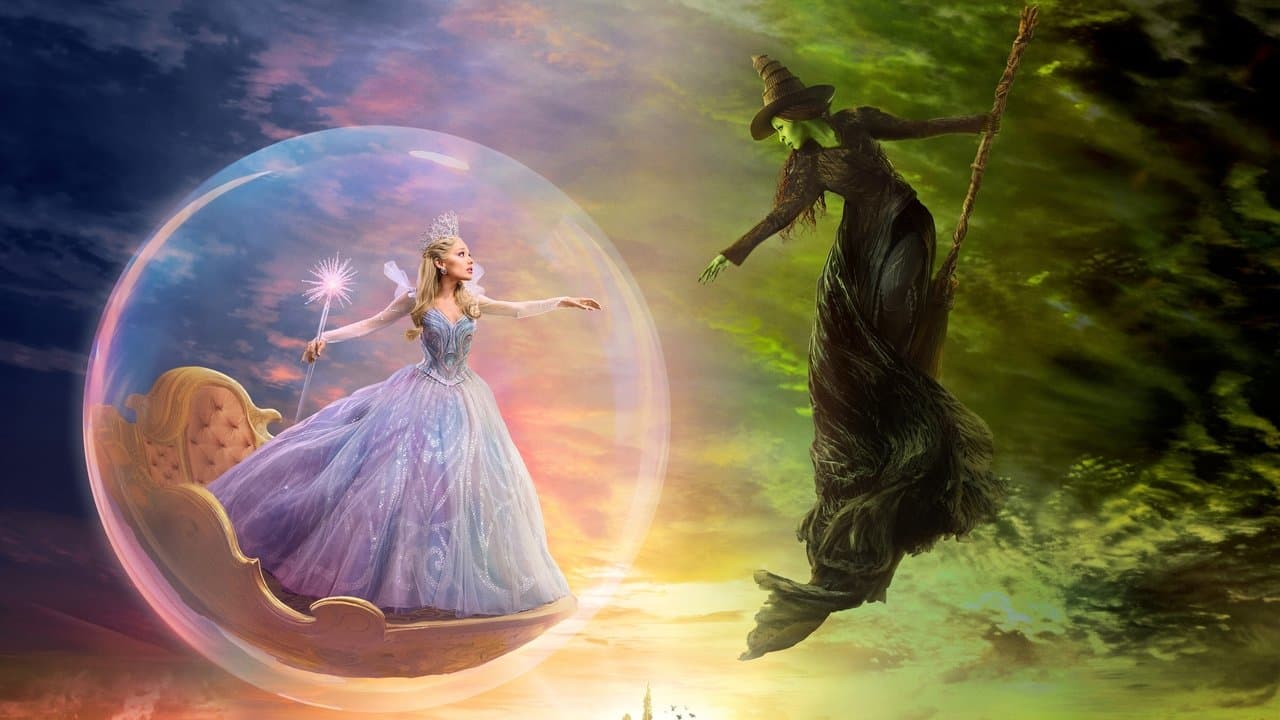
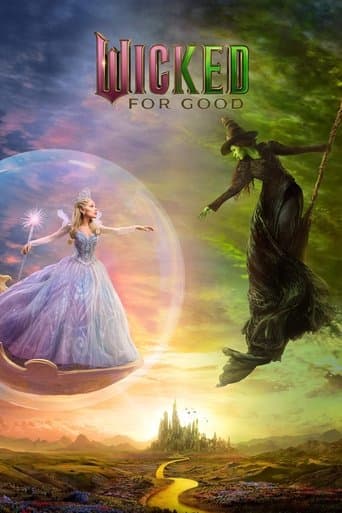
Eagle-eyed viewers have spotted the profile of Margaret Hamilton — 1939's Wicked Witch of the West — formed by cloud banks in multiple shots, alongside the profile of Clara Blandick, who played Auntie Em. The trick extends beyond the film itself: flip the official For Good poster upside down and Hamilton's hooked-nose witch silhouette appears in the negative space, an egg Jon M. Chu seemingly confirmed by reposting the poster inverted on his Instagram stories. The ghost of the original witch literally hangs over this Oz.

Elphaba Finally Blends In with the Foliage

Callback Community ConsensusSecond Watch

WHERE TO LOOK · The forest chase after Elphaba disrupts the Yellow Brick Road ceremony — watch her disappear against the tree.

Fleeing the Gale Force through a forest, Elphaba presses against a tree trunk and her green skin makes her effectively invisible to the soldiers. It's a punchline a full movie in the making: in Part One, Fiyero teased that he hadn't noticed her because she 'blended in with the foliage.' What was a throwaway flirtation in 2024 becomes a survival skill in 2025 — one of the cleaner examples of how For Good converts Part One's jokes into plot mechanics.

The New Song Was Hiding in Part One's Overture

Music SecretForeshadowing ConfirmedWhite Whale

WHERE TO LOOK · Elphaba's new solo to the fleeing Animals, sung at the tunnel beneath the Yellow Brick Road — then go re-listen to Part One's overture.

Stephen Schwartz wrote 'No Place Like Home' for this film — but its melody was planted in the first movie's overture, before 'Good News,' a year before audiences could possibly recognize it. Music supervisor Stephen Oremus confirmed the long con to BroadwayWorld, noting viewers had asked about the unfamiliar tune in Part One without realizing it foreshadowed a song that didn't publicly exist yet. The title itself flips Dorothy's 'there's no place like home' into an anthem for someone whose home has turned against her.

The Cowardly Lion Enters on a Minor-Key MGM Melody

Music SecretCameoReference ConfirmedDeep Cut

WHERE TO LOOK · The end of 'No Place Like Home,' when the Lion cuts Elphaba's last note short.

When the grown Cowardly Lion (voiced by Colman Domingo) interrupts the final riff of 'No Place Like Home,' composer John Powell sneaks in what he describes as a very dark, minor-key version of 'If I Were King of the Forest' — the Lion's comic showpiece from 1939, recast as something mournful. The Lion's design even echoes the real MGM logo lion. Fans have also clocked a phrase reminiscent of 'Home' from The Wiz in the same sequence, making this one animal three musical homages deep.

Silver Slippers, Striped Stockings, and a Flash of Ruby

Hidden DetailReference Community ConsensusSecond Watch

WHERE TO LOOK · Elphaba's visit to Nessarose at the Governor's mansion in Munchkinland — watch the shoes during the spell.

Nessarose's famous slippers are silver, exactly as L. Frank Baum wrote them in the 1900 novel — a necessity as much as a choice, since the ruby-red version was invented for the 1939 MGM film and remains tied up in that studio's rights. The film has it both ways: when Elphaba enchants the shoes, they briefly glow ruby red before settling back to silver. Nessa also wears the striped stockings that curl up beneath Dorothy's fallen house in the original film, completing the Wicked Witch of the East's iconography piece by piece.

Boq Wears His Heart on His Uniform

ForeshadowingHidden Detail Community ConsensusFreeze Frame

WHERE TO LOOK · Boq's scenes at the Governor's mansion before Nessarose's spell — the emblem over his heart.

Spoiler — tap to reveal

The Tin Man's Axe Swings Straight into The Shining

ReferenceHidden Detail Community ConsensusFreeze Frame

WHERE TO LOOK · Immediately after Boq's transformation at the Governor's mansion — the axe through the door.

Spoiler — tap to reveal

The 1939 Wizard's Face Hides Among the Mechanical Heads

Hidden DetailCameoReference Community ConsensusWhite Whale

WHERE TO LOOK · The Wizard's palace chamber during the 'Wonderful' sequence — the shelf of mechanical heads behind the throne apparatus.

Inside the Wizard's chamber, a display of mechanical heads catalogs the faces the 'great and powerful Oz' has worn — and WhatsOnStage spotted that one of them is Frank Morgan, the actor who played the Wizard (and four other roles) in the 1939 film. It's the movie's most elegant piece of continuity plumbing: it implies the humbug we meet in 1939 is just one more mask in a drawer of them, folding the MGM classic into this film's timeline as literal set dressing. Bring a pause button.

Glinda's Wedding Restages Crazy Rich Asians

MetaReference ConfirmedDeep Cut

WHERE TO LOOK · Glinda and Fiyero's wedding ceremony — the greenery-lined aisle and the bride's solo walk.

Glinda walking alone down an aisle through lush forest greenery toward Fiyero looks awfully familiar if you've seen Jon M. Chu's Crazy Rich Asians — the 2018 film's showstopper church wedding also drowned its aisle in living foliage and sent the bride down it solo. Chu acknowledged the visual echo of his own filmography when ScreenRant raised it, making this a rare director-confirmed self-homage. In both films the fairy-tale staging hides rot underneath: neither wedding's couple is built to last.

'These Things Must Be Done Delicately' Comes Home

Reference Community ConsensusDeep Cut

WHERE TO LOOK · Morrible summoning the cyclone late in the film — listen for the line as the storm builds.

Spoiler — tap to reveal

The Witch Hunters March to the Winkie Guards' Chant

Music SecretReference ConfirmedFreeze Frame

WHERE TO LOOK · The opening bars of 'March of the Witch Hunters' as the mob assembles — listen to the low choir.

In the opening moments of 'March of the Witch Hunters,' the choir sings material built to evoke the 'Oh-Ee-Oh' chant of the Winkie guards patrolling the Wicked Witch's castle in 1939 — one of the most instantly recognizable sounds in movie history. The film's music team discussed the nod on the record, and the irony is the point: the mob storming Kiamo Ko now sounds like the army that once served the witch they're hunting. Powell also confirmed a dark, minor-key strain of 'Dancing Through Life' creeps in as Fiyero is beaten.

The Scarecrow's Theme Is Missing Exactly One Note

Music SecretReference ConfirmedWhite Whale

WHERE TO LOOK · Fiyero's first appearance as the Scarecrow near the film's end — the woodwind figure under his entrance.

Spoiler — tap to reveal

Dorothy Never Shows Her Face

Behind the ScenesMetaReference Community ConsensusSecond Watch

WHERE TO LOOK · Every Dorothy appearance — the house crash aftermath, the Yellow Brick Road, and the castle. You never get a frontal shot.

Dorothy Gale finally arrives in Oz — and the camera refuses to look at her. Played by 30-year-old Bethany Weaver, she appears only from behind, in silhouette, or at a distance: a girl-shaped hole in the story, which is precisely how the stage musical treats her. IMDb's trivia page notes the framing conveniently hides that the 'little girl' is an adult performer, and WhatsOnStage caught that her skipping gait deliberately mimics Judy Garland's down the Yellow Brick Road. This is Elphaba's story; Dorothy is just weather.

The Last Shot Recreates the Broadway Poster

CallbackMetaHidden Detail ConfirmedSecond Watch

WHERE TO LOOK · The final flashback after 'For Good' — the very last frames before the credits.

Spoiler — tap to reveal

Is there a post-credit scene in Wicked: For Good?

No — Wicked: For Good has no post-credit scene. No mid-credits or post-credits scenes — you can leave when the credits roll. The omission is deliberate: the story closes the way the stage musical does, preserving the ambiguity around Elphaba's fate rather than teasing a follow-up. Part One skipped credits scenes too.

Frequently asked

+How many easter eggs are in Wicked: For Good?

We document 20 easter eggs in Wicked: For Good, 7 of them confirmed on the record by director Jon M. Chu, composer John Powell, music supervisor Stephen Oremus, or costume designer Paul Tazewell. The true total runs far higher — WhatsOnStage alone catalogued over 100 details — but our list covers the verifiable standouts, from the tornado-wrapped Universal logo to the Broadway-poster recreation in the final shot.

+Does Wicked: For Good have a post-credits scene?

No. Wicked: For Good has no mid-credits or post-credits scenes, matching the first film. The choice is intentional: the story ends the way the stage musical's Act Two does, keeping the mystery around Elphaba's fate intact instead of teasing a sequel. Once the credits start, you're free to go — nothing plays afterward.

+Are Idina Menzel and Kristin Chenoweth in Wicked: For Good?

No. The original Broadway Elphaba and Glinda appear only in the first film, as the Wizomania performers during 'One Short Day.' They were not asked back for For Good. The sequel's stage-veteran cameo instead belongs to Alice Fearn — a 2017-2019 West End Elphaba — who plays Glinda's mother in the childhood flashback.

+Why are the slippers silver instead of ruby in Wicked: For Good?

Nessarose's slippers are silver because that's how L. Frank Baum wrote them in the 1900 novel — the ruby version was invented for the 1939 MGM film, and those rights sit with another studio. The movie splits the difference: when Elphaba enchants the shoes, they briefly glow ruby red before returning to silver, honoring the book and the film in one shot.

+Do you ever see Dorothy's face in Wicked: For Good?

No. Dorothy, played by 30-year-old Bethany Weaver, is shown only from behind, in silhouette, or at a distance — mirroring the stage musical, where she is heard but never seen. The framing keeps the focus on Elphaba and Glinda while hiding that the 'little girl' is an adult performer, though her skip deliberately mimics Judy Garland's.

Last updated 2026-07-08 · Spotted something we missed? Tell us.