The Things You Missed

DarkEaster Eggs & Hidden Details

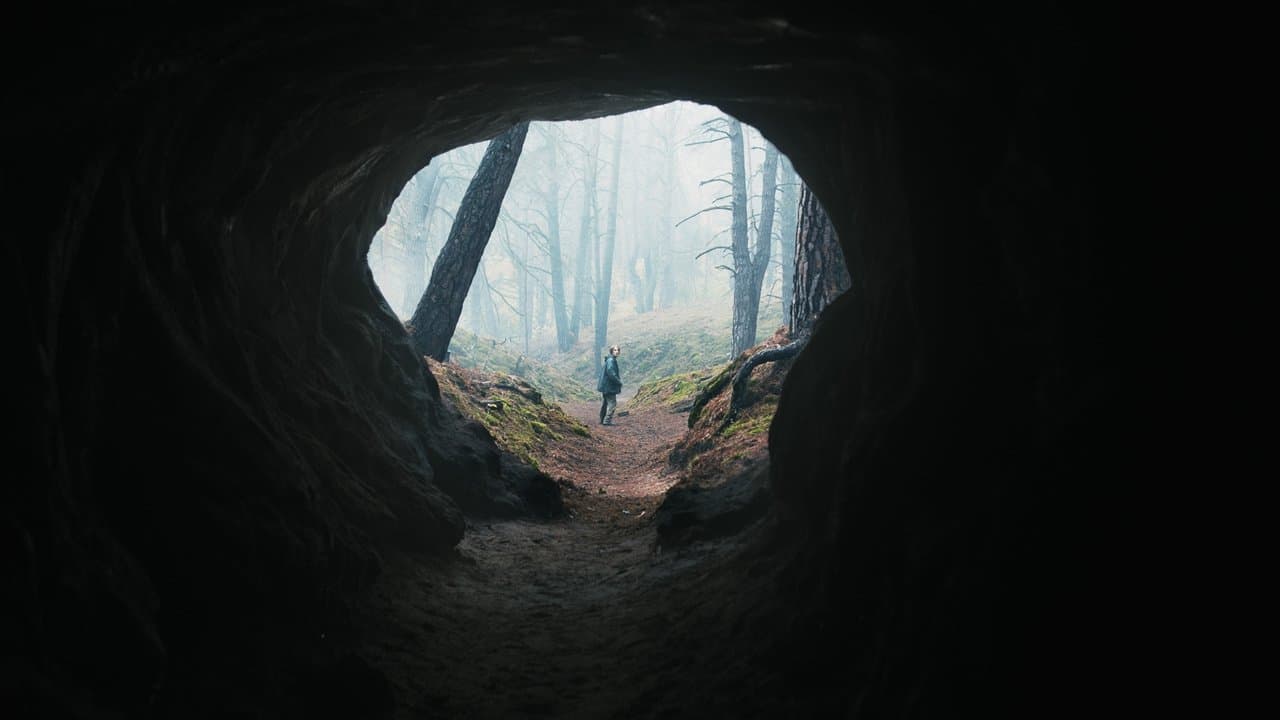
The cave door spells out the ending in Latin before you understand a word of it — Dark hid its entire 33-year machine in plain sight.

2017 · Series · 3 seasons · Baran bo Odar, Jantje Friese

19 eggs catalogued3 confirmedno post-creditsupdated 2026-07-08

The short version

Dark (2017) hides 19 catalogued easter eggs and hidden details, 3 of them confirmed by official sources. Standouts include a child's picture book contains the entire finale, the opening titles are real episode footage, mirrored and jonas's yellow raincoat is a deliberate color-coded anchor. Every entry below includes where to look, a spotting difficulty, and sources.

Every egg on this page

  1. The Series Opens on an Einstein Line About Time Being an Illusion
  2. Mikkel's Magic Trick: "It's Not About How, It's About When"
  3. Mikkel's Skeleton Costume Foreshadows His Own Death
  4. The Pfennig Coin That Proves Time Travel Before Anyone Says It
  5. Almost Every Character Is Named for a Bible or Myth Figure
  6. Martha Plays Ariadne — a Complete Spoiler of Her Arc
  7. The Triquetra Is a Diagram of the Whole Show
  8. "Sic Mundus Creatus Est" Comes From the Hermetic Emerald Tablet
  9. Jonas's Yellow Raincoat Is a Deliberate Color-Coded Anchor
  10. The Number 33 Is Wired Into the Clockwork
  11. The Bunker TV Plays 1984 Songs That Spoil a Kidnapping
  12. Mads Nielsen's Headstone Reads Infinity Instead of a Death Date
  13. The Opening Titles Are Real Episode Footage, Mirrored
  14. Season 2 Opens With Nietzsche Gazing Into the Abyss
  15. A Child's Picture Book Contains the Entire Finale
  16. The Time Machine Runs on Chernobyl's Signature Isotope
  17. Two Girls Stand Like The Shining's Grady Twins
  18. Everything Flips When You Cross Into Eva's World
  19. The Casting Is So Precise It Became a Talking Point

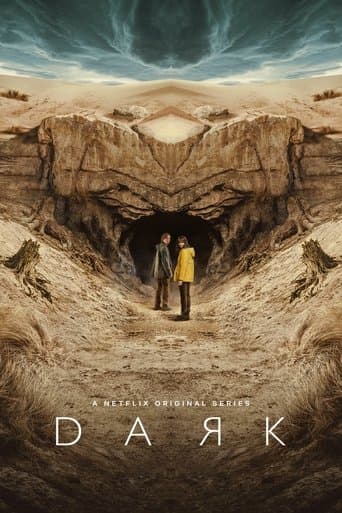
The rusted metal door deep in the Winden cave is engraved with a Latin phrase — Sic Mundus Creatus Est, "thus the world was created" — and a three-looped symbol called the triquetra. You'll stare at both for two full seasons before the show explains that they are, quite literally, a diagram of everything that happens. That's the method of Baran bo Odar and Jantje Friese's German time-travel epic: almost nothing is decoration. The names are clues, the paintings on the walls are clues, the pop songs on a bunker television are clues, and the colors the characters wear track which world you're watching.

Friese has said the pair mapped all three seasons before shooting a frame, which let them bury foreshadowing that is nearly invisible on a first pass — like a children's picture book young Elisabeth reads, showing Adam and Eva blowing wind onto two separate worlds with a third world of origin between them. It's the entire cosmology of the finale, hidden in a bedtime illustration in Season 2. Even the opening titles are a rebus: a mirrored montage of real footage from the episodes, folded back on itself like the show's own symmetry.

This guide collects the details that are actually documented — in the creators' own interviews, title-design profiles, and years of Reddit and Fandom forensics — from the Einstein and Nietzsche epigraphs that bookend the timelines, to the number 33 wired into the plot's clockwork, to the Chernobyl-grade cesium that powers the machine, to the two little girls in Season 3 standing shoulder to shoulder like The Shining's Grady twins.

The full catalog

Type
Status
Difficulty

The Series Opens on an Einstein Line About Time Being an Illusion

S1E1
ReferenceMeta Community ConsensusPlain Sight

WHERE TO LOOK · The very first frames of the pilot, "Secrets," before the cold open

Before a single character speaks, Season 1 fades up on Albert Einstein's words: "The distinction between the past, present and future is only a stubbornly persistent illusion." It's a real quote, drawn from a 1955 condolence letter Einstein wrote for his late friend Michele Besso — comforting the family with the idea that in physics, the dead are not truly gone. The narration then extends it: "We trust that time is linear... yesterday, today and tomorrow are not consecutive, they are connected in a never-ending circle. Everything is connected." It's a mission statement disguised as an epigraph, and by the finale it reads as a plot summary.
Mikkel's Magic Trick: "It's Not About How, It's About When"

S1E1
Foreshadowing Community ConsensusSecond Watch

WHERE TO LOOK · Mikkel's magic routine early in "Secrets"

Spoiler — tap to reveal

Mikkel's Skeleton Costume Foreshadows His Own Death

S1E1
ForeshadowingReference Community ConsensusFreeze Frame

WHERE TO LOOK · The night of Mikkel's disappearance at the caves in "Secrets"

Spoiler — tap to reveal

The Pfennig Coin That Proves Time Travel Before Anyone Says It

S1E1
ForeshadowingBehind the Scenes Community ConsensusFreeze Frame

WHERE TO LOOK · Physical evidence tied to the Nielsen disappearances in early Season 1

Among the objects that surface early is a German Pfennig coin whose mint date doesn't match where it's found — a small piece of currency that shouldn't exist in the timeline it turns up in. It's the show's first hard evidence that people and objects are moving across the decades (1953, 1986, 2019), planted long before any character utters the words "time travel." Dark loves this kind of forensic clue: a date-stamped artifact that a careful viewer can catch and cross-reference while the townsfolk of Winden are still calling it a missing-persons case.

Almost Every Character Is Named for a Bible or Myth Figure

ReferenceBehind the Scenes Community ConsensusDeep Cut
Spoiler — tap to reveal

Martha Plays Ariadne — a Complete Spoiler of Her Arc

S1E5
ForeshadowingReference Community ConsensusSecond Watch

WHERE TO LOOK · The school theater performance in "Truths"

Spoiler — tap to reveal

The Triquetra Is a Diagram of the Whole Show

Hidden DetailForeshadowing Community ConsensusFreeze Frame

The three-looped trinity knot is Dark's signature glyph, and it evolves in meaning as you watch. Early on it marks the caves' closed time loops — past, present and future, each 33 years apart, each feeding the others. By Season 3 it becomes the three worlds: Adam's, Eva's, and the origin world between them. It's engraved on the cave's steel door beside "Sic Mundus Creatus Est," stamped on the leather time-travel notebook, tucked among the Stranger's papers, and pinned to the wall of hotel Room 8. The creators have said they "believe you have to be true to the symbols you lay out" — and "things coming in three" is the show's organizing rule.

"Sic Mundus Creatus Est" Comes From the Hermetic Emerald Tablet

Reference Community ConsensusDeep Cut

The Latin on the cave door — "thus the world was created" — is a genuine line from the Emerald Tablet, the foundational Hermetic alchemy text attributed to Hermes Trismegistus. Its most famous principle, "as above, so below," is refracted throughout Dark as the mantra "the beginning is the end, and the end is the beginning." The show wears its Hermeticism openly: Noah carries the Tablet's text tattooed across his back, Bartosz has it inked on his chest, and the secret society of travelers takes its very name, Sic Mundus, from the inscription. It's ancient mysticism repurposed as time-travel scripture.

Jonas's Yellow Raincoat Is a Deliberate Color-Coded Anchor

Hidden DetailBehind the Scenes ConfirmedSecond Watch

Costume designer Anette Guther used yellow across all three seasons as what she calls an "anchor" — a color that lets you track a character through 100 years and multiple realities. Jonas's canary raincoat is the clearest example: it flags his youth and innocence, doubles as a nuclear-warning hue near the power plant, and functions as the romantic tether between him and Martha. When alternate-world Martha later pulls on that same yellow jacket, it's a costume cue that she's stepping into Jonas's role in a world where he was never born. Adam's world skews yellow; Eva's world skews red — even the palette tells you where you are.

The Number 33 Is Wired Into the Clockwork

ReferenceBehind the Scenes Community ConsensusDeep Cut

Winden's catastrophes recur every 33 years — the interval at which the solar and lunar cycles realign — and the number is seeded far beyond the plot mechanics. H.G. Tannhaus points to Dante's Divine Comedy, whose Purgatorio and Paradiso each run 33 cantos; 33 is Christ's age at the crucifixion and the count of his traditional miracles; and even Chapter 33 of Nietzsche's Thus Spoke Zarathustra carries a loaded title. The three colors that dominate the frame — yellow, red, blue — sit 33 degrees apart in spirit, a triadic set echoing the 33-year gaps between the show's three anchor timelines.

The Bunker TV Plays 1984 Songs That Spoil a Kidnapping

S1E2
Music SecretForeshadowing Community ConsensusDeep Cut

WHERE TO LOOK · Erik held captive in the bunker, background television/radio, early Season 1

Spoiler — tap to reveal

Mads Nielsen's Headstone Reads Infinity Instead of a Death Date

S1E2
Hidden DetailForeshadowing Community ConsensusFreeze Frame

WHERE TO LOOK · Mads Nielsen's burial in "Lies"

Spoiler — tap to reveal

The Opening Titles Are Real Episode Footage, Mirrored

Hidden DetailMusic Secret ConfirmedFreeze Frame

Dark's unsettling main-title sequence isn't abstract animation — it's a kaleidoscope built from actual footage lifted out of that season's episodes, then mirrored down the middle so doorways fold into themselves and faces bloom symmetrically. The technique literalizes the show's obsession with duality and "fearful symmetry," and it rewards rewatchers who can spot which scenes the montage is quoting. The haunting theme is Apparat's "Goodbye," featuring vocalist Soap&Skin. It's one of the most-praised title designs on Netflix precisely because it's a puzzle, not a logo.

Season 2 Opens With Nietzsche Gazing Into the Abyss

S2E1
ReferenceMeta Community ConsensusSecond Watch

WHERE TO LOOK · The cold open of "Beginnings and Endings," set June 1921

Where Season 1 leaned on Einstein and determinism, the Season 2 premiere pivots to Nietzsche: "And if you gaze long into an abyss, the abyss also gazes into you." It lands over a 1921 scene of two men digging the tunnel that will become the time gateway — one of whom is a young Noah committing his first murder. The epigraph frames the season's turn toward the war between fate and free will, and it's a deep-cut fit: Dark is loosely built on Nietzsche's Thus Spoke Zarathustra and his doctrine of eternal recurrence, the eternal return of the same events.

A Child's Picture Book Contains the Entire Finale

S2E4
ForeshadowingHidden Detail ConfirmedDeep Cut

WHERE TO LOOK · Young Elisabeth reading in her bedroom, Season 2

Spoiler — tap to reveal

The Time Machine Runs on Chernobyl's Signature Isotope

S3E1
ReferenceBehind the Scenes Community ConsensusDeep Cut

WHERE TO LOOK · The time-machine mechanics and the barrels beneath the power plant, Season 3

The radioactive material that fuels the time-travel apparatus is cesium-137 — the same isotope that became the enduring fingerprint of the 1986 Chernobyl disaster. It's a grounding touch that ties the show's speculative machinery to real nuclear history and to Winden's own power plant, the looming source of the town's dread. The choice isn't arbitrary: 1986 is one of Dark's three anchor years, and threading a real Chernobyl-era contaminant through the plot fuses the series' fictional apocalypse to an actual one from the same decade.

Two Girls Stand Like The Shining's Grady Twins

S3E1
ReferenceForeshadowing Community ConsensusDeep Cut

WHERE TO LOOK · The Winden school hallway, Season 3

Spoiler — tap to reveal

Everything Flips When You Cross Into Eva's World

S3E1
Hidden DetailForeshadowing Community ConsensusFreeze Frame

WHERE TO LOOK · Jonas's arrival in the alternate world; watch the scar, the hair, and the mirrored title card

Spoiler — tap to reveal

The Casting Is So Precise It Became a Talking Point

Behind the ScenesMeta Community ConsensusSecond Watch

Dark spans roughly a century, so most major characters are played by up to three actors at different ages — and the production went to obsessive lengths to make those actors genuinely resemble one another. Jonas alone is Louis Hofmann (young), Andreas Pietschmann (the middle-aged Stranger) and Dietrich Hollinderbäumer (elderly Adam). The face-matching is uncanny enough that viewers frequently cite it as one of the show's quiet technical marvels; it's the connective tissue that lets you believe a teenager and a white-haired man are the same soul, decades apart on the loop.

Is there a post-credit scene in Dark?

No — Dark has no post-credit scene. Dark has no post-credit scenes. Each episode ends on a cold, hard cut into Apparat's outro music, and the series finale closes on its final image with no button afterward — fitting for a show whose whole point is that the loop simply stops.

Frequently asked

+How many easter eggs are in Dark?

This guide documents 19 easter eggs and hidden details across Dark's three seasons, from the Einstein and Nietzsche epigraphs and Mikkel's magic-trick foreshadowing to the Hermetic Emerald Tablet, the color-coded worlds, and the Season 3 Shining homage. Three are confirmed by the creators or crew on record — the yellow-costume color coding, the mirrored opening titles, and the three-worlds picture book Jantje Friese described in interviews.

+What does the triquetra symbol mean in Dark?

The triquetra, or trinity knot, is Dark's master symbol. Early on it represents the caves' closed time loops linking past, present and future in 33-year jumps. By Season 3 it stands for the three worlds — Adam's, Eva's, and the origin world between them. It appears on the cave door beside "Sic Mundus Creatus Est," on the time-travel notebook, and pinned in hotel Room 8.

+What does Sic Mundus Creatus Est mean in Dark?

It's Latin for "thus the world was created," a genuine line from the Hermetic Emerald Tablet attributed to Hermes Trismegistus. In Dark it's engraved on the cave door leading to the time passage and gives the traveler society Sic Mundus its name. It pairs with the show's recurring mantra, "the beginning is the end and the end is the beginning," echoing the Tablet's "as above, so below."

+Why is the number 33 so important in Dark?

Winden's disasters repeat every 33 years, the interval when the sun and moon cycles realign. The number is layered with meaning: Dante wrote 33 cantos each for Purgatory and Paradise, Christ was 33 at the crucifixion with 33 traditional miracles, and Chapter 33 of Nietzsche's Thus Spoke Zarathustra carries thematic weight. The show's three anchor timelines sit exactly 33 years apart.

+Does Dark have a post-credits scene?

No. Dark never uses post-credit scenes. Episodes cut hard into the closing music, and the finale ends on its last image with nothing after the credits — appropriate for a series built entirely around a time loop that finally comes to rest rather than teasing more.

Last updated 2026-07-08 · Spotted something we missed? Tell us.