The Things You Missed

Stranger ThingsEaster Eggs & Hidden Details

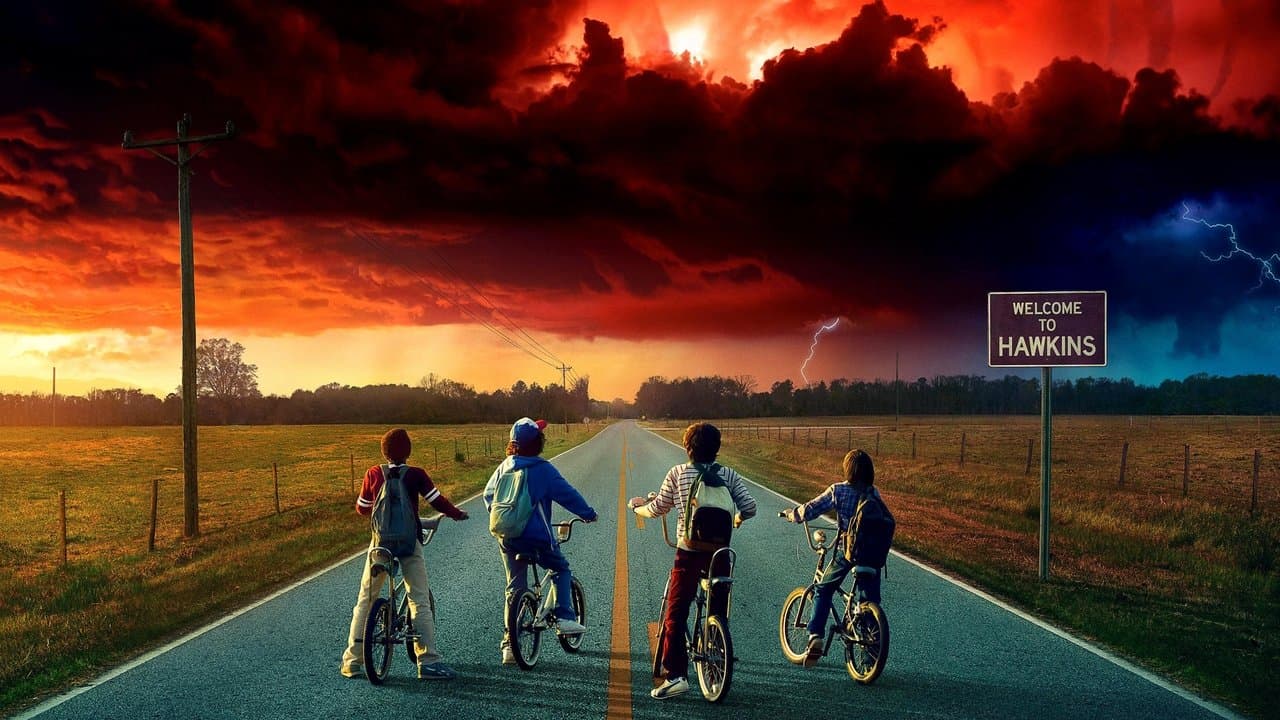
From a Dark Phoenix comic in the very first episode to a d20 frozen on seven after the finale credits, Hawkins hid its whole story in plain sight.

2016 · Series · 5 seasons · Matt Duffer, Ross Duffer

20 eggs catalogued5 confirmedno post-creditsupdated 2026-07-08

The short version

Stranger Things (2016) hides 20 catalogued easter eggs and hidden details, 5 of them confirmed by official sources. Standouts include freddy krueger himself scratches the table in victor creel's cell, hopper's montauk job offer is the show's original title winking back and the stone in henry's briefcase is the confirmed seed of the spin-off. Every entry below includes where to look, a spotting difficulty, and sources.

Every egg on this page

  1. The bike-race prize is X-Men #134 — Eleven's whole arc in one comic
  2. The Clash's 'Should I Stay or Should I Go' is Will's lifeline between worlds
  3. Holly follows the lights like the kid from Close Encounters
  4. The train-tracks walk restages Stand by Me
  5. Eleven is built from Firestarter and Carrie — down to the hand from the dirt
  6. MADMAX tops the Dig Dug leaderboard before Max ever appears
  7. Dustin traps Dart like a Ghostbuster — costume, trap and all
  8. The Day of the Dead screening is a thank-you note to the show's own theme
  9. Steve and Robin come down from truth serum during Back to the Future
  10. Chrissy's ceiling death restages the first kill in A Nightmare on Elm Street
  11. Freddy Krueger himself scratches the table in Victor Creel's cell
  12. Why 'Running Up That Hill' is Max's song — and how Kate Bush said yes
  13. 'The Vanishing of Holly Wheeler' mirrors the very first episode title
  14. A Season 1 frame under the Dark Crystal poster seems to preview the Abyss
  15. Dustin's graduation stunt is Eddie Munson's dream, fulfilled
  16. Joyce beheads Vecna — just like Winona Ryder beheaded Dracula
  17. Hopper's Montauk job offer is the show's original title winking back
  18. The stone in Henry's briefcase is the confirmed seed of the spin-off
  19. After the finale credits, the d20 finally shows its roll: a seven
  20. Max and Lucas's movie date comes true — straight from her drawing

The boys' bike race in episode one has a wager attached: the winner takes Dustin's copy of Uncanny X-Men #134 — the exact issue where Jean Grey turns into Dark Phoenix, a psychic girl corrupted by a shadowy cabal called the Hellfire Club. That's not set dressing. It's the entire series, from Eleven's nosebleeds to Season 4's D&D club name, compressed into a single prop six years before the payoff. Stranger Things has always played this game: every homage doubles as a clue.

The Duffer Brothers built the show as a mixtape of their VHS childhood — Spielberg's suburbs, Carpenter's synths, Stephen King's small towns — but the deepest eggs are the ones the show plants in itself. Will's failed dice roll in the first episode ("it was a seven... the Demogorgon, it got me") doesn't get answered until the last frame of the series finale's credits, when a d20 sits beside the Stranger Things Players Manual, seven-side up. And when Hopper floats a sheriff's job in Montauk during the finale, that's the Duffers winking at the show's original title from its 2015 pitch days.

Below are the hidden details that actually hold up — cross-checked against crew interviews, Netflix's own materials, and the outlets that have tracked Hawkins frame by frame since 2016. Confirmed eggs cite the people who put them there; community finds and fan theories are labeled as exactly that.

The full catalog

Type
Status
Difficulty

The bike-race prize is X-Men #134 — Eleven's whole arc in one comic

S1E1
ReferenceForeshadowing Community ConsensusDeep Cut

WHERE TO LOOK · Will and Dustin race bikes home after D&D night; the comic is named as the prize.

The wager in the series' opening minutes is Dustin's copy of Uncanny X-Men #134 (1980), the issue where Jean Grey first emerges as Dark Phoenix — a telekinetic girl pushed into darkness after being manipulated by the Hellfire Club. Swap Jean for Eleven and the Hellfire Club for Dr. Brenner's lab and you have the show's blueprint: powers, nosebleeds, a handler weaponizing a gifted child. The egg pays off twice — Season 4 names the Hawkins High D&D club Hellfire Club, tying the comic back into the show's mythology six years later. ComicBook.com even argues the issue quietly set up Vecna's psychic-manipulator role.
The Clash's 'Should I Stay or Should I Go' is Will's lifeline between worlds

S1E2
Music SecretForeshadowing ConfirmedSecond Watch

WHERE TO LOOK · Jonathan and Will's bedroom flashback; the cassette player replays it when Will signals from the Upside Down.

Jonathan plays Will The Clash's 1982 single as a big-brother gift — "it will change your life" — and the song becomes the show's first great music egg. When Will is trapped in the Upside Down, he pushes the song through his bedroom cassette player to reach Joyce, and the lyric's literal question (stay or go?) maps onto a kid stuck between two dimensions. The Duffers wrote the song into the script specifically to emotionally bind the separated Byers family, and the needle-drop became central enough to earn the show Emmy attention for its music work in Season 1.

Holly follows the lights like the kid from Close Encounters

S1E3
ReferenceForeshadowing Community ConsensusDeep Cut

WHERE TO LOOK · Holly slips away from Karen Wheeler and follows the flashing lights into Will's room.

In Chapter Three: Holly, Jolly, toddler Holly Wheeler is drawn by mysteriously blinking Christmas lights and wanders toward the Byers house alone, where the Demogorgon is pushing through Will's bedroom wall. The staging is a direct lift from Close Encounters of the Third Kind (1977), where little Barry Guiler toddles toward the glowing doorway that the aliens open. It reads as a one-off Spielberg homage in 2016 — until Season 5 makes Holly-being-lured-by-the-other-side the plot of an entire episode, retroactively turning this into the show's longest-range piece of foreshadowing.

The train-tracks walk restages Stand by Me

S1E5
ReferenceHidden Detail Community ConsensusFreeze Frame

WHERE TO LOOK · Mike, Dustin, Lucas and Eleven follow the railroad tracks while hunting for the gate.

When the boys hike along railroad tracks searching for the gate — and for Will — the compositions mirror Stand by Me (1986), Rob Reiner's adaptation of Stephen King's novella The Body: four kids on the rails, walking toward a body no one wants to find. The Duffers auditioned the young cast with Stand by Me scenes, which is why the parallel feels less like homage and more like DNA. It's one of several King fingerprints on Season 1, sitting alongside the show's King-style title cards, which use a typeface straight off 1980s King paperback covers.

Eleven is built from Firestarter and Carrie — down to the hand from the dirt

S1E5
ReferenceBehind the Scenes Community ConsensusDeep Cut

WHERE TO LOOK · Nancy reaches into the tree-hollow gate in the woods; her hand bursts through the membrane.

Eleven's backstory is essentially Charlie McGee's from Firestarter: a mother dosed with hallucinogens in a government experiment, a psychic child hunted by the agency that made her. The Duffers have also said Carrie White's struggle to control her power shaped Eleven's Season 1 arc. The show salutes the source visually, too — Nancy's hand punching through the membrane of the Upside Down portal echoes the iconic hand-from-the-grave jump scare that ends Carrie (1976). King himself endorsed the show on Twitter, closing the loop on television's most affectionate act of borrowing.

MADMAX tops the Dig Dug leaderboard before Max ever appears

S2E1
ForeshadowingReference Community ConsensusPlain Sight

WHERE TO LOOK · The Palace Arcade; Keith shows the boys the new Dig Dug high score screen.

Season 2 opens with Dustin discovering his Dig Dug high score has been crushed — 751,300 points by someone tagged MADMAX. The episode is literally titled MADMAX, and the mystery gamer turns out to be Max Mayfield, the new kid from California, introduced through her initials before her face. The handle is a double egg: it foreshadows Max's arrival and skater-kid competence, and it tips the show's hat to George Miller's Mad Max — one more piece of 1984-authentic pop culture the party would absolutely worship. Keith the arcade gatekeeper demanding a date with Nancy as the price of intel is pure '80s-movie logic, too.

Dustin traps Dart like a Ghostbuster — costume, trap and all

S2E2
ReferenceHidden Detail Community ConsensusSecond Watch

WHERE TO LOOK · Halloween night and the following morning; watch Dustin's approach to the trash can in his yard.

The party trick-or-treats in full Ghostbusters proton packs (with Lucas and Mike bickering over who gets to be Venkman), but the egg runs deeper than the costumes. When Dustin discovers Dart rattling inside his trash can, his nervous sideways approach mirrors Ray Stantz creeping up on Slimer in the 1984 film's library scene — and he later stashes his pet demodog using trap logic straight out of the movie. Even Hopper gets a beat: he flicks Upside Down slime off his hand exactly the way Venkman shakes off ectoplasm. Season 2 is set in October 1984, months after Ghostbusters conquered the summer box office, so the kids' obsession is period-perfect.

The Day of the Dead screening is a thank-you note to the show's own theme

S3E1
ReferenceMusic Secret Community ConsensusDeep Cut

WHERE TO LOOK · Cold open at Starcourt Mall; the party sneaks through the multiplex's back corridors into the screening.

Season 3 opens with the kids sneaking into a Starcourt screening of George A. Romero's Day of the Dead (1985). It looks like simple period flavor, but it's a musical confession: John Harrison's synth score for that film was a formative influence on Kyle Dixon and Michael Stein's Stranger Things main theme. The Romero homage keeps compounding all season — the finale's battle erupts inside a shopping mall, Dawn of the Dead style, and the Scoops Troop even slides down the center partition of an escalator just like Romero's mall survivors. A movie screening that secretly footnotes the show's own soundtrack is as self-aware as Stranger Things eggs get.

Steve and Robin come down from truth serum during Back to the Future

S3E7
ReferenceMeta Community ConsensusPlain Sight

WHERE TO LOOK · Starcourt multiplex; Steve and Robin watch the DeLorean scenes while the drugs wear off.

Season 3 is set around July 4, 1985 — the week Back to the Future opened in real theaters (July 3). The show milks it: after escaping the Russian base, a drugged Steve and Robin stumble into a Starcourt screening of the movie, babbling at the screen while Marty McFly plays. The multiplex lobby also sports period-correct posters (Cocoon, The Stuff, Fletch), and the season's closing newscast opens on a clocktower — a sly extra nod to Hill Valley. It's the rare egg that works as a joke, a timestamp, and a thematic wink at a show equally obsessed with kids on bikes outrunning the government.

Chrissy's ceiling death restages the first kill in A Nightmare on Elm Street

S4E1
ReferenceHidden Detail Community ConsensusDeep Cut

WHERE TO LOOK · Eddie's trailer; Chrissy freezes in a trance while Eddie tries to wake her.

Spoiler — tap to reveal

Freddy Krueger himself scratches the table in Victor Creel's cell

S4E4
MetaCameoHidden Detail ConfirmedWhite Whale

WHERE TO LOOK · Pennhurst Asylum; the shot opens on Victor Creel's fingers dragging along the grooved tabletop.

Casting horror legend Robert Englund as Victor Creel was already a wink — Season 4's villain owes his dream-stalking playbook to Englund's Freddy Krueger. But executive producer Shawn Levy snuck in a second layer: he rewatched A Nightmare on Elm Street before shooting and told the crew, "Let's take some kind of tool and grind away at the top of the table in Victor Creel's cell, and I'm going to open on a shot of his fingers just scratching the surface of the table as a little bit extra Freddy nod." The gouged tabletop under Creel's dragging fingers is a deliberate, on-record recreation of Freddy's claw-scrape — hidden inside the very interview scene that plays on Englund's legacy.

Why 'Running Up That Hill' is Max's song — and how Kate Bush said yes

S4E4
Music SecretBehind the Scenes ConfirmedPlain Sight

WHERE TO LOOK · Max's headphones and the graveyard trance sequence in 'Dear Billy'.

Spoiler — tap to reveal

'The Vanishing of Holly Wheeler' mirrors the very first episode title

S5E2
CallbackMeta Community ConsensusSecond Watch

WHERE TO LOOK · The episode title card itself — and Holly's abduction sequence it names.

Spoiler — tap to reveal

A Season 1 frame under the Dark Crystal poster seems to preview the Abyss

S1E2
Hidden DetailForeshadowing Community ConsensusWhite Whale

WHERE TO LOOK · Wheeler basement, Eleven near the blanket fort beneath the Dark Crystal poster; compare with Holly in the Abyss in S5.

Spoiler — tap to reveal

Dustin's graduation stunt is Eddie Munson's dream, fulfilled

S5E8
Callback Community ConsensusSecond Watch

WHERE TO LOOK · Hawkins High graduation in the epilogue; watch Dustin at the podium.

Spoiler — tap to reveal

Joyce beheads Vecna — just like Winona Ryder beheaded Dracula

S5E8
ReferenceMeta Community ConsensusDeep Cut

WHERE TO LOOK · The climactic battle's final beat, after Vecna reverts to his human Henry Creel form.

Spoiler — tap to reveal

Hopper's Montauk job offer is the show's original title winking back

S5E8
MetaBehind the Scenes ConfirmedDeep Cut

WHERE TO LOOK · Hopper and Joyce's dinner date at Enzo's in the epilogue.

During the finale's dinner scene, Hopper tells Joyce he's been offered a sheriff's position in Montauk, New York. That's not spin-off setup — it's autobiography. The series was originally pitched and developed as Montauk, set in the Long Island town tied to real-world conspiracy lore (the same 'Montauk Project' mythology that inspired the plot), before production moved the story to fictional Hawkins, Indiana. Ross Duffer confirmed it plainly: "We did the Montauk shout-out because the show was originally going to be set in Montauk." Matt Duffer added the disclaimer fans needed to hear — there is no Montauk spin-off coming.

The stone in Henry's briefcase is the confirmed seed of the spin-off

S5E8
ForeshadowingBehind the Scenes ConfirmedFreeze Frame

WHERE TO LOOK · The briefcase and stone linked to Henry Creel's past, glimpsed late in the finale.

Spoiler — tap to reveal

After the finale credits, the d20 finally shows its roll: a seven

S5E8
CallbackHidden Detail Community ConsensusFreeze Frame

WHERE TO LOOK · The final image after the finale's credits finish rolling — freeze on the d20 next to the Players Manual.

Spoiler — tap to reveal

Max and Lucas's movie date comes true — straight from her drawing

S5E8
CallbackForeshadowing Community ConsensusSecond Watch

WHERE TO LOOK · Max's hospital-room wall in earlier episodes, paid off in the movie-theater moment near the finale's end.

Spoiler — tap to reveal

Is there a post-credit scene in Stranger Things?

No — Stranger Things has no post-credit scene. Stranger Things never used traditional post-credits scenes, and the series finale is no exception — no extra footage plays after the credits. But don't skip them: the finale's credits end on a hidden still of the Stranger Things Players Manual with a twenty-sided die beside it, landed on seven — answering Will's unresolved 'it was a seven' roll from the very first episode.

Frequently asked

+How many easter eggs are in Stranger Things?

This guide catalogs 20 of the most significant documented easter eggs across all five seasons — 5 of them confirmed on the record by the Duffer Brothers, executive producer Shawn Levy, or music supervisor Nora Felder. The true total runs far higher: fan guides count 80+ references in Season 3 alone, and Netflix's own Season 5 roundup lists 83 fun facts and hidden details.

+Does Stranger Things have a post-credits scene?

No — no season or episode of Stranger Things has a traditional post-credits scene, including the series finale. The finale's credits do hide one final image, though: the Stranger Things Players Manual with a d20 resting beside it, landed on seven. That answers Will's line from episode one — 'It was a seven. The Demogorgon, it got me' — and bookends the entire series.

+What does the dice at the end of the Stranger Things finale mean?

The d20 shown after the finale's credits sits on seven, resolving the show's oldest open thread. In the 2016 premiere, Will's climactic D&D roll against the Demogorgon flew off the table before anyone saw it; he later admitted it was a seven — a failed roll — moments before the real Demogorgon took him. Ending the series on that same die, seven-side up, closes the loop that opened the story.

+Why does Hopper mention Montauk in the Stranger Things finale?

Because Montauk was the show's original title and setting. The Duffers first developed the series as 'Montauk,' set in the Long Island town tied to the real Montauk Project conspiracy lore, before relocating the story to Hawkins, Indiana. Ross Duffer confirmed the finale line was a deliberate shout-out to that history — and Matt Duffer explicitly stated it is not setting up a Montauk spin-off.

+Is Vecna based on Freddy Krueger?

Substantially, yes. The Duffers built Season 4 around A Nightmare on Elm Street's DNA — Vecna invades minds, weaponizes trauma, and kills victims whose bodies contort in the real world, mirroring Freddy's first kill. They cast Freddy himself, Robert Englund, as Victor Creel, and EP Shawn Levy confirmed he added a shot of Creel's fingers scratching a gouged tabletop as a deliberate Freddy claw nod. The name, though, comes from Dungeons & Dragons' undead archmage.

Last updated 2026-07-08 · Spotted something we missed? Tell us.