Indiana Jones Watch Order: The Right Way to Watch All 5 Films

Watch the Indiana Jones films in release order: Raiders of the Lost Ark (1981), Temple of Doom (1984), The Last Crusade (1989), Kingdom of the Crystal Skull (2008), and Dial of Destiny (2023). That sequence is the industry-standard recommendation because it follows the franchise’s evolution exactly as Spielberg and Lucas intended it to unfold. If you want strict in-universe continuity, a chronological order exists — but for most viewers, release order is the right call, and here’s why.
The Indiana Jones watch order at a glance:
- Raiders of the Lost Ark (1981) — set in 1936
- Indiana Jones and the Temple of Doom (1984) — set in 1935
- Indiana Jones and the Last Crusade (1989) — set in 1938
- Indiana Jones and the Kingdom of the Crystal Skull (2008) — set in 1957
- Indiana Jones and the Dial of Destiny (2023) — set in 1969
Notice that Temple of Doom is technically a prequel by one year, set in 1935 before Raiders’ 1936. That quirk is exactly why the watch order conversation gets interesting.
Key Takeaways
Release order is the definitive Indiana Jones watch order for new and casual viewers, with chronological order reserved for rewatchers who want full in-universe continuity.
| Point | Details |
|---|---|
| Best starting order | Watch in release order: Raiders (1981) through Dial of Destiny (2023) for the intended experience. |
| Chronological alternative | In-universe order starts with The Young Indiana Jones Chronicles (1908–1920), then Temple of Doom (1935), and is best for rewatchers. |
| Temple of Doom tone warning | It’s darker and more intense than Raiders — tell first-time viewers before they hit play. |
| Where to stream | All five films are on Disney+ as of early 2026; individual rentals available on Amazon, Apple TV, and Vudu. |
| Thethingsyoumissed | Use the timestamped Easter egg database for a spoiler-safe deep dive after each film. |
Table of Contents
- What is the best Indiana Jones watch order?
- Which order should you pick?
- Where does The Young Indiana Jones Chronicles fit in?
- Where can you stream the Indiana Jones films right now?
- Practical tips for your Indiana Jones marathon
- Why release order is the only real starting point
- Catch every Easter egg while you watch with Thethingsyoumissed
- Sources
What is the best Indiana Jones watch order?
Both orders have a real case behind them. The table below lays out every entry, its release year, its in-universe setting year, and a quick note on tone so you can see the full picture before committing.
| Title | Release Year | In-Universe Year | Tone / Note |
|---|---|---|---|
| The Young Indiana Jones Chronicles (TV) | 1992–1996 | 1908–1920 | Episodic, educational; young Indy’s formative adventures |
| Raiders of the Lost Ark | 1981 | 1936 | Pulpy, adventurous; the franchise’s gold standard introduction |
| Indiana Jones and the Temple of Doom | 1984 | 1935 | Darker, more intense; a prequel by one year |
| Indiana Jones and the Last Crusade | 1989 | 1938 | Lighter, father-son warmth; widely considered the best sequel |
| Indiana Jones and the Kingdom of the Crystal Skull | 2008 | 1957 | Cold War sci-fi; set decades after the original trilogy |
| Indiana Jones and the Dial of Destiny | 2023 | 1969 | Reflective, bittersweet; Indy’s final chapter |
Release order vs. chronological order — what actually changes:
- Release order lets you meet Indiana Jones the way audiences did in 1981: fully formed, confident, and immediately compelling. Character beats in Last Crusade and Crystal Skull land harder when you’ve already spent two films with him.
- Chronological order front-loads The Young Indiana Jones Chronicles and Temple of Doom, meaning you start with a younger, less defined version of the character before you ever see the iconic whip-and-fedora introduction.
- Temple of Doom’s 1935 setting makes it a technical prequel, but critics consistently advise watching Raiders first because Temple of Doom’s darker, more violent tone can be a jarring entry point for new viewers.
- A hyper-chronological cut that moves film prologues to their exact in-universe positions exists, but it fragments cinematic pacing and is only worth attempting if timeline fidelity is your primary goal.
Which order should you pick?
Release order is the right choice for most viewers. It preserves the tonal arc Spielberg built: Raiders is a breezy, thrilling adventure; Temple of Doom pushes into darker territory; Last Crusade pulls back toward warmth and humor; Crystal Skull jumps decades into Cold War paranoia; and Dial of Destiny closes the loop with genuine emotional weight. Watching them in that sequence, you feel the franchise grow and shift. Entertainment Weekly puts it plainly: release order works for most viewers, even knowing Temple of Doom is technically a prequel.
Chronological order rewards viewers who already know the films well. When you’re rewatching and want to trace Indy’s life from boyhood to retirement, the in-universe sequence gives you a satisfying biographical arc. What you give up is the narrative momentum the films were designed to build.
Match your viewing goal to the right order:
- New viewer: Release order, no question. Start with Raiders and let it do what it was built to do.
- Casual viewer revisiting the series: Release order again. The tonal progression still holds up.
- Deep-dive fan on a rewatch: Chronological order, with The Young Indiana Jones Chronicles included for full context.
- Rewatcher who wants to feel the biography: Chronological order, but skip the hyper-prologue-splitting variant.
Pro Tip: If you’re introducing Temple of Doom to a first-time viewer who’s sensitive to intense content, frame it as a companion piece rather than a sequel. Watch it second in release order, but mention upfront that it’s a prequel tonally unlike Raiders — that small heads-up prevents the tonal whiplash that catches a lot of new viewers off guard.
The Men’s Health guide makes a useful point here: release order preserves director-intended development and avoids spoiling storytelling devices that depend on the films having been released in a specific sequence. Some of Last Crusade’s emotional payoffs, for instance, only hit as hard as they do because you’ve already watched Raiders and Temple of Doom first.
Where does The Young Indiana Jones Chronicles fit in?
The Young Indiana Jones Chronicles aired from 1992 to 1996 and covers Indy’s life roughly from 1908 to 1920, making it the earliest entry in the in-universe timeline by a wide margin. Tonally, it’s a different animal from the films: slower-paced, more educational, and structured as episodic television rather than two-hour adventure cinema. Each episode drops young Indy into a historical event or alongside a famous figure, which is genuinely fascinating if you’re already invested in the character.
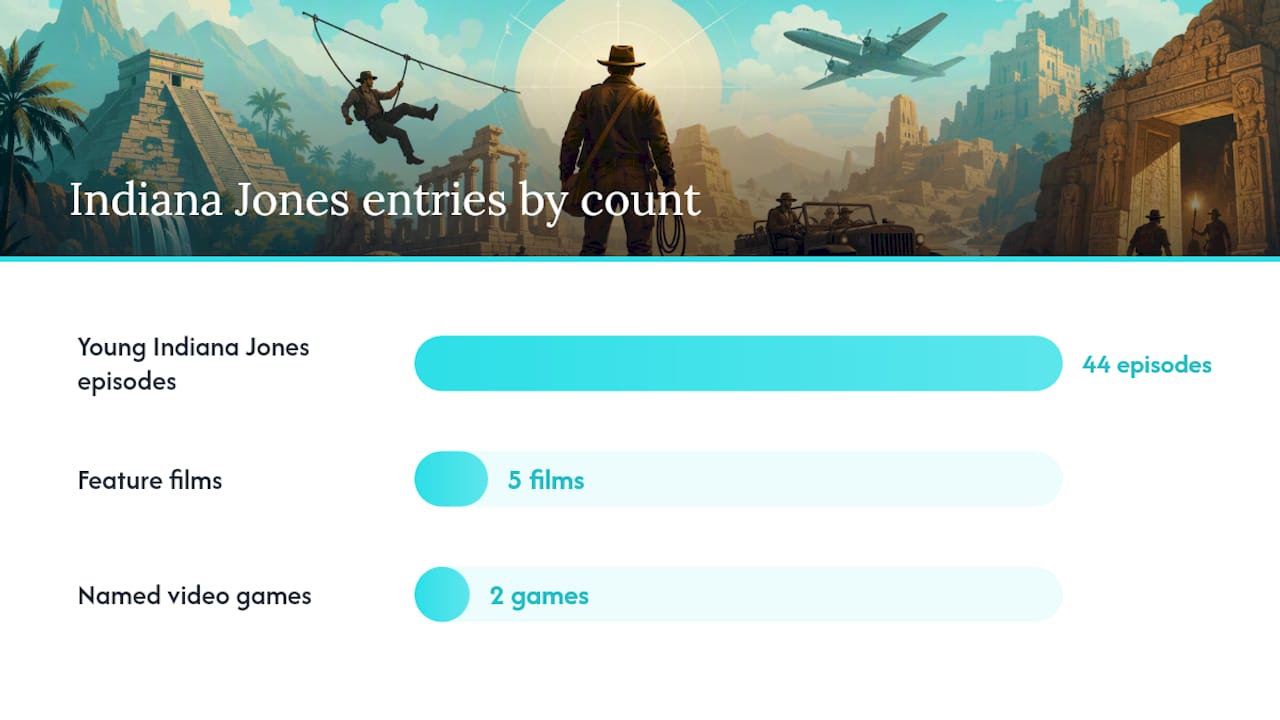
For first-time viewers, it’s optional. The TV series is considered expanded canon rather than required viewing for the feature-film saga. Nothing in the five films requires knowledge of the Chronicles to make sense, and watching 44 episodes of television before you’ve even seen Raiders is a commitment that most viewers won’t find rewarding.
Where other Indiana Jones media fits:
- The Young Indiana Jones Chronicles (TV, 1992–1996): Optional, best saved for after the five films if you want deeper backstory.
- Video games (Indiana Jones and the Fate of Atlantis, Indiana Jones and the Emperor’s Tomb): Non-canonical but fun; treat them as side adventures, not required viewing.
- The Adventures of Young Indiana Jones (DVD feature edits): Edited versions of the TV episodes compiled into feature-length films — a more digestible format if you want the Chronicles without the full episodic commitment.
The TV series breakdowns at Thethingsyoumissed are worth checking after you’ve finished the films if you want to dig into the Chronicles’ hidden references and historical Easter eggs.
Where can you stream the Indiana Jones films right now?
All five Indiana Jones films are available on Disney+ as of early 2026, making it the most convenient single destination for a complete marathon. If you don’t have a Disney+ subscription, individual films are available to rent or purchase through Amazon Prime Video, Apple TV, Vudu, and YouTube.
Current availability at a glance:
- Disney+: All five films, subscription included.
- Amazon Prime Video / Apple TV / Vudu / YouTube: Individual rental or purchase for each film.
- Paramount+: The first four films have appeared on Paramount+ at various points, though availability shifts — confirm before you plan a session.
- Physical media: All five films are available on Blu-ray and 4K UHD for the best picture quality.
Streaming libraries change without notice, so check your preferred platform the day you plan to watch. Disney+ is the safest bet for a complete, uninterrupted run right now.
Practical tips for your Indiana Jones marathon
Start with Raiders of the Lost Ark and don’t skip the opening sequence — that boulder scene is one of cinema’s most restaged famous shots, and it sets the franchise’s entire visual grammar in about four minutes.
A few things worth knowing before you sit down:
- The Temple of Doom tone warning: Tell anyone watching for the first time that Temple of Doom is significantly darker and more violent than Raiders. It earned a PG rating in 1984, but it’s the film that directly prompted the MPAA to create the PG-13 rating. Knowing that going in prevents the tonal shock from souring the experience.
- Prologues and timeline quirks: The Last Crusade opens with a young Indy prologue set in 1912. In a strict chronological viewing, this scene would slot before Temple of Doom. Most viewers should leave it where it is — it works beautifully as a cold open and explains the whip, the hat, and the fear of snakes in one elegant sequence. Moving it disrupts the film’s own rhythm.
- Marathon pacing: The five films run roughly 10.5 hours combined. A two-day split works well: Raiders, Temple of Doom, and Last Crusade on day one (the original trilogy, back to back), then Crystal Skull and Dial of Destiny on day two.
Pro Tip: Keep the Thethingsyoumissed blink-and-miss signage catalog open during your rewatch. The Indiana Jones films are packed with background details and visual callbacks that are easy to miss on a first pass — having a timestamped reference nearby means you catch them without spoiling anything ahead.

Why release order is the only real starting point
Here’s the thing about the chronological-order argument: it treats the Indiana Jones films like a novel series, where reading in publication order versus internal chronology is a genuine debate. These films aren’t that. They were designed as a serialized adventure experience, each one building on the audience’s existing relationship with the character.
Raiders works as well as it does because it drops you into Indy’s world mid-adventure, with no origin story and no hand-holding. That confidence is a creative choice. When Last Crusade reveals the origin of the hat and the whip, the payoff only works because you’ve already spent two films taking those details for granted. Chronological order inverts that logic entirely, and the films lose something real in the process.
The chronological order is a rewatcher’s tool. It’s a way to experience a familiar story from a new angle, not a better way to meet the franchise for the first time.
Catch every Easter egg while you watch with Thethingsyoumissed
The Indiana Jones films are dense with hidden details and visual Easter eggs that most viewers walk right past, even on a rewatch. Thethingsyoumissed catalogs them with timestamps and verified sources, so you know exactly when to pause and what to look for.

The site’s spoiler-safe browsing means you can look up Easter eggs for the film you just finished without accidentally reading ahead into the next one. That’s especially useful if you’re working through the series for the first time and want the hidden-detail layer without the plot spoilers. Browse the movie Easter egg database to start your post-watch deep dive, or submit a request for a breakdown of a specific film you want covered next.
Sources
These are the primary sources used throughout this guide, each worth bookmarking for verification or deeper exploration:
- How to Watch Indiana Jones In Order | Rotten Tomatoes
- How to Watch the ‘Indiana Jones’ Movies in Order | DIRECTV Insider
- How To Watch the Indiana Jones Movies in Chronological Order | The Escapist
- How to watch the Indiana Jones movies in order | Entertainment Weekly
Recommended
- Toy Story 5 Easter Eggs: All 20 Hidden Details & References Explained (2026) — The Things You Missed
- Blink-and-Miss Signage: Every Instance We’ve Catalogued (138 Across 51 Titles) — The Things You Missed
- Ready Player One Easter Eggs: All 18 Hidden Details & References Explained (2018) — The Things You Missed