10 Verified Maverick Easter Eggs, Timestamped and Sourced

Top Gun: Maverick packs intentional callbacks to the 1986 original, built in deliberately by director Joseph Kosinski and the production team. The most surprising discovery is a sampled audio scream, traced by a sharp-eared fan to the original movie’s volleyball scene and confirmed as deliberate by editor Eddie Hamilton. Below, we rank the standout moments and show exactly where each one came from.
TL;DR:
- Over 20 aircraft were used for filming, with the F-14 Tomcat appearing visually but not in active flight due to decommissioning.
- The sampled Slider scream is confirmed to be directly pulled from the original film’s sound mix, verified by editing staff.
- Key callbacks include the opening sequence, “Danger Zone” music, and lines like “Too close for missiles,” all deliberately replicated for nostalgic effect.
- Penny Benjamin’s character expands from a mere mention in 1986 to a full relationship in Maverick, rewarding longtime fans.
- Sound callbacks are subtle but verifiable by matching timestamps, pitch, and cadence, best found with headphones during rewatching.
Table of Contents
- 1. The most-talked-about Maverick callbacks
- 2. Audio Easter eggs: the Slider scream and how to spot sound callbacks
- 3. Character and narrative callbacks: Penny, Rooster, Iceman, and Goose
- 4. Aircraft and production Easter eggs behind the F-14 and Super Hornet
- 5. How The Things You Missed verifies and timestamps these Easter eggs
- 6. Why verified callbacks matter more than nostalgia alone
- Where to rewatch the moments: our verified Maverick entries
- FAQ
- Sources
1. The most-talked-about Maverick callbacks
Rewatching Maverick with these targets in mind turns a familiar film into a scavenger hunt. Some callbacks hit you immediately; others reward a second or third pass.
- Opening sequence recreation: the carrier deck shots, fonts, and Harold Faltermeyer score reuse the 1986 opening almost shot for shot, a structural callback. ScreenRant catalogs as instant nostalgia.
- “Danger Zone” needle drop: the Kenny Loggins track returns at nearly the same emotional beat as the original, bridging two generations of the same ritual.
- Sampled Slider scream: a celebratory yell lifted from the 1986 volleyball scene resurfaces during the beach football game, a detail GamesRadar traced back to fan sleuthing.
- Volleyball becomes football: the shirtless beach game swaps sports but keeps the camaraderie and the bravado intact.
- Piano and “Great Balls of Fire”: Rooster’s bar performance echoes his father Goose’s signature scene, turning a fun callback into a grief beat.
- Penny Benjamin, no longer offscreen: a throwaway line about the admiral’s daughter in 1986 becomes Jennifer Connelly’s full character arc, per the Los Angeles Times.
- Iceman’s photo and tribute: Val Kilnick’s limited screen time is paired with visual nods to the character’s history with Maverick.
- The F-14 Tomcat cameo: Maverick’s old jet appears again, though not in active flight, a detail we unpack below.
- “Too close for missiles, switching to guns”: a near-exact line and cockpit insert lifted from the original, confirmed by Kosinski as an intentional deep cut.
- Buzzing the tower: a brief, blink-and-miss gesture that rhymes with Maverick’s reckless younger self.
2. Audio Easter eggs: the Slider scream and how to spot sound callbacks
The loudest Easter egg in Maverick isn’t visual at all. During the shirtless beach football scene, a triumphant scream plays over the action, and a fan noticed it sounded identical to a shout from the 1986 volleyball scene. The clip made the rounds online, and GamesRadar reported that editor Eddie Hamilton confirmed the sample was pulled directly from the original film’s sound mix, not a coincidence or a soundalike recording.

The discovery earned a direct response from the production, with Tom Cruise reportedly impressed that a viewer caught something buried that deep in the mix.
Fans verified it the way audio detectives always do:
- Lining up both scenes side by side and matching timestamps frame for frame.
- Isolating the audio track to compare pitch and cadence against the original scream.
- Cross-checking social posts and video breakdowns that circulated the comparison clip.
If you want to catch sound-based callbacks yourself, watch with headphones and pay attention to crowd noise, grunts, and ambient effects, since those are the layers filmmakers tend to recycle quietly.
3. Character and narrative callbacks: Penny, Rooster, Iceman, and Goose
Some of Maverick’s best Easter eggs aren’t props or sound bites. They’re character choices that turn old trivia into emotional payoff.
Penny Benjamin existed in 1986 only as a line of dialogue, the admiral’s daughter Maverick was warned to avoid. The sequel builds an entire relationship around her, and the Los Angeles Times frames the choice as one of the film’s smartest long-game references, since it rewards longtime fans without requiring new viewers to have remembered the reference at all. Jennifer Connelly discussed shaping that backstory and reshooting key scenes in an interview with The Hollywood Reporter.
- Rooster’s piano rendition of “Great Balls of Fire” mirrors his father Goose’s performance, reframing a nostalgic needle drop as unresolved grief between Maverick and Rooster.
- Iceman’s limited scenes work as tribute rather than plot device, built around his history with Maverick instead of new conflict.
- Minor visual nods, like a Kawasaki motorcycle and a familiar bar location, round out the catalog that CBR and other outlets have compiled.
4. Aircraft and production Easter eggs behind the F-14 and Super Hornet
Maverick flies an F/A-18 Super Hornet for nearly every active flight sequence, a practical choice since Super Hornets remain in service and were available for the production’s extensive aerial filming. The F-14 Tomcat, Maverick’s signature jet from 1986, appears on-screen but never takes to the air in combat, and Variety’s production reporting explains why: operational F-14s simply were not available, since the jet was decommissioned years before filming began.
- The production assembled more than 20 aircraft for practical flight work, relying on Super Hornets for anything requiring real airborne cameras.
- At least one static F-14 was used as a visual prop rather than a flying asset, a workaround noted in Slashfilm’s coverage of the production.
- Coordinating that scale of flight work involves departments most viewers never think about, which this breakdown of film production roles explains in more general terms.
One cockpit moment stands out as a pure Easter egg rather than a practical necessity. Kosinski copied the original film’s “too close for missiles, switching to guns” line and the matching thumbstick insert, admitting it was never meant to be technically accurate. It is a deliberately fictional “movie” touch built for fans who remember the original beat for beat.
5. How The Things You Missed verifies and timestamps these Easter eggs
Spotting a callback is one thing. Confirming it is deliberate, rather than coincidental, takes a different kind of legwork. We provide every Maverick moment with a timestamp, a visibility and difficulty grade, and a citation back to the interview, press report, or side-by-side comparison that backs it up.
- We timestamp the exact frame or audio cue so you can jump straight to it on a rewatch.
- Every entry links back to its sourced confirmation, whether that’s a director quote or a verified fan comparison.
- Spoiler-safe browsing lets you explore franchise-level catalogs like Star Wars without ruining moments you haven’t reached yet.
Pro Tip: Queue up the scene a few seconds early, mute distractions, and compare the timestamped clip against our cited source before deciding a callback is real rather than a coincidence.
6. Why verified callbacks matter more than nostalgia alone
Callbacks only land when they serve the story, not just the scrapbook. Rooster’s piano scene works because it carries Goose’s death forward into present-tense grief, not because it simply rhymes with 1986. Penny’s arc works because the sequel finally finishes a sentence the original left hanging. Verified, sourced cataloging protects that distinction, giving casual viewers and film analysts alike a shared, checkable record instead of secondhand claims passed around online.
— Christian
Where to rewatch the moments: our verified Maverick entries
We built our movie easter egg catalog specifically so you can track down every callback mentioned here without digging through scattered forum posts or half-remembered interviews. Every Maverick entry carries a timestamp, a sourced citation, and a difficulty grade, so you know whether you’re chasing a detail hardcore fans caught on day one or one that took months to surface.
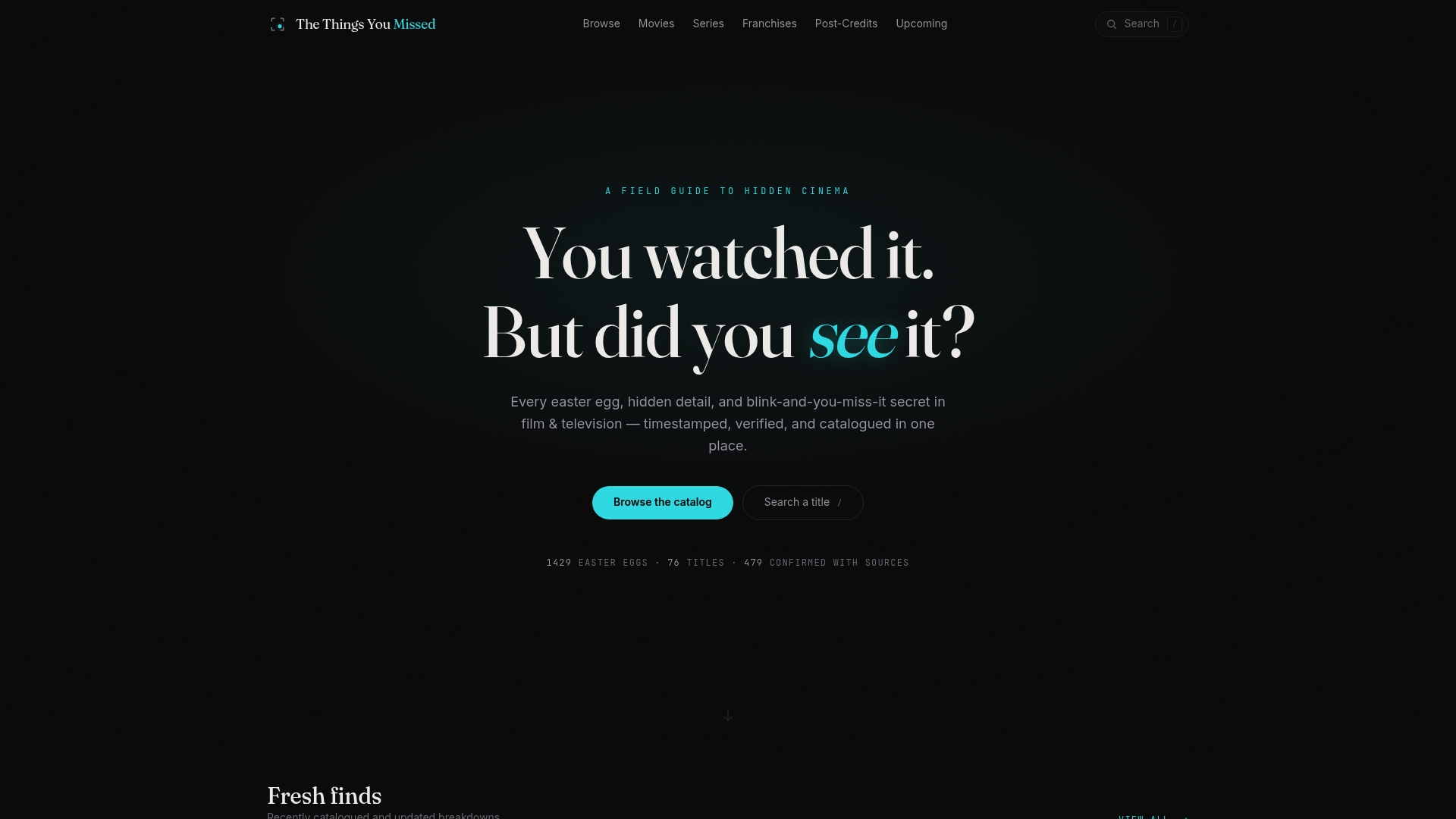
Our catalog also covers franchise-level connections and other recent releases, from post-credit scenes to detail-dense entries like Thunderbolts*.
| What you get | Why it matters |
|---|---|
| Timestamped entries | Jump straight to the exact frame or audio cue |
| Sourced citations | Confirm a callback instead of taking a forum post’s word |
| Spoiler-safe browsing | Explore franchises without ruining what you haven’t seen |
Head to our movies page to pull up every cataloged Maverick moment and start your own hunt.
FAQ
How does Maverick know Penny in Top Gun?
Penny Benjamin is mentioned in the 1986 original only as an admiral’s daughter Maverick was warned against pursuing. Top Gun: Maverick turns that brief reference into a full relationship, casting Jennifer Connelly as the grown character and building a romance around history the original film only hinted at.
What are some famous Easter eggs in movies?
Famous movie Easter eggs typically fall into categories like visual callbacks, reused dialogue, or hidden props tied to earlier films or a director’s other work. Top Gun: Maverick’s sampled audio scream, confirmed by the film’s editor, is a notable recent example of a deep-cut audio Easter egg rather than a visual one.
What are they flying in Top Gun: Maverick?
Pilots fly F/A-18 Super Hornets for nearly all active flight sequences in the film, since the jets remain operational and available for extensive aerial filming, according to Variety’s production reporting. The F-14 Tomcat, Maverick’s jet from the original film, appears on screen but does not fly in active combat scenes.
What did critics say about Top Gun: Maverick’s callbacks?
Reporting from outlets like the Los Angeles Times and ScreenRant framed the sequel’s callbacks as deliberate bridges between generations of fans, recreating the opening sequence and musical cues rather than relying on passing references alone.
Sources
- 17 callbacks to 1986’s ‘Top Gun’ to watch for in ‘Maverick’ - Los Angeles Times
- Top Gun: Maverick fan spotted audio Easter egg that impressed Tom Cruise - GamesRadar
- Top Gun: Maverick Easter Eggs - Every Callback To The Original - ScreenRant
- How Top Gun: Maverick sourced aircraft for production - Variety