Post-Credit Scene Examples and a Timestamped Catalog: Check in Seconds
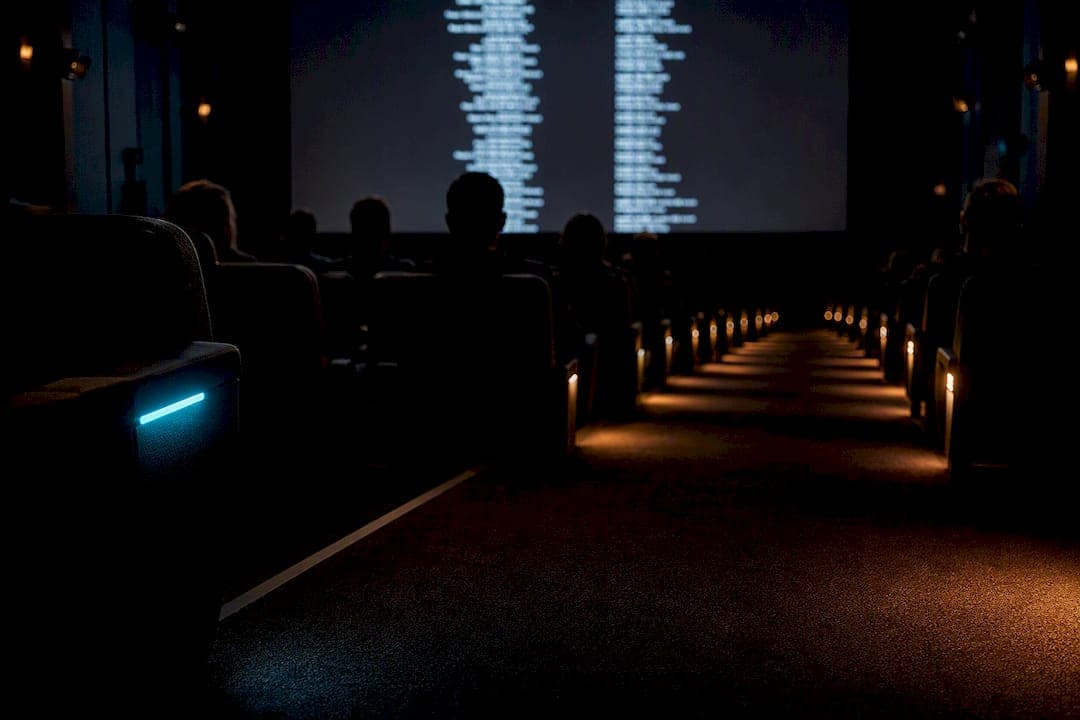
Most modern blockbusters, especially anything connected to a franchise, tack on a short scene after the credits roll, called a stinger or end tag. It usually exists to land a joke, close out a subplot, or tease what’s coming next. Not every film has one, and some carry a mid-credits scene, a post-credits scene, or both. Your safest move is checking a verified catalog before you grab your coat.
TL;DR:
- Nearly all franchise and shared-universe films include post-credits scenes, often for teasing sequels or providing a gag, while standalone films rarely do.
- Mid-credits scenes appear early in the credits and usually last 60 to 90 seconds, whereas post-credits scenes happen after every name and can last five minutes or more.
- Reliable sources like timestamped catalogs or official lists are essential for confirming whether a specific film has a scene and when it occurs, avoiding guesswork or unnecessary waiting.
- Contractual and legal considerations often dictate some scenes, especially cameos or character appearances, rather than creative storytelling choices.
- Checking verified, timestamped sources is the best way to avoid missing a scene, as fan wikis vary in reliability and may omit or misdate key moments.
Table of Contents
- What Post-Credit Scenes Actually Are (And What People Call Them)
- Why Filmmakers Add Them: Teases, Gags, and Closure
- Mid-Credits vs. Post-Credits: Know the Difference Before You Leave
- Notable Post-Credit Scenes Worth Knowing
- How to Check if a Movie Has a Post-Credits Scene
- Why a Verified, Timestamped Catalog Matters More Than a Wiki
- The Legal and Contractual Side Nobody Talks About
- Why We Track Every One of These Scenes
- Check Any Title in Seconds With Our Movies Catalog
- Where This Information Comes From
- Sources
- FAQ
What Post-Credit Scenes Actually Are (And What People Call Them)
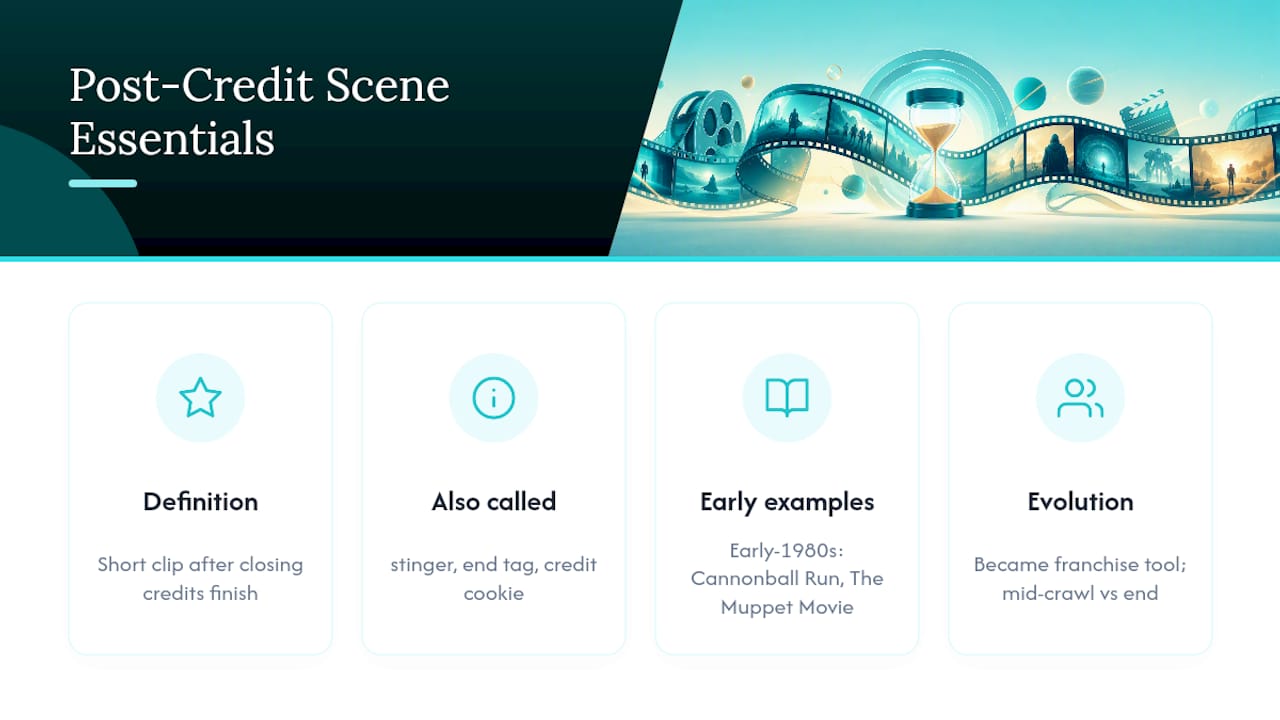
A post-credits scene is a short clip that plays after the closing credits finish scrolling, and fans and industry writers use several interchangeable names for it: stinger, end tag, or credit cookie. Whatever you call it, the function is the same. It’s a small, deliberate reward tucked past the point where most of the audience has already left their seats.
The format is older than most people assume. Comedies from the early 1980s were already toying with the idea of rewarding patient viewers, and two frequently cited early examples are The Cannonball Run, which ran actor blooper outtakes during its credits, and The Muppet Movie, which broke the fourth wall with a closing gag. Neither was setting up a sequel. They were simply having fun with a moment audiences typically ignore.
What changed the format from a novelty into an expectation was the rise of the shared cinematic universe. As studios started building franchises where one film’s ending fed directly into the next film’s premise, the stinger became a structural tool rather than a bonus gag. At the same time, credits themselves got longer. Visual effects houses, stunt teams, and international crews ballooned the crawl to five or six minutes on a tentpole release, and that length created a new problem: how do you reward viewers without demanding they sit through the entire technical scroll? The answer was splitting the difference, placing some scenes mid-crawl and saving others for the very end, a distinction worth understanding on its own.
Why Filmmakers Add Them: Teases, Gags, and Closure
Not every stinger exists for the same reason, and knowing the type usually tells you whether it’s worth the wait.
- The sequel tease. This is the most common modern use, planting a character, location, or object that pays off in a future installment.
- The pure gag. No narrative stakes at all, just a joke that rewards patience, often improvised on set.
- Emotional or narrative closure. A quiet coda that resolves a minor character’s arc or reframes the ending you just watched.
- The contractual cameo. Some actors are signed for a single scene, and studios tuck that appearance into the credits rather than reworking the whole runtime.
That last category surprises people the most. A stinger isn’t always creative. Sometimes it’s the byproduct of a negotiated deal between a studio and a performer’s team, and the scene exists because a contract says it has to. Beyond sequel bait, these scenes can also fulfill obligations tied to cameo clauses, reframe how you’re meant to remember the ending, or hand a small, satisfying moment to a character who never got one during the main runtime.
Whether a movie has one at all often comes down to genre and structure. Franchise entries, superhero films, and anything built around a shared universe carry stingers as a near-default expectation now. Standalone dramas, prestige releases, and most horror films skip them entirely, because there’s no future installment to tease and no shared universe to feed. If you’re watching an original one-off comedy or an awards-season drama, the odds of a scene waiting for you drop sharply. If you’re watching anything with a numeral or a studio logo tied to a bigger franchise, assume there’s a decent chance something’s coming.
Mid-Credits vs. Post-Credits: Know the Difference Before You Leave
The distinction is simple once you see it laid out. A mid-credits scene appears early in the crawl, usually right after the main cast list finishes and before the crew credits begin. A post-credits scene waits until the very end, after every name, thank-you, and copyright notice has scrolled past.
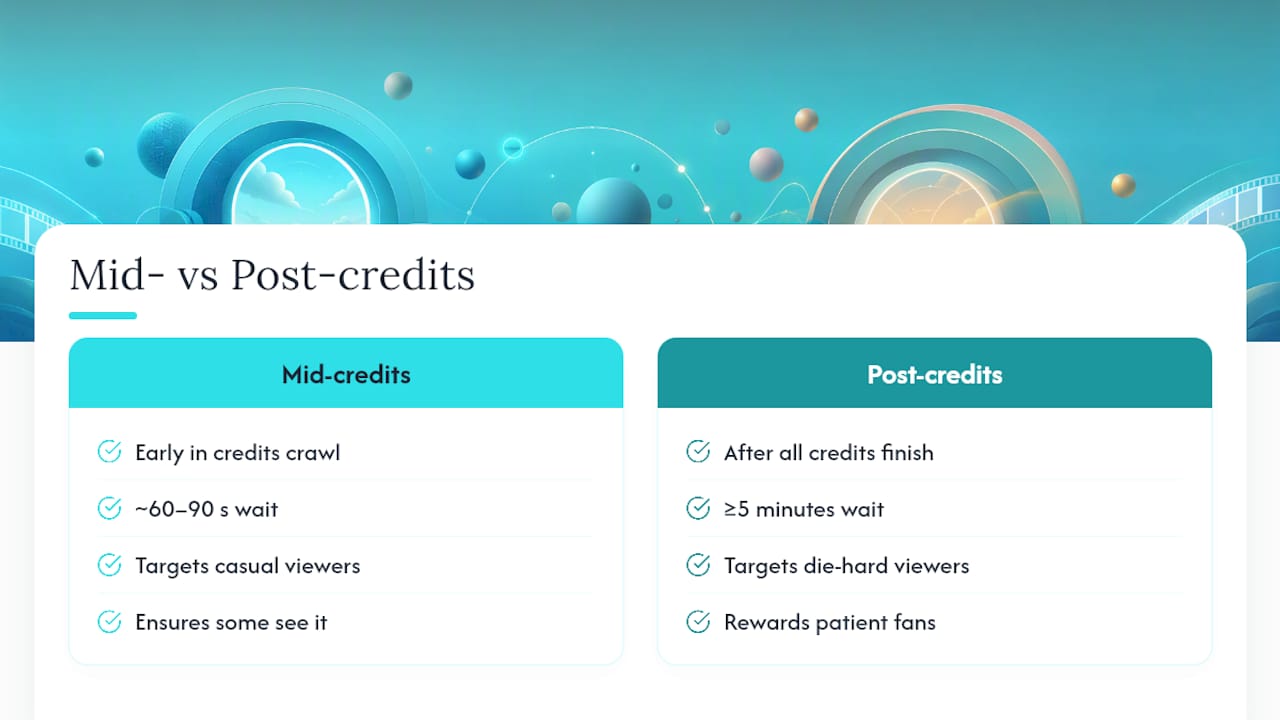
The gap matters for your evening. A mid-credits scene might ask you to sit through 60 to 90 seconds. A true post-credits scene can mean waiting through five minutes or more of technical credits, particularly on a big-budget visual-effects picture. That’s a deliberate production choice. Placing a scene mid-crawl guarantees at least some of the audience catches it without requiring the full sit-through, which is why many modern franchise films use both: a mid-credits beat for the casual viewer who’s already halfway to the exit and a post-credits button for the die-hards who never move.
Marvel Studios popularized this two-tier approach, but it’s spread well beyond superhero movies. Animated franchises and even some horror sequels now split their bonus content the same way, banking on the fact that different segments of the audience have different patience levels.
Notable Post-Credit Scenes Worth Knowing
Some stingers became cultural touchstones in their own right. These examples span decades and mediums, and they explain why checking before you leave the theater became a habit for serious fans.
- Iron Man (2008): Nick Fury’s living room ambush. Samuel L. Jackson steps out of the shadows to tell Tony Stark he’s “part of a bigger universe,” and that single scene retroactively became the founding document of the entire Marvel Cinematic Universe. Nobody watching in theaters that summer knew they’d just seen the first domino fall.
- The Avengers (2012): the shawarma scene. After a citywide battle against an alien invasion, the team sits in near silence eating shawarma at a demolished restaurant. It’s pure gag, zero plot advancement, and it’s still one of the most beloved stingers Marvel ever produced precisely because it let the characters just breathe.
- A Bug’s Life (1998): the blooper reel. Pixar borrowed the live-action gag format and applied it to computer animation, showing its insect cast fumbling lines and flubbing takes as if they were real actors on a real set.
- Toy Story 2 (1999): more outtakes. Pixar leaned into the joke again, running a credits sequence of “bloopers” from its already-finished animated characters, cementing the studio’s habit of using credits as a wink to the audience rather than a narrative tool.
- Finding Dory (2016): a quiet epilogue. Rather than a gag, Pixar used its mid-credits real estate here to check in on a group of rescued sea lions, giving minor characters a small, satisfying send-off instead of a punchline.
- The Muppet Movie (1979) and The Cannonball Run (1981). Both predate the franchise era by decades and prove the format started as comedic filler, not a marketing tool. The Muppets broke the fourth wall for a laugh, while Cannonball Run’s cast simply flubbed lines on camera.
- EarthBound and other video games. The stinger concept crossed mediums early, with post-credits sequences in games like EarthBound used to reveal new story information or plant a hook for what comes next, functioning almost identically to a film’s end tag.
- Mystery Science Theater 3000. The cult television series folded stinger-style bonus material into its own closing segments, showing the format wasn’t locked to film at all.
What ties these together isn’t genre or era. It’s intent. Some scenes exist to set up a decade of future storytelling, and some exist because a group of animators wanted to make you laugh one more time before you stood up.
How to Check if a Movie Has a Post-Credits Scene
You don’t have to guess, and you definitely don’t need to sit through six minutes of visual-effects credits on a hunch. A few reliable moves will tell you in under a minute.
- Search a verified, timestamped catalog first, such as The Things You Missed’s post-credits database, which flags exactly whether a title has one and roughly when it lands.
- Cross-reference against the Wikipedia list of films with post-credits scenes, which is organized by decade for quick lookups.
- Check a specialist ranking or roundup for franchise-specific context, particularly useful for MCU releases where a scene’s cultural impact matters as much as its existence.
- Watch for notes about director’s cuts, festival prints, or streaming versions. A scene present in theaters doesn’t always carry over to a home release, and vice versa.
Pro Tip: If you’re already seated and the credits just started, pull out your phone and search the film’s title plus “post credits” on a verified catalog rather than a general fan wiki. You’ll get a straight yes or no in seconds instead of scrolling through speculation.
Why a Verified, Timestamped Catalog Matters More Than a Wiki
Fan-run wikis, including the Marvel Cinematic Universe Wiki, compile exhaustive lists, but verification quality varies wildly from entry to entry. A timestamped, spoiler-safe catalog closes that gap by confirming exactly when a scene plays and what it contains, without ruining the surprise for someone still avoiding details. An editor who covers this territory built the site’s approach around cross-checking a timestamped entry, a distributor note, and one reputable editorial source before confirming a scene’s presence.
The Legal and Contractual Side Nobody Talks About
Not every stinger is a creative decision. Plenty exist because of a contract, not a script.
Studios negotiating with high-profile actors for a single appearance sometimes structure the deal around one scene, and it’s often cheaper and simpler to shoot that scene as a stinger than to weave the character into the main plot. This is common in shared-universe filmmaking, where an actor’s schedule, salary, or billing terms make a full role impossible but a cameo clause is still worth the price for the marketing buzz it generates.
Distribution agreements complicate things further. A scene cleared for a theatrical release doesn’t automatically carry the same rights for a streaming cut or an international print, and licensing costs for music or a guest actor’s likeness can force a studio to trim a stinger for certain territories. That’s part of why some scenes vary between director’s cuts, festival prints, and streaming versions: the legal paperwork behind the footage isn’t always identical across every version of the film.
Union rules add another wrinkle. Actors’ guild agreements in some regions dictate minimum pay scales tied to a scene’s length or prominence, which occasionally shapes how long a stinger runs or whether it gets trimmed in post-production. None of this is visible to the audience. It’s negotiated months before anyone sees a frame of footage, and it explains why some scenes feel oddly abrupt or strangely brief.
Why We Track Every One of These Scenes
Post-credit scenes reward the kind of attention most viewers stop paying the moment the lights come up, and that’s exactly why they deserve tracking. A scene that plays for ninety seconds can retroactively reframe an entire film, or preserve a joke that would otherwise vanish into a home-video footnote nobody remembers correctly a decade later. Cataloging them with timestamps protects that history and keeps casual viewers from getting spoiled by a vague forum post. Such details are worth getting exactly right.
— Christian
Check Any Title in Seconds With Our Movies Catalog
Guessing whether to wait through the credits, or scrolling through unreliable fan forums, wastes time you could spend actually enjoying the film. Thethingsyoumissed’s movies catalog gives you a direct, timestamped answer instead, built specifically so you never have to sit through six minutes of visual-effects credits on a guess.

The landing page works as a quick lookup tool: search the title, see whether a stinger exists, and get a spoiler-safe note on roughly when it plays without having the actual content spoiled for you. Entries get updated as new releases hit theaters and streaming platforms, so recent titles show up fast rather than months later. It’s one trusted option among several verification methods worth knowing, but it’s built specifically to answer this one question fast. If you’ve got a title in mind right now, search the movies catalog before the credits even start rolling.
Where This Information Comes From
The history, terminology, and franchise details in this piece draw on a handful of consistently reliable references worth bookmarking yourself.
- The Wikipedia entry on post-credits scenes for definitions, terminology, and historical context.
- The Wikipedia list of films with post-credits scenes, organized by decade for fast lookups.
- Slashfilm’s ranking of the best Marvel post-credits scenes for franchise-specific analysis and cultural context.
Sources
- Post-credits scene — Wikipedia
- List of films with post-credits scenes — Wikipedia
- 10 Best Marvel post-credits scenes, ranked — Slashfilm
FAQ
What are post-credit scenes for?
They tease sequels, deliver a final joke, close out a minor character’s arc, or fulfill a contractual cameo obligation, and which purpose applies usually depends on whether the film belongs to a larger franchise.
Which movies have scenes that play after the credits?
Franchise and shared-universe films carry them most consistently, with the Marvel Cinematic Universe as the clearest modern example, though the format goes back to comedies like The Cannonball Run and The Muppet Movie. Check a verified catalog for any specific title rather than assuming.
Does Fantastic Four have a scene during or after the credits?
This varies by specific release and cut, so the safest move is checking a timestamped entry for that exact title rather than relying on general franchise assumptions, since Marvel properties don’t uniformly include one on every release.
Did the Stranger Things finale have a post-credit scene?
Streaming series handle this inconsistently release to release, and confirming it requires checking a specific, up-to-date entry for that episode rather than assuming a TV finale follows film conventions.
Do all movies have post-credit scenes?
No. Standalone dramas, most horror films, and awards-season releases typically skip them entirely, while franchise and shared-universe entries include them far more often.