The Things You Missed

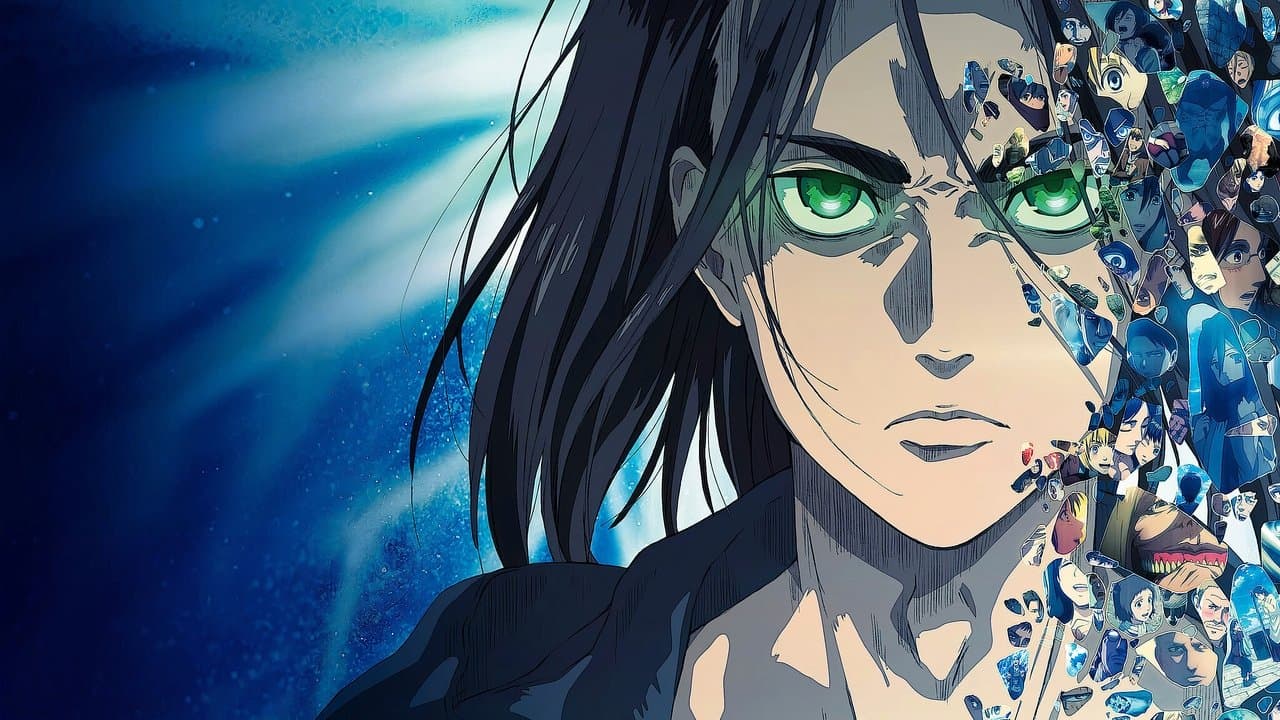
Attack on TitanEaster Eggs & Hidden Details

Isayama hid the ending in plain sight from episode 1 — in Eren's dream, a basement key, and Titans painted into the credits.

2013 · Series · 4 seasons · Hajime Isayama

20 eggs catalogued1 confirmed1 post-credit sceneupdated 2026-08-10

The short version

Attack on Titan (2013) hides 20 catalogued easter eggs and hidden details, 1 of them confirmed by official sources. Standouts include falco is jesse pinkman — per isayama himself, gabi was modeled on arya stark and the victim-to-aggressor arc was locked from day one. Every entry below includes where to look, a spotting difficulty, and sources.

Every egg on this page

  1. Eren's Opening Dream Is a Transmission From the Future
  2. The Episode 1 Title Is Addressed Across Two Millennia
  3. The Basement Key and 'The Most Important Thing of All'
  4. The Smiling Titan Kept a 20-Year-Old Promise
  5. 'Grisha, Today Your Son Became a Soldier'
  6. The Camera Cuts to Reiner When the Armored Titan Comes Up
  7. Eren Vents Shifter Steam Six Episodes Early
  8. The Classroom Lecture That Explains the Whole Endgame
  9. Three Cadets React Way Too Fast to the Rogue Titan
  10. The Second Opening Turns the Traitors Around
  11. The 'great escape' Credits Are a Spoiler Mural
  12. Annie Presents Marco's ODM Gear as Her Own
  13. Eren's Unfinished 'A—' Names the Female Titan
  14. 'Smile' Opens With Annie Styled as the Female Titan
  15. The Season 1 Post-Credits Stinger: A Face in the Wall
  16. Season 2's Ending Credits Quietly Teach the True History of the World
  17. The Series Title Was the Name of Eren's Titan All Along
  18. Gabi Was Modeled on Arya Stark
  19. Falco Is Jesse Pinkman — Per Isayama Himself
  20. The Victim-to-Aggressor Arc Was Locked From Day One

Rewatching Attack on Titan is watching a different show. The first time through, Season 1 plays as survival horror; the second time, it plays as a confession, because Hajime Isayama locked in his ending before he had even named his characters — and the anime's staff planted it everywhere. Eren's very first scene is a dream stuffed with flash-frames of deaths that won't happen for years, and he wakes from it asking Mikasa why her hair is suddenly long — because in the dream he had just seen the short-haired Mikasa of his final days.

The famous tells are famous for a reason: the camera cutting to Reiner the instant Eren mentions the Armored Titan, the drill sergeant who silently addresses Eren's dead father by name, and the great escape ending credits, which literally paint a chain of Titans inside the Walls a full season before the show admits they're there. But the vault goes deeper — down to a classroom lecture that lists every rule the endgame will exploit, and a post-credits stinger most viewers switched off before seeing.

Below are 20 documented eggs in broadcast order, from episode one's time-bending title to the Final Season characters Isayama confirmed he built out of Breaking Bad and Game of Thrones. Verification labels separate what's on the record from what the community pieced together frame by frame.

The full catalog

Your hunt

Tick off what you spotted

0 / 20 spotted

Tap the circle on a card when you catch one.

Type
Status
Difficulty

Eren's Opening Dream Is a Transmission From the Future

S1E1
ForeshadowingHidden Detail Community ConsensusFreeze Frame

WHERE TO LOOK · Cold open, before the title card — pause through the dream montage as Eren naps under the tree

Spoiler:

The series opens inside Eren's dream, and the anime hides literal flash-frames of the future in it: Wall Maria falling, his mother's death, and members of Levi's squad lying dead in a forest they won't enter for another twenty episodes. When Eren wakes he is crying without knowing why and asks Mikasa, 'When did your hair get so long?' — her hair is short in the dream, the way she wears it years later. The show is telling you in its first minute that Attack Titan memories flow backward as well as forward: the 'dream' is Eren receiving his own future.

The Episode 1 Title Is Addressed Across Two Millennia

S1E1
ForeshadowingMeta Community ConsensusDeep Cut

WHERE TO LOOK · The episode title card itself

Spoiler:

The very first episode is called 'To You, 2,000 Years From Now' — a title with no referent anywhere in Season 1. It only resolves roughly 80 episodes later, when Ymir Fritz, the girl who gained the Titan power 2,000 years ago, is revealed as the founder of everything; the addressee is the person who finally reaches her across those two millennia. The manga closes the loop with Chapter 122, pointedly titled 'From You, 2,000 Years Ago.' Season 1 even name-drops the number: Dot Pixis describes the royal bloodline as 'unbroken for 2,000 years.'

The Basement Key and 'The Most Important Thing of All'

S1E1
Foreshadowing Community ConsensusSecond Watch

WHERE TO LOOK · Grisha and Eren's doorstep conversation before Grisha leaves for his house call

Spoiler:

Grisha Jaeger guards the family basement with an intensity that reads as parental quirk on first watch and as desperation once you know he has glimpsed the future through the Attack Titan. When Eren asks when he'll finally get to see it, Grisha answers that he'll show him once Eren understands 'the most important thing of all.' The key then hangs around Eren's neck for three seasons before the payoff in 'The Basement' (S3E19): a false-bottomed drawer, three journals preserved with peppermint oil and charcoal, and a photograph proving a whole world exists beyond the Walls.

The Smiling Titan Kept a 20-Year-Old Promise

S1E1
CallbackForeshadowing Community ConsensusDeep Cut

WHERE TO LOOK · The Smiling Titan lifting Carla at the collapsed Jaeger house; recontextualized by S3's 'That Day'

Spoiler:

The Smiling Titan that eats Carla Jaeger in episode 1 is the show's cruelest long game. Season 3 Part 2 reveals she is Dina Fritz — Grisha's first wife, turned into a mindless Titan by Marley after the Eldian Restorationists were betrayed. Her last human words to Grisha were a promise to find him 'no matter what form I take.' She keeps it: of every street in Shiganshina, her Titan walks to his house and destroys his second family. What plays as random horror in episode 1 is, on rewatch, a straight line drawn from Grisha's buried past directly into Eren's defining trauma.

'Grisha, Today Your Son Became a Soldier'

S1E3
ForeshadowingBehind the Scenes Community ConsensusSecond Watch

WHERE TO LOOK · The cadet initiation rite — note who Shadis skips, and his voiceover when he reaches Eren

Spoiler:

As Keith Shadis hazes the fresh cadets, he pointedly skips Reiner, Annie, Bertholdt and the others who have already 'seen hell' — a quiet sorting of who has real combat trauma. Then, when Eren finally passes his ODM aptitude test, Shadis' internal monologue slips: 'Grisha... today your son has become a soldier.' First-time viewers have no reason to think the drill instructor knows Eren's father. Season 3 reveals Shadis was the Survey Corps' 12th commander and the man who found Grisha wandering outside Wall Maria — meaning the person who trained Eren had been orbiting the Jaeger family's secret for two decades.

The Camera Cuts to Reiner When the Armored Titan Comes Up

S1E3
ForeshadowingHidden Detail Community ConsensusSecond Watch

WHERE TO LOOK · Mess-hall dinner — watch the cutaways while Eren describes the Colossal and Armored Titans

Spoiler:

In the episode 3 mess-hall scene, cadets press Eren about the Titans he saw at Shiganshina. The instant he mentions the Armored Titan that broke Wall Maria, the shot cuts to Reiner, listening intently with his back half-turned. It's pure visual grammar — the animators pointing at the culprit two seasons before 'Warrior.' The same dinner gives Bertholdt his cover story about a destroyed home village (actually the Warriors' infiltration alibi) and Reiner his vow to 'return to my homeland' — which everyone hears as a razed village inside Wall Maria and which actually means Marley, across the sea.

Eren Vents Shifter Steam Six Episodes Early

S1E3
ForeshadowingHidden Detail Community ConsensusFreeze Frame

WHERE TO LOOK · After Eren's upside-down ODM failure; again in Trost (E5) after his injury

Spoiler:

Titan shifters vent steam as their bodies regenerate, and Eren does it on camera well before anyone says the word 'shifter.' In episode 3 he collapses during ODM aptitude training — blamed on a faulty harness — and faint steam rises off him as he recovers, his body already knitting itself back together. It happens again during the battle of Trost when he loses a leg to a Titan. The show files it under 'weird background detail' both times; on a rewatch it's a flashing sign that the boy swearing to kill every Titan is already becoming one.

The Classroom Lecture That Explains the Whole Endgame

ForeshadowingBehind the Scenes Community ConsensusDeep Cut

WHERE TO LOOK · Classroom flashback during the Trost arc — the teacher's rundown of Titan biology

Spoiler:

A classroom flashback lays out everything wrong with the official story of the Titans: they show no way of reproducing, they don't actually need to eat, and yet they devour humans anyway — while ignoring animals. Every 'anomaly' on the chalkboard is a clue. Titans are made from humans; they don't reproduce because they're manufactured; and mindless Titans eat people because each one is blindly searching for a shifter to consume so it can become human again. The lecture is the show handing you the rules of its endgame in Season 1 and betting, correctly, that you'll shrug.

Three Cadets React Way Too Fast to the Rogue Titan

S1E8
Foreshadowing Community ConsensusSecond Watch

WHERE TO LOOK · Rooftop exchange with Connie during the Trost retreat; the trio's sprint after the cannonball transformation

Spoiler:

When Eren's rogue Titan starts wrecking other Titans in Trost, Reiner corners Connie with an oddly specific question — how much does he actually know about that Titan? — because a Titan attacking its own kind can only mean one thing to someone who is secretly a shifter himself. Reiner and Annie then push to 'secure' the abnormal rather than flee. And when Eren later transforms in front of the garrison to block a cannonball, Reiner, Annie and Bertholdt are the first to move toward him. Three cadets out of a hundred react instantly, and they're exactly the three who need to know who the new shifter is.

The Second Opening Turns the Traitors Around

Hidden DetailForeshadowing Community ConsensusFreeze Frame

WHERE TO LOOK · OP2 (episodes 14-25), the fast cadet montage — track Reiner, Bertholdt and Annie's head turns

Spoiler:

The second opening, 'Die Flügel der Freiheit,' includes a rapid-fire sequence showcasing the surviving 104th cadets. Watch which way everyone faces: Reiner, Bertholdt and Annie are animated turning to look in the opposite direction from their classmates. It's a blink-and-miss composition choice that quietly sorts the infiltrators from the loyalists — months of broadcast time before Annie's unmasking, and years before Reiner and Bertholdt's. Opening sequences in this show are never decoration; the storyboards knew exactly who was facing Marley.

The 'great escape' Credits Are a Spoiler Mural

Hidden DetailForeshadowing Community ConsensusDeep Cut

WHERE TO LOOK · ED2 (episodes 14-25) — pause on the wall murals and the character placement on each side

Spoiler:

Season 1's second ending sequence, set to 'great escape,' hides the series' biggest secrets in its artwork. A wall splits the cast: Eren, Mikasa, Armin, Jean, Sasha and Connie stand on one side; Annie, Reiner, Bertholdt, Ymir and Historia — every character concealing an identity — on the other. The wall art itself includes a paper-doll chain of humanoid figures: the Colossal Titans standing inside the Walls, teased a full season before that reveal. Behind Mikasa sits a praying mantis, the insect famous for beheading its mate — exactly how her story with Eren ends. Most of it was only decoded after the finale aired.

Annie Presents Marco's ODM Gear as Her Own

S1E16
ForeshadowingCallback Community ConsensusSecond Watch

WHERE TO LOOK · The ODM gear inspection line — Armin's lingering look at Annie's equipment

Spoiler:

During the post-Trost equipment inspection, Armin notices something about the gear Annie hands over: it isn't hers. It's Marco Bodt's — taken from him when the Warriors silenced him — swapped in to hide what Annie's own gear had been used for. The anime shows Armin's glance without underlining it, and he says nothing at the time. It becomes the keystone of his trap in Stohess: when he finally confronts Annie, he cites the gear, along with the fact that the Female Titan spared his life in the field, as the moment he began to suspect her.

Eren's Unfinished 'A—' Names the Female Titan

S1E21
Foreshadowing Community ConsensusSecond Watch

WHERE TO LOOK · Eren vs. the Female Titan in the forest — his last line before decapitation

Spoiler:

In the Forest of Giant Trees, Eren finally fights the Female Titan himself — and loses. As she squares up to finish him, he starts a single word: 'A—.' He never completes it, because she takes his Titan's head off mid-syllable. Eren has just recognized her stance: the exact hand-to-hand posture Annie drilled into him during training. It's a one-syllable confession that part of him already knows who's inside, two episodes before Armin says it aloud. The following episode twists the knife — as Levi and Mikasa cut Eren free, the defeated Female Titan sheds tears.

'Smile' Opens With Annie Styled as the Female Titan

S1E23
Hidden DetailForeshadowing Community ConsensusFreeze Frame

WHERE TO LOOK · The cold open in the cadet barracks — Annie at her bunk, hair loose

Spoiler:

Episode 23, 'Smile,' opens with Annie waking in her bunk with her hair down — and for a few seconds she is framed and lit so that her resemblance to the Female Titan is unmistakable: same hooded eyes, same jawline, same blonde fall of hair. The episode performs its reveal silently in the first minute, then spends the rest of its runtime building to Armin, Mikasa and Eren cornering her in the underground passage. Even the episode title is a tell, mirroring the small, broken smile Annie gives before she transforms in the capital.

The Season 1 Post-Credits Stinger: A Face in the Wall

S1E25
Hidden DetailForeshadowing Community ConsensusPlain Sight

WHERE TO LOOK · After the full ending credits of the season finale

Spoiler:

Season 1 doesn't end when the credits roll on episode 25. After the ending theme, chunks of Wall Sina's surface — cracked during Annie's attempted escape up the Wall — crumble away, and a colossal Titan's face stares out from inside the structure itself. It's the season's only true post-credits scene, and it detonates the show's foundational mystery: the Walls humanity hides behind are made of the very monsters it hides from. The manga plays this moment with Mikasa present; the anime deliberately holds it until after the credits as a parting shock.

Season 2's Ending Credits Quietly Teach the True History of the World

Hidden DetailForeshadowingMusic Secret Community ConsensusDeep Cut

WHERE TO LOOK · The ending credits throughout Season 2 (episodes 26-37) — pause on each sepia painting

Spoiler:

The Season 2 ending, 'Yuugure no Tori,' plays over sepia, storybook-style paintings that look like mood-setting decoration — and are actually a complete history lesson the show won't deliver for years. The sequence depicts a lone girl who gains the Titan power, armies crushed by giants, Titans wading in from the sea, and — most chilling once you know — three daughters made to consume their mother's remains: Ymir Fritz's story, King Fritz's exploitation of her power beyond death, and the wars that built the Eldian Empire. Fans treated it as abstract art in 2017; after Season 4's revelations it reads as the entire mythology, aired in plain sight during the credits.

The Series Title Was the Name of Eren's Titan All Along

S3E21
MetaBehind the ScenesForeshadowing Community ConsensusFreeze Frame

WHERE TO LOOK · Kruger and Grisha at the riverside — Kruger names the Titan he is passing on

Spoiler:

'Shingeki no Kyojin' doesn't actually translate to 'Attack on Titan' — it reads closer to 'the advancing giant,' and for five years that looked like an awkward localization. Then, in Season 3's 'Attack Titan' (S3E21), Eren Kruger hands Grisha his power and names it: the Attack Titan — Shingeki no Kyojin. The show had been titled after Eren's own Titan since day one, meaning every episode opened with a spoiler nobody could read yet. The English title accidentally buried the pun, which is why Japanese-speaking fans caught the title drop instantly while much of the West needed it explained.

Gabi Was Modeled on Arya Stark

S4E1
ReferenceBehind the Scenes Community ConsensusWhite Whale

WHERE TO LOOK · Gabi's debut in 'The Other Side of the Sea' — the railway gambit at Fort Slava

Isayama built Gabi Braun from a specific template: Arya Stark. Speaking at Anime NYC, he said the Final Season's most polarizing character was fashioned after Game of Thrones' young wolf — a scrappy, lethally capable kid whose childhood is consumed by a war she didn't start. Isayama has said that while drawing the Marley arc he was 'really into TV shows like Game of Thrones and Breaking Bad,' and Gabi's arc — indoctrination, revenge, and the slow unlearning of both — is his Arya study transplanted into Liberio.

Falco Is Jesse Pinkman — Per Isayama Himself

S4E1
ReferenceBehind the Scenes ConfirmedWhite Whale

WHERE TO LOOK · Falco's debut in 'The Other Side of the Sea' — dragging Gabi to cover under fire

Falco Grice is Breaking Bad's Jesse Pinkman in a Warrior cadet uniform, and that's not fan theory — Isayama revealed the inspiration himself in a blog post, later reaffirmed at Anime NYC. The parallel tracks cleanly: a soft-hearted kid trapped inside a brutal system, apprenticed to people who weaponize his decency, who keeps his conscience while everything around him rots. Isayama's admitted binge of prestige American TV during the Marley arc quietly shaped the entire Final Season ensemble.

The Victim-to-Aggressor Arc Was Locked From Day One

Behind the ScenesMeta Community ConsensusWhite Whale
Spoiler:

'This was pretty much there from the beginning — the story that starts with the victim who then goes through this story and becomes the aggressor. That is something I had in mind right from the get-go.' That's Isayama on record, describing how Eren's turn from wronged boy to world-ending force predates nearly everything else in the series — he plotted the destination before naming his characters. He has also said his original ending was even bleaker, modeled on the gut-punch finale of The Mist, before he pulled back out of responsibility to readers. Season 1's absurd foreshadowing density isn't luck; the map was drawn before the journey.

Is there a post-credit scene in Attack on Titan?

Yes — Attack on Titan has 1 post-credit scene. Attack on Titan normally runs next-episode previews after its credits, but the Season 1 finale (episode 25) hides a genuine post-credits stinger: damaged sections of Wall Sina crumble away to reveal a colossal Titan's face embedded inside the Wall — the hook for every mystery the show unpacks from Season 2 onward.

Frequently asked

+How many easter eggs are in Attack on Titan?

This guide documents 20 easter eggs and foreshadowing details across Attack on Titan, with Season 1 supplying most of them — Eren's prophetic dream, the loaded episode-one title, Reiner's mess-hall tell, and the 'great escape' credits that paint Titans into the Walls a season early. One is confirmed by creator Hajime Isayama in his own posted words — Falco being modeled on Jesse Pinkman. Gabi's Arya Stark template and the planned-from-day-one ending reach us only through secondhand write-ups, so they sit at community level. Fans keep finding more with every rewatch.

+Does Attack on Titan have a post-credits scene?

One that matters: the Season 1 finale, episode 25. After the ending credits, pieces of Wall Sina — damaged during the Female Titan fight — crumble away and reveal a colossal Titan's face inside the Wall itself. It confirms the Walls are built from Titans and sets up the Wall cult's secrecy, Season 2's opening crisis, and ultimately the Rumbling. Regular episodes only carry previews, so this stinger is easy to miss.

+Did Hajime Isayama plan the Attack on Titan ending from the beginning?

Yes. Isayama confirmed in interviews that the core arc 'was pretty much there from the beginning: the story that starts with the victim who then becomes the aggressor.' He plotted the destination before naming his characters, which is why Season 1 can seed the basement, the Titans in the Walls, and Eren's future memories so precisely. He did adjust the tone — his original ending was darker, inspired by the film The Mist, before he softened it.

+What does 'To You, 2,000 Years From Now' mean in Attack on Titan?

The first episode's title is addressed across two millennia. Ymir Fritz gained the Titan power roughly 2,000 years before the series begins, and the story ends with her finally being released from it. Pixis even cites the royal line as 'unbroken for 2,000 years' in Season 1. The manga mirrors the title in Chapter 122, 'From You, 2,000 Years Ago,' confirming episode one was labeled for the ending all along.

+Who is the Smiling Titan that ate Eren's mother?

Dina Fritz — the first wife of Eren's father Grisha and the last royal-blooded Eldian living in Marley. After the Eldian Restorationists were betrayed, Marley turned her into a mindless Titan on Paradis. Her final human promise was to find Grisha 'no matter what form I take,' and as a Titan she walked to his house in Shiganshina and killed his second wife, Carla. The reveal in Season 3 Part 2 recasts episode 1 entirely.

Last updated 2026-08-10 · Spotted something we missed? Tell us.