Chekhov's Gun: 3 Canonical Literary Plants, 5 Screen Payoffs Verified
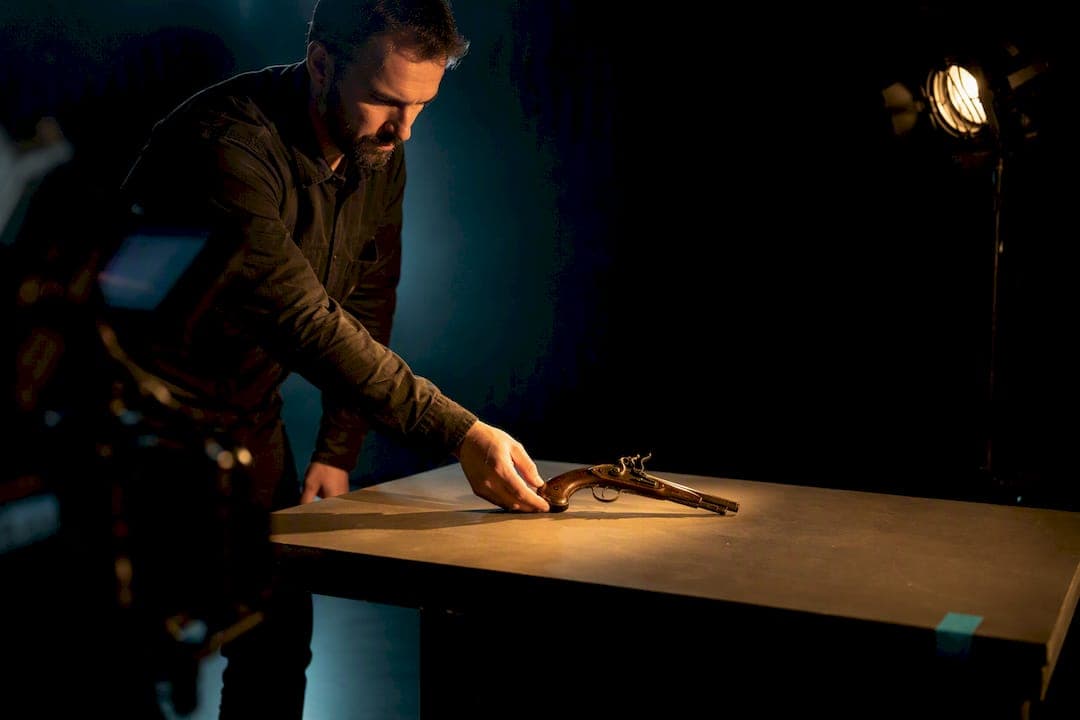
Chekhov’s gun is the storytelling rule that every meaningful detail a writer plants must matter later. The name comes from a rifle hanging on a wall: show it in act one, and it has to fire by the final act, or don’t show it at all. The device matters because it protects the deal every story makes with its audience: pay attention, and that attention gets rewarded. Verified, timestamped examples cataloged on specialized sites make the pattern easy to see across film and television.
TL;DR:
- Many details planted early in stories, movies, or TV shows must pay off later to satisfy audience expectations and avoid narrative clutter.
- Classic examples include the pistol in Chekhov’s play, the poisoned blade in Hamlet, and the lightning strike flyer in Great Expectations, all used with deliberate timing.
- Visual storytelling makes it easier to spot setups in film and TV, with objects or cues often lingering before their eventual, meaningful use.
- Writers should track and plan every emphasized detail, ensuring each one clearly answers a question or creates a payoff, especially in long-form narratives.
- Deliberate misdirection, such as red herrings or thematic delays, can break or subvert the rule, but unfulfilled setups weaken story coherence.
Table of Contents
- What Chekhov’s Gun Explained by the Playwright Himself Means
- Chekhov’s Gun Definition in Action: Canonical Literary Examples
- Chekhov’s Gun in Film and TV: Modern Screen Examples
- When Writers Break the Rule on Purpose
- How to Use Chekhov’s Gun: A Checklist for Writers
- Chekhov’s Gun vs. MacGuffin vs. Red Herring
- Verifying Setups and Payoffs Without Spoilers
- A Working Writer’s Take on Restraint
- Find Your Own Setups and Payoffs
- Sources
What Chekhov’s Gun Explained by the Playwright Himself Means
Anton Chekhov summed up the principle himself: “One must never place a loaded rifle on the stage if it isn’t going to go off.” He meant it literally, as stage advice. Theater sets are expensive and limited, so anything on stage should earn its place. Over time, critics and teachers stretched that carpentry note into a general law of narrative structure: don’t introduce anything that promises significance and then abandon it.
The generalization stuck because it names something readers and viewers feel intuitively. A gun on the wall, as Britannica frames it, is a promise that every element in a story should be necessary, and irrelevant elements should be cut. That idea reshaped how writers think about economy in narrative structure. Three implications follow directly from Chekhov’s original phrasing:
- A promise to the audience. Draw attention to a detail, and you’ve made an implicit commitment to use it.
- Narrative economy. Cutting anything that doesn’t serve the plot or theme keeps a story tight instead of cluttered.
- Payoff timing. The gap between setup and payoff can be a scene or an entire season, but it has to close eventually.
Chekhov’s Gun Definition in Action: Canonical Literary Examples
The clearest examples of foreshadowing come from the writers who established the pattern before anyone had a name for it. Each case below shows exactly where the setup lands and where the payoff detonates.
- The Seagull. Chekhov’s own play gives the purest version of the device: a pistol appears early, tied to Konstantin’s despair, and its later use closes the story with the inevitability the setup demanded. This is the literal example the term is named after.
- Hamlet. Shakespeare plants the poisoned blade and the poisoned cup well before the final duel. The audience registers both as threats in earlier scenes, so when Claudius’s plan collapses on itself at the climax, the deaths feel earned rather than random.
- Great Expectations. Dickens introduces Magwitch as a frightening convict in the marshes within the opening chapters, then reveals him, more than halfway through the novel, as the secret benefactor behind Pip’s fortune. The early scene reads as color and threat until the reveal turns it into structure.
Each example follows the same shape: an early, specific detail; a long middle section where it seems to matter for one reason; a late scene where it detonates for a different, bigger reason. Reedsy’s breakdown of literary examples makes the same point about how deliberately these details get seeded well before their purpose becomes clear.
Chekhov’s Gun in Film and TV: Modern Screen Examples
Screenwriters lean on this device constantly, and the visual medium makes it even easier to spot once you know what you’re looking for. StudioBinder’s analysis of setup and payoff frames it as insurance against a deus ex machina: plant the solution early, and the ending feels inevitable instead of convenient.
- Signs. M. Night Shyamalan’s camera lingers on abandoned glasses of water throughout the film, an odd detail that reads as texture until the alien’s vulnerability turns them into the climax’s entire mechanism.
- Back to the Future. The flyer advertising the clock tower’s lightning strike gets planted early as a throwaway historical curiosity. It becomes the only viable power source to send Marty home, timed to the minute.
- Breaking Bad. Walter White’s ricin cigarette and the box cutter both get planted scenes ahead of their payoffs, sometimes across different seasons entirely, which shows how far apart a setup and its detonation can sit in serialized television.
- Shaun of the Dead. The rifle mounted above the bar in the Winchester pub is a background joke for most of the film, until the zombie siege turns it into the one tool that actually matters.
- Ready Player One and The Hunger Games widen the definition beyond literal weapons. A coin given early in Ready Player One becomes a decisive currency at the climax, and survival skills Katniss learns almost in passing become the difference between life and death in the arena.
NoFilmSchool’s catalog of these examples is a good next stop if you want more screen breakdowns, and Thethingsyoumissed’s weapons easter egg archive timestamps several literal gun setups across film so you can verify the beat yourself without spoiling the rest of the movie.
Pro Tip: When you rewatch a film looking for Chekhov’s gun, mute your instinct to focus on dialogue. The setup is usually visual: an object the camera holds on a beat longer than the scene requires.
When Writers Break the Rule on Purpose
Not every unfired gun is a mistake. Red herrings are a deliberate cousin of this device: a writer plants a detail that looks like a setup specifically to mislead the audience, then resolves the real payoff elsewhere. That’s misdirection by design, which is different from an accidentally broken promise where a detail simply gets forgotten.
Chekhov himself broke his own rule in The Cherry Orchard, where certain details are left thematically unresolved rather than mechanically fired. Wikipedia notes that some of his own plays intentionally leave guns unfired as a deliberate thematic choice rather than an oversight, which suggests the rule was never meant as an absolute.
Modern films push this further through outright subversion:
- Kiss Kiss, Bang Bang toys with audience expectations by planting an obvious setup, then redirecting the payoff somewhere the audience didn’t anticipate.
- A skilled subversion plants multiple plausible payoffs, then resolves one thematically rather than literally, which surprises the audience without breaking the story’s internal logic.
How to Use Chekhov’s Gun: A Checklist for Writers
Here’s a compact process for making sure every setup earns its payoff, and every payoff has a setup behind it.
- Mark every detail you emphasize. If the camera lingers, or the prose slows down to describe something, flag it as a potential promise.
- Decide the payoff before you draft the scene. Know what question the detail answers before you write the moment it pays off.
- Avoid over-highlighting. A detail that gets three callouts before it matters tips off the audience too early; one clean plant is usually enough.
- Separate atmosphere from setup. Not everything needs to fire. Background texture that never gets a spotlight moment doesn’t carry the same promise as an object the story stops to notice.
- Run the editor’s test on every emphasized detail. Ask: what question does this answer at the payoff moment? If you can’t answer that, cut the emphasis or cut the detail.
Setups don’t have to pay off in the same scene, or even the same act. NoFilmSchool’s citation notes that television plants can stretch across an entire season before the payoff lands, so plan long-form promises deliberately rather than hoping you’ll remember them in the finale.
Pro Tip: Keep a single running document listing every setup you plant while drafting, alongside where you intend to pay it off. It’s the fastest way to catch an accidental unfired gun before an editor does.
Chekhov’s Gun vs. MacGuffin vs. Red Herring
These three devices get confused constantly, but they do different jobs. A MacGuffin is an object the plot chases without needing to matter thematically. A red herring is a deliberate false lead planted to mislead. Chekhov’s gun is a detail that must resolve meaningfully, whether that resolution is literal or thematic.
Three mistakes show up often in early drafts:
- Planting without paying off. The remedy is simple: cut the emphasis, or write the payoff scene.
- Over-signaling a payoff. Trim repeated callbacks to the same detail before the reveal.
- Confusing decoration with promise. If cutting the detail changes nothing, it was atmosphere, not a gun.
Verifying Setups and Payoffs Without Spoilers
Studying these patterns firsthand beats taking someone’s word for it. Thethingsyoumissed’s database timestamps setups and payoffs across movies and indexes recurring motifs, all through spoiler-safe browsing. For class citations or craft study, that gives you a verified moment to point to instead of a vague memory of “that scene with the water glasses.”

A Working Writer’s Take on Restraint
The device works best as discipline, not decoration. The habit worth building is simple: log every setup in one running list before revision, then check each one against its payoff. That single habit catches more dangling promises than any amount of instinct.
— Christian
Find Your Own Setups and Payoffs
Some platforms exist for exactly the moment you finish a movie and think, “wait, was that a setup?” Entries in catalogs can be timestamped and verified, allowing you to jump straight to the plant, then the payoff, without wading through spoilers for the rest of the plot.
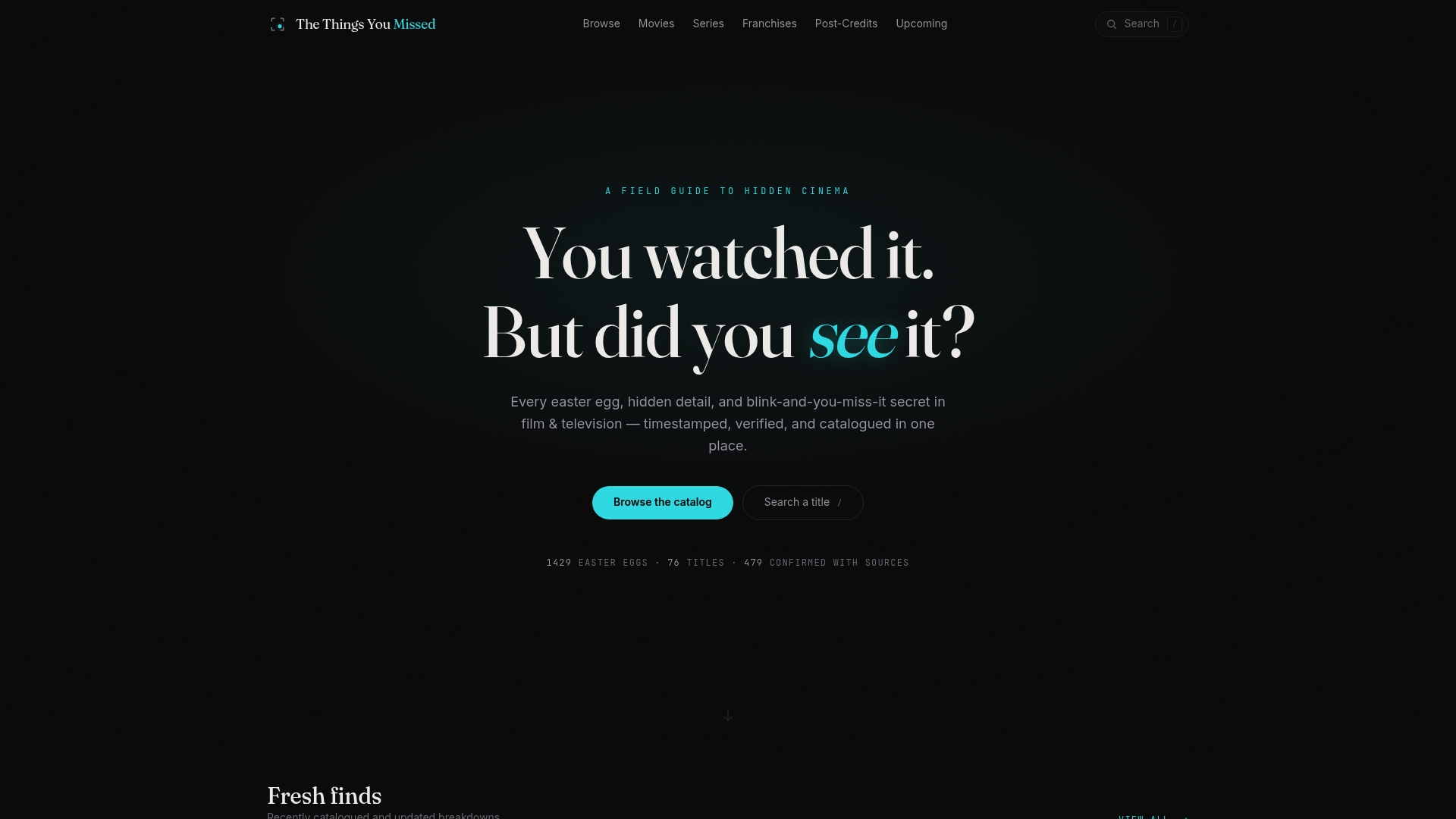
Browse the movie easter egg archive to check a specific title, or dig through recurring motifs if you’re studying how a pattern like this shows up across multiple franchises. Either page gets you straight to the timestamp you need for your next essay, video, or rewatch.
Sources
- Chekhov’s Gun | Definition, Uses, & Examples | Britannica
- Chekhov’s gun: setup and payoff in screenwriting | StudioBinder
- What Is Chekhov’s Gun? Definition and Examples for Screenwriters | NoFilmSchool