Doctor Who Easter Eggs: 20 Blink-and-Miss References Explained
A Doctor Who Easter egg is a deliberate reference, prop, line, or visual callback that production or writers bury in a scene for viewers paying close attention. Some are continuity glue for the show’s own sixty-plus-year timeline. Others are winks at outside franchises, or writer-specific in-jokes that only make sense once you know who scripted the episode.
The standouts are the ones fans still argue about years later. The Day of the Doctor stitches its 50th anniversary special directly to the black-and-white 1963 pilot. Remembrance of the Daleks contains a gag suggesting Doctor Who exists as a broadcast show inside its own universe. Blink hides its scares in the background, not just the foreground. The Season 14 finale assembles a “Memory TARDIS” stuffed with hundreds of props from six decades of history. And Rogue, from 2024, uses a guest star to quietly reshape what counts as canon.
This piece runs through those and more, episode by episode, with the scene context, the timestamp where one’s available, and why each one matters to the show’s larger lore. Expect production-verified details, not fan speculation dressed up as fact.
- The Day of the Doctor: Totter’s Lane, Ian Chesterton signage, broadcast-date callbacks
- Remembrance of the Daleks: the announcer gag that breaks the fourth wall
- Blink: Weeping Angels hidden in plain sight, background details in almost every frame
- The Season 14 Memory TARDIS: a curated props trove built for pause-and-scan viewing
- Rogue: Richard E. Grant’s appearance and its effect on perceived canon
- Face the Raven: a Back to the Future poster hiding in the background
Key Takeaways
Doctor Who Easter eggs work because production teams deliberately layer continuity hooks, writer-specific winks, and out-of-universe homages into scenes built for repeat viewing.
| Point | Details |
|---|---|
| Three egg types exist | In-universe continuity hooks, out-of-universe homages, and writer-specific winks each require a different kind of attention. |
| The Day of the Doctor anchors to 1963 | Totter’s Lane and Ian Chesterton signage tie the 50th anniversary special directly to the original pilot episode. |
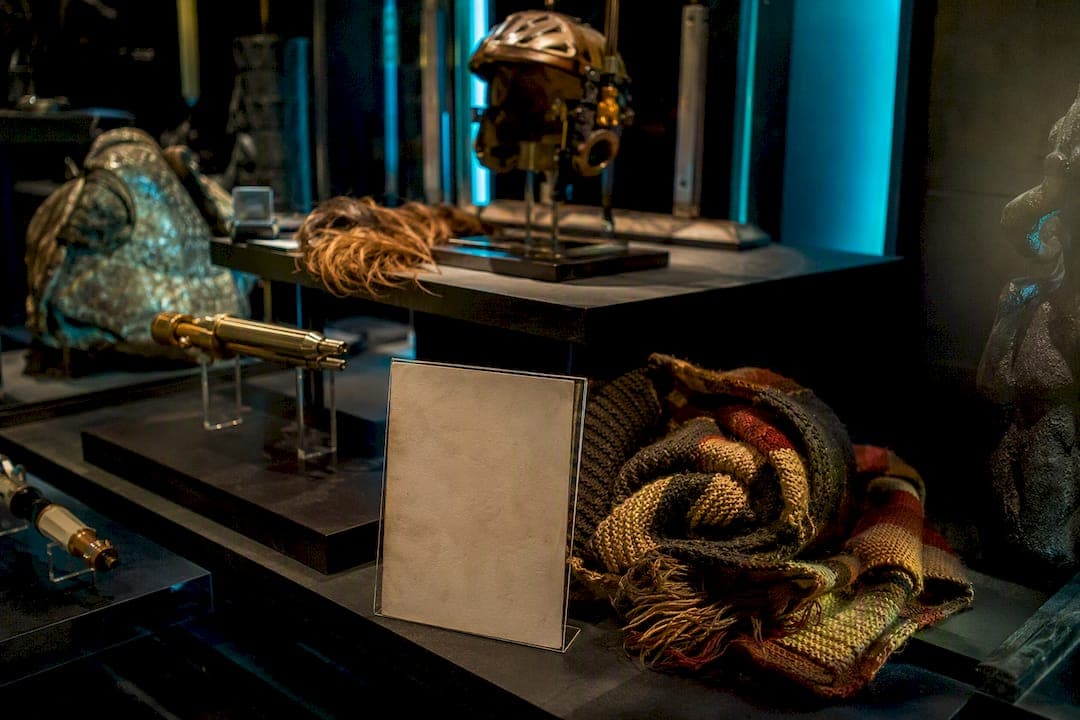
| The Memory TARDIS rewards freeze-framing | Hundreds of props, including Tom Baker’s scarf, were curated specifically for pause-and-scan viewing. |
| Guest casting can reshape canon | Richard E. Grant’s role in Rogue retroactively folded an earlier non-canon performance into the show’s mythology. |
| Verified databases beat guesswork | Thethingsyoumissed offers timestamped, spoiler-safe entries for Doctor Who and other long-running series. |
Table of Contents
- What Counts as a Doctor Who Easter Eggs?
- Notable Doctor Who Easter Eggss, Episode by Episode
- Why Certain References Keep Coming Back
- Inside the Memory TARDIS: A Deep Dive Into the Props Trove
- How to Spot Doctor Who Easter Eggss Yourself
- Frequently Asked Questions
- Sources
What Counts as a Doctor Who Easter Eggs?
Not every reference qualifies as an Easter egg. A returning monster is just a returning monster. What separates a true Easter egg is intent paired with subtlety: something a writer, director, or props supervisor planted specifically for viewers who already know the show cold.
Doctor Who references break into three rough categories. In-universe continuity hooks link back to the show’s own sixty-plus years of episodes, comics, and spinoffs. Out-of-universe homages nod to other franchises, from Star Wars to Back to the Future, without touching Doctor Who’s internal mythology. Writer-specific winks are the fingerprints a particular scriptwriter leaves across their tenure, visible only if you’ve tracked their other episodes. All three types show up below, and knowing which is which changes how you read a scene.

Notable Doctor Who Easter Eggss, Episode by Episode
This is the core list: sequenced examples from the classic era through the most recent specials, each with what to look for and why it matters.
-
An Unearthly Child (1963) tributes in The Day of the Doctor (2013). The 50th anniversary special recreates the junkyard at Totter’s Lane, the exact setting where the very first episode began. A sign reading “I. Chesterton” nods to Ian Chesterton, one of the First Doctor’s original companions, and the police box interior briefly echoes the black-and-white lighting of the 1963 pilot. RadioTimes cataloged several of these callbacks, noting how thoroughly the anniversary episode ties itself to the show’s literal beginning rather than a generic “classic era” gesture. This is an in-universe continuity hook aimed squarely at fans who know the first serial’s shooting locations by heart.
-
The announcer gag in Remembrance of the Daleks (1988). Buried in this Seventh Doctor serial is a radio broadcast referencing “a program” that sounds suspiciously like Doctor Who itself, implying the show exists as fiction within its own fictional universe. It’s a meta-reference decades ahead of its time, and it complicates the show’s internal logic in a way writers still tiptoe around. This one is a writer-specific wink, since only a handful of scripts ever risk touching the fourth wall this directly.
-
Background details in Blink (2007). Steven Moffat’s most acclaimed episode hides its best material in the margins. The Weeping Angels themselves are the obvious trick, statues that only move when unobserved, but the episode also plants throwaway details in DVD Easter egg menus and background graffiti that reward a second viewing. Fans still debate whether every angel in every background shot was intentional, which is part of why Blink remains the reference point for “hidden details in Doctor Who” discussions.
-
The Cloisters of Gallifrey in Hell Bent (2015). This Twelfth Doctor finale sets its final act in the Cloisters beneath the Time Lord capital, a location dense with visual references to Gallifreyan history and past villains. Sharp-eyed viewers spotted design cues connecting the space to earlier Time Lord architecture from the classic series, turning a single set into a rogues’ gallery of continuity nods rather than a plain sci-fi corridor.
-
Clara’s mother’s death date in The Rings of Akhaten (2013). A quiet character beat rather than a monster reveal: Clara references a specific date tied to her mother’s death, a detail that pays off two episodes later when the timeline becomes plot-relevant. It’s a subtle continuity hook, easy to miss on first watch, that rewards fans who track dates the way other viewers track costume changes.
-
John Smith’s parents in Human Nature / The Family of Blood (2007). When the Tenth Doctor becomes human, his fabricated backstory includes parents named as a quiet tribute, a small detail that longtime writers on the show have used to honor real people connected to Doctor Who’s production history. It’s easy to scroll past in the dialogue, but it’s the kind of writer-specific touch that turns a throwaway line into a genuine tribute.
-
The flux-capacitor poster in Face the Raven (2015). Somewhere in the background of this Twelfth Doctor episode sits a poster referencing the flux capacitor from Back to the Future, a pure out-of-universe homage with zero bearing on the plot. It exists for the split second a pause button catches it, which is exactly the kind of detail Blink-and-Miss Signage exists to catalog across shows beyond just this one.
-
The library card in Vampires of Venice (2010). The Doctor flashes identification throughout the show’s history, and in this Matt Smith episode, one version of his library card lists William Hartnell, the actor who originated the role in 1963, as a prior cardholder. It’s a joke that only lands if you already know Hartnell’s face, making it one of the show’s cleverer nods to its own casting history.
-
Richard E. Grant and Rogue (2024). Grant had played a version of the Doctor before, in the non-canon 2003 animated special Scream of the Shalka. Rogue brings him back in a different role, and the episode’s structure and dialogue arguably fold that earlier performance into the show’s broader mythology. CultBox reported that the episode effectively reframes Grant’s Doctor as canon, an unusual case of a guest appearance retroactively expanding the show’s own lore rather than just referencing it.
-
Showrunner callbacks in Joy to the World (2024). The 2024 Christmas special weaves in nods to previous showrunners’ scripts and set-dressing choices from earlier Christmas episodes, a tradition the show leans on every December. Mashable’s breakdown documented several of these homages, from visual callbacks to dialogue that echoes earlier festive specials, tying the newest special to a decade and a half of Christmas Day tradition.
-
The Memory TARDIS in the Season 14 finale. Rather than a single hidden object, the finale builds an entire set piece: a corridor stuffed with props spanning the show’s history. It functions less like a single Easter egg and more like a whole field of them, which is why it gets its own deep dive below.
-
“Galvanic radiation” in The Well (Season 15). A single piece of technical jargon does the work here. The phrase links directly back to the Season 4 story Midnight, and ScreenRant’s analysis noted that the repeated terminology functions as a deliberate breadcrumb rather than coincidence, tipping off attentive viewers to the connection well before the episode confirms it outright.
-
The Sutekh stowaway thread. Across a full season, subtle visual and audio cues suggested a presence hiding inside the TARDIS itself. Den of Geek’s reporting traced how these clues were seeded episode by episode, long before the payoff, showing that not every Easter egg lives in a single freeze-frame. Some are built to unfold over months.
Every one of these rewards a second look, and that’s really the throughline: nothing here is required to enjoy the episode once. It’s all built for the rewatch.
Why Certain References Keep Coming Back
Doctor Who’s writers don’t scatter references randomly. Certain motifs recur across decades because specific people keep placing them, and once you know the pattern, you start spotting it everywhere.
- Bad Wolf ran across the entire 2005 season as two words hidden in signage, dialogue, and graffiti before paying off as the season finale’s central mystery.
- Dalek graffiti appeared as background set dressing across Series 1, a visual in-joke for anyone scanning the walls instead of the actors.
- Slade’s “Merry Xmas Everybody” turns up across multiple Christmas specials as a musical motif, tying otherwise unconnected holiday episodes together.
- Reused props, like specific TARDIS console pieces, migrate between eras as a quiet nod to the show’s production continuity.
Steven Moffat’s episodes tend to build continuity loops that only fully resolve seasons later, Blink and its Weeping Angels being the clearest example of a self-referential structure he returned to repeatedly. Russell T Davies, by contrast, leans on frank homage: resurrecting classic-era concepts and giving them modern payoffs rather than burying them in subtext.
Out-of-universe homages work differently from either. Doctorwho the show’s Star Wars nods, including the Resolution special’s title card mimicking the famous opening crawl. These carry no weight for the show’s internal mythology. They’re a wink to viewers who watch more than just Doctor Who, distinct from a continuity hook that actually changes how you understand the Doctor’s own history.
Inside the Memory TARDIS: A Deep Dive Into the Props Trove
The Season 14 finale didn’t hide one Easter egg. It built a room full of them. The Memory TARDIS is a set piece stuffed with props, costume fragments, and set dressing pulled from across the show’s history, assembled specifically to reward viewers who pause and scan rather than just watch.
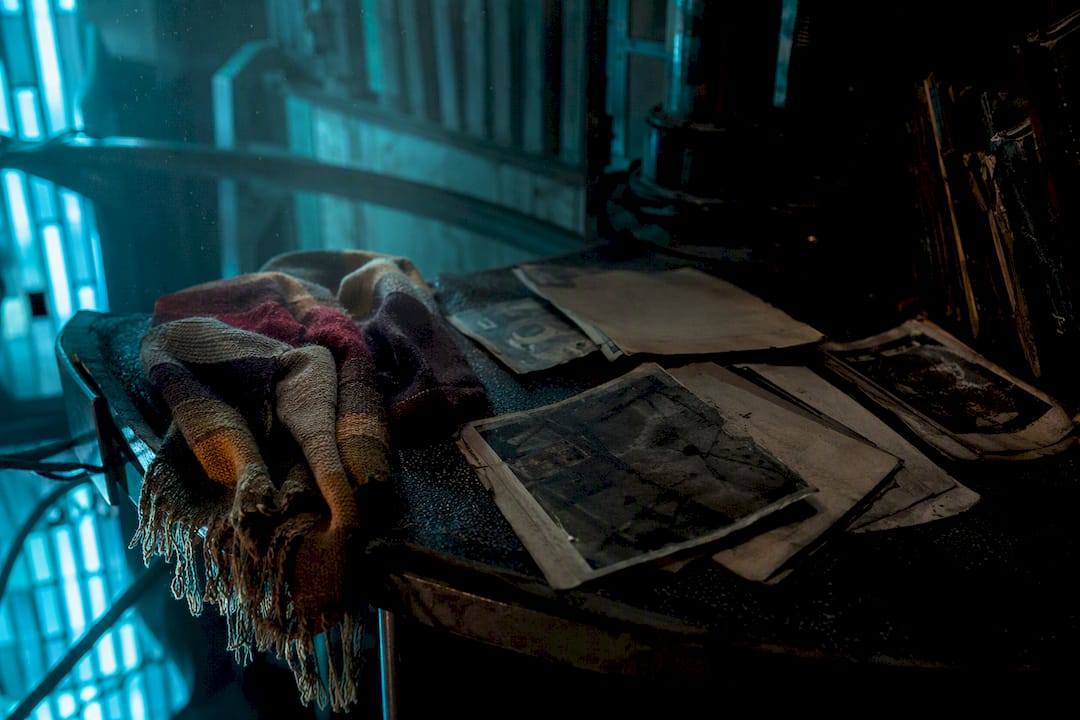
ScreenRant explained that production teams packed the set with hundreds of specific items, from Tom Baker’s iconic scarf to Tenth Doctor psychic paper to a missing poster for Rose Tyler. None of it advances the plot in the moment. All of it exists purely for long-term viewers who know what they’re looking at.
| Prop | Original Era / Doctor | Where It Appears |
|---|---|---|
| Tom Baker’s scarf | Fourth Doctor | Season 14 finale, Memory TARDIS set |
| Psychic paper | Tenth Doctor | Season 14 finale, Memory TARDIS set |
| Missing poster (Rose Tyler) | Ninth/Tenth Doctor era | Season 14 finale, background set dressing |
| Sonic screwdriver variants | Multiple Doctors | Displayed across Memory TARDIS shelving |
Collider’s coverage of the Memory TARDIS tour, featuring Bonnie Langford and script editor Scott Handcock walking through the set, confirmed several of these items directly from the production side rather than fan speculation. That kind of on-set verification is rare, and it’s exactly why the sequence functions as such a dense Easter-egg field.
The Memory TARDIS tour with Bonnie Langford and Scott Handcock walked through specific props one by one, confirming their origins directly from the people who built the set rather than leaving fans to guess.
A single freeze-frame on that set can surface three or four references at once, which is part of why it’s become one of the most screenshotted sequences in the modern era.
How to Spot Doctor Who Easter Eggss Yourself
Finding these on your own comes down to habits more than luck. A few techniques consistently pay off:
- Pause on any scene with background signage. Newspapers, posters, and street names hide more than dialogue ever will.
- Listen for throwaway lines delivered fast, especially names, dates, or technical jargon repeated from earlier seasons.
- Freeze-frame prop closeups, particularly library cards, psychic paper, and console readouts.
- Track recurring music cues across specials. A repeated song often signals a deliberate callback, not coincidence.
- Check writer credits before rewatching. Knowing which writer scripted an episode tells you which motifs to expect.
Fan wikis and timestamped databases do the heavy lifting once you’re ready to verify a hunch rather than guess at it. The Things You Missed’s TV series hub breaks these down episode by episode with verified timestamps, which beats scrubbing through a fifty-minute episode on your own.
Pro Tip: Set-dressing homages hide most often in the first thirty seconds of a scene, before the camera settles on the main actors. Directors tend to let background details breathe briefly before dialogue takes over, so that opening beat is your best window.
Why This Rewatch Project Matters to Me
I’ve spent enough time freeze-framing Doctor Who episodes to know that half the fun is the hunt, not just the reveal. Every entry above got cross-checked against production interviews or reputable reporting before it made this list, because a fan theory dressed up as fact does nobody any favors.
If you’ve spotted something that didn’t make this list, or you’ve got a cleaner screenshot than what’s floating around online, The Things You Missed takes reader submissions for timestamps and captures. Every entry in the database gets verified before it goes live, spoiler-safe browsing included.
Never Miss Another Doctor Who Reference Again
Scrolling through forum threads to confirm whether that background prop was intentional wastes a rewatch you could spend actually enjoying the episode. Thethingsyoumissed built its database specifically to skip that step: every entry is timestamped, verified against production sources, and organized so you can browse by episode without stumbling into spoilers for a season you haven’t finished.

The TV series Easter eggs hub covers Doctor Who alongside other long-running shows, broken down episode by episode with frame captures instead of vague descriptions. If cross-franchise homages caught your interest, the Star Wars Easter eggs catalog covers the other side of those references in the same format. Start with the Doctor Who entries, bookmark the ones you want to verify on your next rewatch, and check back weekly since new episodes get added to the database as they air.
Frequently Asked Questions
What’s the difference between a Doctor Who Easter egg and a regular callback? A callback can be as simple as a returning monster or catchphrase. An Easter egg is subtler by design, something placed specifically to reward viewers who already know the show’s history, often hidden in background signage, props, or a single line of dialogue.
Are Doctor Who cameos always tied to continuity? No. Some cameos, like Richard E. Grant’s turn in Rogue, directly affect canon. Others are purely out-of-universe fun, like the Star Wars nods documented by DoctorWho.tv, with zero bearing on the show’s internal timeline.
What’s the best episode to start with for spotting hidden details? Blink remains the gold standard for background detail density, but The Day of the Doctor rewards fans specifically familiar with the 1963 pilot, and the Season 14 finale’s Memory TARDIS sequence packs more references into a single set than almost any other episode in the show’s history.
Where can I find verified timestamps instead of guessing? Thethingsyoumissed’s TV series hub catalogs Doctor Who alongside other shows with timestamped, spoiler-safe entries verified against production sources rather than fan speculation.
Sources
These are the primary sources behind this rundown, useful if you want to verify a detail yourself or dig deeper into a specific episode.
- Richard E. Grant Doctor is made canon in Doctor Who episode Rogue - CultBox
- Doctorwho
- 10 Doctor Who Easter eggs even die-hard fans might have missed | RadioTimes
- Did You Notice All These Easter Eggs in the ‘Doctor Who’ Season 14 Finale? | Collider
- Doctor Who’s TARDIS stowaway has been hiding in plain sight | Den of Geek
Thethingsyoumissed builds on this reporting with timestamped, frame-by-frame verification, so you can confirm a detail without rewatching an entire episode yourself.
Recommended
- 28 Years Later Easter Eggs: All 20 Hidden Details & References Explained (2025) — The Things You Missed
- Black Mirror Easter Eggs: All 18 Hidden Details & References Explained (2011) — The Things You Missed
- TV Series Easter Eggs — Every Show, Episode by Episode — The Things You Missed
- Thunderbolts* Easter Eggs: All 20 Hidden Details & References Explained (2025) — The Things You Missed