The Things You Missed

28 Years LaterEaster Eggs & Hidden Details

A 1915 chant lifted from the film's own trailer, Olivier's Henry V archers, a Shell sign missing its S, and 5,500 cast skulls.

2025 · Film · 115 min · Danny Boyle

20 eggs catalogued10 confirmed? 1 theoriesno post-creditsupdated 2026-08-10

The short version

28 Years Later (2025) hides 20 catalogued easter eggs and hidden details, 10 of them confirmed by official sources. Standouts include the story only exists because of the last of us, the alpha wore a prosthetic to protect a 13-year-old and olivier's henry v archers loose their arrows beside spike's. Every entry below includes where to look, a spotting difficulty, and sources.

Every egg on this page

  1. The Film's Most Famous Sound Was Stolen From Its Own Trailer
  2. Olivier's Henry V Archers Loose Their Arrows Beside Spike's
  3. The Teletubbies Keep Playing While the Children Are Killed
  4. The Hymn the Island's Children Sing Played Over Jim's Dead Parents
  5. Godspeed You! Black Emperor Come Back After 23 Years
  6. The Petrol Station Sign Reads HELL
  7. Erik Restages the Benzene Rescue From the First Film
  8. Spike Packs Apples Because Frank Explained Why in 2002
  9. The Crow at the Corpse Is How Frank Died
  10. Twenty iPhones on a Ring Rig Made a 'Poor Man's Bullet Time'
  11. The 2.76:1 Frame Was Found by Accident on the Sensor
  12. Dr Kelson Is a Deliberately Inverted Colonel Kurtz
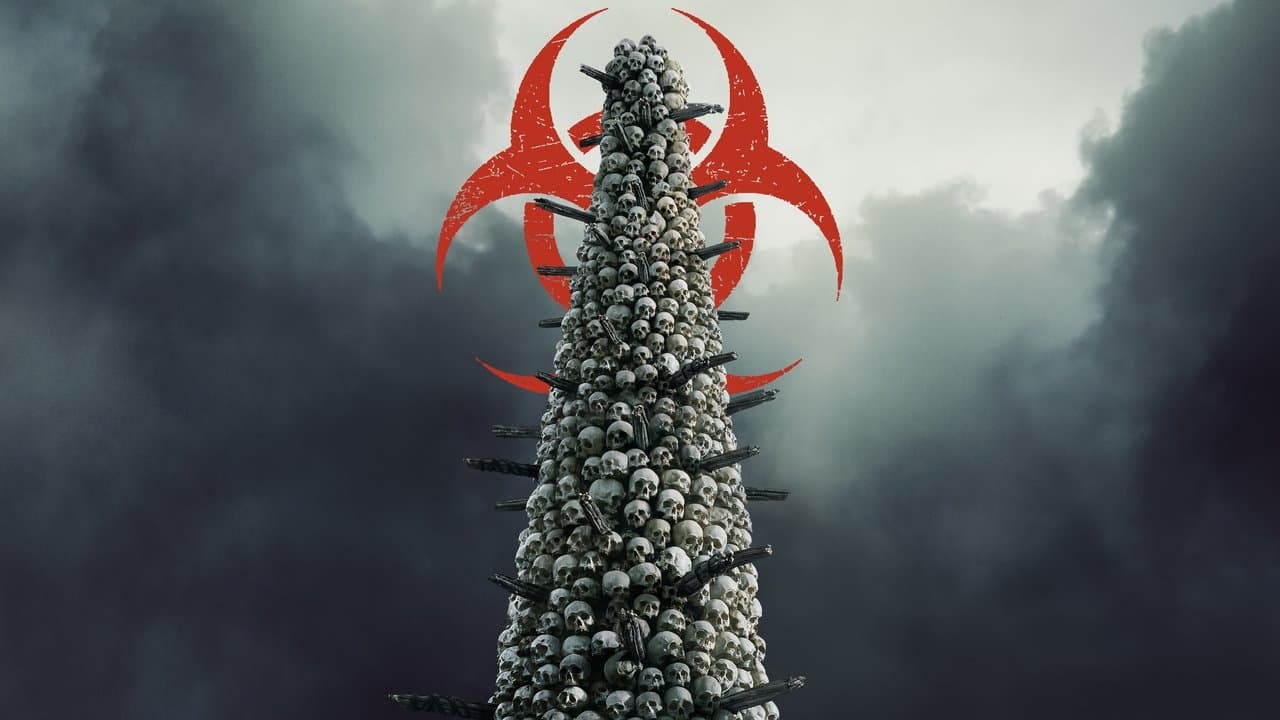
  13. Kelson's Temple Is 5,500 Cast Skulls and 250,000 Bones
  14. Single-Frame Symbols in the Trailer Spelled a Password
  15. Sir Jimmy Crystal Is Dressed as Jimmy Savile
  16. The Cult Leader Is the Boy From the First Five Minutes
  17. Every 'Jim' in the Film Is Bait for a Cillian Murphy Fake-Out
  18. The Story Only Exists Because of The Last of Us
  19. The Alpha Wore a Prosthetic to Protect a 13-Year-Old
  20. Isla's Name Is the Island, and the Baby Inherits It

The most frightening sound in 28 Years Later was recorded in 1915. It is the voice of American actor Taylor Holmes reciting Rudyard Kipling's Boer War poem "Boots"foot-foot-foot-foot-sloggin' over Africa — repeated until the words stop being language and start being a pulse. It is not in Alex Garland's screenplay. Danny Boyle heard it on a teaser Sony's marketing agency had cut without him, and he has described the reaction plainly: "Alex and I remember it vividly… we were like, 'Fucking hell!'" The recording went into the finished film, replacing the St Crispin's Day speech from Henry V that Boyle had been planning to use in the same sequence. A trailer, in other words, wrote one of the movie's defining scenes.

That single decision explains why this film rewards a second pass more than almost any other 2025 release. Boyle and Garland were not making a zombie sequel so much as an argument about national memory, and they buried the argument in the texture. The montage that plays under Kipling intercuts Spike's first hunt with actual archive: Laurence Olivier's massed archers from the 1944 Henry V, First World War footage, England remembering a version of itself that never existed. Garland has said the film grew from the observation that we live in an age "absolutely dominated by a misremembered past," naming Brexit and MAGA directly; Boyle described Lindisfarne's schooling as "very much a regressive thing." Even the equipment is doing thematic work — the whole picture was shot on iPhone 15 Pro Max handsets, sometimes twenty of them bolted into a ring rig, in an ultra-wide 2.76:1 frame the cinematographer only discovered was hiding on the sensor during late tests.

Underneath the essay sits a dense layer of fan service for anyone who remembers 2002: irradiated apples, a crow at a corpse, a petrol-station fireball, a Shell sign with its S torn off, and a Godspeed You! Black Emperor track that has waited twenty-three years to come back. And then there is the ending — a tracksuited cult that has sent people to Wikipedia for reasons Boyle and Garland have been forced to explain repeatedly. Everything below is sorted by how solid the evidence is: confirmed by filmmakers or official material, community consensus among documented fan finds, or clearly labelled theory.

The full catalog

Your hunt

Tick off what you spotted

0 / 20 spotted

Tap the circle on a card when you catch one.

Type
Status
Difficulty

The Film's Most Famous Sound Was Stolen From Its Own Trailer

Music SecretBehind the ScenesReference ConfirmedFreeze Frame

WHERE TO LOOK · The archive montage as Jamie and Spike march inland on Spike's first hunt

The chant that scores Spike's first hunt is a 1915 recording of Taylor Holmes reciting Rudyard Kipling's 1903 poem "Boots" — and it was never in the script. Buddha Jones, the agency cutting Sony's teaser, got the recording from a music director who had heard about it from a SERE trainee; US military survival schools have played the loop at trainees in small rooms to simulate the psychological grind of captivity. Boyle and Garland saw the finished trailer and immediately pulled the track into the film itself. Boyle called it "a reverse osmosis. It came into the film and seemed to make sense of so much of what we'd been trying to reach for." The poem is about infantry marching until thought dissolves — which is precisely what Jamie is teaching his son to do.
Olivier's Henry V Archers Loose Their Arrows Beside Spike's

ReferenceHidden DetailBehind the Scenes ConfirmedDeep Cut

WHERE TO LOOK · The archive-intercut montage on the mainland, alongside WWI newsreel and other wartime imagery

Look closely at the archive footage cut against Jamie and Spike on the mainland: alongside First World War newsreel, Boyle drops in *massed longbowmen from Laurence Olivier's 1944 Henry V**, the wartime propaganda Shakespeare made to steel Britain for D-Day. The rhyme is deliberate — Lindisfarne has regressed to bows and arrows, so the island's mythology reaches back to Agincourt. Boyle has confirmed the Henry V* connection from the other direction too: he originally intended to lay the St Crispin's Day speech over this exact sequence to "suggest the culture that the island was teaching its children," before the Kipling recording arrived and took the slot. The picture stayed even after the audio changed.

The Teletubbies Keep Playing While the Children Are Killed

Hidden DetailReference Community ConsensusPlain Sight

WHERE TO LOOK · The 2002 prologue, before Jimmy runs to his father's church

The prologue opens on a huddle of small children in a Scottish living room watching Teletubbies while the Rage outbreak tears through the house outside. It is a period-perfect choice — the film's opening is set in 2002, when the BBC show was inescapable — and Boyle stages the massacre so that arterial spray lands across the screen while Tinky Winky and Laa-Laa carry on. The gag is that the most saccharine artefact of British children's television becomes the last thing several of them see, and it sets up the movie's whole thesis about a country clinging to a cartoon version of itself. It is also the moment that introduces young Jimmy, whose survival the ending pays off.

The Hymn the Island's Children Sing Played Over Jim's Dead Parents

Music SecretCallback Community ConsensusFreeze Frame

WHERE TO LOOK · The montage establishing daily life and schooling on Holy Island

During the montage of life on Lindisfarne, the community's schoolchildren sing "Abide With Me" — Henry Francis Lyte's 1847 hymn, written as he was dying of tuberculosis and now a fixture of British funerals and the FA Cup final. The same hymn plays in 28 Days Later in the sequence where Jim finds his mother and father dead in their bed, having taken their own lives together. Using it as the island's teaching material does two jobs at once: it quietly links the two films across twenty-three years, and it makes explicit that Lindisfarne's curriculum is a curated nostalgia for a Britain that was already gone before the virus arrived.

Godspeed You! Black Emperor Come Back After 23 Years

Music SecretCallback Community ConsensusSecond Watch

WHERE TO LOOK · Used late in the film — the same cue that scored Jim's deserted-London walk in 28 Days Later

Young Fathers wrote the score, but Boyle reached back for one cue he could not replace: "East Hastings" by Godspeed You! Black Emperor — specifically the "Sad Mafioso" movement — the doom-drone that plays as Jim walks through an empty London in 28 Days Later. Boyle has said the original film "was cut to Godspeed in my head," and the track famously never made the 2002 soundtrack album because the rights could not be cleared. Twenty-three years on, the band said yes. Hearing that crawling crescendo again is the film's most efficient piece of muscle memory: it tells returning viewers exactly where they are before a single line of dialogue lands.

The Petrol Station Sign Reads HELL

Hidden DetailCallback Community ConsensusFreeze Frame

WHERE TO LOOK · The abandoned petrol station on the mainland where Isla and Spike take shelter

The derelict Shell forecourt Spike and Isla shelter at has lost the S from its sign, so the illuminated letters spell out HELL. It is a direct visual rhyme with 28 Days Later, where Jim, Selena and Hannah lay out bedsheets on a hillside to spell HELLO for a passing aircraft and the wind — plus the framing — leaves it reading HELL to the audience. Boyle's crew have repeated the joke on a bigger canvas, and it is the sort of thing that plays as ordinary set dressing until you know the original. Freeze the frame on the approach shot; the missing letter is only obvious once you are looking for it.

Erik Restages the Benzene Rescue From the First Film

CallbackHidden Detail Community ConsensusSecond Watch

WHERE TO LOOK · The mainland petrol station, when Erik opens fire on the infected

Spoiler:

When Isla and Spike are cornered at the petrol station, Erik's rifle fire ignites fuel vapour and the resulting explosion incinerates the infected while the survivors, sheltered low, walk away. That is a near beat-for-beat restaging of 28 Days Later, where Jim is saved at a petrol station by a deliberately triggered benzene ignition that kills the infected around him. Both scenes turn a mundane roadside structure into a fuel-air bomb, and both use it as the moment a stranger with a gun enters the family unit. Placing it at the midpoint of the new film is the clearest structural quotation Boyle and Garland allow themselves.

Spike Packs Apples Because Frank Explained Why in 2002

CallbackHidden Detail Community ConsensusDeep Cut

WHERE TO LOOK · Spike packing supplies on Holy Island before crossing the causeway

Watch what Spike puts in his bag before the crossing: apples, and nothing that will rot. In 28 Days Later, Frank — the taxi driver who takes Jim's group north — explains that supermarket apples are irradiated to kill the microorganisms that spoil them, which is why they last when everything else in the country has turned. Twenty-eight years on, apples are still the sensible ration, and a boy who was born long after supermarkets existed is following a rule the audience learned from a dead man in the first film. Nobody in 28 Years Later says any of this out loud, which is what makes it a proper deep cut rather than a nod.

The Crow at the Corpse Is How Frank Died

CallbackForeshadowingHidden Detail Community ConsensusDeep Cut

WHERE TO LOOK · On the mainland, when Jamie and Spike find an infected corpse being scavenged

Jamie and Spike come across an infected body being torn at by a large, unbothered crow — an image that will detonate for anyone who remembers 28 Days Later's cruellest turn. Frank disturbs a crow feeding on a corpse in a stairwell, and a single drop of the body's blood falls into his eye; he is infected within seconds and shot dead by soldiers minutes later. Boyle restages the tableau without commentary, and the effect is a low-level dread that sits under the rest of the scene: in this world, birds are vectors, and looking up at the wrong moment is fatal. It also quietly reminds you that the virus has had twenty-eight years to work its way through the food chain.

Twenty iPhones on a Ring Rig Made a 'Poor Man's Bullet Time'

Behind the ScenesMeta ConfirmedSecond Watch

WHERE TO LOOK · Throughout, most obviously in the frozen-moment kill shots on the mainland

28 Years Later was shot primarily on the iPhone 15 Pro Max, but the headline undersells the trick. Cinematographer Anthony Dod Mantle and his team built custom curved rigs holding eight, ten and up to twenty phones at once, dressed in aluminium cages with proper lens adapters, then fired them together to freeze an arrow or a body mid-air and orbit it — what Boyle calls "basically a poor man's bullet time." The rigs could be craned or hand-carried. Boyle's stated reason was thematic, not gimmicky: he wanted a Northumberland landscape that "look[ed] like it hadn't been touched for 28 years," which meant a crew that could move fast and leave nothing behind. The film's one modern smartphone on screen — Erik's dying handset, showing a photo of his fiancée — is the same device that shot the movie.

The 2.76:1 Frame Was Found by Accident on the Sensor

Behind the ScenesHidden Detail ConfirmedFreeze Frame

WHERE TO LOOK · The entire film, but felt most in the causeway and open-moor sequences

The film is presented in 2.76:1 — the ultra-wide ratio of Ben-Hur and The Hateful Eight, used by barely a handful of films ever made. Boyle and Dod Mantle had planned ordinary 2.39:1 CinemaScope, and only during very late camera tests did Dod Mantle notice extra usable image sitting unused at the edges of the iPhone sensor. By his account the two of them agreed to switch "in about three seconds." The reason it works is defensive: in a frame that wide, the infected can be anywhere, and the audience is forced into the same constant horizon-scanning as the characters. It also strands Spike as a speck in an enormous, reclaimed English landscape — loneliness rendered as geometry.

Dr Kelson Is a Deliberately Inverted Colonel Kurtz

ReferenceMeta ConfirmedFreeze Frame

WHERE TO LOOK · Spike and Isla's arrival at the bone temple

Spoiler:

A blood-red figure deep upriver, ringed by bones, spoken of by everyone as insane — Ralph Fiennes's Dr Ian Kelson is built from Apocalypse Now's iconography on purpose, and then turned inside out. Garland has said so directly, describing him as "an inverse Kurtz, who appears to be like Colonel Kurtz from Heart of Darkness or Apocalypse Now, sort of superficially. Surrounded by bones and perceived as being crazy… but actually what he is is very compassionate and very thoughtful." The red on his skin is iodine, not blood. Where Jamie teaches Spike to kill efficiently, Kelson teaches him that memento mori is an act of care. It is the film's central moral swap, hidden inside a horror-movie silhouette.

Kelson's Temple Is 5,500 Cast Skulls and 250,000 Bones

Behind the Scenes ConfirmedFreeze Frame

WHERE TO LOOK · The bone temple itself, in the film's final act

Spoiler:

The ossuary is not CGI and it is not real. The art department cast roughly 5,500 replica skulls and more than 250,000 individual bones, then spent over six months assembling them into columns on grassland beside the River Ure near Redmire in the Yorkshire Dales — a practical set the actors walked through. Designers Carson McColl and Gareth Pugh built it as a literal memento mori, a monument rather than a trophy wall, which is the point Kelson makes when Spike assumes the worst. The scale is what sells the reveal: no digital cathedral would carry the same weight of individual, hand-placed dead.

Single-Frame Symbols in the Trailer Spelled a Password

MetaForeshadowing Community ConsensusWhite Whale

WHERE TO LOOK · Off-screen — single frames in the official second trailer, unlocking RageLeaks.net

Sony hid pigpen cipher glyphs on individual frames of the second trailer — the Freemason's grid-and-dot substitution alphabet, gone in a fraction of a second at normal speed. Fans stepped through the footage, decoded the message as "memento mori", and discovered it was the password to a site they had already found and could not open: RageLeaks.net. Inside, with "Admin" pre-filled as the username, sat a counter ticking up toward twenty-eight years and a cache of in-universe military and government documents, including a surveillance dossier on the "Lindisfarne Commune" describing a stable social order with no quarantine breaches. Sony kept feeding the site new material through release. It is the same Latin phrase Kelson lives by — planted in the marketing months before anyone knew who he was.

Sir Jimmy Crystal Is Dressed as Jimmy Savile

ReferenceMeta ConfirmedSecond Watch

WHERE TO LOOK · The final sequence, when Jimmy and his tracksuited followers rescue Spike

Spoiler:

The tracksuit, the gold ropes, the stringy bleached hair, the self-awarded knighthood in the name: Jack O'Connell's Sir Jimmy Crystal is styled after Jimmy Savile, the BBC children's-television fixture knighted in 1990 and exposed after his 2011 death as one of Britain's most prolific sexual predators. It is not an accident and Boyle and Garland have defended it repeatedly. Boyle's framing: "The virus needs to move forward. The British human beings left to fight it are moving backwards" — Jimmy is a cult built out of half-remembered pop culture, "clinging onto things and recreating them as an image for followers." Crucially, the outbreak begins in 2002, a decade before the allegations surfaced, so in-universe Jimmy is worshipping a national treasure whose reality nobody left alive knows.

The Cult Leader Is the Boy From the First Five Minutes

CallbackForeshadowing ConfirmedFreeze Frame

WHERE TO LOOK · The 2002 prologue, then the final sequence on the mainland road

Spoiler:

The child who watches his family die in the 2002 prologue, runs to his vicar father for help and is handed a gold crucifix while the man raves that judgement day has come, is the same Jimmy who appears at the end wearing that crucifix over a tracksuit. Boyle has confirmed it outright, explaining that Jimmy's followers are "a replacement, really, for the family he loses at the beginning of the film," and that their function is "to reintroduce evil into what has become a compassionate environment." Hiding in the prologue is the line the boy whispers while the infected take his father: why hast thou forsaken me. Everything about the cult — the sainthood, the mass name-sharing, the theatrical cruelty — grows from that abandonment.

Every 'Jim' in the Film Is Bait for a Cillian Murphy Fake-Out

MetaBehind the Scenes Community ConsensusDeep Cut

WHERE TO LOOK · Scattered across the mainland sequences — most visibly the carved chest in the abandoned house

Spoiler:

The movie keeps waving the name at you. A boy called Jimmy opens the film. "JIM" is carved into the chest of an infected man in an abandoned house. Variations of the name turn up scrawled around the mainland. Cillian Murphy was publicly attached as an executive producer and his return had been rumoured for months, so a first-time viewer reads all of it as a countdown to Jim walking back into the story. Instead the name resolves into Jack O'Connell's cult leader — and Murphy does not appear at all. SlashFilm called it the film's slyest easter egg: a bait-and-switch that also makes plain that Aaron Taylor-Johnson's Jamie is not the boy from the prologue, which is the misdirection most audiences fell for.

The Story Only Exists Because of The Last of Us

Behind the ScenesMeta ConfirmedWhite Whale

WHERE TO LOOK · Not on screen — the film's development history, per Garland's own interviews

Garland's first pitch for a third 28 film was something else entirely — Chinese special forces entering a quarantined UK after the discovery that the Rage virus had been weaponised. Boyle wanted no part of it. What Garland wrote instead was a father-and-child journey through a ruined country, and he has told Neil Druckmann to his face that The Last of Us is why: "Last of Us had such an impact on me." The debt runs in a loop — Druckmann has repeatedly cited 28 Days Later as a foundational influence on the game, so the 2025 film is Garland borrowing back a structure that his own 2002 script helped create.

The Alpha Wore a Prosthetic to Protect a 13-Year-Old

Behind the Scenes ConfirmedWhite Whale

WHERE TO LOOK · Every Samson appearance, from the first mainland attack onward

Chi Lewis-Parry — 6'8", former heavyweight MMA fighter — plays Samson, the naked Alpha whose signature move is tearing a head off with the spine still attached and swinging it like a flail. His full-frontal nudity is a prosthetic, and he has explained exactly why: thirteen-year-old Alfie Williams was on set. "It was to protect him. And, as well, I'm really friendly and am always hugging people." Boyle asked him to look lean rather than gym-built, so the muscle reads as incidental. Samson has no written backstory, so Lewis-Parry invented one — that he was infected while sacrificing himself for others — and he took real injuries for it, including a rifle wound to the leg he now calls "a nice bit of memorabilia."

Isla's Name Is the Island, and the Baby Inherits It

Behind the ScenesForeshadowing? TheoryDeep Cut

WHERE TO LOOK · Throughout — pays off when Spike names the newborn

Spoiler:

Isla is Spanish for island, and Jodie Comer's character is the one person on Lindisfarne who cannot be separated from the place — her illness keeps her there, her memory of it is what Spike is trying to save. Aaron Taylor-Johnson has said he and Comer worked from the idea that Isla "always had a connection to it prior," possibly a born islander. The pattern closes at the end: the uninfected baby Isla delivers from an infected mother is named Isla by Spike and carried back to the island. Garland has never confirmed the wordplay, so this stays a reading rather than a fact — but a writer this fond of blunt symbolism rarely names a woman island by accident.

Post-credit scenes in 28 Years Later

No — 28 Years Later has no post-credit scene. The full answer — what plays, where it falls in the roll and what it sets up — has a page of its own.

Full post-credit breakdown →

Frequently asked

+How many easter eggs are in 28 Years Later?

We've catalogued 20 easter eggs, references and hidden details in 28 Years Later, 10 of them confirmed on the record by Danny Boyle, Alex Garland, the crew or official material. The standouts: the 1915 Kipling "Boots" recording that Boyle lifted out of his own film's trailer after Sony's agency put it there; Laurence Olivier's massed Henry V archers cut into the archive montage in place of the St Crispin's Day speech Boyle originally planned; and the single-frame pigpen cipher in the trailer that decoded to "memento mori" and unlocked the in-universe site RageLeaks.net.

+Does 28 Years Later have a post-credit scene?

No. There is no post-credits scene and no mid-credits scene — you can leave as soon as the credits begin. The credits do run over rapid cutaways of footage from the film, ending on a shot of Spike, but nothing new plays. Boyle and Garland put the sequel hook before the credits instead: the final sequence, in which Sir Jimmy Crystal and his tracksuited followers rescue Spike, is the tag, and it leads directly into 28 Years Later: The Bone Temple. Neither 28 Days Later nor 28 Weeks Later had credits scenes either.

+Who is Jimmy at the end of 28 Years Later and why does he dress like that?

Sir Jimmy Crystal, played by Jack O'Connell, is the boy from the 2002 prologue — Danny Boyle has confirmed it — who watched his family die and was handed a gold crucifix by his raving vicar father. The tracksuit, gold chains and bleached hair deliberately evoke Jimmy Savile, the BBC presenter exposed as a serial abuser after his 2011 death. Because the outbreak began in 2002, Jimmy's cult worships a knighted national treasure whose real crimes nobody in Britain ever learned about. Boyle frames it as a country moving backwards into a misremembered past.

+What is the creepy poem chanted in 28 Years Later?

It's "Boots," Rudyard Kipling's 1903 poem about British infantry marching in the Boer War, performed in a 1915 recording by American actor Taylor Holmes. US military SERE schools have used the recording to psychologically stress trainees preparing for captivity. It reached the film by accident: the agency cutting Sony's teaser found it, and Boyle and Garland were so startled watching the trailer that they pulled it into the movie itself, dropping the Henry V speech they had planned for the same archive montage.

+How is 28 Years Later connected to 28 Days Later?

Beyond the Rage virus and the 28-year time jump, the film is stitched with callbacks. Spike packs irradiated apples because Frank explained in 2002 why they don't spoil. A crow feeds on an infected corpse, the way the crow that infected Frank did. A Shell station missing its S reads HELL, echoing the HELLO bedsheet signal. Erik's rifle shot detonates petrol vapour exactly as the benzene rescue did. The children sing "Abide With Me," the hymn that played over Jim's dead parents. And Godspeed You! Black Emperor's "East Hastings" finally returns.

+Was 28 Years Later really shot on an iPhone?

Yes — primarily on iPhone 15 Pro Max handsets, alongside action cameras and drones. Cinematographer Anthony Dod Mantle built curved rigs holding eight, ten and up to twenty phones firing simultaneously, which Boyle describes as "basically a poor man's bullet time," all housed in aluminium cages with professional lens adapters. Boyle's reasoning was practical and thematic: a tiny footprint let the crew shoot remote Northumberland landscapes that had to look untouched for 28 years. The film is also presented in an ultra-rare 2.76:1 frame that Dod Mantle only discovered was available on the sensor during late tests.

Last updated 2026-08-10 · Spotted something we missed? Tell us.