Every Major One Piece Easter Egg Worth Hunting Down

One Piece Easter eggs are the deliberate-hidden details Eiichiro Oda and the anime team plant across chapters, episodes, cover pages, and SBS columns, things a casual read skips right past but a rewatch cracks wide open. Some are throwaway gags. Others are foreshadowing planted decades before payoff. Here’s your fast list of the ones worth knowing before you go deeper:
- Pandaman — background cameo hidden across manga panels, anime frames, and volume inside covers
- Elbaf mural — dense wall art in the Elbaf arc packed with worldbuilding clues
- Lola’s vivre card — a Whole Cake Island detail that quietly confirms her tie to Big Mom
- Enel’s moon and cover story — a post-Skypeia cover arc that shows exactly where he ended up
- Laboon — the whale from Chapter 1 that keeps circling back into the plot
- Luffy’s X scar — a chest wound explained years before its full context ever surfaces
- Sanji’s royal-blood clues — early hints buried well before the Vinsmoke reveal
Each of these lives somewhere specific and citable, whether that’s a manga chapter, an anime episode, a cover arc, or an official Oda Q&A. That’s the whole game with this franchise: nothing is truly thrown away.
Key Takeaways
One Piece Easter eggs reward close, source-checked viewing far more than any other long-running anime, because Oda builds confirmed payoffs into background gags, cover arcs, and SBS answers rather than leaving them as coincidence.
| Point | Details |
|---|---|
| Pandaman is the anchor example | He’s the most recurring cameo, appearing across manga backgrounds, anime frames, and volume inside covers. |
| Murals and openings are dense by design | The Elbaf mural holds 26 identifiable elements and the Egghead opening carries 35, both built to reward frame-by-frame scrutiny. |
| Verification beats vibes | Always cite chapter/page, episode/timestamp, or volume cover, and cross-check SBS or databook confirmations before trusting a claim. |
| Foreshadowing runs for years | Luffy’s X scar and Sanji’s royal-blood clues both appear chapters or arcs before their full context lands. |
| Use a verified source for the deep cuts | Thethingsyoumissed maintains a timestamped, spoiler-safe One Piece catalog for readers who want citations, not guesses. |
Table of Contents
- How One Piece hides Easter eggs (and why the format matters)
- The catalog: 14 One Piece Easter eggs worth your rewatch time
- How to verify an Easter egg before you swear by it
- Why Oda packs every frame with clues in the first place
- Where One Piece shows up as an Easter egg somewhere else
- Why I keep chasing these details down
- Get the verified, timestamped catalog behind this whole list
- Frequently asked questions about One Piece Easter eggs
- Sources
How One Piece hides Easter eggs (and why the format matters)
Oda doesn’t hide details one way. He rotates through several formats, and knowing which one you’re looking at changes how you verify it.
Background cameo or joke characters show up mid-panel, no dialogue, no fanfare, just a familiar face doing something absurd in the corner of a crowd scene. Pandaman is the textbook case here, a doodled panda-masked figure that has been sneaking into backgrounds since the earliest volumes.
Cover and inside-cover art sequences run as their own mini-stories between chapters, tracking side characters Oda isn’t ready to bring back into the main plot yet. Enel’s post-Skypeia arc plays out almost entirely in cover pages, which is exactly why casual readers miss it.
Author self-inserts are Oda literally drawing himself, often on book spines or in gag panels, usually as a running joke about deadlines or his editors. Foreshadowing hints are visual or dialogue clues planted chapters or arcs before their payoff, Luffy’s scar being the clearest long-game example. SBS and databook confirmations come straight from Oda answering reader mail, which makes them the closest thing this franchise has to a director’s commentary track. And dense arc murals, the newest format, cram dozens of symbols into a single illustrated wall or opening sequence, practically daring the fandom to freeze-frame it.
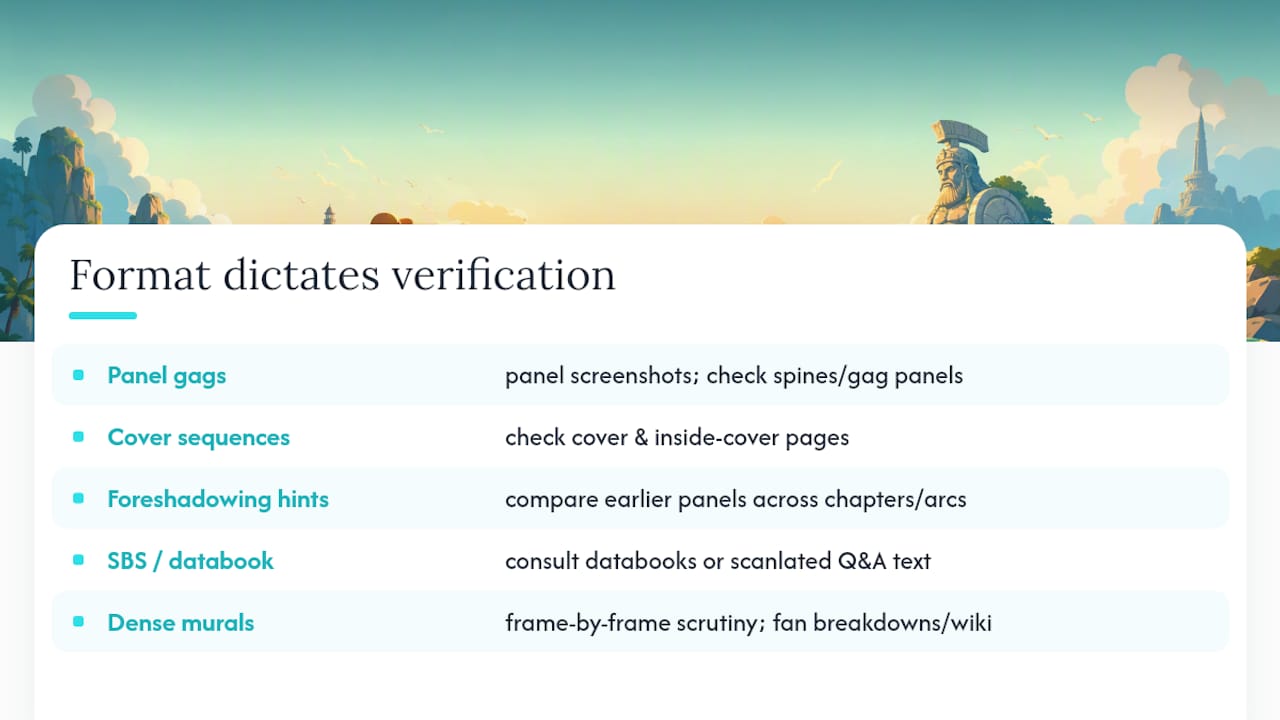
The format matters because it dictates your verification method. A background cameo needs a panel screenshot. An SBS clue needs the actual databook or scanlated Q&A text. A mural needs frame-by-frame scrutiny, the kind One Piece Wiki and dedicated fan breakdowns specialize in cataloging.
The catalog: 14 One Piece Easter eggs worth your rewatch time
This is the rewatch-ready list. Spoiler levels are noted so you know what you’re walking into.
1. Pandaman, the running cameo you can’t unsee
Where to find it: Scattered across manga backgrounds from the early volumes onward, plus multiple anime frames and volume inside covers. Spoiler level: none.
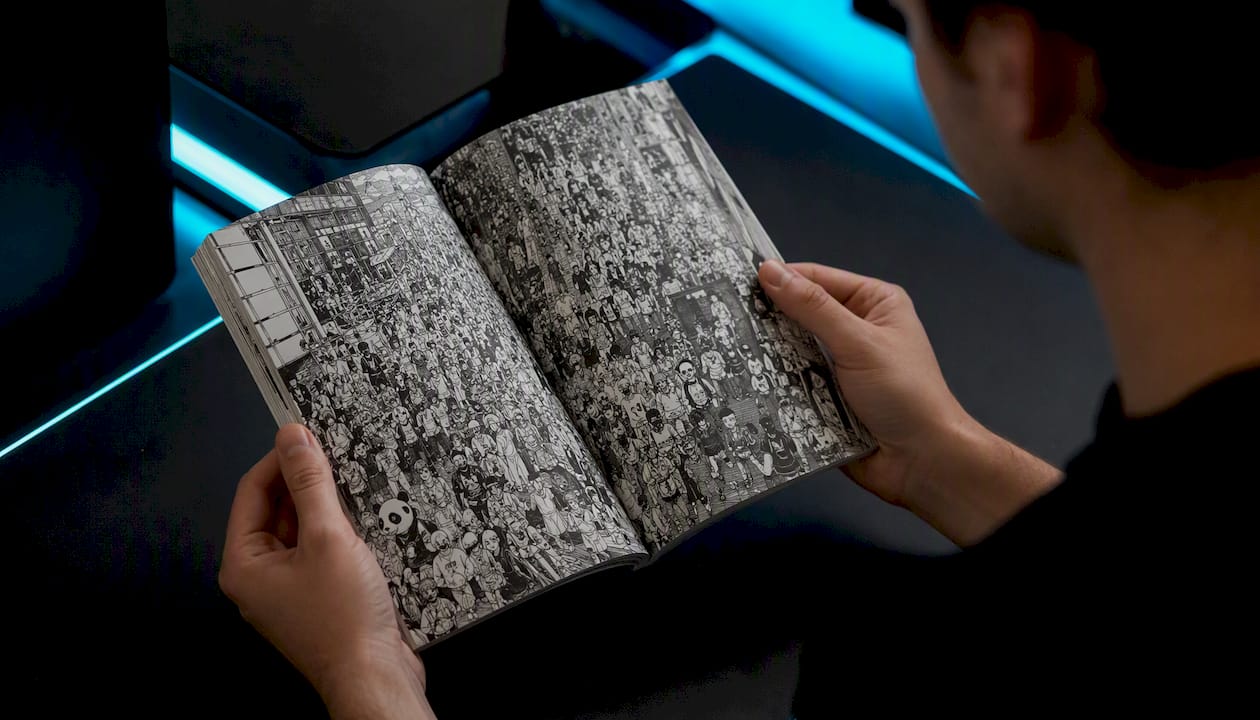
Once you learn to spot Pandaman, you’ll notice him everywhere: crowd scenes, marketplaces, battle backdrops. CBR’s rewatch-focused breakdown calls him one of the details fans only catch the second time through, and the One Piece Wiki documents his appearances across dozens of volumes and inside-cover variations. He’s not plot-relevant. He’s just Oda rewarding attentive readers, over and over, for two decades straight.
2. Laboon, the whale who never left the story
Where to find it: Chapter 1 and the Reverse Mountain arc, then callbacks throughout the Grand Line saga. Spoiler level: low.
Laboon gets introduced before the Straw Hats even reach the Grand Line, waiting at Reverse Mountain for a crew that promised to return. What looks like a one-off emotional beat becomes a recurring thread the CBR list flags as exactly the kind of setup that only clicks once you’ve seen how the story pays it off years later.
3. Lola’s vivre card and the Big Mom connection
Where to find it: Whole Cake Island arc chapters. Spoiler level: medium.
Lola’s vivre card, introduced casually as a keepsake, quietly ties her back to one of the Four Emperors long before that relationship becomes central to the plot. Fan roundups documenting early hints that later proved meaningful flag this as one of the cleaner examples of Oda seeding a reveal chapters ahead of schedule.
4. Enel’s moon exile, told entirely in cover pages
Where to find it: Post-Skypeia cover story arc. Spoiler level: medium.
Most readers assume Enel just vanishes after Skypeia. He doesn’t. His entire post-arc fate, including where he lands and what he builds there, unfolds across a dedicated cover page saga that runs parallel to the main story. It’s a full character arc hiding in the margins.
5. Luffy’s X scar, explained years before it’s explained
Where to find it: Early East Blue chapters, with context arriving arcs later. Spoiler level: high.
The scar on Luffy’s chest is visible from nearly the start of the series, but its origin doesn’t get contextualized until much further in. It’s foreshadowing at its most patient, the kind of detail that turns a casual detail into a “wait, that was always there” moment on rewatch.
6. Sanji’s clues to royal blood
Where to find it: Scattered pre-Whole Cake Island chapters. Spoiler level: high.
Small visual and behavioral hints about Sanji’s background appear well before the Vinsmoke family reveal recontextualizes his entire backstory. Once you know the twist, several earlier scenes read completely differently.
7. The Elbaf mural and its dense worldbuilding hints
Where to find it: Elbaf arc, mural sequence. Spoiler level: high.
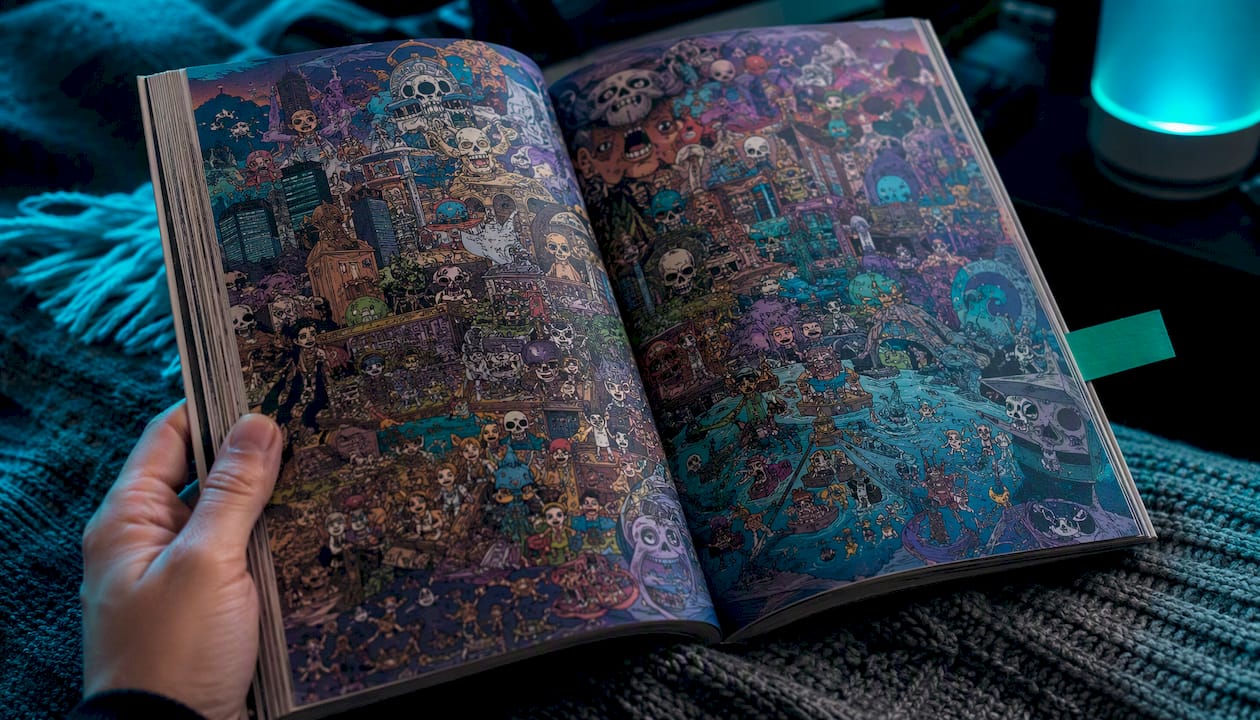
This one’s the current gold standard for “how many details can Oda cram into a single image.” ComicBook’s breakdown identifies at least 26 distinct Easter-egg elements in the mural alone, celestial motifs, Noah-like imagery, Lunarian hints, and figures fans connect to Joyboy and the Ancient Kingdom. It functions less like a background flourish and more like a lore document disguised as artwork.
8. The Egghead opening’s cameo overload
Where to find it: Egghead arc anime opening sequence. Spoiler level: high.
Anime openings used to be simple recap montages. Not anymore. ComicBook cataloged 35 separate hidden details packed into a single Egghead-arc opening, fleeting cameos, callback imagery, and spoilers moving fast enough that most viewers need a pause button to catch them all.
9. Usopp’s fables that quietly came true
Where to find it: Scattered across East Blue and early Grand Line chapters. Spoiler level: medium.
Usopp’s tall tales get treated as comic relief on first read. Several of them describe events that later happen almost exactly as he “lied” about them, a pattern astute fans have tracked as one of Oda’s subtler running jokes about storytelling itself.
10. Oda’s self-inserts on book spines and gag panels
Where to find it: Volume spines and occasional in-story cameos. Spoiler level: none.
Oda draws himself into his own franchise more often than most creators would dare, usually as a small joke about deadlines or editorial notes. It’s a quiet reminder that a franchise this sprawling still has one person drawing nearly every panel.
11. Recurring fictional brands across arcs
Where to find it: Background signage and props throughout the series. Spoiler level: none.
Certain invented product names and shop signs recur across completely unrelated islands, a worldbuilding touch that makes the setting feel continuous rather than episodic.
12. Season 2 live-action frame references
Where to find it: Specific Season 2 episodes, per ScreenRant’s episode-by-episode breakdown. Spoiler level: medium.
The live-action adaptation embeds its own layer of Easter eggs on top of the source material, including Pandaman sightings and frame-level nods that foreshadow arcs the show hasn’t adapted yet.
13. Cover-arc cameos from side characters
Where to find it: Rotating cover pages between major arcs. Spoiler level: low.
Beyond Enel, dozens of minor characters get cover-page mini-arcs that never make it into the anime, meaning manga-only readers see storylines anime-only viewers completely miss.
14. Jewel Tree and Harley text fragments
Where to find it: Elbaf arc mural and surrounding chapters. Spoiler level: high.
Tied closely to the mural itself, these text and symbol fragments feed the same web of worldbuilding clues fans are actively decoding in real time, making Elbaf one of the densest Easter-egg arcs in the franchise’s history.
| Example | Where to Find It |
|---|---|
| Pandaman | Manga backgrounds (multiple volumes), anime frames, volume inside covers |
| Elbaf mural | Elbaf arc mural sequence, manga chapters |
| Egghead opening | Egghead arc anime opening, Season 2 adaptation |
Pro Tip: Screenshot the panel or pause the frame the moment you spot something odd. Half the fun of these details is that they vanish in three seconds, and you’ll want the receipt before you argue about it in a group chat.
How to verify an Easter egg before you swear by it
Spotting something weird in a panel is step one. Confirming it’s actually intentional, and not just a fan theory dressed up as fact, takes a bit more discipline.
Start with the exact location. For manga, that means citing the chapter and page number. For anime, it means the episode number and a timestamp down to the second. For cover art, note the volume and whether it’s the inside front or back cover, since Oda uses both.
Next, cross-check translations. Scanlation groups occasionally phrase dialogue differently than the official release, and a “clue” that hinges on specific wording can evaporate once you compare two translations side by side. This matters most for SBS material, where Oda’s original Japanese phrasing sometimes carries a nuance that doesn’t survive translation cleanly.
Then check the SBS and databooks directly. If Oda has addressed a detail in a reader Q&A, that’s about as authoritative as verification gets. Wikipedia’s general definition of Easter eggs in media) notes that creator-confirmed details carry far more weight than fan-inferred ones, and that distinction matters enormously in a franchise where fan theories move fast and confirmations move slow.
Here’s a copyable citation format for your own notes or group chat arguments:
- Manga: Chapter [number], page [number]
- Anime: Episode [number], timestamp [mm:ss]
- Volume inside cover: Volume [number], inside front/back
Pro Tip: Watch out for cropped screenshots circulating on social media. A detail stripped of its surrounding panel context often looks far more significant than it actually is, and plenty of “confirmed foreshadowing” posts are just decontextualized crops.
Why Oda packs every frame with clues in the first place
Oda’s habit of hiding details isn’t incidental. It’s a documented pattern that runs from his earliest self-inserts through to the densest mural work in Elbaf, and it lines up with a broader shift in how modern anime treats its own visual real estate.
Openings and arc murals now function less like decoration and more like compressed lore documents, dense enough to reward the kind of frame-by-frame scrutiny only a rewatch culture makes possible.
That shift shows up clearly in the numbers. The Egghead arc opening alone carries 35 identifiable hidden details, and the Elbaf mural packs in at least 26 separate Easter-egg elements, from celestial motifs to Lunarian hints to imagery fans tie directly to Joyboy. Neither of those is an accident of animation budget. Both are built, deliberately, as containers meant to be paused, screenshotted, and argued over.
Oda’s own SBS habit reinforces the same instinct on the page. He’s been dropping self-inserts, inside jokes, and confirmed clarifications into reader mail for over two decades, which is exactly why fan wikis treat SBS and databook entries as primary sources rather than secondhand interpretation. The mural and the opening didn’t invent this approach. They just scaled it up for an era of pause buttons and frame-by-frame video tools.
Where One Piece shows up as an Easter egg somewhere else
The nods run both directions. One Piece doesn’t just hide references inside itself, it gets referenced constantly by other shows, a sign of just how deep its cultural footprint runs.
- Straw Hat crew silhouettes and Jolly Roger designs turn up as background gags in unrelated anime crowd scenes
- Western animated sitcoms have slipped Luffy’s straw hat or Going Merry-style ships into throwaway background art
- Convention and crossover specials occasionally stage brief cameo appearances from Straw Hat crew members alongside other long-running shonen casts
- Merchandise crossovers and licensed collectibles, from apparel to home decor, keep the crew’s iconography circulating well outside the anime itself
Creators drop these nods for a mix of reasons: genuine affection for the source material, an acknowledgment of influence, or a wink to audiences who’ll recognize the reference instantly. Each one is a small cultural signal that One Piece has moved past “long-running shonen” status into shared visual shorthand, the kind of reference a show can drop without explanation and trust half its audience to catch anyway.
Why I keep chasing these details down
Verification is the whole point. A cool detail without a citation is just a rumor with better marketing, and this fandom has produced enough of those to fill several forums. What makes an Easter egg worth remembering isn’t the “aha” moment alone, it’s being able to point to the exact chapter, episode, or SBS entry that backs it up.
That’s the standard I try to hold every entry to, whether it’s Pandaman’s twentieth cameo or a mural fragment nobody’s fully decoded yet. Timestamped, sourced, spoiler-tagged. If you’ve spotted something that doesn’t match what’s documented here, or found a detail that deserves its own entry, submit it through Thethingsyoumissed’s One Piece catalog and it’ll get checked against the same standard.
Get the verified, timestamped catalog behind this whole list
Thethingsyoumissed exists for exactly the problem this article just walked you through: scattered forum threads and half-cropped screenshots that never tell you the chapter, episode, or timestamp behind a claim. Every entry in the catalog comes with a source citation attached, so you’re never left wondering whether a detail is confirmed or just a popular guess.

The One Piece catalog page breaks down every hidden detail by arc, with spoiler-safe browsing so you can dig as deep as you want without accidentally reading ahead. If Pandaman-style running gags are your thing, the site’s recurring motifs section tracks that pattern across other franchises too, useful for spotting how different creators reuse the same trick. And if you’re the type who wants your rewatch setup to match the obsession, a One Piece themed lamp doesn’t hurt the mood either.
Found something that isn’t listed yet? Submit it. The catalog grows the same way this list did: chapter by chapter, timestamp by timestamp, one verified sighting at a time.
Frequently asked questions about One Piece Easter eggs
What is the most famous One Piece Easter egg? Pandaman holds that title by a wide margin. He’s been sneaking into backgrounds across manga volumes, anime frames, and cover art for over two decades, making him the franchise’s longest-running visual gag.
Are One Piece Easter eggs confirmed by Oda, or are they fan theories? Both exist. Some, like specific foreshadowing details, get confirmed directly through Oda’s SBS columns and official databooks. Others remain fan-identified patterns that haven’t received a direct creator confirmation, which is exactly why citing your source matters.
Where do most Easter eggs hide, manga or anime? Both, but differently. Cover-page arcs and self-inserts tend to live in the manga specifically, while dense visual callbacks like the Egghead opening’s 35 hidden details are anime-exclusive additions layered on top of the source material.
How do I know if an Easter egg is real or just a fan edit? Trace it back to an actual chapter, episode timestamp, or SBS entry. If a “detail” only exists in a cropped screenshot with no citation attached, treat it as unverified until you can locate the original panel or frame yourself.
Sources
Start with the One Piece Wiki’s Easter egg page for a running catalog of appearances, especially Pandaman sightings across volumes. For the mural specifically, ComicBook’s Elbaf breakdown remains the most detailed frame-by-frame source available. And for a rewatch-focused list that pairs well with your own notes, CBR’s rewatch roundup covers several of the examples above with additional context. Wherever possible, pair any of these with the exact chapter or episode citation before treating a detail as confirmed rather than theorized.
- Easter Egg | One Piece Wiki - Fandom
- One Piece: 10 Easter Eggs You’ll Only Notice On A Rewatch
- Comicbook
- One Piece Season 2 Easter Eggs: Every Hidden Detail … - ScreenRant
Recommended
- Severance Easter Eggs: All 18 Hidden Details & References Explained (2022) — The Things You Missed
- Breaking Bad Easter Eggs: All 19 Hidden Details & References Explained (2008) — The Things You Missed
- Peacemaker Easter Eggs: All 19 Hidden Details & References Explained (2022) — The Things You Missed