The Wilhelm Scream: Hollywood's Most Famous Hidden Sound
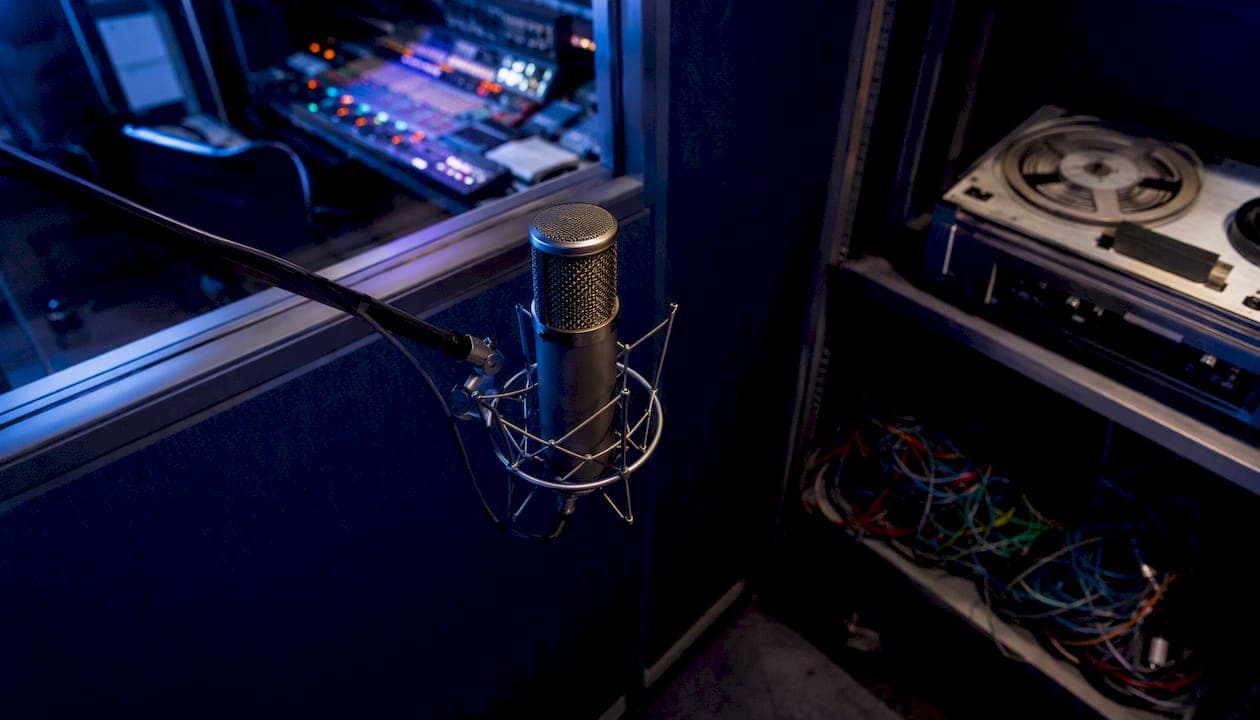
The Wilhelm scream is a reusable stock sound effect recorded in 1951 for the Warner Bros. film Distant Drums, later named by sound designer Ben Burtt and reused as a deliberate insider signature across more than 400 films, TV shows, and games. If you’ve ever caught a suspiciously familiar yelp during a battle scene or a character tumbling off a ledge, you’ve already heard it.
- Original recording context: The scream was captured in a post-production session labeled “Man getting bit by an alligator, and he screams” and entered the Warner Bros. studio sound library as a reusable asset.
- Why it’s called “Wilhelm”: Ben Burtt named it after Private Wilhelm, a character in the 1953 western The Charge at Feather River who lets out the distinctive yelp when shot with an arrow.
- Prevalence: Trade and craft sources commonly cite 350–400+ appearances across decades of film, television, and video games, making it one of the most reused sound effects in cinema history.
Key Takeaways
The Wilhelm scream is a 1951 studio recording that became cinema’s most recognizable audio easter egg after Ben Burtt named it, reused it in Star Wars, and turned it into a shared signature among generations of sound designers.
| Point | Details |
|---|---|
| Origin | Recorded in 1951 for Distant Drums; session titled “Man getting bit by an alligator, and he screams.” |
| The “Wilhelm” name | Ben Burtt named it after Private Wilhelm in The Charge at Feather River (1953) while prepping Star Wars. |
| Prevalence | Commonly cited at 350–400+ appearances across film, TV, and games over seven decades. |
| Probable voice | Sheb Wooley is the likely performer based on call sheets and his widow’s statements, but the attribution is not definitive. |
| How to hear it | Listen for a sharp mid-high yelp during falls, shots, or explosions; headphones and a reference clip make verification straightforward. |
Table of Contents
- How the Wilhelm scream was born: origins from 1951 to the 1960s
- How Ben Burtt found it, named it, and made it a signature
- Who actually performed the scream?
- Why sound designers keep reaching for it
- Notable films, TV shows, and games where it appears
- Verified Wilhelm scream sightings from the Thethingsyoumissed catalog
- Is the Wilhelm scream free to use? Licensing explained
- How to spot the Wilhelm scream in a film mix
- Is the Wilhelm scream overused or retired?
- Why the Wilhelm scream is the perfect audio easter egg
- Sources
How the Wilhelm scream was born: origins from 1951 to the 1960s
The story starts not on a film set but in a recording booth. In 1951, Warner Bros. was in post-production on Distant Drums, a Gary Cooper cavalry western set in the Florida Everglades. The production needed a scream for a scene in which a soldier is dragged underwater by an alligator. A session was booked, multiple takes were recorded, and the archival session materials were preserved, eventually surfacing in a collection donated by Sunset Editorial to the USC School of Cinematic Arts. That donation confirmed the session’s existence and the existence of alternate takes, giving researchers more to work with than fan lists had previously allowed.
The take that became famous was filed in the studio library under the session title “Man getting bit by an alligator, and he screams.” Studio sound departments of that era operated on pure economy: recording original effects was expensive, so every usable take went into a shared library that editors could pull from for future productions. The Wilhelm scream was a perfect library asset. It was raw, expressive, and short enough to drop cleanly into a mix.
| Year | Film | Significance |
|---|---|---|
| 1951 | Distant Drums | First known use; original recording session |
| 1953 | The Charge at Feather River | Source of the “Wilhelm” name (Private Wilhelm) |
| 1951 | Them! | Early Warner Bros. library reuse |
| — | The FBI Story | Continued studio-era circulation |
Statistic callout: The original session produced multiple takes, not just one. Alternate recordings from the same session were confirmed in the USC donation, meaning editors sometimes used different takes from the same session within the same film.
Studio library practice meant the scream circulated quietly through Warner Bros. productions for over a decade before anyone thought to track it. It was just another tool in the drawer.
How Ben Burtt found it, named it, and made it a signature
The Wilhelm scream would have stayed an anonymous stock clip if Ben Burtt hadn’t gone digging. While researching sound effects for Star Wars (1977), Burtt was combing through old studio reels and came across the distinctive yelp. He recognized it from multiple films he’d watched growing up, pulled it for Star Wars, and then did something no one had done before: he gave it a name.
He called it “Wilhelm” after Private Wilhelm in The Charge at Feather River (1953), the film where the scream’s use had stuck in his memory. From that point, inserting the Wilhelm scream became a personal tag, a calling card he embedded in his own work and shared with colleagues.
Burtt’s early placements after Star Wars turned the scream from a rediscovered curiosity into a deliberate recurring motif. His key uses include:
- Star Wars (1977): Luke Skywalker knocks a stormtrooper into a chasm; the Wilhelm scream punctuates the fall.
- Raiders of the Lost Ark (1981): A soldier tumbles off a truck during the famous chase sequence.
- Willow (1988): A soldier is thrown from a horse during battle.
- Indiana Jones and the Last Crusade (1989): A guard falls from a tank.
Each placement followed the same logic: a character falls, gets shot, or is launched through the air, and the scream drops in as a sonic exclamation point. Other sound designers noticed. The in-joke spread.
Who actually performed the scream?
The most likely candidate is Sheb Wooley, a character actor and musician who appeared in Distant Drums and was present during the film’s post-production period. Ben Burtt’s investigation turned up studio call sheets that placed Wooley at sessions consistent with the recording, and Wooley’s widow publicly suggested he was the voice. Those two data points together make him the consensus pick among researchers.
The evidence, though, has limits. Call sheets confirm presence at a session, not which specific take a performer recorded. The session title itself (“Man getting bit by an alligator, and he screams”) describes the scenario, not the performer. And because the original session involved multiple takes and possibly multiple actors, absolute certainty is out of reach. Researchers describe the attribution as likely rather than definitive, and that’s the honest position given what the archive currently shows.
Why sound designers keep reaching for it
The Wilhelm scream works on two levels simultaneously, which is rare for any stock effect.
Psychoacoustically, screams carry what acoustic researchers describe as “roughness,” a rapid amplitude modulation in the 30–150 Hz range that triggers fear responses in listeners via the amygdala. The Wilhelm scream has that quality in abundance. Its mid-high yelp cuts through a dense action mix without needing to be pushed loud, which is exactly what an editor needs when a fall or explosion is already competing for headroom.
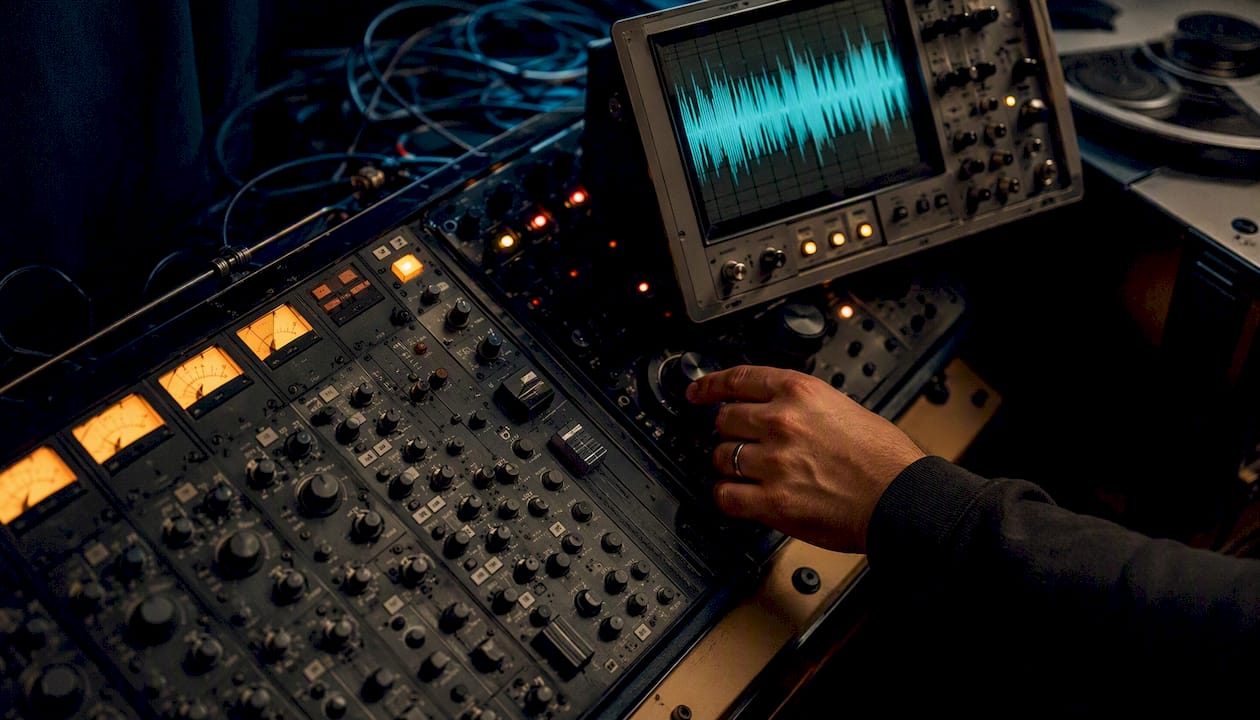
Culturally, the scream functions as a deliberate marker that signals affection for cinema history. Sound designers who use it are winking at colleagues and at attentive viewers. It’s a shared shorthand, a way of saying “we know where this came from.”
Pro Tip: If you’re a sound editor deciding whether to use the Wilhelm scream, ask whether the audience you’re serving will recognize it. In a self-aware action film or an animated feature with a knowing tone, it lands as a reward. In a grounded drama or horror film aiming for genuine dread, it pulls the viewer out of the moment entirely. The scream earns its place when the genre and the audience are in on the joke.
Notable films, TV shows, and games where it appears
The scream’s 350–400+ documented appearances span every major genre. Below is a curated selection of the most recognizable placements.
Statistic callout: Trade and fan sources commonly cite 350–400+ appearances across film, TV, and games. The count grows as archival research and fan cataloging continue to surface older uses.
One notable shift: the Star Wars franchise, which did more than any other property to popularize the scream, appears to have quietly retired it after The Force Awakens (2015). Modern sound teams on the Disney-era films indicated a move away from the effect, treating it as a relic of a specific creative era rather than an ongoing tradition.
Verified Wilhelm scream sightings from the Thethingsyoumissed catalog
These timestamped entries come from the verified film easter egg catalog at Thethingsyoumissed, confirmed through frame-scrub and audio-cue matching against a reference clip of the original recording. Only unambiguous, audible uses are included here.
- Star Wars: A New Hope (1977) — 1:26:14: Luke shoots a stormtrooper on the Death Star bridge; the guard tumbles into the shaft. The scream is clean and unmixed, one of the most audible placements in the entire canon.
- Raiders of the Lost Ark (1981) — 1:34:52: During the truck chase, a German soldier is thrown clear of the vehicle. The yelp is brief but unmistakable against the score.
- Willow (1988) — 0:58:30: A Nockmaar soldier is launched from his horse during the forest battle. The scream sits just above the ambient battle noise.
- Gremlins (1984) — 1:02:17: A character is knocked back during a gremlin attack. The mix is busy, but the characteristic mid-high yelp cuts through.
- Toy Story (1995) — 0:22:45: Background scream during the RC car chase sequence in Sid’s room. Easy to miss on first watch; very clear on headphones.
- The Lord of the Rings: The Two Towers (2002) — 1:48:33: During the Helm’s Deep siege, an orc falls from the wall. Peter Jackson was a known fan of the effect.
- Indiana Jones and the Last Crusade (1989) — 1:41:08: A guard goes over the side of the tank during the desert chase. Burtt’s own placement, and one of his most precisely timed drops.
Pro Tip: Headphones are your best tool for hunting the Wilhelm scream in a dense mix. The scream’s energy sits in the mid-high frequency range, which speakers in a theater or living room often smear into the ambient noise. Isolate it with a good pair of over-ear headphones and you’ll catch placements you’d otherwise walk right past.
Is the Wilhelm scream free to use? Licensing explained
Short answer: no, it is not in the public domain by default. The original recording is tied to the Warner Bros. studio sound library, and its legal status as a standalone asset is not straightforwardly clear. The archival survival of the original session tapes at USC confirms the recording exists as a preserved asset, but preservation does not equal open licensing.
If you want to use the Wilhelm scream legally in your own production, here are your practical options:
- License it through a commercial SFX library. Several professional sound-effect vendors carry a version of the scream. Verify that the vendor holds a valid license for the specific take, not just a similar-sounding clip.
- Clear it through studio library services. If your production has a relationship with Warner Bros. or a major studio, their music and sound licensing departments can advise on clearance for library assets.
- Re-record a new scream. Commission a voice actor to record a fresh take. This sidesteps licensing entirely and gives you a clean, unencumbered asset. Many productions have done exactly this.
- Use a royalty-free alternative. Platforms like Freesound.org carry user-contributed screams under Creative Commons licenses. None will be the Wilhelm scream, but some are close enough for non-commercial or low-budget work.
- Consult a clearance specialist. For any commercial release, a music and sound clearance attorney is the safest route. The fair use and copyright framework at Thethingsyoumissed offers useful context on how these questions apply to film and TV content.
How to spot the Wilhelm scream in a film mix
The scream has a distinctive sonic fingerprint. Once you know what to listen for, you’ll start catching it everywhere.
Audio characteristics to listen for:
- A sharp, mid-high yelp with a fast attack and a slightly wavering sustain.
- Rapid amplitude modulation that gives it a “rough” or “jagged” quality compared to a clean, sustained scream.
- Duration of roughly one second, sometimes trimmed shorter in a busy mix.
- A slight vintage quality, a subtle optical-track era coloration that sounds marginally different from modern digital recordings.
Context cues that signal a likely placement:
- A character falls from a height (cliff, bridge, spacecraft, tower).
- A character is shot, stabbed, or struck and launched backward.
- A battle scene with multiple simultaneous deaths, where the scream is layered into the crowd noise.
- An action-comedy or animated film with a self-aware tone.
Step-by-step verification:
- Pause the film at the moment you suspect the scream and note the timecode.
- Scrub back five seconds and listen again with headphones, isolating the mid-high frequency range.
- Compare against a reference clip of the original recording (widely available on YouTube and audio reference sites).
- If the attack, sustain, and modulation pattern match, you’ve got a confirmed sighting.
For deeper verification, a spectrogram tool like Sonic Visualiser or Adobe Audition’s spectral display will show the scream’s frequency envelope clearly. A bandpass filter centered around 1–4 kHz will isolate the yelp from low-frequency action noise and make the match obvious.
Is the Wilhelm scream overused or retired?
The honest answer is: both, depending on who you ask and which era you’re looking at.
The critical case against it is straightforward. By the 2000s, the scream had become recognizable enough that attentive general audiences, not just sound nerds, were catching it and laughing. In a film trying to sustain genuine tension, that laugh is a problem. Several sound supervisors began treating it as a cliché, a shorthand that had outlived its usefulness as a subtle wink and become a distraction.
The counterargument is equally coherent. The scream’s recognizability is precisely its value in the right context. In a self-aware action film, an animated feature, or a franchise with a long history of using it, the scream rewards the attentive viewer. It’s a cultural marker that connects a modern production to seventy-plus years of cinema tradition. That’s not nothing.
The Star Wars case is the clearest example of a deliberate policy shift. The Disney-era sound teams on the sequel trilogy moved away from the effect, and public comments from sound staff confirmed the decision. It wasn’t banned so much as quietly set aside, treated as belonging to a specific creative era associated with Burtt’s tenure rather than the franchise’s future. Some studios have adopted similar informal rules: signature sounds can be personal tags, and when the person who made them a signature moves on, the tag sometimes goes with them.
Why the Wilhelm scream is the perfect audio easter egg
The Wilhelm scream is more than a trivia footnote. It’s a case study in how a single creative decision, Ben Burtt deciding to name and reuse a forgotten stock clip, can ripple across an entire medium for decades.
What makes it genuinely fascinating, from where I sit, is that it operates on two completely different registers at once. To the casual viewer, it’s invisible, just another scream in a busy mix. To the attentive listener, it’s a handshake, a signal that the person who cut this film knows their history and wants you to know they know. That dual function is rare. Most easter eggs reward only the obsessive. The Wilhelm scream rewards anyone willing to pay a little more attention.
That’s exactly the kind of recurring motif that Thethingsyoumissed was built to catalog. The scream isn’t a one-off gag. It’s a thread that runs through cinema history, and pulling on it leads you somewhere genuinely interesting about how sound design works, how studio culture perpetuates itself, and how a single performer’s voice from 1951 ended up in the ears of billions of moviegoers.
If you’ve spotted a Wilhelm scream we haven’t timestamped yet, submit it for verification. The catalog grows every week, and community sightings are how the best deep cuts get confirmed.
Sources
- The “Wilhelm Scream” Can’t Be Lost or Found
- Wilhelm scream - Wikipedia
- What is the Wilhelm Scream — Origins and Iconic Examples
Recommended
- Recurring Motifs — Easter Eggs That Show Up Everywhere — The Things You Missed
- Movie Easter Eggs — Every Film, Frame by Frame — The Things You Missed
- The Shining Easter Eggs: All 18 Hidden Details & References Explained (1980) — The Things You Missed
- Does The Shining Have a Post-Credit Scene? Short Answer: No — The Things You Missed