Watch X-Men Right: Release, Timelines, and Timestamped Easter Eggs

New viewers should watch the X-Men movies in release order, starting with X-Men (2000) and ending with Deadpool & Wolverine (2024). Rewatchers chasing continuity should switch to a chronological or timeline-split order instead, since it groups films by story year rather than premiere date. Either way, Days of Future Past is the hinge that complicates any strict chronology, and knowing why matters before you hit play.
TL;DR:
- Watching the films in release order preserves the intended storytelling progression for first-time viewers, from the original 2000 film to the 2024 finale.
- The timeline split caused by Days of Future Past creates two overlapping timelines, making a single, consistent chronological listing impossible without confusion.
- For rewatchers, grouping movies by primary era or separating the original trilogy from the altered timeline clarifies cause and effect across decades.
- Deadpool and Deadpool 2 can be placed almost anywhere without disrupting continuity, while Logan mostly fits as the final, future-set chapter of Wolverine’s story.
- Using scene-specific or timestamped Easter eggs enhances viewing detail and rewatch enjoyment, especially when exploring franchise motifs and callbacks.
Table of Contents
- The Best X-Men Watch Order, Release and Chronological
- Why Days of Future Past Makes a Clean Timeline Impossible
- Copy-Ready Sequences for Every Kind of Viewer
- How to Pick the Right Order in Under a Minute
- What the X-Men Timeline Reveals About Franchise Storytelling
- Turn Your Rewatch Into a Detail Hunt
- Sources
- FAQ
The Best X-Men Watch Order, Release and Chronological
The X-Men watch order question really breaks into two separate lists, and picking the wrong one for your goals is the fastest way to spoil a twist or lose the emotional throughline the filmmakers built on purpose.
Release order is the one to use if you have never seen an X-Men film. It preserves the storytelling progression exactly as IGN’s full release-order breakdown lays it out, from the original trilogy through the era-defining prequels to the two-timeline mashup that closes things out:
- X-Men (2000)
- X2 (2003)
- X-Men: The Last Stand (2006)
- X-Men Origins: Wolverine (2009)
- X-Men: First Class (2011)
- The Wolverine (2013)
- X-Men: Days of Future Past (2014)
- Deadpool (2016)
- X-Men: Apocalypse (2016)
- Logan (2017)
- Deadpool 2 (2018)
- Dark Phoenix (2019)
- The New Mutants (2020)
- Deadpool & Wolverine (2024)
Chronological order works better once you already know the plot and want to trace cause and effect across decades. There are two credible versions, and neither is “wrong”:
- Simple chronology by primary era: start with First Class (1962), move through Apocalypse (1983), Days of Future Past (1973, though its framing scenes run to 2023), The Last Stand and X2 era events, then Logan (2029) as the endpoint. Space uses this model and places Days of Future Past early because most of its runtime unfolds in 1973.
- Timeline-split order: watch the original 2000 to 2006 trilogy as its own arc first, then treat everything after Days of Future Past as an altered continuity that plays out separately. TheWrap’s chronological guide recommends this structure specifically because it avoids forcing two contradictory timelines into one artificial line.
Deadpool and Deadpool 2 sit outside mainline continuity and can slot almost anywhere without breaking anything. Logan and The Wolverine are trickier: both jump around Wolverine’s own life rather than the team’s, so most guides place them by the era where the bulk of their plot lands rather than by every flashback inside them.
Why Days of Future Past Makes a Clean Timeline Impossible
Days of Future Past is the reason nobody agrees on one definitive x-men chronological order. The film sends Wolverine’s consciousness back to 1973 to prevent an assassination, and the changes he makes erase the dystopian future shown in the original trilogy. That single act splits the franchise into two timelines that both technically exist on screen.
- Original timeline: the 2000 to 2006 trilogy, where the future shown at the start of Days of Future Past is heading.
- Altered timeline: everything after the 1973 fix, including Apocalypse, Dark Phoenix, and the new versions of Mystique and Xavier those films present.
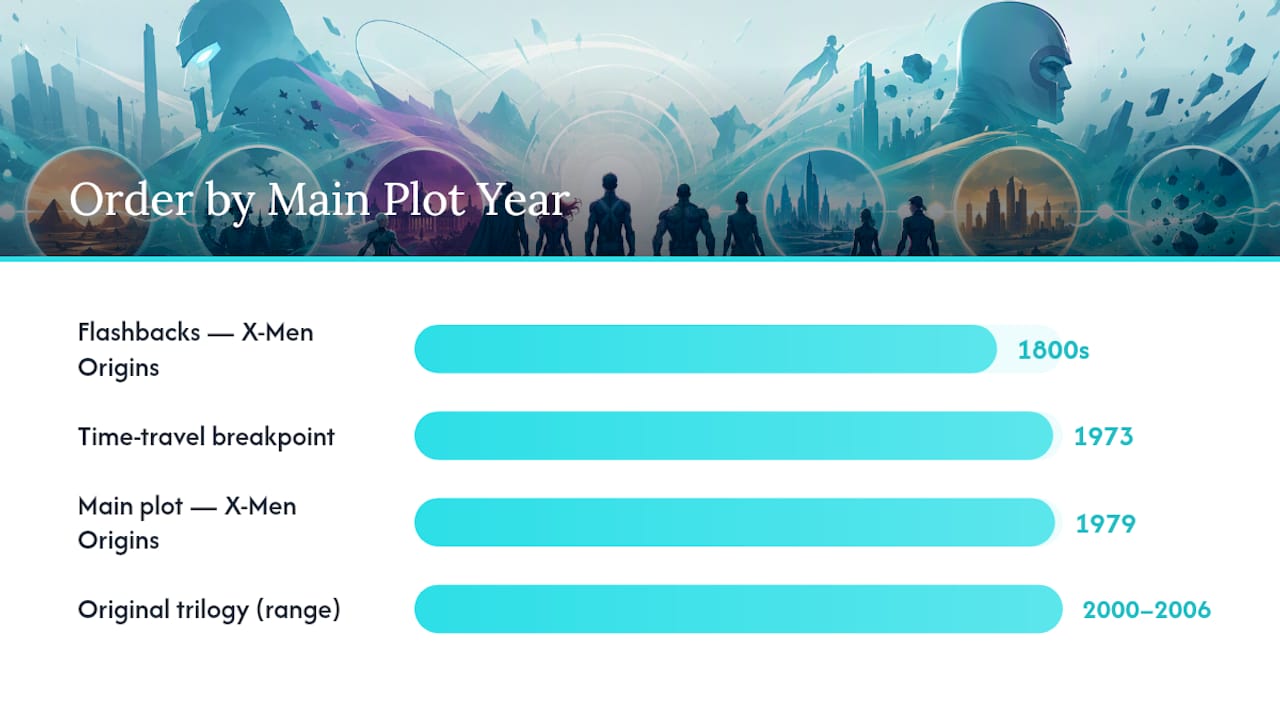
A discussion thread mapping the X-Men timeline split points out that Mystique and Xavier behave differently across the two threads because they are, narratively speaking, no longer the same characters after 1973 reshapes their choices. Trying to slot every flashback and time-jump into one master calendar creates more confusion than it resolves, which is why WikiHow’s ordering guide recommends placing each film by its primary era instead of chasing every scene’s exact date. X-Men Origins: Wolverine contains scenes stretching back to the 1800s, but it still gets slotted near 1979, where most of its plot actually sits.
Pro Tip: If a film’s flashbacks span decades but its main plot lives in one specific year, order it by that main plot year. Chasing every flashback into a single timeline is how chronological lists turn into arguments.
Copy-Ready Sequences for Every Kind of Viewer
Pick the sequence that matches why you are watching, not just what order the movies came out in.
Sequence A: First-time viewer (release order)
- X-Men (2000)
- X2 (2003)
- X-Men: The Last Stand (2006)
- X-Men Origins: Wolverine (2009)
- X-Men: First Class (2011)
- The Wolverine (2013)
- X-Men: Days of Future Past (2014)
- Deadpool (2016)
- X-Men: Apocalypse (2016)
- Logan (2017)
- Deadpool 2 (2018)
- Dark Phoenix (2019)
- The New Mutants (2020)
- Deadpool & Wolverine (2024)
Sequence B: Rewatch, timeline-split
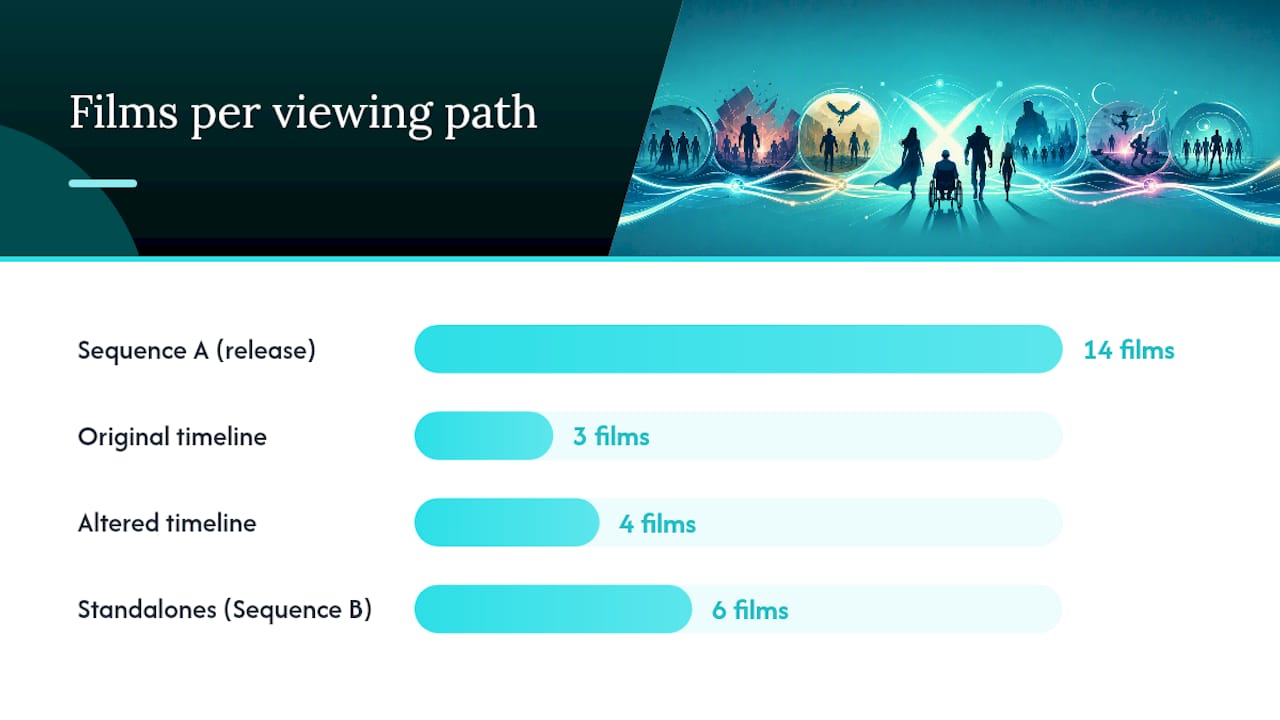
- Original timeline: X-Men → X2 → The Last Stand
- Altered timeline: First Class → Days of Future Past → Apocalypse → Dark Phoenix
- Standalone: X-Men Origins: Wolverine, The Wolverine, The New Mutants, both Deadpool films, Deadpool & Wolverine
Watching the original trilogy first, then the altered trilogy, keeps the emotional payoff of each arc intact instead of scrambling them into a single confusing line.
Sequence C: Character focus
- Wolverine path: X-Men Origins: Wolverine → X-Men → X2 → The Last Stand → Days of Future Past → The Wolverine → Apocalypse → Logan, closing the character’s arc where TheWrap notes Logan’s 2029 setting functions as a deliberate emotional endpoint.
- Deadpool path: Deadpool → Deadpool 2 → Deadpool & Wolverine, which you can enjoy almost independent of the rest.
Split any of these across three or four sessions. The original trilogy alone runs over six hours, so pacing it across a weekend beats a single marathon sitting.
How to Pick the Right Order in Under a Minute
Run through these questions before you press play:
- Have you seen any X-Men film before? If no, use release order.
- Do you want to avoid discovering plot twists out of sequence? Release order protects that.
- Are you rewatching specifically to understand how the timeline connects? Use the timeline-split order.
- Do you only have time for one character’s arc? Use the Wolverine or Deadpool path from Sequence C.
Media analysts consistently recommend release order for first-time viewers specifically because it preserves the storytelling progression the filmmakers intended, while chronological order suits people who already know the plot and want to study how continuity shifts across the two timelines.
If you are still unsure, default to release order. It is the version every guide agrees on, and it is nearly impossible to get “wrong.”
What the X-Men Timeline Reveals About Franchise Storytelling
The X-Men timeline order debate is really a lesson in how franchises age. Movies made 24 years apart were never going to fit one tidy chronology, and treating Days of Future Past as a hard reset rather than a continuity error makes the whole series easier to enjoy. That reframing, two miniseries instead of one broken timeline, is the same move IGN’s guide makes when it treats the franchise’s retroactive continuity as a feature of the storytelling rather than a flaw to explain away.
What gets underrated is how much a second viewing rewards attention to detail that a first watch simply cannot catch. A reused prop, a visual callback to the original trilogy, a line that only lands once you know what Apocalypse is setting up. That is where a resource like Thethingsyoumissed’s timestamped easter-egg entries earns its keep: spoiler-safe browsing means you can look up a specific scene without accidentally reading ahead into a film you have not reached yet. Pairing a deliberate watch order with that kind of detail hunting turns a rewatch into something closer to a director’s commentary track you assemble yourself.
— Christian
Turn Your Rewatch Into a Detail Hunt
Once you have picked your order, the next question is what you might be missing scene by scene, and that’s exactly the gap movie pages with timestamped and verified entries close. Every entry is timestamped and verified, so you can jump straight to the moment in question instead of scrubbing through a two-hour film hoping to spot a blink-and-miss cameo.
- Timestamped moments mean you find the reference in seconds, not minutes.
- Spoiler-safe browsing lets you check a film you have not finished without ruining what comes next.
- Franchise-wide motif tracking, like reused props across the series, helps explain continuity choices that a plain synopsis never covers.
If your next stop is Deadpool & Wolverine, the full easter-egg breakdown is ready before the credits finish rolling. Start browsing the movie easter-egg database and queue up your next watch with the details already mapped out.
Sources
- X-Men Movies in Order: The Full Timeline — IGN
- Space
- Comingsoon
- How to watch X‑Men movies in chronological order — TheWrap
FAQ
What Is the Best Way to Watch the X-Men Movies?
Release order is best for first-time viewers because it follows the storytelling progression the filmmakers intended, from X-Men (2000) through Deadpool & Wolverine (2024).
Is It Better to Watch X-Men in Chronological or Release Order?
Release order suits new viewers, while chronological or timeline-split order suits rewatchers who already know the plot and want to trace how the two timelines connect.
What Are the X-Men Movies in Order?
The full release-order lineup runs X-Men, X2, The Last Stand, X-Men Origins: Wolverine, First Class, The Wolverine, Days of Future Past, Deadpool, Apocalypse, Logan, Deadpool 2, Dark Phoenix, The New Mutants, and Deadpool & Wolverine.
How Do You Watch the X-Men Movies in Chronological Order?
Start with First Class (1962), then move through Apocalypse, Days of Future Past, and the rest of the altered timeline, treating the original 2000 to 2006 trilogy as a separate thread since Days of Future Past splits the franchise in two.
Where Do Deadpool and Logan Fit in the Watch Order?
Both Deadpool films sit mostly outside mainline continuity and can be watched almost anywhere, while Logan, set in 2029, works best as a chronological endpoint that closes out Wolverine’s arc.
Recommended
- X-Men '97 Easter Eggs: All 37 Hidden Details & References Explained
- The Fantastic Four: First Steps Easter Eggs: All 20 Hidden Details & References Explained
- Deadpool & Wolverine Easter Eggs: All 20 Hidden Details & References Explained
- Deadpool Easter Eggs: All 20 Hidden Details & References Explained