The Things You Missed

Get OutEaster Eggs & Hidden Details

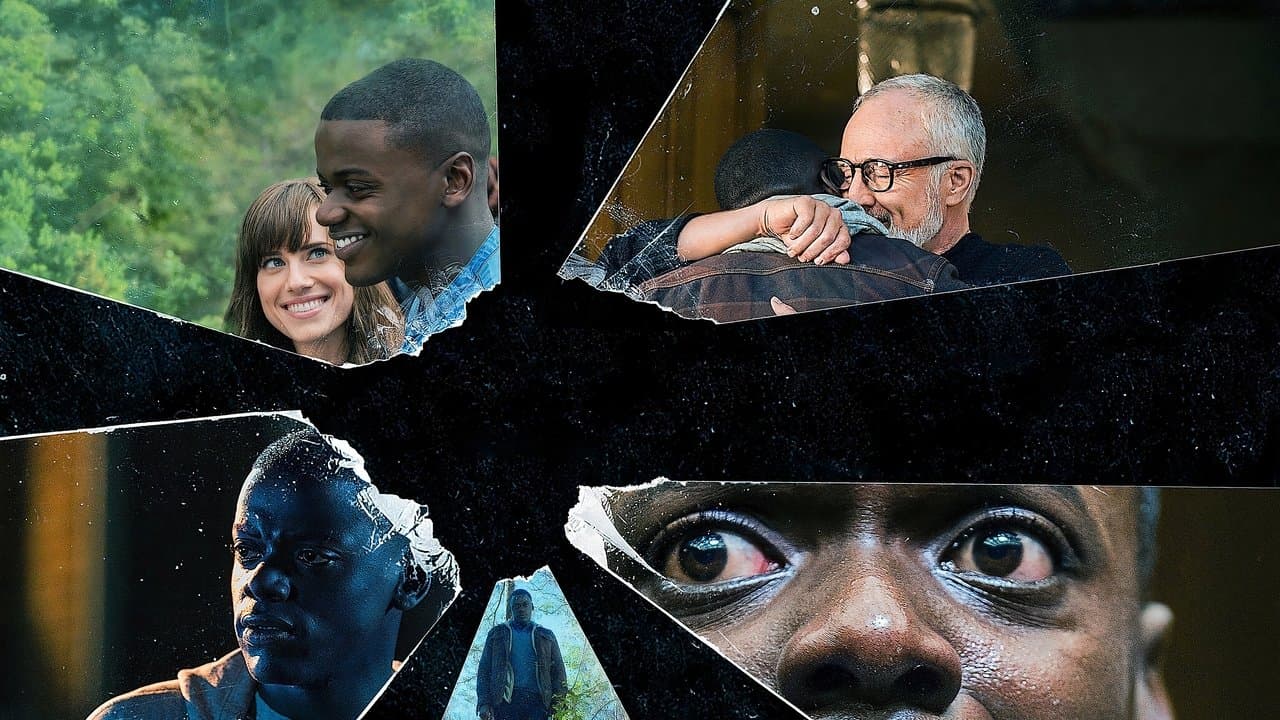
Peele voices the dying deer, an airport PA calls Flight 237, and Rose's dry Froot Loops are exactly as calculated as they look.

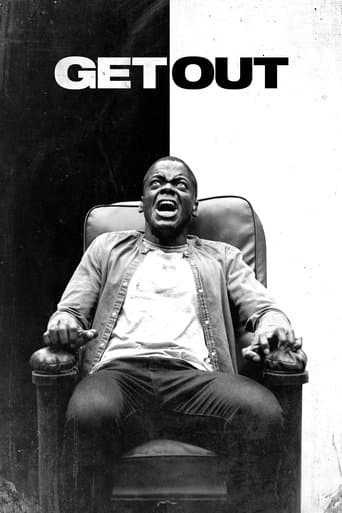
2017 · Film · 104 min · Jordan Peele

19 eggs catalogued12 confirmedno post-creditsupdated 2026-07-08

The short version

Get Out (2017) hides 19 catalogued easter eggs and hidden details, 12 of them confirmed by official sources. Standouts include jordan peele is the dying deer (and the tv announcer), two abandoned endings sent chris to prison — or back to the sunken place and the title is an eddie murphy punchline. Every entry below includes where to look, a spotting difficulty, and sources.

Every egg on this page

  1. The title is an Eddie Murphy punchline
  2. "Run Rabbit Run" scores the hunt — twice
  3. The title song is warning Chris in Swahili
  4. "Redbone" is there for two words: Stay Woke
  5. Chris jokes about the exact way the movie ends
  6. The deer, Chris's mother, and the mounted buck
  7. Jordan Peele is the dying deer (and the TV announcer)
  8. Rose's "woke" traffic-stop moment is evidence control
  9. Rose, Roman, and the Armitage name game
  10. The Sunken Place, defined by Peele himself
  11. The guests greet Walter like an old friend — because he is one
  12. The lone Japanese guest is a Rosemary's Baby homage
  13. The silent bingo game is a slave auction
  14. Rose's separated Froot Loops and milk
  15. Flight 237 boards for the Overlook Hotel
  16. Walter's midnight sprints are rematches with Jesse Owens
  17. "Behold the Coagula" is an alchemy reference
  18. Chris picks cotton to save his life
  19. Two abandoned endings sent Chris to prison — or back to the Sunken Place

Jordan Peele spent years as half of Key & Peele engineering sketches where every prop paid off, and Get Out is that discipline weaponized. His Oscar-winning debut is built like a magic trick: the first act tells you everything the third act will do to Chris Washington, and it does it through cereal bowls, radio songs, and a stuffed deer head. Peele has spent more time on the record decoding his own film than almost any modern director — a Vanity Fair sit-down grading Reddit theories, a Time interview owning up to a Kubrick homage, a UCLA lecture defining the Sunken Place — which means an unusual number of this movie's eggs are confirmed straight from the source.

Some of what's hiding here is genuinely obscure. The Swahili chant over the title credits is a literal warning to the hero that almost nobody in the audience could translate. An airport announcement buried under dialogue name-checks the most haunted room in The Shining. And the detail Peele swore "no one's ever gonna get that" — Chris scratching the cotton out of a leather armrest — turned out to be the key to the entire ending.

Below are the hidden details worth a second, third, and frame-by-frame watch: what each one is, where to look, and whether Peele himself has signed off on it.

The full catalog

Type
Status
Difficulty

The title is an Eddie Murphy punchline

ReferenceMeta ConfirmedDeep Cut

WHERE TO LOOK · The title itself — and echoed when possessed Andre lunges at Chris screaming "Get out!" at the party

The name Get Out is a direct nod to Eddie Murphy's 1983 stand-up special Delirious, in which Murphy jokes that white families in haunted-house movies refuse to leave: a ghost growls "get out," and a Black family would simply reply "too bad we can't stay." Peele confirmed the homage on the red carpet at the film's premiere, telling Entertainment Tonight it's "one of the best bits of all time." The joke is the film's thesis in miniature — a Black protagonist who reads the warning signs a horror-movie white family would ignore, yet stays anyway because polite society demands it.
"Run Rabbit Run" scores the hunt — twice

Music SecretForeshadowing Community ConsensusSecond Watch

WHERE TO LOOK · Opening scene — the white sports car trailing Andre; the song returns in Jeremy's car during the finale

In the cold open, the car that stalks Andre through the suburbs is blasting Flanagan and Allen's WWII-era novelty song "Run Rabbit Run" — a jaunty tune about a farmer shooting rabbits ("bang, bang, bang, bang goes the farmer's gun"). It's a literal warning to prey that a hunter is coming. The needle drop pays off on a rewatch: the same song is queued up in Jeremy's car at the end of the film, implying he plays it every time he goes out to abduct someone. It also kicks off the rabbit motif Peele would carry into his next film, Us.

The title song is warning Chris in Swahili

Music SecretForeshadowing ConfirmedDeep Cut

WHERE TO LOOK · Main title sequence, over the drive through the woods; reprised in the closing stretch

Composer Michael Abels' main theme, "Sikiliza Kwa Wahenga," sounds like wordless ominous chanting — unless you speak Swahili. The lyrics translate roughly to "brother, listen to the ancestors... something bad is coming. Run!" It's the movie's entire plot delivered as a warning Chris can't understand, sung in a language chosen so most of the audience can't either. Abels and Peele have both discussed the design in interviews: Peele wanted the voices of Black ancestors urging the hero to flee, hiding the film's biggest spoiler in plain hearing over the opening credits.

"Redbone" is there for two words: Stay Woke

Music SecretMeta ConfirmedSecond Watch

WHERE TO LOOK · Chris's apartment montage as he gets ready and packs for the trip

Childish Gambino's "Redbone" plays over Chris's introduction, and Peele has said the pick came down to one lyric. "I love the 'Stay Woke' — that's what this movie is about," he explained, framing the whole film as a warning against letting your guard down. The song itself is about paranoia and creeping betrayal in a relationship — which is exactly the movie Chris is about to live through with Rose. The mellow groove doubles as the calm before the storm: it's the last genuinely relaxed moment Chris gets.

Chris jokes about the exact way the movie ends

Foreshadowing Community ConsensusSecond Watch

WHERE TO LOOK · Early apartment conversation between Chris and Rose before they leave the city

Spoiler — tap to reveal

The deer, Chris's mother, and the mounted buck

Hidden DetailForeshadowing ConfirmedFreeze Frame

WHERE TO LOOK · The roadside deer stop on the drive; Dean's anti-deer rant at dinner; the buck head in the basement game room

Spoiler — tap to reveal

Jordan Peele is the dying deer (and the TV announcer)

CameoBehind the Scenes ConfirmedWhite Whale

WHERE TO LOOK · The dying deer on the roadside; the UNCF slogan heard on TV during Rod's couch scene

Peele hid two vocal cameos in his own debut. The wounded deer's unsettling groans in the roadside scene are Peele's own voice, recorded because no animal sound felt wrong enough. He's also the announcer voice intoning the United Negro College Fund's slogan — "a mind is a terrible thing to waste" — a brutal in-joke in a film about white people literally taking over Black minds. Peele revealed both cameos himself in Vanity Fair's fan-theory video, and he kept the tradition of hidden animal voice work going in Us.

Rose's "woke" traffic-stop moment is evidence control

Foreshadowing Community ConsensusSecond Watch

WHERE TO LOOK · The roadside police stop after hitting the deer, on the drive to the Armitage estate

Spoiler — tap to reveal

Rose, Roman, and the Armitage name game

Reference Community ConsensusDeep Cut

WHERE TO LOOK · Character names throughout — check the Armitage family introductions and Roman in the Coagula orientation film

The character names are a horror-nerd cipher. Rose echoes Rosemary Woodhouse of Rosemary's Baby, and grandfather Roman doubles the nod — Roman Castevet is that film's cult leader, and Roman Polanski its director. Peele has repeatedly named Rosemary's Baby and The Stepford Wives as the two films that most shaped Get Out's tone of smiling suburban conspiracy. The family surname Armitage, meanwhile, matches Dr. Henry Armitage of H.P. Lovecraft's The Dunwich Horror — a fitting flourish for a story about an old order performing unspeakable rituals behind respectable walls.

The Sunken Place, defined by Peele himself

MetaHidden Detail ConfirmedSecond Watch

WHERE TO LOOK · Missy's late-night hypnotherapy session with the teacup, and every hypnosis sequence after

The film's signature image — Chris paralyzed, screaming, falling through black void while watching his life on a distant screen — has an official author's reading. "The Sunken Place means we're marginalized. No matter how hard we scream, the system silences us," Peele tweeted in March 2017. He went further in a UCLA lecture: the floating screen makes Chris a spectator to his own life, which Peele tied to Black audiences watching Black characters die in horror movies they have no power to influence. The hypnosis metaphor is the one egg Peele considers the skeleton key to everything else in the film.

The guests greet Walter like an old friend — because he is one

Hidden DetailForeshadowing Community ConsensusFreeze Frame

WHERE TO LOOK · Party guests arriving at the estate — background beats as Walter helps with cars and greetings

Spoiler — tap to reveal

The lone Japanese guest is a Rosemary's Baby homage

ReferenceForeshadowing ConfirmedDeep Cut

WHERE TO LOOK · The garden party — Tanaka's question to Chris about the African-American experience

Spoiler — tap to reveal

The silent bingo game is a slave auction

Hidden DetailForeshadowing Community ConsensusSecond Watch

WHERE TO LOOK · The gazebo after the party — cut in while Chris and Rose walk away from the house

Spoiler — tap to reveal

Rose's separated Froot Loops and milk

Hidden DetailBehind the Scenes ConfirmedSecond Watch

WHERE TO LOOK · Rose's bedroom during the finale — headphones in, browsing top NCAA basketball prospects

Spoiler — tap to reveal

Flight 237 boards for the Overlook Hotel

Reference ConfirmedFreeze Frame

WHERE TO LOOK · Airport background audio during Rod's TSA scenes as he digs into Andre's disappearance

Listen closely to the airport PA while TSA agent Rod works his investigation: a gate announcement calls Flight 237 — the number of the most haunted room in The Shining. Peele owned it in a Time interview: "That's what we call a little Easter egg for the Kubrick fans, really easy one to do." The nod runs deeper than a number. Rod is Get Out's Dick Hallorann — the distant ally who senses something is wrong and races toward the house — except Peele lets his rescuer actually survive the trip. A tiny audio egg that doubles as a thesis on how Peele rewrites horror history.

Walter's midnight sprints are rematches with Jesse Owens

ForeshadowingBehind the Scenes ConfirmedFreeze Frame

WHERE TO LOOK · Chris's late-night smoke break — Walter charging across the lawn; Dean's Jesse Owens story during the house tour

Spoiler — tap to reveal

"Behold the Coagula" is an alchemy reference

ReferenceHidden Detail Community ConsensusDeep Cut

WHERE TO LOOK · The old instructional video Chris is forced to watch while strapped to the chair in the game room

Spoiler — tap to reveal

Chris picks cotton to save his life

Hidden DetailForeshadowing ConfirmedDeep Cut

WHERE TO LOOK · The basement game room — Chris's fingers on the armrest before the second orientation video

Spoiler — tap to reveal

Two abandoned endings sent Chris to prison — or back to the Sunken Place

Behind the Scenes ConfirmedWhite Whale

WHERE TO LOOK · The theatrical finale's police-light fake-out; the alternate version appears in the Blu-ray/DVD extras

Spoiler — tap to reveal

Is there a post-credit scene in Get Out?

No — Get Out has no post-credit scene. No mid- or post-credits scene — once Rod drives Chris away, the credits roll clean to the end. The closest thing to bonus footage lives on the home release: a filmed alternate ending plus deleted scenes with Peele's commentary, which recontextualize the finale rather than tease a sequel.

Frequently asked

+How many easter eggs are in Get Out?

We track 19 documented easter eggs and hidden details in Get Out — 12 of them confirmed on the record by Jordan Peele or his collaborators, in places like Vanity Fair's fan-theory video, a Time interview, and premiere-night press. Highlights include the Swahili warning in the title song, the Flight 237 nod to The Shining, Peele's two hidden voice cameos, and the cotton-picking escape Peele believed no viewer would ever decode.

+What do the Froot Loops mean in Get Out?

Rose eating dry Froot Loops with a separate glass of milk works on two levels. Fans read it as segregation imagery — colored cereal kept apart from white milk — and Peele gave that theory "partial credit" in Vanity Fair's breakdown. His stated primary intent was character: the worst possible food eaten in the worst possible way, exposing Rose's methodical, emotionally stunted psychopathy the moment her mask drops.

+What does the deer symbolize in Get Out?

Peele confirmed the deer runs on a triple track. The dying doe mirrors Chris's mother, killed in a hit-and-run while he did nothing — which is why he can't walk away from it. Dean's rant about exterminating deer telegraphs the family's racism, since "buck" was a slur aimed at Black men. And the mounted buck head looming over Chris in the basement becomes the weapon he uses to fight free.

+Does Get Out have a post-credits scene?

No. Get Out has nothing during or after its credits, so you can leave when Rod's "I'm T-S-motherf***ing-A" rescue wraps up. The extra material worth hunting down is on the Blu-ray instead: a fully filmed alternate ending in which Chris is arrested and visited by Rod in prison, which Peele scrapped because audiences needed to see Chris win.

+What is the Sunken Place in Get Out?

It's the paralyzed void Missy's hypnosis drops victims into — conscious, screaming, but powerless, watching life play out on a distant screen. Peele defined it himself: "The Sunken Place means we're marginalized. No matter how hard we scream, the system silences us." He has also linked the floating-screen imagery to Black audiences watching horror films where characters like them rarely survive or get heard.

Last updated 2026-07-08 · Spotted something we missed? Tell us.