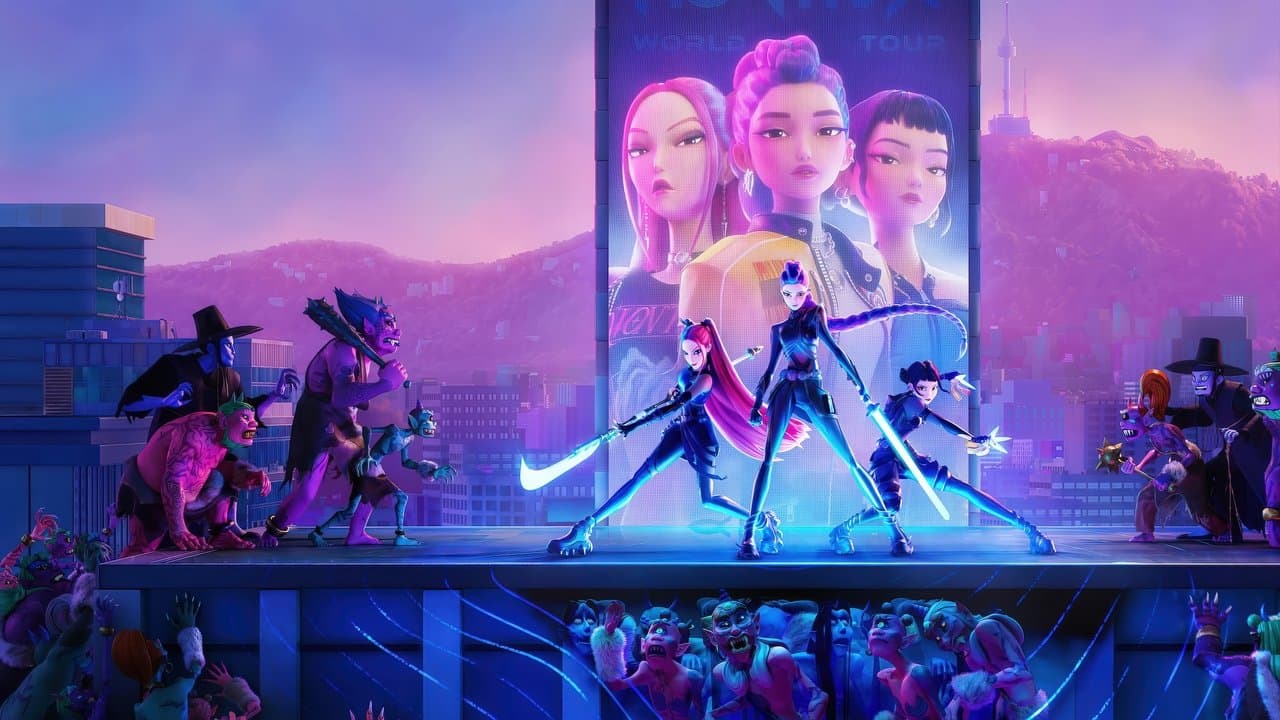
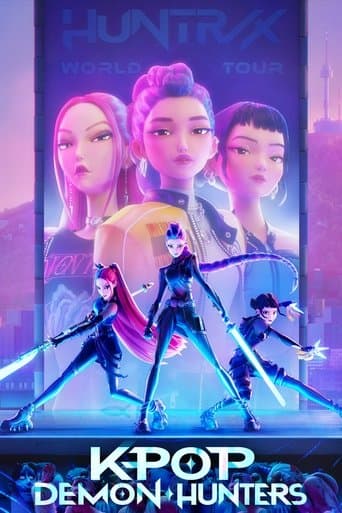
Minutes into KPop Demon Hunters, manager Bobby checks the music charts on his phone — and sitting right under HUNTR/X's "How It's Done" is "Strategy" by Twice, a real song holding a real chart position inside a fictional one. That single frame sets the rules for the whole movie: directors Maggie Kang and Chris Appelhans treat modern K-pop and five centuries of Korean folklore as one continuous universe, and they hide the receipts everywhere.
The density is the point. Jinu's blue tiger and six-eyed magpie are a walking minhwa folk painting from the Joseon Dynasty. The Saja Boys' name is a bilingual pun that quietly spoils their true nature. Rumi falls for Jinu in slow motion while a K-drama love song plays — one that Jinu's own voice actor famously covered. And because Kang went on record in interviews, a Reddit AMA, and Korean television, an unusually high share of these eggs are officially confirmed rather than fan guesswork — including the three background demons she secretly voiced herself.
Below are the hidden details that made this film's egg-hunt culture go viral after its June 2025 release: where each one hides, what it references, and which ones the filmmakers have personally confirmed.
The full catalog
Type
Status
Difficulty
01
Twice's "Strategy" Is Charting Right Under HUNTR/X
WHERE TO LOOK · Bobby's phone screen right after the opening 'How It's Done' performance; Twice posters reappear backstage at the Idol Awards.
After the opening plane battle and "How It's Done" set piece, manager Bobby (Ken Jeong) checks his phone to see how the single is performing. HUNTR/X sits at #1 — and directly below them at #2 is "Strategy" by Twice, a real 2024 hit by the real girl group. The gag quietly canonizes actual K-pop inside the film's universe, and Twice's presence doesn't stop there: their posters hang backstage at the Idol Awards, and three Twice members (Jeongyeon, Jihyo, and Chaeyoung) recorded the "Takedown" cover that plays over the end credits. The creators confirmed the chart and poster cameos in their Reddit AMA.
02
Rumi's Blade Is a Joseon Demon-Warding Ritual Sword
Hidden DetailReference◆ Community ConsensusDeep Cut
WHERE TO LOOK · Any HUNTR/X fight, starting with the opening plane battle — look at the etchings and coloring on Rumi's sword.
Rumi's sword isn't a generic fantasy weapon — it's modeled on the Four Tiger Sword (saingeom), a ritual blade from the Joseon Dynasty forged under precise astrological conditions and used in shamanic rites to ward off evil spirits. In other words, the film handed its demon hunter a weapon whose real historical job was hunting demons. Egg-hunters also spotted that the blade's colorful detailing echoes dancheong, the traditional painted patterning on Korean temple architecture, tying the hunters' arsenal to sacred spaces designed to repel misfortune.
03
The Trio's Norigae Pendants Are Real Anti-Evil Charms
Hidden DetailReference✓ ConfirmedDeep Cut
WHERE TO LOOK · Look at the small tasseled pendants on each HUNTR/X member's outfit throughout the film, especially in fight scenes.
Rumi, Mira, and Zoey each wear a norigae — the tassel-like ornament traditionally hung from a hanbok. Historically, norigae weren't just decorative: they were believed to channel good fortune and ward off evil, which is exactly the job they do in the film, where their glow marks the hunters' protective power. Maggie Kang walked through this detail (along with the Saja Boys' hanbok and each member's distinct traditional sword) when she broke down the film's hidden Korean details on South Korean television, covered by Newsweek.
04
The Honmoon's Magic Is Written in Hangul
Hidden Detail◆ Community ConsensusFreeze Frame
WHERE TO LOOK · Pause during Rumi's most intense spellcasting and Honmoon shots — the glowing glyphs contain Hangul letter fragments.
Freeze the frame during the film's biggest spell moments and the glowing sigils resolve into fragments of Hangul, the Korean alphabet. The Honmoon — the mystical barrier the hunters maintain with their voices — is literally woven from Korean writing, turning the film's central metaphor (song and language as protection) into a visual system. It's a detail that rewards Korean-speaking viewers first, which fits a movie whose magic is powered by singing in Korean to millions of fans at once.
05
Rumi Falls for Jinu to His Own K-Drama Love Song
Music SecretMetaReference✓ ConfirmedDeep Cut
WHERE TO LOOK · Rumi's slow-motion first encounter with Jinu and the Saja Boys on the street, before she collapses to the pavement.
When Rumi first locks eyes with Jinu on the street, the slow-motion swoon is scored by "Love, Maybe" by MeloMance — the hit theme from the 2022 K-drama Business Proposal. The punchline: Business Proposal starred Ahn Hyo-seop, Jinu's voice actor, whose own viral cover of "Love, Maybe" with co-star Kim Se-jeong racked up millions of views. So Rumi is falling for Jinu while a song famously associated with his actor's most beloved romantic role plays with full lyrics. It's a needle drop built entirely for K-drama fans, and it was hiding in plain sight in the official soundtrack credits.
06
The Saja Boys Debut Where the Director's Parents Met
Behind the Scenes✓ ConfirmedWhite Whale
WHERE TO LOOK · The Saja Boys' street debut performance in Myeong-dong; also the bathhouse and traditional medicine clinic scenes.
The Saja Boys stage their first public appearance in Myeong-dong, Seoul's famous shopping district — and the choice is autobiographical. Maggie Kang revealed in a Korean TV interview that she was born in Myeong-dong and that her parents met while working in an office there. It's one of several locations Kang picked from her own childhood: the public bathhouse and the hanuiwon (traditional Korean medicine clinic) that appear in the film are also places she remembers frequenting before her family emigrated to Canada.
07
Jinu's Pets Walked Out of a Joseon Folk Painting
ReferenceHidden Detail✓ ConfirmedDeep Cut
WHERE TO LOOK · Every scene with the blue tiger and the six-eyed magpie, starting in Jinu's lair — check who is wearing the tiny hat.
Jinu's blue tiger and six-eyed magpie — officially named Derpy and Sussie by the crew — are a living hojakdo ("tiger and magpie"), one of the most famous subjects of minhwa, Joseon-era Korean folk painting. In minhwa, the tiger is deliberately painted goofy (a caricature of the aristocracy) while the clever magpie represents the common people, which is exactly the dynamic the film gives them. Maggie Kang confirmed the pair's names, explained that they can cross between worlds because they're Korean supernatural creatures rather than demons, and admitted Derpy's face was partly modeled on her own Himalayan cats. Bonus gag: the magpie wears a scholar's gat hat, and Jinu quips, "I made it for the tiger, but the bird keeps taking it."
08
"Saja" Secretly Spoils the Boy Band's True Nature
ForeshadowingReference◆ Community ConsensusDeep Cut
WHERE TO LOOK · The Saja Boys' name from their debut onward; the payoff is the black-hanbok-and-gat staging of the 'Your Idol' performance.
The Saja Boys' name is a bilingual trap. In Korean, saja means "lion" — a perfectly normal boy-band flex — but it's also short for jeoseung saja, the Korean grim reaper who escorts souls to the afterlife. The film cashes the pun in during "Your Idol," when the boys perform in black hanbok and wide-brimmed gat hats: the exact iconography of the jeoseung saja popularized by the 1970s–80s KBS series Korean Ghost Stories and echoed in modern K-dramas like Guardian: The Lonely and Great God. Korean viewers effectively got the twist spoiled in the group's name from their first scene.
Spoiler — tap to reveal
09
Seo Taiji and Deux Hide in the Soundtrack
Music SecretReference✓ ConfirmedDeep Cut
WHERE TO LOOK · Rumi and Jinu's date scenes — the background music is vintage 90s K-pop, not the original soundtrack.
The film sneaks first-generation K-pop history in under the modern bangers. The official soundtrack includes "As the Night Goes On" by Seotaiji and Boys — the group widely credited with inventing modern K-pop in 1992 — and in their Reddit AMA the filmmakers confirmed a Deux needle drop as well, tucked into one of Rumi and Jinu's dates. For a movie about the idol industry, scoring the tender scenes with the genre's founding artists is a deliberate genealogy lesson most international viewers scrolled right past.
10
You Can Visit Almost Every Location in the Film
Hidden DetailReferenceBehind the Scenes✓ ConfirmedSecond Watch
WHERE TO LOOK · Throughout — the 'Your Idol' stadium (Namsan), the rooftop scenes ('Free'), the bridge fight, and the fan event.
The film's Seoul is real enough to tour, and Netflix published an official map. N Seoul Tower on Namsan looms over the stadium where the Saja Boys stage "Your Idol" — a moment Maggie Kang describes as a "Pied-Piper-into-Hell" sequence. Jinu first tells Rumi about his 400-year-old bargain with Gwi-Ma among the tiled rooftops of Bukchon Hanok Village, where the pair later float through the duet "Free." HUNTR/X fights demons on the Cheongdam Bridge over the Han River while arguing about their Idol Awards setlist, and the fan-sign event mirrors COEX K-pop Square in Gangnam, home of the giant curved LED screen.
11
A Royal Five-Peaks Screen Stands Behind the Idol Awards
Hidden DetailReference◆ Community ConsensusDeep Cut
WHERE TO LOOK · The Idol Awards stage backdrop during the climactic performance — a dark screen with sun, moon, and five mountain peaks.
The staging of the Idol Awards performance features an Irworobongdo backdrop — the "Painting of the Sun, Moon and Five Peaks," the folding screen that stood exclusively behind the king's throne in Joseon palaces as a symbol of royal authority and cosmic order. Planting it behind a K-pop awards stage is a sly visual thesis: in this world, idols occupy the throne, and the fight over who stands in front of that screen is literally a fight for sovereignty over Korea's soul. Korea Times folklore coverage flagged it as one of the film's best-hidden traditional references.
12
Gwi-Ma Is Voiced by Squid Game's Front Man
CameoMetaBehind the Scenes✓ ConfirmedDeep Cut
WHERE TO LOOK · Every Gwi-Ma scene — he appears as a giant flame voice in the demon world.
The demon king Gwi-Ma is voiced by Lee Byung-hun — the Front Man from Squid Game, making him the villain of Netflix's two biggest Korean-language juggernauts simultaneously (Squid Game's final season dropped the same month this film did). It's his first animated role, and he recorded the part in both English and Korean for the two dubs. Fan wikis add that the filmmakers had briefly considered K-pop mogul J.Y. Park for the role before deciding Gwi-Ma needed a darker register. Once you recognize the voice, the casting plays like a deliberate Netflix-universe crossover joke.
13
The Final Shot Quietly Leaves the Door Open
ForeshadowingHidden Detail◆ Community ConsensusSecond Watch
WHERE TO LOOK · The film's final shot, immediately before the end credits roll.
After the Honmoon is restored and the demons are sealed away, the movie's very last shot reveals that Derpy the tiger and Sussie the magpie are still in the human world — lounging around like adopted pets. Because Maggie Kang has confirmed the duo aren't demons but Korean supernatural creatures, they're exempt from the barrier that banished everyone else. Fans read the shot two ways at once: a cute epilogue implying Rumi kept them, and proof that the supernatural never fully left, which is exactly the kind of thread a sequel can pull.
Spoiler — tap to reveal
14
The Director Voices Three Hidden Demons
CameoBehind the Scenes✓ ConfirmedWhite Whale
WHERE TO LOOK · The flight attendant in the opening plane scene, a crying fan in the demon world, and the news voice-over when the barrier falls.
Maggie Kang gave herself a secret triple cameo. She voices a demon disguised as a flight attendant who waters a flowerpot with coffee during the opening plane sequence, a demon K-pop fan crying in the underworld, and the news announcement heard when the Honmoon fails. She only revealed the cameos months after release, in a South Korean TV interview covered by Newsweek — which is why virtually nobody caught them on first watch. It's the animation equivalent of a Hitchcock walk-on, spread across three throwaway background beats.
15
Young Rumi Is Voiced by the Real Rumi
Behind the ScenesCameo✓ ConfirmedWhite Whale
WHERE TO LOOK · The childhood flashbacks of Rumi with Celine.
The heroine is named after Maggie Kang's own daughter, Rumi — and the casting goes one layer deeper: Kang's daughter also provides the voice of young Rumi in the flashback scenes with Celine. The film's most emotionally loaded scenes — a mother figure raising a half-demon girl and teaching her to hide her patterns — are therefore literally a conversation between the director's family and her fictional counterpart. Kang confirmed both the naming and the casting in the same interview where she revealed her own voice cameos.
16
The Rice Bowl Sits on the Correct Side
Behind the ScenesHidden Detail✓ ConfirmedWhite Whale
WHERE TO LOOK · Any HUNTR/X meal scene — check the placement of rice (left) and soup (right) and how the table is set.
The food scenes are quietly rigorous. Kang recounted that Korean crew members flagged an early layout where the rice bowl and soup bowl were on the wrong sides of the table — in Korean dining custom, rice goes on the left, soup on the right — and the shot was corrected. The same care shows up in chopsticks resting on napkins, characters snacking while sitting on the floor, and the ramyeon-fueled team meals that became some of the film's most memed moments. It's background authenticity most audiences feel rather than notice.
Is there a post-credit scene in KPop Demon Hunters?
No — KPop Demon Hunters has no post-credit scene. There is no extra scene after the credits — but don't skip them. Twice members Jeongyeon, Jihyo, and Chaeyoung perform a cover of "Takedown" over the end credits, which roll alongside behind-the-scenes footage of the cast and musicians recording the film. The closest thing to a sequel tease is the final shot *before* the credits, which reveals two supernatural characters still hanging around the human world.
Frequently asked
+How many easter eggs are in KPop Demon Hunters?
We've documented 16 verified easter eggs and hidden details in KPop Demon Hunters, from the Twice "Strategy" chart cameo and the Business Proposal needle drop to Joseon-era references like the Four Tiger Sword, minhwa folk-painting pets, and the Irworobongdo royal screen. Eleven of the 16 are officially confirmed by the filmmakers through interviews, Korean TV appearances, a Reddit AMA, or Netflix's own published materials.
+Does KPop Demon Hunters have a post-credits scene?
No — there is no scene after the credits. The credits themselves are the bonus: Twice members Jeongyeon, Jihyo, and Chaeyoung perform a cover of "Takedown" over behind-the-scenes recording footage. The sequel-bait moment comes just before the credits, when the film's final shot reveals Jinu's tiger and magpie still living in the human world after the Honmoon is sealed.
+What does "Saja" mean in KPop Demon Hunters?
"Saja" is a Korean double meaning: it's the word for "lion," a natural boy-band name, but it's also short for jeoseung saja — the Korean grim reaper who escorts souls to the afterlife. The film pays the pun off when the Saja Boys perform "Your Idol" in black hanbok and wide-brimmed gat hats, the classic Korean reaper look, revealing the group's name foreshadowed their demonic mission all along.
+Is TWICE actually in KPop Demon Hunters?
Yes, three ways. Twice's real 2024 song "Strategy" appears at #2 on the in-movie chart, right under HUNTR/X's "How It's Done," when manager Bobby checks his phone. Twice posters hang backstage at the Idol Awards. And Twice members Jeongyeon, Jihyo, and Chaeyoung recorded the official cover of "Takedown" that plays over the end credits — they later performed it live at Lollapalooza Chicago.
+Who voices Gwi-Ma in KPop Demon Hunters?
Gwi-Ma, the demon king, is voiced by Lee Byung-hun — the Front Man from Squid Game — in his first-ever animated role. He recorded the character in both English and Korean, meaning both dubs feature the same actor. The casting made him the villain of Netflix's two biggest Korean-language franchises at once, since Squid Game's final season premiered the same month the film was released.
Last updated 2026-07-08 · Spotted something we missed? Tell us.