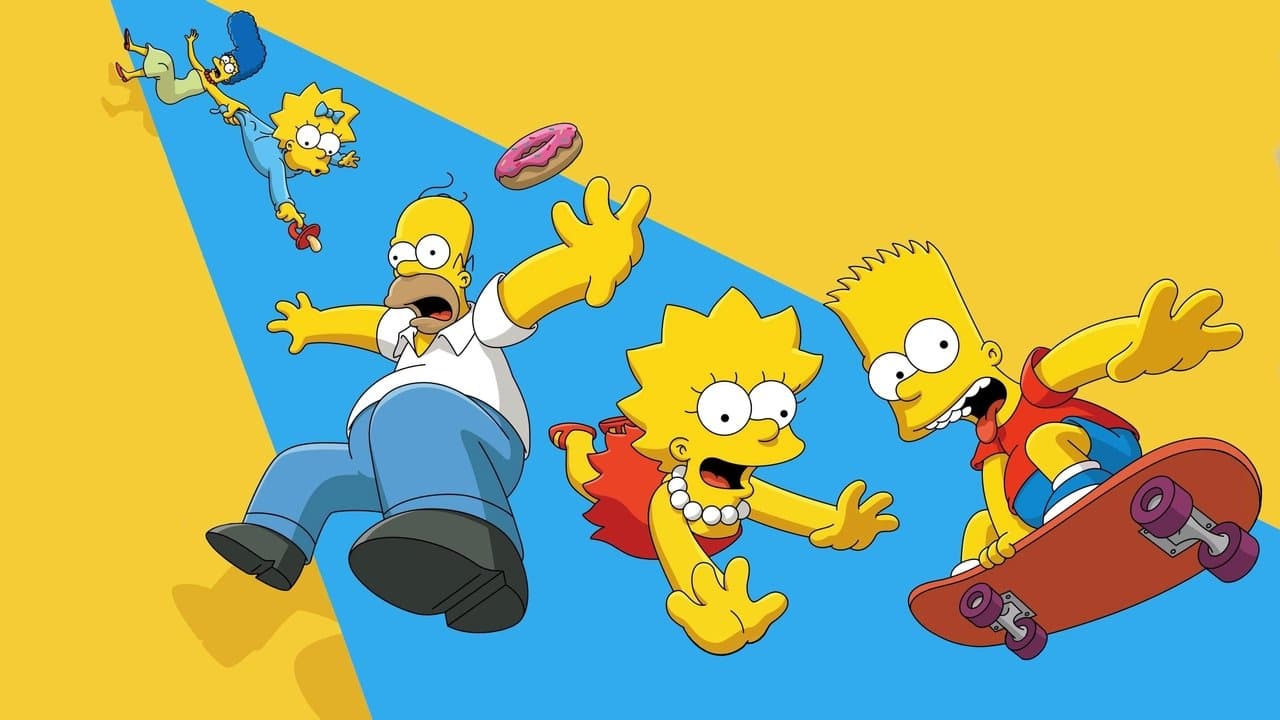
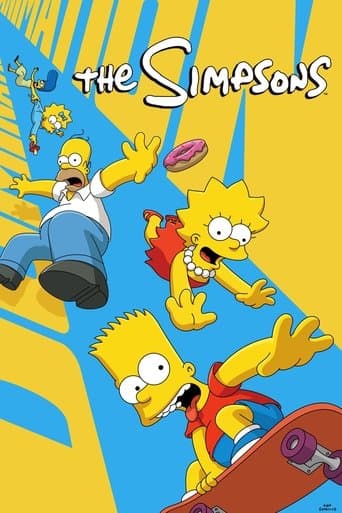
Pause the opening titles at the exact moment Maggie gets swept over the supermarket scanner and the register rings up $847.63 — the average monthly cost of raising a baby in 1989, according to Matt Groening himself. That's the operating philosophy of the whole show: The Simpsons has been layering jokes for viewers with a pause button since December 1989, decades before "easter egg" became a marketing checkbox.
Springfield's hidden details come in two flavors. There are the freeze-frame gags the writers openly courted once VCRs made frame-hunting possible — background signs, fourth-wall chalkboard confessions, and an entire four-and-a-half-minute McBain action movie smuggled across five separate episodes. Then there are the deep-cut signatures: Brad Bird stamping CalArts classroom A113 onto Springfield's mugshots, and writer David X. Cohen hiding an equation in Homer³ that appears to disprove Fermat's Last Theorem — until you check the math properly.
This guide sticks to what's actually documented: creator interviews, DVD commentaries, and long-verified fan finds. That means skipping the supernatural "predictions" clickbait — though yes, the Trump episode is here, along with the writer's own on-record explanation of why it was never really a prediction at all.
The full catalog
Type
Status
Difficulty
01
Homer's Hairline Is Matt Groening's Signature
Hidden DetailMeta✓ ConfirmedDeep Cut
WHERE TO LOOK · Any shot of Homer in profile — hair zigzags form the M, the ear supplies the G.
Look at Homer in profile: the two zigzag strands of hair above his ear form an M, and the ear below is drawn from a G — Matt Groening's initials, baked into the character design from his earliest sketches. Groening has explained that the original ear read so obviously as a letter G that he softened it into a normal ear because it was too distracting, but the M-hair stayed, and to this day he still draws the ear as a 'G' when he sketches Homer for fans. It is, in effect, a creator's signature stamped on every single frame Homer appears in — arguably the most-seen easter egg in television history.
02
Krusty Was Designed as Homer in Clown Makeup
MetaBehind the Scenes✓ ConfirmedDeep Cut
WHERE TO LOOK · Any side-by-side of Homer and Krusty — same face, same build, different hair.
Krusty the Clown looks suspiciously like Homer with a hair tuft for a reason. Groening has said on record: "The original idea behind Krusty the Clown was that he was Homer in disguise, but Homer still couldn't get any respect from his son, who worshiped Krusty." The planned reveal — Bart discovering the TV idol he worships is the father he disrespects — was scrapped as too complicated during the show's chaotic early production, but the character design was never changed. The show finally cashed in the resemblance in season 6's 'Homie the Clown,' where Homer becomes a Krusty impersonator.
03
The Register Rings Maggie Up at $847.63
Hidden DetailBehind the Scenes✓ ConfirmedFreeze Frame
WHERE TO LOOK · Opening titles — the register display at the Kwik-E-Mart checkout as Maggie is scanned.
In the classic opening titles, Maggie gets accidentally swept over the checkout scanner and the register flashes $847.63 — which, according to Matt Groening, was the average monthly cost of raising a baby in the United States in 1989. It's a one-frame economics joke that ran for two decades. When the opening was rebuilt in HD in 2009, the gag was updated: the register now reads $243.26 and doubles to $486.52 when Maggie is scanned, keeping the baby-as-line-item joke alive for a new generation of freeze-framers.
04
A113: Springfield's Recurring Prison Number
S1E12
ReferenceMeta✓ ConfirmedDeep Cut
WHERE TO LOOK · Krusty's police mugshot in 'Krusty Gets Busted'; Sideshow Bob's prisoner numbers in later episodes.
Brad Bird — future director of The Incredibles and Ratatouille — directed on early Simpsons seasons and brought along animation's most famous inside joke: A113, the number of the character-animation classroom at CalArts. It first appears as Krusty's number in his 'Krusty Gets Busted' mugshot, then returns as Sideshow Bob's prisoner number in 'Cape Feare' and 'Sideshow Bob's Last Gleaming,' and even shows up on Bart's mugshot in the 'Do the Bartman' music video. Bird has said: "I put it into every single one of my films, including my Simpsons episodes — it's sort of my version of Hirschfeld's 'Nina.'" The same code hides in every Pixar feature, starting with the license plate in Toy Story.
05
Bart's Chalkboard Swears He Isn't a 32-Year-Old Woman
S2E6
MetaHidden Detail◆ Community ConsensusDeep Cut
WHERE TO LOOK · The opening chalkboard gag, before the couch gag.
The chalkboard gag in 'Dead Putting Society' has Bart writing "I am not a 32 year old woman" over and over — a fourth-wall wink at Nancy Cartwright, the actress who has voiced 10-year-old Bart since day one and who was 32 when the episode aired in November 1990. It's one of the earliest chalkboard gags to poke at the show's own production reality rather than Bart's misbehavior, and it set the template for decades of self-aware blackboard lines. Worth knowing: Cartwright originally auditioned to play Lisa and asked to read for Bart instead.
06
The McBain Clips Secretly Assemble Into a Complete Movie
S2E12
MetaCallback◆ Community ConsensusWhite Whale
WHERE TO LOOK · Every McBain movie clip from 'The Way We Was' through 'Last Exit to Springfield,' in airing order.
The Rainier Wolfcastle 'McBain' movie snippets scattered across seasons 2 through 4 aren't random Schwarzenegger parodies — they're chapters of one coherent short film. Watched in order — 'The Way We Was' (McBain accuses Senator Mendoza of running a drug cartel and punches his boss through a window), 'Oh Brother, Where Art Thou?' (diner scene with partner Scoey, who's one day from retirement), 'The War of the Simpsons' (McBain demands a bigger gun to avenge Scoey), 'Saturdays of Thunder' ('Ice to see you' — McBain infiltrates a party as an ice sculpture), and 'Last Exit to Springfield' (Mendoza thrown out a skyscraper window, Die Hard-style) — they form a four-and-a-half-minute revenge movie with a beginning, middle, and end. Fans spliced it together in 2016 and the internet lost its mind.
07
'John Jay Smith' Was Michael Jackson All Along
S3E1
CameoBehind the Scenes✓ ConfirmedWhite Whale
WHERE TO LOOK · The closing credits — 'John Jay Smith' listed as a guest voice.
The season 3 premiere 'Stark Raving Dad' credits the voice of Leon Kompowsky — a 300-pound bricklayer convinced he's Michael Jackson — to one 'John Jay Smith.' It really was Jackson, a superfan of the show who personally called Matt Groening to ask for a guest spot, but contractual obligations to his record label kept his name off the episode. The layers go deeper: Jackson spoke Leon's dialogue but insisted a soundalike (Kipp Lennon) perform the singing, reportedly as a prank on his own brothers, and he co-wrote Bart's hit single 'Do the Bartman' without credit for the same contractual reasons. Groening confirmed all of it on the record decades later: "He did the show, he didn't want credit for it."
08
God Is the Only Character With Five Fingers
S4E3
Hidden DetailBehind the Scenes✓ ConfirmedFreeze Frame
WHERE TO LOOK · Homer's dream conversations with God — count the fingers, especially in the final scene.
Everyone in Springfield has the standard cartoon four fingers per hand — except God. When the Almighty appears in Homer's dream in 'Homer the Heretic,' He has five fingers on each hand, a deliberate design choice confirmed on the season 4 DVD commentary to set the divine apart from mere four-fingered mortals. (Jesus, in later appearances, fluctuates between four and five — apparently divinity is inherited inconsistently.) The best part: in the episode's final shot, God is accidentally drawn with four fingers. Director Jim Reardon has said fans ascribe deep theological meaning to the inconsistency, and he has to tell them: "It just slipped past me completely."
09
'Eat Up Martha' — the Joke That Haunted Apple for a Decade
S6E8
ReferenceBehind the Scenes✓ ConfirmedSecond Watch
WHERE TO LOOK · Kearney dictates a reminder to Dolph, who writes it on his Apple Newton.
In 'Lisa on Ice,' bully Dolph scrawls a memo — 'Beat up Martin' — on an Apple Newton, whose infamous handwriting recognition renders it as 'Eat up Martha.' The 1994 gag skewered Apple's overhyped PDA so effectively that it followed the company home: Nitin Ganatra, Apple's former director of iOS applications engineering, revealed that 'Eat up Martha' became shorthand in Apple's hallways during original iPhone development — a constant reminder that if the touchscreen keyboard wasn't nailed, the iPhone would become the next punchline. A throwaway Springfield bully joke genuinely pressure-tested the most important keyboard of the 21st century.
10
Where's Waldo? Occasionally in Springfield
S6E14
CameoHidden Detail◆ Community ConsensusFreeze Frame
WHERE TO LOOK · The bomb-shelter crowd in 'Bart's Comet'; the kitchen window in 'Hello Gutter, Hello Fadder' (S11E6).
The striped wanderer himself has been quietly slipped into crowd scenes over the years. In 'Bart's Comet,' Waldo is crammed among the townspeople packed into Ned Flanders' bomb shelter — a literal Where's-Waldo crowd panel. And in 'Hello Gutter, Hello Fadder,' the show inverts the joke: while Homer stares at a cereal box complaining that he can't find Waldo, Waldo casually strolls past the kitchen window behind him, unnoticed. He also turns up in costume gags in the Treehouse of Horror episodes. It's the show's recurring tribute to the original freeze-frame hunt.
11
Lisa's 2010 Future: Smartwatches, Video Calls and the Shard
S6E19
ForeshadowingBehind the Scenes◆ Community ConsensusSecond Watch
WHERE TO LOOK · Hugh's wrist-phone call and the futuristic London establishing shots.
'Lisa's Wedding' aired in March 1995 and flashes forward to 2010 — and its throwaway background tech aged eerily well. Lisa's fiancé Hugh speaks into a wrist communicator that Snopes confirms is the show's much-cited 'smartwatch prediction'; Lisa video-calls Marge years before FaceTime; and the London establishing shot includes a pointed skyscraper on the skyline where the Shard would top out in 2012, plus a digital-faced Big Ben. None of it is prophecy — wrist communicators go back to Dick Tracy — but as a snapshot of 1995 writers extrapolating 2010, it's the show's most accurate future-gazing episode.
12
The Equation That 'Disproves' Fermat in Homer³
S7E6
Hidden DetailBehind the Scenes✓ ConfirmedDeep Cut
WHERE TO LOOK · The 3D dimension in 'Homer³' — equations drift by just before the world collapses.
As Homer drifts through the 3D world in the 'Homer³' segment of Treehouse of Horror VI, the equation 1782¹² + 1841¹² = 1922¹² floats past — which, if true, would violate Fermat's Last Theorem, proved by Andrew Wiles just months earlier. Writer David X. Cohen (who has a master's in computer science) wrote a computer program specifically to hunt for Fermat 'near misses': punch that equation into a pocket calculator and it checks out, because the discrepancy hides beyond the display's precision. The proper refutation is elegant — the left side is odd, the right side even. The same 3D limbo also floats 'P = NP' and other math in-jokes past the camera, courtesy of the show's famously over-degreed writers' room.
13
Nelson Calls the Episode's Own Production Code as a Football Play
S9E6
MetaBehind the Scenes◆ Community ConsensusDeep Cut
WHERE TO LOOK · Nelson's play call at the line of scrimmage during the football game.
During the pee-wee football action in 'Bart Star,' Nelson barks out a play call before the snap: "5F03! Hike!" — and 5F03 is the actual production code of this very episode, visible in the closing credits. It's the writers signing their work in-universe, a gag only viewers who cross-reference credits would ever catch. Bonus deep cut in the same episode: the opposing team hails from Arlen, Texas, and the Hill family from King of the Hill appears in the stands, with Hank grumbling in his unmistakable drawl.
14
Homer's Blackboard Predicts the Higgs Boson — and Trolls Fermat Again
S10E2
Hidden DetailBehind the Scenes✓ ConfirmedWhite Whale
WHERE TO LOOK · Homer at his basement blackboard in his Thomas Edison phase — pause on the full board.
When Homer turns inventor in 'The Wizard of Evergreen Terrace,' his basement blackboard is a masterclass in hidden math. One equation, as author Simon Singh documented, estimates the mass of the Higgs boson — Homer's version works out to roughly 775 GeV, in the ballpark (if a bit heavy) of the 125 GeV particle CERN finally confirmed 14 years later in 2012. Below it sits David X. Cohen's upgraded Fermat near-miss, 3987¹² + 4365¹² = 4472¹², engineered to survive the odd/even objection that debunked his 'Homer³' equation. Cohen built the blackboard with help from his high-school friend David Schiminovich, an astronomer at Columbia University.
15
Futurama Keeps Sneaking Into Springfield
S10E9
CameoReference◆ Community ConsensusFreeze Frame
WHERE TO LOOK · Üter's T-shirt in 'Mayored to the Mob'; Bender cameos in S11E15 and S16E15.
Matt Groening's other show has been cross-pollinating Springfield since before it existed: in 'Mayored to the Mob,' German exchange student Üter wears a Futurama T-shirt a full three months before Futurama premiered — an ad disguised as a background gag. Bender later pops up in the Fox telethon audience in 'Missionary: Impossible' (S11E15) and rides through the future-tunnel in 'Future-Drama' (S16E15), with John DiMaggio actually voicing the cameo. Keep pausing and you'll find a Planet Express ship model on Comic Book Guy's shelf in 'Helter Shelter' and a Fry-and-Bender poster in a season 15 video store — all before the full 'Simpsorama' crossover made it official.
16
"We Inherited Quite a Budget Crunch From President Trump"
S11E17
ForeshadowingBehind the Scenes✓ ConfirmedPlain Sight
WHERE TO LOOK · President Lisa's first briefing in the Oval Office.
The line that launched a thousand 'Simpsons predicted it' headlines comes from 'Bart to the Future' (March 2000), where adult President Lisa Simpson tells her staff she's inherited a budget crisis from her predecessor: Donald Trump. When it 'came true' in 2016, writer Dan Greaney told The Hollywood Reporter: "It was a warning to America... It was pitched because it was consistent with the vision of America going insane." The context kills the clairvoyance: Trump was publicly exploring a Reform Party presidential run in 1999-2000, so the writers were extrapolating the news, not seeing the future. It remains the definitive case study in how Simpsons 'predictions' actually work — sharp satire plus enormous sample size.
17
The Gracie Films Shush Lady Screams on Halloween
Music SecretMeta◆ Community ConsensusSecond Watch
WHERE TO LOOK · After the closing credits of Treehouse of Horror episodes — the Gracie Films logo card.
Stay through the credits of any Treehouse of Horror episode for the show's closest thing to a post-credits scene: the Gracie Films logo — normally a woman shushing a noisy movie theater over a gentle piano jingle — gets a horror makeover. The 'Shhh!' is replaced by a blood-curdling scream, and the jingle is replayed on a creepy pipe organ. The variant has mutated over the decades: some early Halloween episodes kept the organ but dropped the scream, while Treehouse of Horror VII used a higher-pitched shriek over a slowed organ dirge. It's a tiny annual tradition that rewards anyone who doesn't reach for the remote.
Is there a post-credit scene in The Simpsons?
No — The Simpsons has no post-credit scene. The Simpsons has no traditional post-credits scenes, but the Gracie Films logo after every episode's credits is its own micro easter egg: on Treehouse of Horror episodes the logo's famous 'Shhh!' is swapped for a horror-movie scream and the piano jingle is replayed on a creepy organ, with the variant changing from year to year.
Frequently asked
+How many easter eggs are in The Simpsons?
This guide documents 17 significant, verifiable easter eggs in The Simpsons, 10 of them confirmed on the record by creators, writers, or DVD commentaries. The true total is effectively uncountable: across 790-plus episodes, nearly every installment carries its own chalkboard gag, couch gag, and background-sign jokes, and the writers deliberately planted freeze-frame gags for VCR-era fans. We track the documented, deliberate standouts rather than every background sign.
+Did The Simpsons really predict Donald Trump becoming president?
Yes — in 'Bart to the Future' (season 11, 2000), President Lisa Simpson says she 'inherited quite a budget crunch from President Trump.' Writer Dan Greaney told The Hollywood Reporter it 'was a warning to America,' pitched 'because it was consistent with the vision of America going insane.' It was informed satire, not prophecy: Trump was publicly exploring a Reform Party presidential run when the episode was written.
+What does A113 mean in The Simpsons?
A113 is the room number of the character-animation classroom at CalArts, where Brad Bird and many top animators trained. Bird planted it in his Simpsons work — it's Krusty's prison number in 'Krusty Gets Busted' and Sideshow Bob's in 'Cape Feare' and 'Sideshow Bob's Last Gleaming' — calling it 'my version of Hirschfeld's Nina.' The same code appears in every Pixar feature film.
+Are Matt Groening's initials really hidden in Homer Simpson?
Yes. Homer's two zigzag strands of hair form an 'M' and his ear is drawn from a 'G' — Matt Groening's initials, embedded in the original character design. Groening has said the early version of the ear looked so obviously like a letter G that he softened it into a normal ear, but he still draws it as a 'G' whenever he sketches Homer for fans.
+Why does God have five fingers in The Simpsons?
Everyone in Springfield has four fingers per hand — except God, who gets five. The season 4 DVD commentary for 'Homer the Heretic' confirms it's deliberate: a visual cue that God stands apart from mortals. Ironically, the episode's final shot slips up and shows God with four fingers — an animation error director Jim Reardon admitted 'just slipped past me completely.'
Last updated 2026-07-08 · Spotted something we missed? Tell us.