Glass Onion Easter Eggs: 10 Timestamped Clues Checked by the Cast

The Beatles title and props, the Among Us Zoom, the red envelope and drink swap, the Andi and Helen wig-and-parting reveal, the Mona Lisa motif, and a handful of blink-and-miss cameos are the Glass Onion Easter eggs you cannot afford to skip. We walk through each one with a timestamp cue, plus the interviews that confirm what the filmmakers planted on purpose.
TL;DR:
- Treat timestamps as scene cues, not exact marks, because Netflix and disc versions differ; prioritize the early puzzle party, flashbacks, and finale.
- At the puzzle party, track the red envelope and whose drink moves; both clues remain visible before Duke goes down, despite competing dialogue.
- Compare Helen and Andi’s hair parting and wigs in the flashbacks, then check interviews with Janelle Monáe and Rian Johnson for confirmation of deliberate planning.
- Watch backgrounds for the Among Us video call and Yo-Yo Ma cameo, but treat color symbolism and unlisted musical clues as interpretations, not confirmed intent.
- Pause on the Mona Lisa’s destruction and Miles’ upside down Rothko; both connect the finale’s spectacle with the film’s critique of wealth and taste.
Table of Contents
- 1. Glass Onion Easter eggs worth pausing on
- 2. Why these Easter eggs work on a second watch
- 4. Director and cast commentary that confirms the clues
- 5. What each main character’s props really say
- 6. How Glass Onion links back to Rian Johnson’s earlier films
- 7. Musical cues and soundtrack Easter eggs
- 8. Color and lighting clues hidden in plain sight
- 9. The layered storytelling these Easter eggs reveal
- 10. The six moments I would pause on first
- 11. Where to find every timestamped, verified Glass Onion Easter egg
- FAQ
- Sources
1. Glass Onion Easter eggs worth pausing on
Timestamps shift slightly between the Netflix stream and disc versions, so treat each cue below as a scene marker rather than a stopwatch reading. Pause, rewind, check.
- The Beatles title and the glass statuettes. Watch the opening party setup, then the finale. The song title promises transparency and layers, and The Beatles Bible explains why that phrase fits a story about people who think they are deeper than they are.
- Masks as character signals. Early island arrival, around the first dock scene. The COVID-era props work as quick character studies, a point Collider’s Easter egg roundup highlights.
- The Among Us Zoom. The star-studded video call near the start. The game’s “who is the impostor” premise mirrors the whole film.
- The red envelope and the drink swap. Early in the puzzle party, before Duke goes down. Pause on the envelope on the table, then track whose glass moves where. Both sit in the frame the whole time.
- The Andi and Helen reveal. Flashback sequences after the midpoint. Compare the hair parting and wig between the sisters, and note how the performances mirror each other.
- The chessboard detail. Look at the set dressing near Miles’ space. The board offers a visual joke about how little he understands the game he is playing.
- The Yo-Yo Ma cameo. Birdie Jay’s party. He is easy to miss because he sits in the background of a crowded room.
- The Mona Lisa motif. The painting’s destruction gives the finale a striking visual moment.
- The upside-down Rothko and the portrait. Miles’ collection. BuzzFeed’s list of 19 eggs flags the inverted art and the portrait detail as taste-as-signal gags: wealth with no eye behind it.
- Brief famous faces. Brad Pitt appears in a portrait detail.
If you only have time for a few pauses, take the red envelope, the Zoom, the parting detail, the Mona Lisa and the Rothko. Those details make for a rewarding rewatch.
2. Why these Easter eggs work on a second watch
These details are not decoration. The film is built so the midpoint reveal reframes earlier scenes, and Rogerebert that the structure carries the meaning, with scenes that foreshadow the finale and details that hide in plain sight.
That is why the clues feel fair. Vulture’s behind-the-scenes piece describes precise camera blocking and “double bluffs” that keep clues visible without flagging them as clues.
Here is what fair play looks like on screen:
- The red envelope sits openly on the table, so you see it and your brain files it as set dressing.
- The drink swap happens in frame, but your attention follows the dialogue instead.
- Watch the background as well as the main action, since small details can be easy to miss.
- Miles’ scrambled phrasing signals a man reciting depth he does not own, a trait Vulture links to deliberate malapropisms.
The editing does the rest. A cut away at the right beat gives you the information and takes your focus in the same second.
Pro Tip: On your rewatch, ignore the speaker and watch the edges of the frame, hands, glasses and background doors. That is where most of the fair-play clues live.
4. Director and cast commentary that confirms the clues
We lean on published interviews and the commentary track so you can verify what we say instead of taking our word for it.
- Rian Johnson has said in the RogerEbert.com interview that structure and foreshadowing were designed in, not retrofitted.
- Variety’s Janelle Monáe piece records the hair parting plan she and Johnson made to signal the Helen and Andi switch.
- The same Variety piece discusses the film’s character details and production choices.
- The commentary track, summarized by Collider, is the best place to hear which production details came late.
Start with the interviews, then watch with the commentary on. You will hear which details were planted and which were happy accidents.
5. What each main character’s props really say
Beyond masks and costumes, the objects around each guest sketch who they are. Miles’ puzzle box is the loudest: a gadget billed as unsolvable that someone else does in seconds, a neat summary of a man who buys genius instead of having it. The film’s recurring motifs play the same trick on his supposed disruption.
Birdie’s gear tells you she is always selling something. Her branded clothing and fashion flexing work like a shield, and the bodyguard-assistant pairing shows how little she handles alone.
Lionel’s lab-coat authority and gadget talk make his science sound clean while his compromises stay hidden. Claire’s political polish is the same pattern: the right words, rehearsed.
Duke’s props lean on swagger and dominance, the supplements and the posturing of a man performing strength. Helen’s recorder is the opposite: small, practical and discarded in the background, the one prop that serves a real purpose.
Notice the pattern. The guests carry objects that advertise status, while the person with the real objective carries the least conspicuous gear.

6. How Glass Onion links back to Rian Johnson’s earlier films
Glass Onion shares a mystery-structure DNA with Knives Out and its heirs, but these are echoes of method, not a confirmed shared universe. TIFF Q&A reporting from TellTale TV says the team intends to keep making Knives Out films as long as Daniel Craig wants to, so the franchise thread is Benoit Blanc himself.
The film uses familiar mystery elements, including a wealthy group with something to hide and a reveal that shifts the viewer’s perspective. Johnson discussed the film’s structure and foreshadowing in his RogerEbert.com interview.
The sequel shifts the setting to a tech-billionaire’s island, while retaining the mystery and visual motifs that connect it to Knives Out.
For other breakdowns in a similar format, browse our movie Easter egg hub or see how we cover Get Out.
7. Musical cues and soundtrack Easter eggs
Music in this film does the same double work as the props: it entertains and it points. The title song’s meaning is the obvious anchor. Listen for other musical details as you rewatch.
Listen to how the score behaves as the structure shifts. Its changing tone can add to the mood of the mystery.
The Beatles connection also works as a thematic cue. The song’s layered imagery makes it a fitting thematic companion to a billionaire who prizes the appearance of depth. We would suggest one dedicated audio pass on your rewatch: close your eyes during the island arrival and the finale and compare the energy.
We cannot point to a confirmed scene-by-scene musical Easter egg list beyond what the sources state, so treat the Elfman sample and the title song as the verified entries and add your own ear for the rest.
8. Color and lighting clues hidden in plain sight
Color in this film is loud on purpose, which is exactly why it hides things. The island setting is saturated, bright and clean, and that gloss makes everything look transparent. The glass onion itself, a literal see-through structure, is the visual thesis.
Light also does narrative work. Bright, even exposure in the party scenes keeps the mood breezy, so a detail like the red envelope reads as party décor rather than evidence. When the story turns, pay attention to how reflective surfaces start to matter: glass, mirrors and polished art show you doubles, which suits a plot built on one person standing in for another.
Red is the standout accent. The envelope draws the eye early, then fades into the set, and that is the classic fair-play move: show it vividly, then let the scene bury it.
A practical tip for your pause-and-check pass: look for reflections of faces in glass during the Helen and Andi scenes. The mirror imagery is a repeating visual idea, and the production design leaves plenty of surfaces for it. We have not found a published breakdown that assigns specific color meanings per character, so read these as visual readings, not confirmed director statements.
9. The layered storytelling these Easter eggs reveal
Think of the film as having several layers stacked on top of each other. The surface layer is the party game, with puzzle boxes and a weekend mystery, and The Verge’s look at the Netflix Tudum clip shows how the humor and devious puzzles set that frame.
The middle layer is the structural flip. TheWrap’s spoiler interview discusses the practical challenge of a mid-movie reveal: it deepens the stakes without boring the audience who already know who did it.
The bottom layer is theme: wealth, illusion and mirrors. Each Easter egg belongs to one layer, and the best ones serve two. The upside-down artwork can read as both a set gag and a character statement. The Mona Lisa is a prop in the middle and a symbol of worth versus ownership at the bottom.
On a rewatch, sort what you find into those three buckets. You will notice the film rarely puts a clue in only one place, which is why it holds up so well.

10. The six moments I would pause on first
If you have an evening, consider watching for these moments. Each pick ties to the film’s core ideas of wealth, illusion and mirrors.
- The opening puzzle box: watch how fast it is solved. Illusion of genius.
- The Among Us Zoom: note the game’s impostor premise. Everyone is playing a role.
- The red envelope and drink swap: pause the table. Clues sit in view.
- Miles’ flashback outfit: read the costume against his talk. Style over substance.
- The atrium and the Mona Lisa: track the painting before the fire. Value as performance.
- The Helen and Andi flashbacks: compare parting and posture. Mirror imagery.
— Christian
11. Where to find every timestamped, verified Glass Onion Easter egg
Our catalog is designed for this kind of rewatch. Browse entries by scene and use spoiler-safe navigation to avoid stumbling into the ending.
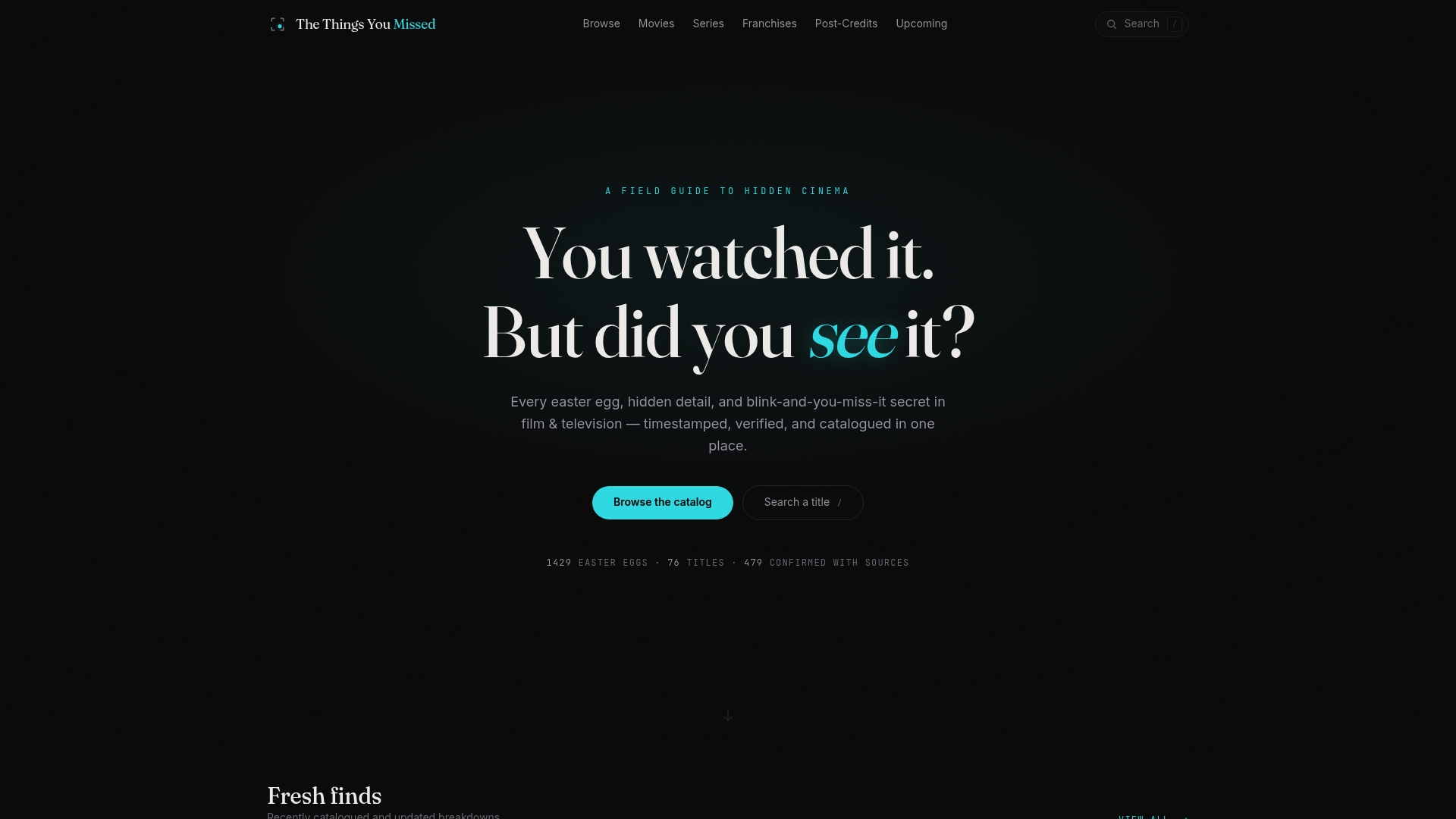
- Searchable, timestamped Easter egg entries with sourced references
- Spoiler-safe navigation by title, franchise or motif
Start with our answer page on how many Easter eggs are confirmed, then browse our film catalog for Glass Onion entries.
FAQ
What day did Glass Onion come out?
Netflix released Glass Onion: A Knives Out Mystery after a limited theatrical run. The exact calendar dates for the theatrical and streaming releases are not listed in the sources we reviewed, so check Netflix’s official release information for the precise days.
What are Easter eggs in a movie?
Easter eggs are hidden details, references or inside jokes that filmmakers tuck into a scene for attentive viewers. They can be cameos, props, music cues or visual callbacks, and some double as fair-play clues in a mystery.
Why does Glass Onion end the way it does?
The ending pays off the film’s central idea that wealth and apparent genius can be an illusion. The Mona Lisa’s destruction is the physical expression of that theme, and the structure was designed so the finale feels earned, as Rian Johnson described in his RogerEbert.com interview.
Are they making another Glass Onion?
Reporting from a TIFF Q&A says the filmmakers plan to keep making Knives Out films as long as Daniel Craig is interested. That points to more Benoit Blanc mysteries rather than a direct Glass Onion sequel, and we have no confirmed details beyond that.
Sources
Separating intentional references from post-production additions matters if you want to credit the right people. Here is the quick map:
- ‘Glass Onion’: All the Easter Eggs Hidden in Rian Johnson’s Mystery
- Endings Are My Favorite Thing About Movies: Rian Johnson on Glass Onion: A Knives Out Mystery
- Glass Onion Rian Johnson behind the scenes
If you enjoy the puzzle-party setup, the same itch can be scratched at home: Murder in Prague sells a cinematic murder mystery kit with a physical evidence box and a companion app.