The Pizza Planet Truck: Every Pixar Cameo and Where to Find It
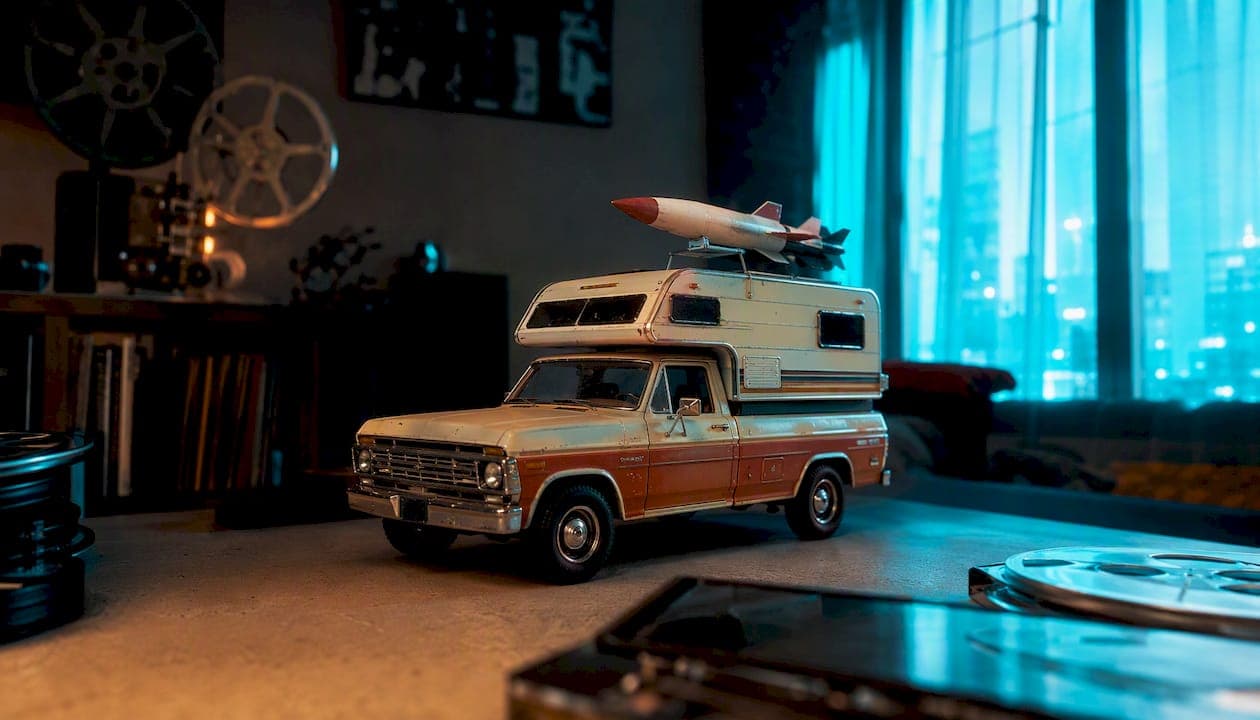
The Pizza Planet Truck is Pixar’s most beloved recurring Easter egg: a battered yellow delivery pickup first introduced in Toy Story (1995) that has since appeared, in some form, across nearly every Pixar feature film. Whether you’re planning a freeze-frame rewatch or just want to know what you’ve been missing, here’s the full breakdown.
Quick hits before you dive in:
- First appearance: Toy Story (1995), where it plays an actual plot role
- Confirmed cameos: Toy Story 2, A Bug’s Life, Monsters, Inc., Finding Nemo, Cars, Ratatouille, WALL-E, Up, Brave, Inside Out, Soul, Toy Story 4, and Toy Story 5
- What this guide covers: film-by-film scene notes with timestamps where available, production context on how Pixar hides and re-skins the vehicle, fan trivia, and links to Thethingsyoumissed’s verified, timestamped Pixar Easter eggs catalog for quick navigation
Key Takeaways
The Pizza Planet Truck is Pixar’s most consistent Easter egg, appearing in some form across nearly every feature film since 1995, from a full plot-driving vehicle to a wooden carving to a tattoo.
| Point | Details |
|---|---|
| Origin and canonical identity | First appeared in Toy Story (1995); fictional model name is the 1978 Gyoza Mark VII Lite Hauler |
| Core visual identifiers | Look for faded yellow paint, white camper shell, roof rocket ornament, and “YO” tailgate detail |
| How Pixar disguises it | Retexturing, silhouette substitution, focal-depth blurring, and prop-category translation (carvings, tattoos, orbs) |
| Where to freeze-frame | Background corners of exterior scenes, parking lots, street shots, and any scene in a cluttered interior space |
| Thethingsyoumissed | Verified, timestamped Pixar Easter egg catalog with spoiler-safe browsing and franchise filters |
Table of Contents
- What is the Pizza Planet Truck and where did it come from?
- How to identify the truck on-screen
- Every confirmed Pizza Planet Truck appearance, film by film
- Where else does the truck show up beyond the films?
- Fan theories and the trivia that makes this truck legendary
- How Pixar actually hides and re-skins the truck
- The most memorable shots: a descriptive gallery
- Thethingsyoumissed has every Pixar cameo cataloged and timestamped
- Why the truck matters more than you might think
- Sources
What is the Pizza Planet Truck and where did it come from?
The truck’s origin is Toy Story (1995), and it’s not a background extra there. It’s a plot device. Woody and Buzz need a ride to Pizza Planet, the arcade restaurant where Andy’s family is headed, and the truck is their vehicle of choice. It pulls into a gas station, Buzz spots the “spaceship” logo on the side, and the two hitch a ride in the back. That single scene locked the vehicle into Pixar’s visual vocabulary forever.
According to the Pixar Wiki on Fandom, the truck’s fictional designation is the 1978 Gyoza Mark VII Lite Hauler, a name that nods to the real-world design inspiration: late-1970s Toyota pickup trucks with camper shells. The name itself is a deep cut, blending Japanese food culture (“gyoza”) with the kind of utilitarian model-number language you’d find on an actual fleet vehicle. It’s the kind of detail that rewards the obsessive.
Why did it stick? Partly because the truck is visually simple and immediately readable, even at a distance. Partly because Pixar’s production pipeline made it easy to re-use a finished 3D asset across projects. And partly because the studio’s in-joke culture thrives on exactly this kind of recurring prop.
How to identify the truck on-screen
Before you can spot it, you need to know what you’re looking for. The truck’s core design is consistent enough that even a blurred background version is recognizable once you’ve trained your eye.
Core visual cues:
- Faded yellow paint on the cab and bed, often slightly weathered
- White camper shell over the truck bed
- Rocket or pizza-slice ornament on the roof of the camper shell (the most reliable freeze-frame tell)
- Red “Pizza Planet” signage on the door or side panel
- “YO” visible on the tailgate, the back half of a longer word cut off by the frame
Variations to watch for:
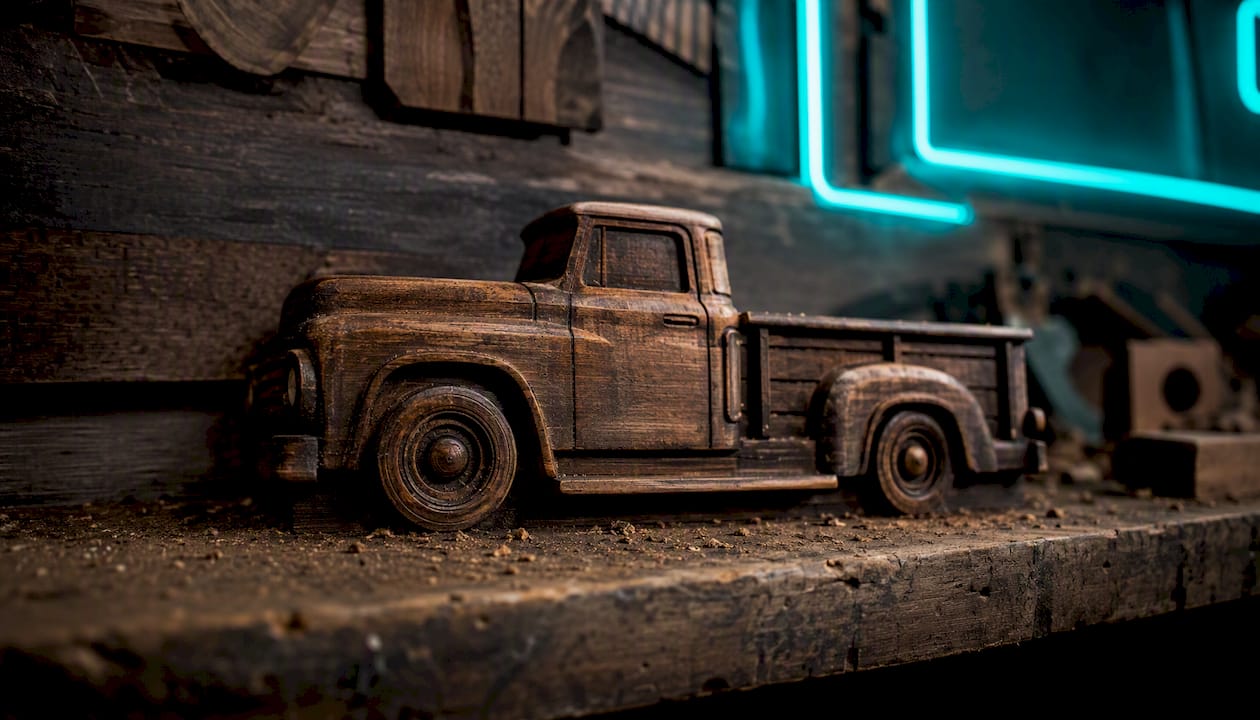
- A wooden carving of the truck’s silhouette (used in Brave)
- A tattoo version on a character’s arm (Toy Story 4)
- A blurred or miniaturized form inside a memory orb (Inside Out)
- Background glimpses in crowd scenes where only the yellow cab is visible
Pro Tip: In wide shots and ensemble scenes, don’t scan the whole frame at once. Lock your eye on the upper-left or upper-right background corners first, then sweep the midground. The rocket silhouette and yellow-against-neutral contrast are the fastest identifiers. Pause at any moment with a parking lot, street, or open exterior.
Every confirmed Pizza Planet Truck appearance, film by film
D23’s official guide confirms appearances across a wide range of Pixar features, noting that some are obvious and others require serious freeze-frame dedication. The table below catalogs confirmed sightings with scene cues and timestamps where sources provide them.
Freeze-frame guidance by film type:
- Plot-adjacent appearances (Toy Story, Toy Story 2): The truck is large and centered. You won’t miss it, but pause anyway to read the signage details.
- Background cameos (Ratatouille, Up, Monsters, Inc.): Scan the street-level midground during any exterior scene. The yellow cab against gray or brown backgrounds pops fast.
- Disguised appearances (Brave, Inside Out, Toy Story 4): These require knowing the scene. For Brave, the witch’s cottage is the location; for Inside Out, watch the memory-orb sequences closely.
Business Insider’s breakdown provides additional timestamp context for several of these entries and is worth cross-referencing for the early-era films.
Where else does the truck show up beyond the films?
The Pizza Planet Truck’s reach extends well past Pixar’s feature filmography. Fan culture and Disney’s own merchandise machine have both latched onto it.
Video games:
- The truck appears in tie-in video games connected to Pixar properties, including cameos in The Incredibles video game and various LEGO game adaptations of Pixar titles. These appearances tend to be background props or unlockable references rather than playable elements.
Theme parks and events:
- During Pixar Fest at Disneyland Resort, a Pizza Planet Truck-themed popcorn bucket became one of the event’s most sought-after collectibles, selling out repeatedly. The truck’s silhouette and color scheme translated directly to the bucket’s design.
- Physical truck replicas and themed carts have appeared at Disney California Adventure during Pixar-themed events, giving park guests a real-world version to photograph.
Fan tributes and builds:
- The RealTruck feature on the Pizza Planet Truck documents fan-built recreations of the vehicle, with enthusiasts sourcing late-1970s Toyota pickups and customizing them with the yellow paint, camper shell, and rocket ornament. Several of these builds have appeared at car shows and fan conventions.
- Social media accounts dedicated specifically to tracking Pizza Planet Truck sightings have built followings in the thousands, crowd-sourcing frame grabs and timestamped screenshots from new releases.
Fan theories and the trivia that makes this truck legendary
The Pizza Planet Truck has generated more fan analysis than almost any other Pixar Easter egg, and for good reason. It’s not just a recurring prop. It’s a connective thread that fans have used to build the case for a unified Pixar universe.
Key trivia and patterns:
- The truck’s fictional model name, the 1978 Gyoza Mark VII Lite Hauler, was never announced in any film. It emerged through fan research and was later confirmed by community sources like the Pixar Wiki.
- The “YO” tailgate detail is a consistent callback. It’s the back half of a word (presumably “GYOZA” or a longer brand name) that’s always partially obscured, a deliberate tease for frame-by-frame hunters.
- Cars is the one Pixar film where the truck couldn’t logically exist as a vehicle in-universe (since all characters are cars), so it appears on a TV screen instead. That workaround is itself a piece of trivia fans love.
- The truck’s absence from Cars 2 and Cars 3 as a full vehicle is sometimes cited as evidence that Pixar’s animators treat the cameo as a creative puzzle rather than a contractual obligation.
- CBR’s compilation of hiding spots notes that the disguised versions (tattoos, carvings, orbs) represent a deliberate escalation in difficulty, as if the studio is raising the bar for its own fans.
How Pixar actually hides and re-skins the truck
Understanding why the truck keeps appearing requires a quick look at how Pixar’s production pipeline works, and why a single 3D asset becomes a studio-wide tradition.
-
Asset re-use is standard practice. Once a 3D model is built, textured, and rigged, it costs relatively little to drop it into a new scene. The Pizza Planet Truck’s model was completed for Toy Story and has been available to every subsequent production team as a library asset.
-
Retexturing adapts it to new worlds. The base geometry stays the same, but animators can swap the surface texture entirely. A wooden texture turns the truck into a carving; a flat, stylized texture makes it fit a 2D-adjacent visual style. This is how the Brave witch’s cottage cameo works.
-
Silhouette substitution is the subtlest technique. In scenes where the truck appears as a background blur or a distant shape, animators rely on the vehicle’s distinctive silhouette (cab plus camper shell plus roof ornament) to remain readable even without color or detail. Your brain fills in the rest.
-
Scale and focal depth trickery. Placing the truck in the deep background and using a shallow depth of field blurs it just enough to be deniable. It’s there, but you need to know it’s there. This technique appears in several street-scene cameos.
-
Embedding as a prop or motif. The Inside Out memory-orb version and the Toy Story 4 tattoo are examples of the truck being translated into a different object category entirely. It’s no longer a vehicle; it’s a representation of a vehicle. This is the hardest version to spot and the most satisfying to find.
-
Matching the film’s visual world. MovieWeb’s breakdown of re-skinned appearances emphasizes that the animators always make the truck feel native to its host film. The Brave carving looks like it belongs in a medieval Scottish cottage. The Soul version fits the Hall of Everything’s chaotic abundance. The cameo earns its place rather than disrupting the scene.
-
In-joke culture as creative fuel. Former Pixar animators have noted in interviews that Easter eggs like the truck function as morale-building inside jokes, a way for teams to leave a personal mark on a film without breaking the story. The truck is the most visible expression of that culture.
The most memorable shots: a descriptive gallery
These are the frames worth hunting down, described for readers who want to know exactly what they’re looking at before they hit pause.
Toy Story (1995) — Gas station arrival (~0:44): The truck pulls into frame in full, glorious detail. This is the only time in Pixar’s filmography where the vehicle gets a proper hero shot. The Pizza Planet logo is crisp, the rocket on the roof is unmistakable, and the faded yellow paint reads as authentically worn. Freeze here and read every inch of the door panel.
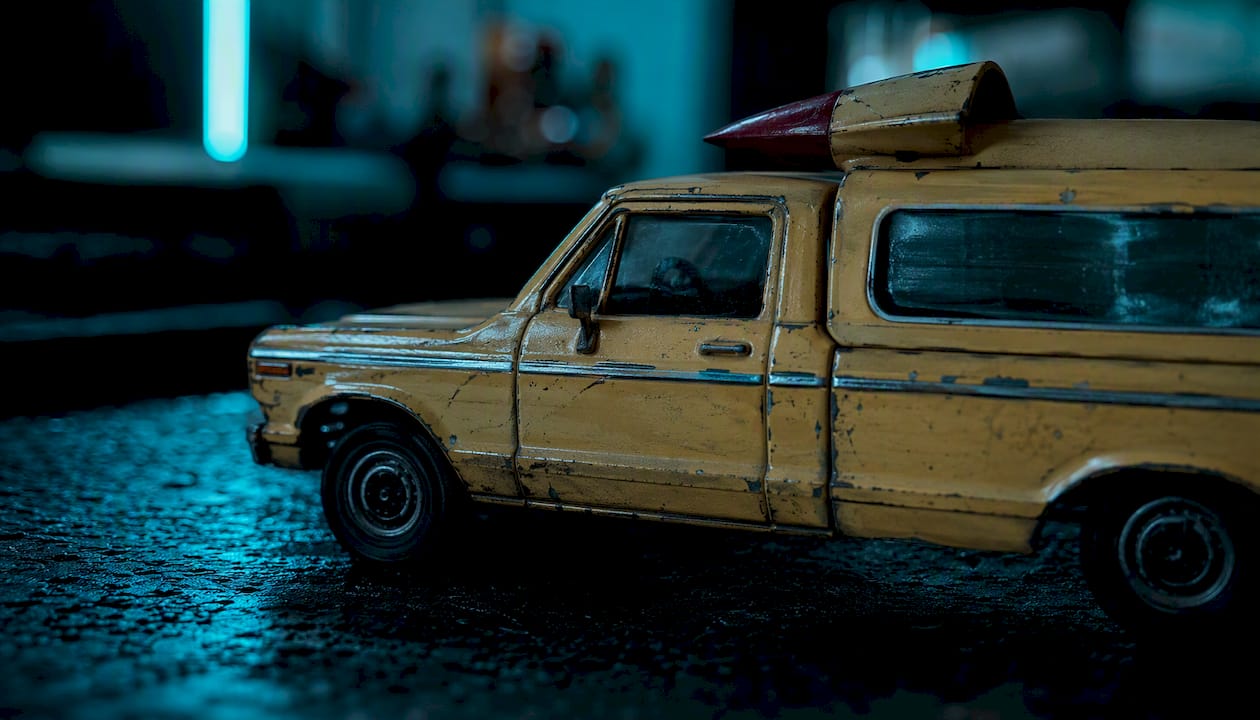
Toy Story 2 (1999) — Parking-lot chase (~0:18): The truck appears during the frantic rescue sequence. It’s moving, which makes it harder to catch, but the yellow cab against the gray lot is a strong contrast. Pause during any wide shot of the parking area.
Cars (2006) — TV screen cameo: Blink and you’ll miss it. The truck appears on a television visible in the background of a scene. The screen is small and the shot is brief, so scrub slowly through any interior scene with a TV in frame.
Brave (2012) — Witch’s cottage carving: This is the most creative disguise in the catalog. Among the dozens of wooden sculptures in the witch’s workshop, one is unmistakably the truck’s silhouette. Scan the shelves and walls during any scene in the cottage.
Inside Out (2015) — Memory orb sequence: The truck appears miniaturized inside one of Riley’s memory orbs. The orb scenes move quickly, so pause during any close-up of the orb collection. The yellow-and-white color combo is your tell even at thumbnail size.
Soul (2020) — Hall of Everything: The Hall of Everything is deliberately overwhelming, packed with objects from across human experience. The truck is in there. Scan the background during wide shots of the hall; look for the camper-shell silhouette among the clutter.
Toy Story 4 (2019) — Tattoo cameo: A character at the antique fair has the truck tattooed on their arm. It’s a quick shot, but the detail is sharp enough to confirm. Watch for close-ups of arms and hands during the fair scenes.
Toy Story 5 (2026) — Full vehicle return: After years of disguised and embedded cameos, the truck returns as an actual on-screen vehicle in Toy Story 5. ComicBook’s coverage frames this as a genuine fan moment, a callback to the truck’s original plot role that rewards long-time viewers. For verified timestamps, the Toy Story 5 Easter eggs page on Thethingsyoumissed has the exact moment cataloged.
For screenshot use, fair-use considerations apply to all Pixar stills. Thethingsyoumissed’s fair use and copyright policy covers how the site handles timestamped frame grabs.
Thethingsyoumissed has every Pixar cameo cataloged and timestamped
If you’re planning a rewatch with a freeze-frame checklist, building one from scratch is the slow route. Thethingsyoumissed’s Pixar Easter eggs catalog gives you verified, timestamped entries for hidden details across Pixar’s filmography, including Pizza Planet Truck sightings, with spoiler-safe browsing so you can look up one film without accidentally reading ahead.

The catalog is built for exactly this kind of hunt: filter by franchise, browse by motif, or search by title. Every entry is verified and linked to its source. The weekly newsletter surfaces new additions and upcoming releases being cataloged, so you never miss a fresh sighting. For the full movie Easter eggs database across all studios, that’s your next stop.
Why the truck matters more than you might think
Here’s what most Easter-egg roundups get wrong about the Pizza Planet Truck: they treat it as a trivia footnote, a fun fact to drop at a dinner party. That undersells what it actually does for rewatch culture.
The truck is a scavenger-hunt engine. Every new Pixar release now arrives with a community already mobilized to find it, frame by frame, within hours of the film’s debut. That collective hunt is a form of engagement no marketing campaign can manufacture. It turns passive viewers into active participants, and it rewards the kind of obsessive attention to detail that defines the best film fandom.
What’s more, the truck’s increasing difficulty over the years tells you something real about Pixar’s relationship with its audience. The studio started with a full hero shot in Toy Story, moved to background cameos, then to disguised versions (carvings, tattoos, orbs), and now, with Toy Story 5, brought it back as a full vehicle. That arc isn’t accidental. It’s a studio that knows exactly who’s watching and how closely.
Thethingsyoumissed exists precisely for that viewer: the one who pauses, rewinds, and wants the timestamp confirmed before moving on. The recurring motifs catalog on the site treats the truck not as a one-off trivia item but as a cross-film motif with a documented history, which is exactly what it is.
Sources
These are the highest-value references used for timestamps, production context, and cameo verification throughout this guide.
- Pizza Planet Truck - Pixar Wiki - Fandom
- Where to Find the Iconic Pizza Planet Trucks in Pixar Films
- Where to Find Pizza Planet Truck in ‘Soul’ and Other Pixar Movies - Business Insider
- 10 Best Places Pixar Has Hidden The Pizza Planet Truck
- Times the Pizza Planet truck was snuck into Pixar movies
- Comicbook
Recommended
- Toy Story 5 Easter Eggs: All 20 Hidden Details & References Explained (2026) — The Things You Missed
- The Super Mario Galaxy Movie Easter Eggs: All 19 Hidden Details & References Explained (2026) — The Things You Missed
- Back to the Future Easter Eggs: All 18 Hidden Details & References Explained (1985) — The Things You Missed