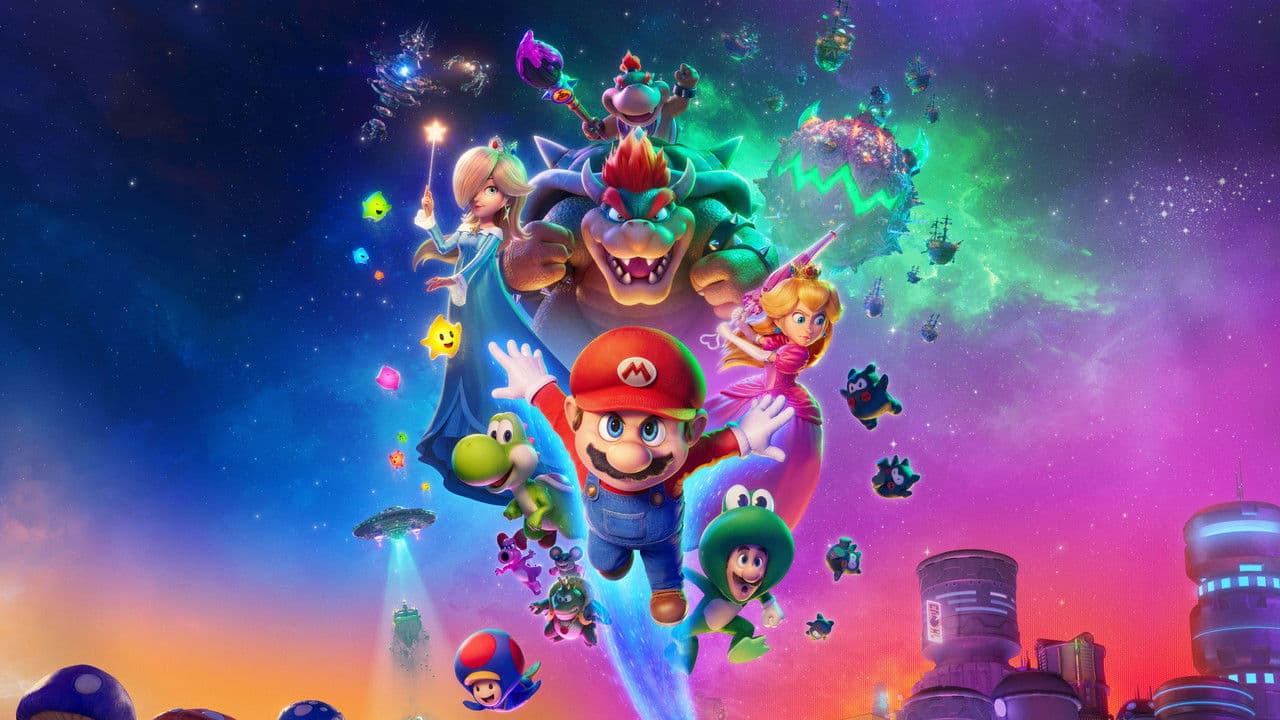
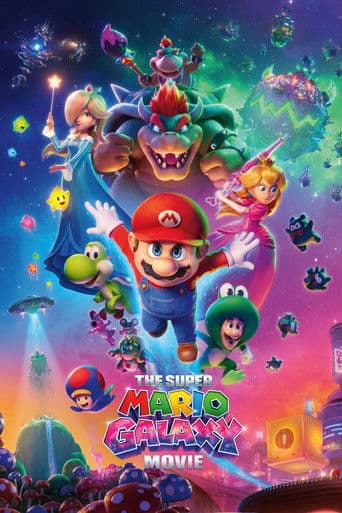
The Things You Missed

The Super Mario Galaxy MovieEaster Eggs & Hidden Details

Miyamoto told audiences to study every starport spaceship closely — and that's before the score's 300+ hidden game-music references.

2026 · Film · 98 min · Aaron Horvath, Michael Jelenic

19 eggs catalogued6 confirmed2 post-credit scenesupdated 2026-07-08

The short version

The Super Mario Galaxy Movie (2026) hides 19 catalogued easter eggs and hidden details, 6 of them confirmed by official sources. Standouts include the score hides 300+ game references — written from a hospital bed, director's favorite: departure boards in original game boy graphics and the fake brick wall that resurrects the minus world. Every entry below includes where to look, a spotting difficulty, and sources.

Every egg on this page

  1. Rosalina's Storybook Opening Recreates the Games' Saddest Secret
  2. The Dark Prognosticus Sits on Rosalina's Bookshelf
  3. Rosalina Beats Megaleg Exactly the Way You Did in 2007
  4. Peach's Party Piñata Is 8-Bit Bowser
  5. Kamek's Coffee Mug Teases Professor E. Gadd
  6. Bowser Jr. Sleeps With a King Kaliente Plushie
  7. Bowser Jr.'s Arsenal: Sunshine's Paintbrush Meets the Wonder Flower
  8. The Starport Fleet Miyamoto Dared You to Freeze-Frame
  9. Director's Favorite: Departure Boards in Original Game Boy Graphics
  10. R.O.B. Runs the World's Least Helpful Information Desk
  11. Fox McCloud, the Pilot Who Pitched His Own Movie
  12. The Fake Brick Wall That Resurrects the Minus World
  13. Wart's Casino Is a Full Super Mario Bros. 2 Reunion
  14. The Casino's Neon Was Painted With Mario Kart 8's Palette
  15. Daisy's Flower Emblem Hides in Plain Sight Before Her Reveal
  16. Yoshi's Brooklyn Detour Settles a Score From the First Movie
  17. The Climax Restages 1985's Axe-Bridge Finale — With a Dry Bowser Twist
  18. A Luma Crowns Mario Like Galaxy 2's 120-Star Ending
  19. The Score Hides 300+ Game References — Written From a Hospital Bed

Shigeru Miyamoto doesn't usually do scavenger-hunt marketing, but ahead of this film's April 2026 release he told viewers point-blank: "Look at each flying spaceship closely, you're sure to recognize them from somewhere." He wasn't bluffing. The Gateway Galaxy starport alone hides a Joy-Con shuttle, an N64-controller starship, Samus's gunship, and a rocket full of Pikmin — and that's before Peach and Toad ever descend into Wart's neon casino.

Directors Aaron Horvath and Michael Jelenic have each gone on record with a personal favorite, and both are deep cuts: Horvath loves the starport's departure boards rendered in original Game Boy graphics, while Jelenic points to a fake brick wall that resurrects the infamous Minus World glitch from 1985's Super Mario Bros. Fan breakdowns have catalogued 76-plus on-screen references, and outlets like ScreenRant count over 50 — this really is the rare sequel where the background is a second movie.

The deepest layer isn't visual at all. Composer Brian Tyler — who, it later emerged, wrote much of the score from a hospital bed and told no one — threaded more than 300 references to classic Mario game music through the film, anchored by Super Mario Galaxy's beloved Gusty Garden Galaxy theme. Below are the standouts we could verify, ordered roughly as they appear, from plain-sight cameos to white-whale secrets straight from crew interviews.

The full catalog

Type
Status
Difficulty

Rosalina's Storybook Opening Recreates the Games' Saddest Secret

ReferenceMusic Secret Community ConsensusSecond Watch

WHERE TO LOOK · The opening sequence aboard the Comet Observatory, before the main plot kicks off

The film opens with Rosalina (Brie Larson) reading a bedtime story to her Lumas aboard the Comet Observatory — a direct lift of the optional storybook chapters from Super Mario Galaxy (2007), where her tragic backstory unfolds one page at a time in the Observatory's library. Listen closely: a few notes of the games' storybook theme play under the scene, and the Lumas' coos are the actual voice clips from the Wii games. The Observatory itself is modeled tightly on its in-game counterpart, right down to the domed towers orbiting a central beacon.
The Dark Prognosticus Sits on Rosalina's Bookshelf

Hidden DetailReference Community ConsensusDeep Cut

WHERE TO LOOK · Background shelves during the storytime scenes in the Comet Observatory's library

Freeze-frame Rosalina's library and the shelves turn into a Mario RPG reading list. Fans have identified the Dark Prognosticus — the doom-prophecy tome that drives the plot of Super Paper Mario (2007) — alongside a book bearing a Shine Sprite from Super Mario Sunshine, and spines whose designs echo Tippi, the Royal Stickers, and other deep-lore iconography. It's a two-second background pan that quietly canonizes some of the strangest corners of the Mario library.

Rosalina Beats Megaleg Exactly the Way You Did in 2007

ReferenceMusic Secret Community ConsensusSecond Watch

WHERE TO LOOK · The Megaleg assault on the Comet Observatory in the first act

Megaleg — the planet-sized mechanical walker that serves as one of Super Mario Galaxy's first bosses — attacks the Observatory early in the film. The fight is pure gameplay translation: Megaleg fires Bullet Bills, and Rosalina catches one and hurls it back, mirroring how players had to lure Bullet Bills into the glass dome on Megaleg's head to crack it open. The moment lands harder because the score swells into the Gusty Garden Galaxy theme as she fights.

Peach's Party Piñata Is 8-Bit Bowser

Hidden DetailReference Community ConsensusSecond Watch

WHERE TO LOOK · Princess Peach's birthday party in the Mushroom Kingdom, early in the film

At Princess Peach's birthday celebration in the Mushroom Kingdom, the piñata is shaped like Bowser's original NES sprite from 1985's Super Mario Bros. — blocky pixels and all. It's a cheeky bit of in-universe symbolism given that the real Bowser spends this movie shrunken and behind bars. The party sequence doubles down with fireworks that burst into Super Mushroom and Super Star shapes, echoing the end-of-level fireworks tradition from the classic side-scrollers.

Kamek's Coffee Mug Teases Professor E. Gadd

Hidden DetailForeshadowing Community ConsensusFreeze Frame

WHERE TO LOOK · Kamek holds the mug during a quieter Mushroom Kingdom scene — watch his hands, not his face

Kamek drinks from a mug printed with the silhouetted logo of Professor E. Gadd, the ghost-hunting scientist from the Luigi's Mansion series. E. Gadd has never appeared in the film universe, so fans immediately read the mug as a breadcrumb toward a Luigi-led spin-off — especially since Luigi's arc in this movie leans into him stepping out of Mario's shadow. Whether it's a genuine setup or just merch in the Mario universe, it's one of the most-discussed props in the film.

Bowser Jr. Sleeps With a King Kaliente Plushie

Hidden DetailReference Community ConsensusFreeze Frame

WHERE TO LOOK · The Bowser Jr. childhood flashback in his bedroom on Planet Bowser

A flashback to Bowser Jr.'s bedroom shows the young villain surrounded by plush toys of famous baddies — including King Kaliente, the lava-dwelling octopus boss from Super Mario Galaxy. It's a double-layered gag: the plushies characterize Junior as a kid who idolizes villains the way real kids idolize heroes, and the Kaliente pick quietly signals which game this movie is drawing its universe from. Grrrol and Peewee Piranha designs also show up as Ferris wheel decorations on Bowser's planet.

Bowser Jr.'s Arsenal: Sunshine's Paintbrush Meets the Wonder Flower

ReferenceHidden Detail Community ConsensusSecond Watch

WHERE TO LOOK · Bowser Jr. wields the brush throughout; the Super Scope appears in his baby-ray ambush

Bowser Jr.'s signature weapon is the Magic Paintbrush from Super Mario Sunshine (2002) — the same brush he used to frame Mario as Shadow Mario in his debut game — but here its reality-warping powers are fused with the Wonder Flower chaos from Super Mario Bros. Wonder (2023), and his doomsday machine visibly riffs on Wonder Bowser. He also packs a ray gun modeled on the SNES Super Scope light gun, which he uses to zap Mario, Luigi, and Toad into babies — a hardware deep cut disguised as a plot device.

The Starport Fleet Miyamoto Dared You to Freeze-Frame

Hidden DetailCameoReference ConfirmedFreeze Frame

WHERE TO LOOK · Wide shots of the Gateway Galaxy starport and hangar bay — pause on every ship

Producer Shigeru Miyamoto personally flagged this one: "Look at each flying spaceship closely, you're sure to recognize them from somewhere." The Gateway Galaxy starport is packed with hardware-shaped vessels — a shuttle built like a detachable Nintendo Switch Joy-Con pair, an N64-controller starship, and an SNES controller resting in the hangar bay. Sharper eyes caught Samus Aran's gunship leaving the flight deck and a squad of red, blue, and yellow Pikmin boarding an Onion-shaped rocket, complete with a musical sting — Miyamoto has smuggled Pikmin into both Mario movies.

Director's Favorite: Departure Boards in Original Game Boy Graphics

Hidden DetailReference ConfirmedDeep Cut

WHERE TO LOOK · Departure boards and signage around the Gateway Galaxy starport terminal

Co-director Aaron Horvath calls this his "most favorite obscure Easter egg": the Gateway Galaxy starport's departure signage is rendered in the chunky, olive-tinted graphic style of the original Game Boy. Look at what's listed, too — the boards advertise routes to real Super Mario Galaxy levels including Good Egg, Sweet Sweet, Beach Bowl, Dusty Dune, Sea Slide, and Snowcap galaxies, alongside logos for Galaxy Air and Propeller Toad Transport. It's world-building written entirely in fan service.

R.O.B. Runs the World's Least Helpful Information Desk

CameoMeta Community ConsensusFreeze Frame

WHERE TO LOOK · The information desk in the Gateway Galaxy terminal

The Gateway Galaxy's information desk is staffed by R.O.B., the Robotic Operating Buddy accessory Nintendo shipped with the NES in 1985 — and the movie makes him exactly as slow and clunky as the real peripheral was. It's a rare easter egg that's also a self-roast: R.O.B. was designed to sneak the NES into toy aisles after the 1983 video game crash, and his legendary uselessness is the whole joke here. Kids see a funny robot; retro collectors see Nintendo laughing at its own history.

Fox McCloud, the Pilot Who Pitched His Own Movie

CameoReference ConfirmedPlain Sight

WHERE TO LOOK · Fox is introduced at the Gateway Galaxy starport and flies the crew for much of the second act

The gang's hired pilot at the Gateway Galaxy is Fox McCloud of Star Fox, voiced by Glen Powell — a casting born from Powell pitching an actual Star Fox movie to Illumination boss Chris Meledandri. The film stuffs his scenes with nods: Toad tells him "Do a barrel roll!" (the series' most famous line, originally Peppy's), his Arwing cockpit buttons are colored like an SNES controller's face buttons, and he signs off missions with Star Fox's recurring "good luck." His mid-credits departure to his own quadrant of the universe is Nintendo openly leaving the hangar door open for a spin-off.

The Fake Brick Wall That Resurrects the Minus World

Hidden DetailReference ConfirmedDeep Cut

WHERE TO LOOK · The tunnel chase after Ukiki beneath the Gateway Galaxy — read the corridor walls

When Peach and Toad chase the thieving monkey Ukiki, the darkest corridor wall is stenciled "Level 1-2" — the underground stage from the original Super Mario Bros., drawn in that level's darker palette. The payoff: a false brick wall in that corridor conceals the entrance to a hidden underground city, exactly how players clipped through the bricks at the end of World 1-2 to reach the glitched Minus World. Co-director Michael Jelenic names this his favorite egg in the film, saying it recreates the feeling of discovering that impossible hidden level in 1985.

Wart's Casino Is a Full Super Mario Bros. 2 Reunion

CameoReference Community ConsensusSecond Watch

WHERE TO LOOK · Wart's Casino in the underground city, midway through the film

The crime boss running the casino beneath the Gateway Galaxy is Wart — the frog king final boss of Super Mario Bros. 2 (1988), voiced by Luis Guzmán, making his first major appearance in decades. The whole set is an SMB2 shrine: the casino concept nods to that game's end-of-level slot machine bonus game, his muscle includes Birdo and Mouser using their original attack patterns, and Wart still spits bubbles. Best of all, he goes down the same way he did in 1988 — hit with a thrown vegetable, after Peach busts out her turnip toss.

The Casino's Neon Was Painted With Mario Kart 8's Palette

Hidden DetailMusic Secret ConfirmedDeep Cut

WHERE TO LOOK · Inside Wart's Casino — study the neon signs on each gravity-flipped wall

Co-director Aaron Horvath revealed the casino's look came straight from a racetrack: "There's this one stage in Mario Kart 8 called Neo Bowser City. The team used that as a reference" for the glowing signage. Producer Shigeru Miyamoto added that the room is "peppered with familiar designs" — each wall of the square chamber even has its own gravitational pull, a physics gag imported from Super Mario Galaxy's gravity puzzles. Listen as well as look: a jazzy lounge cover of Super Mario Odyssey's "Jump Up, Super Star!" plays under the gambling.

Daisy's Flower Emblem Hides in Plain Sight Before Her Reveal

ForeshadowingHidden Detail Community ConsensusDeep Cut

WHERE TO LOOK · Background signage during Yoshi's Chain Chomp gulp — one blink and it's gone

Spoiler — tap to reveal

Yoshi's Brooklyn Detour Settles a Score From the First Movie

CallbackCameo Community ConsensusSecond Watch

WHERE TO LOOK · Yoshi's Brooklyn sequence in the second half of the film

Yoshi's jaunt through Brooklyn is a callback gauntlet to the 2023 film: he swallows the same yappy dog that terrorized Mario and Luigi during their plumbing job in The Super Mario Bros. Movie, and the Brooklyn couple from that film's background gags resurface too. The sequence also works in a recreation of the original 1981 Donkey Kong arcade game — a fitting flex, since that cabinet is where Mario (then "Jumpman") made his debut. It's the sequel telling first-movie viewers their rewatch homework paid off.

The Climax Restages 1985's Axe-Bridge Finale — With a Dry Bowser Twist

ReferenceCallback Community ConsensusSecond Watch

WHERE TO LOOK · The bridge showdown during the film's climax

Spoiler — tap to reveal

A Luma Crowns Mario Like Galaxy 2's 120-Star Ending

ReferenceHidden Detail Community ConsensusDeep Cut

WHERE TO LOOK · The final scenes and the stylized end-credits sequence

Spoiler — tap to reveal

The Score Hides 300+ Game References — Written From a Hospital Bed

Music SecretBehind the Scenes ConfirmedWhite Whale

WHERE TO LOOK · Throughout the film — the Gusty Garden theme recurs from the Megaleg fight to the finale

Composer Brian Tyler layered more than 300 references to classic Mario game music into the score, anchored by Super Mario Galaxy's Gusty Garden Galaxy theme — which he had already smuggled into the first movie's closing credits as his own private setup. The wilder story emerged after release: Tyler wrote much of the score from a hospital bed following a double brain hemorrhage, telling no one on the production because, as he put it, he "didn't want to let anyone down." He has said the game quotes are blended so they hit emotionally even for viewers who don't recognize a note.

Is there a post-credit scene in The Super Mario Galaxy Movie?

Yes — The Super Mario Galaxy Movie has 2 post-credit scenes. Two scenes. Mid-credits: Lumalee, the fatalistic blue Luma from the first film, is now a prison guard watching over the incarcerated Bowser and Bowser Jr., while Fox McCloud gets his ship repaired and departs for his own quadrant — a wink toward a possible Star Fox project. After the full credits: back at the Gateway Galaxy, the thieving monkey Ukiki tries one scam too many and gets decked by a princess in a yellow dress — Princess Daisy's big-screen debut, teeing up the next film.

Frequently asked

+How many easter eggs are in The Super Mario Galaxy Movie?

We document 19 standout easter eggs on this page, but the true total runs far higher: ScreenRant catalogued over 50 references and cameos, fan video breakdowns count 76-plus on-screen nods, and composer Brian Tyler says he wove more than 300 game-music references into the score alone. Between visuals and music, the film realistically contains several hundred distinct references to Nintendo history.

+Does The Super Mario Galaxy Movie have a post-credits scene?

Yes — two. A mid-credits scene shows Lumalee working as a prison guard over Bowser and Bowser Jr. while Fox McCloud departs in his repaired ship, hinting at a Star Fox spin-off. Then, after the full credits, a final scene at the Gateway Galaxy reveals Princess Daisy, who punches the thieving monkey Ukiki and makes her film-series debut. Stay all the way to the end.

+Who plays Fox McCloud in The Super Mario Galaxy Movie?

Glen Powell voices Fox McCloud, the Star Fox pilot the heroes hire at the Gateway Galaxy. The casting has a great backstory: Powell, a lifelong Star Fox fan, pitched an actual Star Fox movie to Illumination CEO Chris Meledandri, which led directly to his role here. Fox's mid-credits farewell — flying off to his own quadrant of the universe — deliberately leaves the door open for that spin-off.

+Is Princess Daisy in The Super Mario Galaxy Movie?

Yes, but only just. Daisy appears wordlessly in the post-credits scene, revealed by her yellow dress after she punches the monkey thief Ukiki at the Gateway Galaxy. The film also plants her yellow-and-teal Sarasaland flower emblem on a background sign during Yoshi's Chain Chomp scene — foreshadowing fans spotted in a TV spot before release. Her reveal strongly suggests a bigger role in a third movie.

+What games is The Super Mario Galaxy Movie based on?

The backbone is Super Mario Galaxy (2007) and Super Mario Galaxy 2 (2010) — the Comet Observatory, Rosalina, Lumas, Megaleg, and gravity mechanics all come from those Wii games. But the film raids the whole catalog: Bowser Jr.'s paintbrush is from Super Mario Sunshine, Wart and his casino court come from Super Mario Bros. 2, the Wonder Flower powers are from Super Mario Bros. Wonder, and the climax restages the original 1985 Super Mario Bros. axe-bridge finale.

Last updated 2026-07-08 · Spotted something we missed? Tell us.