Timestamped and Verified: 25 The Office Easter Eggs for Rewatchers
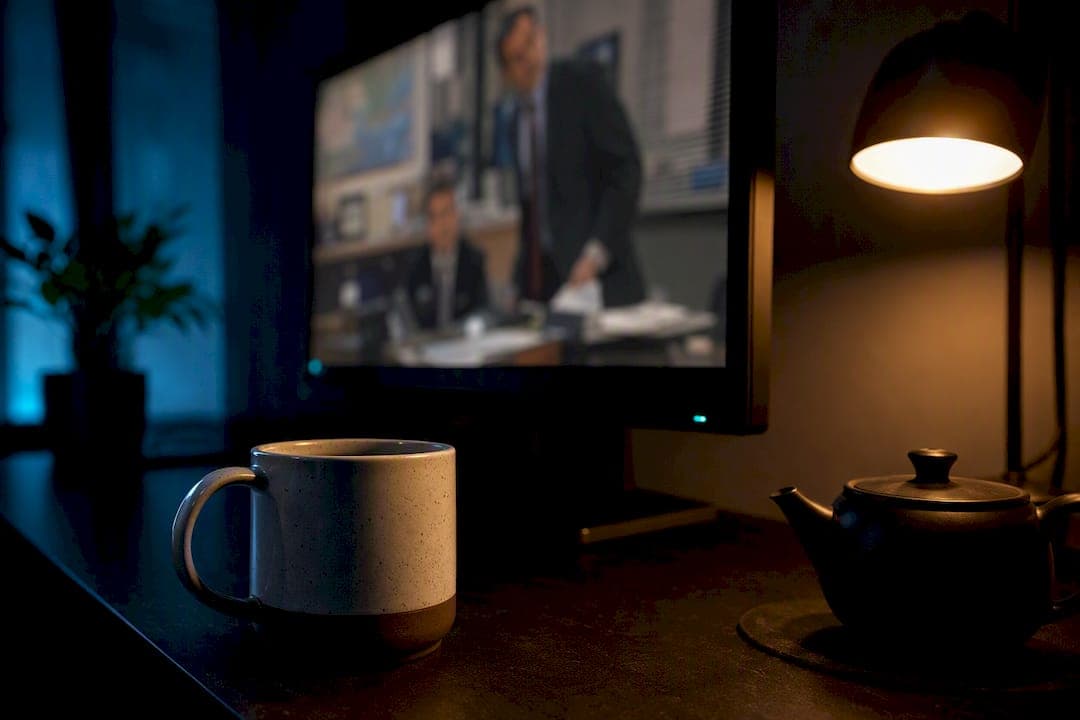
Yes, The Office is loaded with intentional Easter eggs, and the show’s writers, camera operators, and prop department buried enough of them to fuel a decade of rewatches. This list pulls the standout hidden details, each tied to a specific season and episode, plus tips for catching them yourself. Every entry below has been checked against episode footage and cross-referenced according to thorough verification practices.
TL;DR:
- Many background props, such as Michael’s mug and Pam’s teapot, are recurring details that reveal character or story subtleties over multiple seasons.
- Visual framing cues in talking-head interviews indicate characters’ narrative potential or entrapment within the show’s universe.
- Several Easter eggs, like the broken plasma TV and Jim’s changing hairstyle, are unintentional continuity quirks or background habits caught in rewatching.
- Prop and set details, including office supplies and decor, are deliberately seeded to reward attentive viewers with hidden layers of meaning.
- Rewatching with slow playback and precise note-taking can uncover these hidden details, which have been verified through frame confirms and multiple sources.
Table of Contents
- The Office Easter Eggs Worth Rewatching For
- Why The Office Hides So Many Details in Plain Sight
- How to Spot and Timestamp These Details Yourself
- How These Easter Eggs Get Verified
- What Makes a Great Office Easter Egg List
- Browse the Full Office Breakdown
- Sources
The Office Easter Eggs Worth Rewatching For
Some of these are blink-and-you-miss-it prop gags. Others are storytelling choices baked into the cinematography itself. Here are the 25 that reward the most attentive rewatchers.
1. The World’s Best Boss mug has a real paper trail. Michael’s coffee mug, the one David Wallace and the Prince family paper company gift him early on, keeps reappearing across seasons as a quiet signal of how Michael sees himself versus how Corporate sees him. Watch for it on his desk in wide shots long after the joke of its origin has faded from dialogue.
2. Michael’s “Great Scott” salad dressing jar (Season 4, Episode 2). During a lunch scene, a jar labeled “Great Scott” with Michael’s face on it sits in the break room, a self-branding prop that nobody in the scene ever mentions. It’s one of the purest examples of background details you only notice rewatching the show, since the joke depends entirely on the viewer spotting it unprompted.
3. Jim’s hair changes mid-scene more than once. Continuity supervisors weren’t always perfect with Jim’s hairstyle across multi-day shoots for the same in-universe scene, and eagle-eyed viewers have flagged visible length and part differences between cuts, especially in early Season 2. It’s not a joke the writers planted, but it’s become a fan-tracked continuity quirk anyway.
4. Pam’s teapot makes a slow, quiet migration. A small teapot appears on Pam’s desk starting in the early seasons and follows her through desk moves, including her stint at the Michael Scott Paper Company. It’s an unremarkable object doing a lot of quiet character work, marking Pam’s desk as “home base” even as everything else around her shifts.
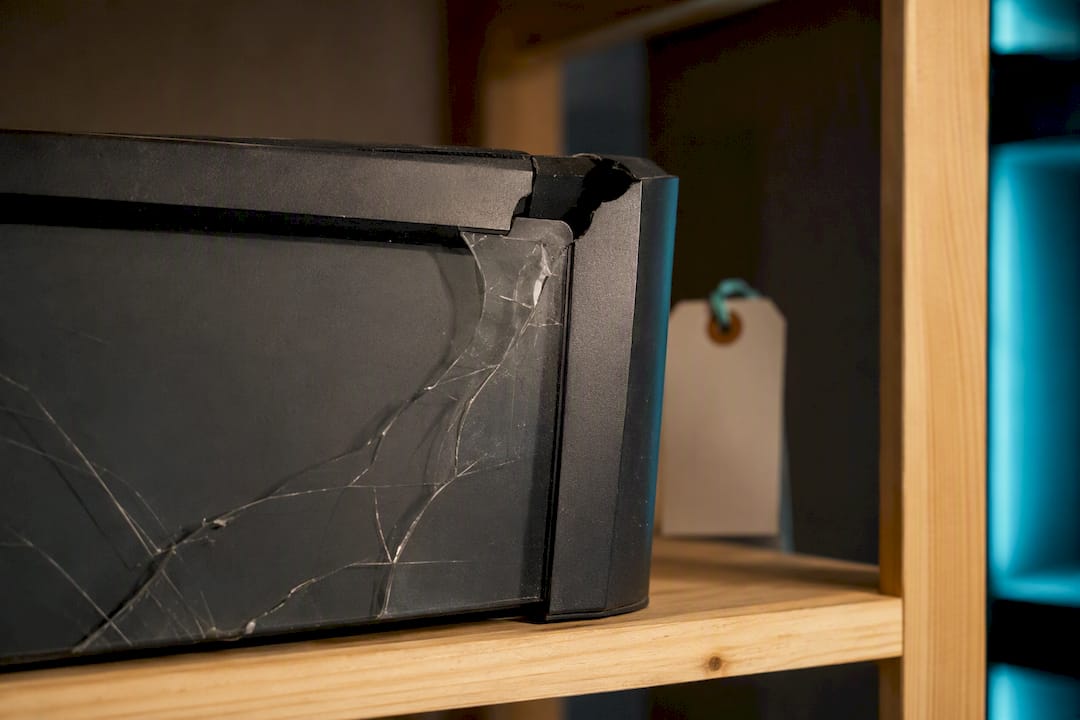
5. The broken plasma TV pays off three seasons later. Michael destroys a TV during “Dinner Party” in Season 4, and the same broken unit resurfaces as a background gag in “Garage Sale” during Season 7, treated as junk nobody wants to deal with. It’s a rare case of a prop joke with an actual multi-year punch line.
6. Talking-head backgrounds aren’t random. Cinematographers placed certain characters in front of windows during their confessional interviews and boxed others into flat interior walls, a deliberate visual cue about who might escape Dunder Mifflin and who’s stuck there. Collider’s breakdown of the talking-head framing traces how Jim gets the window early, and Pam only gets it once her own arc opens up.
7. FreeCell is everywhere in the background. Cast members played the Windows card game FreeCell on their monitors between takes, and because the mockumentary style kept cameras rolling, that unscripted habit became a running visual texture across the series rather than a planted joke.
8. A license plate doubles as an office-supply reference. A background prop plate reading “Chd-0032” lines up with the model number of the colored paper clips Michael favors, a connection BuzzFeed’s Easter egg roundup flags as one of the show’s more obsessive prop gags.
9. Gabe’s medal matches Robert California’s offer. A framed medal on Gabe’s desk mirrors one Robert California later dangles in front of him, a detail Looper documents as a subtle joke about Gabe’s eagerness to please anyone with authority.
10. Dwight’s fantasy salary hides a devil’s number. In “Hotel Hell,” Dwight names $80,000 as his desired salary, which breaks down to roughly $6,666.66 a month. Fans have pointed to the repeating sixes as a deliberate 666 joke buried in a throwaway line of dialogue, the kind of math gag that only works if someone actually does the division.
11. Creed’s continuity is its own puzzle. Creed Bratton’s character contradicts himself constantly about his age, his past jobs, and even his name, and the writers never correct any of it on-screen. Every inconsistency is technically an Easter egg, since the joke is that Creed’s biography is unknowable by design.
12. Andy’s online gaming handles reveal more than they should. Andy references usernames and gamer tags in passing dialogue that tie back to his Cornell obsession and his general need for validation, small verbal Easter eggs that reward viewers paying attention to throwaway lines rather than visual gags.
13. Meredith looks different in the pilot for a real reason. The Meredith Palmer seen in the original pilot isn’t Kate Flannery. A different actor played the role before the show was picked up, and Flannery was cast when the series moved into its full run, according to ScreenRant’s explainer on the recast. It’s a rare documented case of pilot-era continuity that never got smoothed over in later cuts.
14. Wegmans shows up as more than set dressing. Grocery bags and receipts from the regional Wegmans chain appear in break room scenes throughout the show’s Scranton-set run, a product placement choice that doubles as a wink to viewers who know the chain’s real Northeast footprint.
15. The Saticoy Street address is a production in-joke. Dunder Mifflin’s fictional address nods to Saticoy Street, a real Los Angeles street associated with the production side of the show, a small wink from the writers’ room to anyone who bothers to look up the paperwork on-screen.
16. The refrigerator cake topper keeps reappearing. A small decorative item tied to office celebrations shows up in multiple break room scenes across unrelated episodes, treated as permanent scenery rather than a one-off prop, which is exactly the kind of detail a frame-by-frame rewatch catches that a casual viewing never will.
17. Props sometimes arrive before their plot does. Several items that later become plot-relevant, awards, documents, even certain office supplies, appear in the background of earlier episodes well before any character mentions them. It’s the writers seeding payoffs the way a mystery show plants clues, except here the payoff is usually a joke rather than a twist.
18. The opening title sequence hides Scranton in plain sight. Establishing shots in the credits use real Scranton, Pennsylvania landmarks and municipal signage, grounding a mockumentary premise in an actual city most sitcoms would fake on a studio backlot.

19. Background extras change identities between seasons. Several background actors playing unnamed Dunder Mifflin employees swap positions, desks, or apparent roles between early and later seasons without explanation, a continuity blur most viewers only notice once they start rewatching with a critical eye.
20. The theme music’s tempo shifts with the show’s mood. Subtle rearrangements of the show’s main theme, slower and more subdued in dramatic stretches, brighter in comedic runs, function as an audio Easter egg most fans never consciously register despite hearing it every episode.
21. Michael’s DVD collection name-drops real early-2000s culture. Visible titles and references scattered through Michael’s apartment and office point to specific mid-2000s films and pop-culture touchpoints, part of what Joe Sabia catalogued in his exhaustive Office Time Machine project, which counts roughly 1,300 pop-culture references across the series’ run.
22. Kevin’s music posters track his character arc. Band posters and music memorabilia in Kevin’s apartment scenes shift over the seasons to reflect his stated musical tastes, a small continuity detail the art department maintained even though almost no dialogue ever calls attention to it.
23. The conference room whiteboard holds inside jokes. Background whiteboards in meeting scenes occasionally carry handwriting referencing earlier plotlines or crew in-jokes, visible only if you pause and zoom, which is exactly the kind of detail a timestamped database exists to catch.
24. Background sound design hides small character beats. Ambient office noise, phone rings, printer jams, and stapler clicks are timed in certain scenes to land on specific character reactions, an audio Easter egg that works on repeat viewings once you know to listen for it.
25. Dwight’s beet farm signage evolves with his business. Schrute Farms signage and promotional material change subtly across seasons to reflect Dwight’s expanding side ventures, a background detail that tracks his entrepreneurial arc almost as thoroughly as the dialogue does.
Why The Office Hides So Many Details in Plain Sight
The sheer density of Easter eggs in The Office isn’t an accident of a chaotic production. It comes from specific storytelling devices the crew repeated on purpose.
- Talking-head framing carries subtext. Characters interviewed in front of windows were signaling narrative “escape potential,” while those boxed into flat interior walls read as stuck, a distinction Collider traces across Jim and Pam’s arcs specifically.
- Prop callbacks double as character commentary. The broken plasma TV, Pam’s teapot, and Gabe’s medal all function as small character judgments dressed up as background clutter, the kind of detail Looper’s continuity breakdown singles out as deliberate writing rather than coincidence.
- Some Easter eggs were never scripted at all. FreeCell became a running visual motif purely because cast members played it off-camera between takes, and the mockumentary format kept catching it. Jenna Fischer has spoken about how background behavior like this became part of the show’s texture without anyone planning it that way.
Pro Tip: When you spot a background prop that seems oddly specific, pause and ask whether it reappears later. The writers rewarded patient viewers far more often than casual ones ever noticed.
How to Spot and Timestamp These Details Yourself
Catching this stuff reliably takes a system, not just sharp eyes on a random rewatch.
- Slow the playback speed to 0.5x during break room and bullpen scenes, where most background props live.
- Use frame advance on streaming players during talking-head segments to check window placement and background objects.
- Turn on subtitles so you can note the exact timestamp the moment you spot something, rather than scrubbing back later.
- Screenshot anything suspicious, then compare it against later episodes before assuming it’s a one-off prop.
- Prioritize dense-payoff episodes first: “Diversity Day,” “The Injury,” “Dinner Party,” “Stress Relief,” “Niagara,” “Threat Level Midnight,” “Goodbye, Michael,” and “Finale” all carry unusually high concentrations of callbacks and background gags.
- Log everything in a simple format: episode, minute:second, description. That three-field structure is essentially what Thethingsyoumissed uses internally to verify each timestamped entry before it goes live.
Pro Tip: Rewatch “Goodbye, Michael” specifically for prop callbacks. It’s the episode where the show pays off the most background objects it planted over seven seasons.
How These Easter Eggs Get Verified
Every entry above went through the same basic checks Thethingsyoumissed applies across its catalog before anything gets published as a confirmed detail.
- Freeze-frame confirmation. A claimed detail has to actually be visible on-screen, not just described secondhand.
- Episode and timecode logging. Each entry gets tied to a specific season, episode, and approximate timestamp rather than a vague time reference.
- Secondary-source corroboration. Claims get checked against reporting from outlets like Time, Collider, ScreenRant, and Looper before they’re treated as confirmed rather than fan speculation.
- Spoiler-safe organization. The site’s series pages are structured so you can browse by show without stumbling into plot details you haven’t reached yet.
Readers who spot something not yet documented can submit it directly for review and inclusion in future updates.
What Makes a Great Office Easter Egg List
Most roundups of hidden details in this show read like someone scrolled through a fan forum and copied the top-voted comments. That approach gets you volume, not reliability. It also tends to flatten every entry into the same weight, treating a genuine continuity callback like the plasma TV gag the same as a coincidence nobody actually planted.
The better approach treats the show’s Easter eggs the way a continuity supervisor would: sort what’s deliberate (the talking-head framing, the “Great Scott” jar, Gabe’s medal) from what’s emergent (FreeCell, Jim’s hair drift), and cite the episode and timestamp for each. That distinction changes how you watch. Once you know the window-versus-wall framing was intentional, you stop seeing it as trivia and start seeing it as the show quietly telling you who gets to leave.
If there’s one thing worth prioritizing on your next rewatch, it’s the prop callbacks over the trivia. A running gag like the broken TV rewards patience across years of episodes in a way a one-off pop-culture reference never can.
Browse the Full Office Breakdown
The Office isn’t the only show hiding this much on-screen texture, and if fifteen years of Scranton in-jokes weren’t enough, Thethingsyoumissed keeps a growing, spoiler-safe catalog of TV series Easter eggs organized by show and episode, each entry timestamped the same way the list above was built. You can browse the site’s dedicated Michael Scott breakdown for a deeper dive into his self-branding gags and prop continuity, or check the movie Easter egg catalog if you’re chasing details in film franchises next.
Missing entry, or spotted something not listed here? You can request a new breakdown and Thethingsyoumissed will add it to the queue with the same freeze-frame and timecode verification used throughout this list.
Sources
- The Office Easter Egg: The Secret Meaning Behind the Talking Heads
- From the Black Eyed Peas to Battlestar Galactica: Every Single Pop Culture Reference Ever on The Office
- The small hilarious detail that you might have missed on The Office