The Things You Missed

MichaelEaster Eggs & Hidden Details

Thriller shot on the real Boyle Heights street under a real full moon, Michael's actual Grammys used as props, and an assistant director pulled off set to play John Landis.

2026 · Film · 128 min · Antoine Fuqua

20 eggs catalogued12 confirmedno post-creditsupdated 2026-08-10

The short version

Michael (2026) hides 20 catalogued easter eggs and hidden details, 12 of them confirmed by official sources. Standouts include john landis is played by one of the film's own assistant directors, the bass on the tour scenes is played by michael's actual bassist and the thriller zombies dance on the real 1983 street. Every entry below includes where to look, a spotting difficulty, and sources.

Every egg on this page

  1. The Thriller Zombies Dance on the Real 1983 Street
  2. The Jackson Compound and the Off the Wall Studio Play Themselves
  3. "Gary, Indiana" Was Shot a Few Streets From the Encino Mansion
  4. The Motown 25 Stage Is the Pasadena Playhouse
  5. Jaafar Is Holding Michael's Real Grammy Awards
  6. John Landis Is Played by One of the Film's Own Assistant Directors
  7. The Girl in the Thriller Recreation Is Fuqua's Daughter
  8. The Film's Own Makeup Designer Plays the Thriller Makeup Artist
  9. Jaafar Sang Live on Every Take — and You Still Hear Michael
  10. The Bass on the Tour Scenes Is Played by Michael's Actual Bassist
  11. Michael's Own Choreographers Drilled Jaafar Every Single Day
  12. The Moonwalk Is Deliberately the Rougher 1983 Version
  13. Sheryl Crow and Jennifer Batten Are Standing Behind Him at Wembley
  14. The Beat It Gang Members Are Real Street-Dance Royalty
  15. Michael's Son Is Somewhere in the Victory Tour Crew
  16. Bubbles the Chimp Is Entirely Computer-Generated
  17. The Last Line of the Credits Belongs to Tito
  18. "His Story Continues" — the Card That Isn't a Post-Credits Scene
  19. The Lawyer Miles Teller Plays Is a Credited Producer of the Movie
  20. The Film Originally Opened in 1993 With Police at Neverland

Antoine Fuqua staged the Thriller sequence on the actual stretch of Union Pacific Avenue in Boyle Heights where John Landis filmed the zombies in 1983 — and got lucky with the sky. "We shot Thriller at the original location," he told the Motion Picture Association, "and we had a full moon every night." That is the register the whole film operates in: Michael is less interested in inventing images than in going back to the exact addresses, garments and musicians involved the first time and rebuilding the moment on top of them.

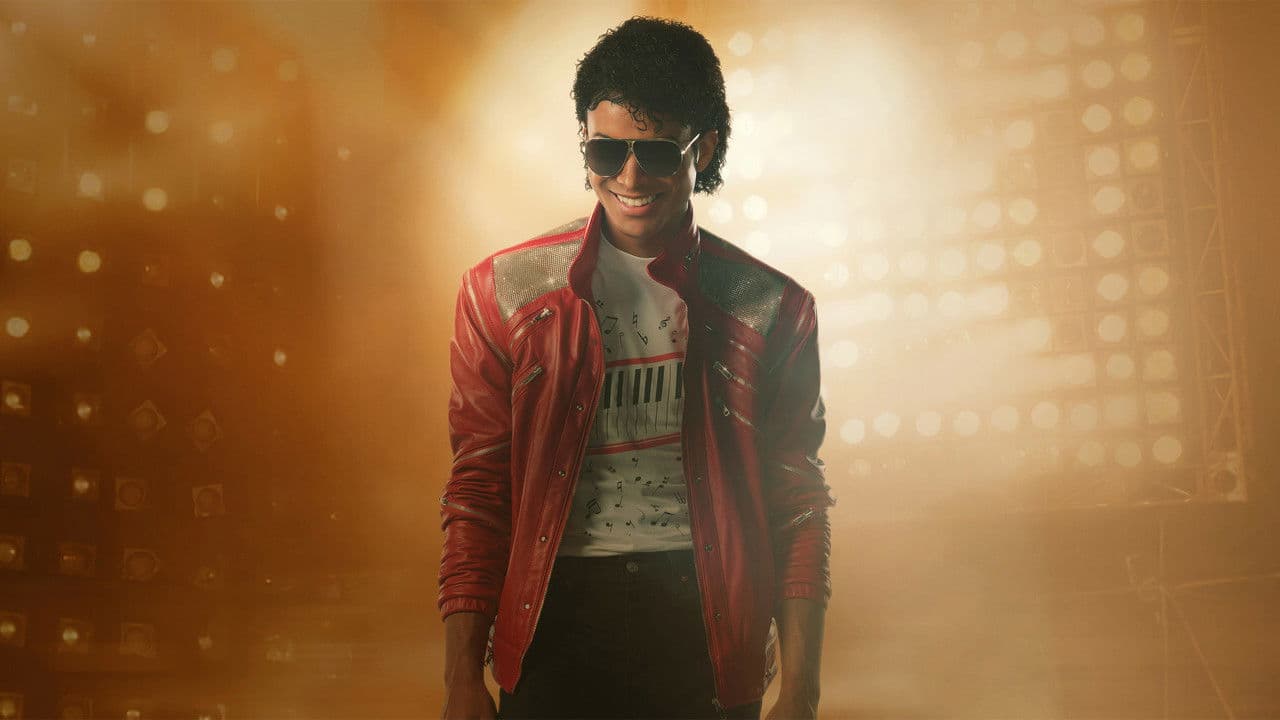
The result is a biopic where most of the hidden material is provenance rather than plot. The Jackson family compound at 4641 Hayvenhurst Avenue plays itself. The Motown 25 stage is the Pasadena Playhouse. When Jaafar Jackson lifts a row of Grammys, Fuqua confirms they are Michael's own trophies, and the jacket he is wearing is a hand-rebuilt copy that costume designer Marci Rodgers hung beside the surviving original to check — fifteen pounds of it. Michael's touring bassist Don Boyette plays the bass parts. Michael's choreographers, Rich and Tone Talauega, drilled Jaafar every day. And music supervisor John Warhurst decided that even where Jaafar sang live on set — and he did, over the playback — the master recordings would stay dominant, so the voice coming out of the screen is almost always the real one. Half the fun of a rewatch is spotting where the seams between 1983 and 2024 are supposed to be, and finding there aren't many.

The other half is the negative space. This is a film with a visible hole cut in it: the original version opened in 1993 with police arriving at Neverland, and every trace of that thread was removed after a settlement clause was found that forbade naming the accuser, forcing a third act to be rebuilt from scratch. Roughly seventy per cent of a three-and-a-half-hour assembly survives on screen; the rest is being held for a sequel that the last frame quietly promises. Two of the credits' smallest cards carry the most weight — the promise itself, and a dedication to a brother who died before he could see it. Everything below is sorted by how firmly it's established: confirmed where Fuqua, the crew or studio material said it outright, community where it's a well-documented finding without an official statement behind it.

The full catalog

Your hunt

Tick off what you spotted

0 / 20 spotted

Tap the circle on a card when you catch one.

Type
Status
Difficulty

The Thriller Zombies Dance on the Real 1983 Street

Behind the ScenesReferenceHidden Detail ConfirmedDeep Cut

WHERE TO LOOK · The Thriller video shoot sequence — the zombie choreography filmed on an East LA street at night

The recreation of the Thriller video shoot wasn't staged on a backlot. Fuqua took the production to the actual Boyle Heights location — Union Pacific Avenue near South Calzona Street — where John Landis filmed the zombie street dance in 1983. Fuqua told the Motion Picture Association: "We used the Pasadena Playhouse 9 for the Motown 25 show, we shot 'Thriller' at the original location, and we had a full moon every night." That last clause is the detail worth savouring: the moon over the sequence is real, not a plate. Location trackers note that the Thriller material shot at the original sites was trimmed down in the edit, and the street dance is the piece that survived into the final cut.

The Jackson Compound and the Off the Wall Studio Play Themselves

Behind the ScenesHidden Detail ConfirmedFreeze Frame

WHERE TO LOOK · The family's Encino home throughout, and every recording-booth scene

Two of the film's most-used interiors are the genuine article. The Encino mansion the family moves into is the Jackson estate at 4641 Hayvenhurst Avenue — the house the real Jacksons bought in 1971 and lived in for decades — and the album-session scenes were shot in the Sunset Boulevard rooms where the records were actually cut, at EastWest Studios. Fuqua flagged both as the privileges of the production: "To have access to Hayvenhurst was incredible," and "to film in the actual studios in Los Angeles where you recorded 'Off the Wall' was incredible." If the rooms feel a half-size smaller than a movie would normally build them, that's why — nobody widened the walls for the camera.

"Gary, Indiana" Was Shot a Few Streets From the Encino Mansion

Behind the ScenesHidden Detail Community ConsensusWhite Whale

WHERE TO LOOK · The Gary, Indiana house in the Jackson 5 chapter, versus the Encino estate after the move

The cramped Jackson house in Gary, Indiana — the one the film uses as shorthand for everything the family is trying to escape — is a bungalow on Enfield Avenue at Hatteras Street in Encino, San Fernando Valley. The mansion they graduate to is on Hayvenhurst Avenue, in the same Encino neighbourhood, a short drive from the first address. The entire arc of the first act, from steel-town poverty to gated wealth, was therefore filmed inside a few square blocks of the Valley. It's a production-economics accident that reads as accidental poetry once you know it, and it explains why the two homes share the same quality of Southern California light.

The Motown 25 Stage Is the Pasadena Playhouse

Behind the ScenesReference ConfirmedDeep Cut

WHERE TO LOOK · The Motown 25 television special — Michael's Billie Jean performance

The single most-anticipated sequence in the film — the Billie Jean performance at Motown 25: Yesterday, Today, Forever, where the moonwalk arrives — was rebuilt inside the Pasadena Playhouse at 39 South El Molino Avenue, standing in for the Pasadena Civic Auditorium where the 1983 special was actually taped. Fuqua named the venue directly in his MPA interview. The choice keeps the sequence in the right city and the right vintage of proscenium, and it lets the film shoot the audience reaction from the wings the way the original broadcast never could. Watch the balcony rake: it's a real 1917 theatre, not a stage build.

Jaafar Is Holding Michael's Real Grammy Awards

Hidden DetailBehind the Scenes ConfirmedFreeze Frame

WHERE TO LOOK · The Grammy Awards sequence following Thriller's sweep

The awards-night scene doesn't use props. Fuqua, asked about the level of detail in the film's recreations, answered flatly: "The jacket he wore for the Grammys weighed 15 pounds. Those are Michael's actual Grammys that Jaafar is holding." The trophies came out of the estate's keeping for the shoot; the jacket is a from-scratch rebuild by costume designer Marci Rodgers, who worked by direct comparison rather than photographs — "We would literally put Michael's costumes next to what she made and compare," Fuqua said. Freeze on the gramophone plaques and you are looking at the objects Michael actually collected on the night the film is dramatising.

John Landis Is Played by One of the Film's Own Assistant Directors

CameoBehind the ScenesMeta ConfirmedWhite Whale

WHERE TO LOOK · The Thriller video shoot — the director up on the camera crane

The director calling the shots inside the Thriller recreation is not a hired actor. Fuqua's original extra had a problem: "The extra we hired to play John Landis didn't realize he was going to be on a Chapman crane, and we were going to take him up in the air. He was scared of heights, so I was like, 'Well, who's going to play John?' It just so happened that I saw one of my ADs smoking a cigarette by the Ritter fan, very 80s, and I was like, 'He looks just like John Landis.'" The AD, credited as Jono Petrie, went up on the crane and stayed in the movie. A crew member directing the film-within-the-film, on the street where it really happened.

The Girl in the Thriller Recreation Is Fuqua's Daughter

CameoBehind the Scenes ConfirmedDeep Cut

WHERE TO LOOK · The Thriller video shoot — Michael's date in the recreation

The young woman on Michael's arm in the Thriller sequence — the Ola Ray role, the one who gets walked home past the graveyard — is played by Asia Fuqua, the director's daughter, credited in the film as "Thriller" Girlfriend. Fuqua mentioned it almost in passing while describing how the sequence came together: "My daughter's in it as well; she's the girl, so it was really special." It's a quiet family signature inside a film about a family, and it sits three feet from the other in-house casting decision in the same scene — the assistant director standing in for John Landis.

The Film's Own Makeup Designer Plays the Thriller Makeup Artist

CameoMetaBehind the Scenes Community ConsensusWhite Whale

WHERE TO LOOK · Inside the Thriller shoot — the makeup trailer / transformation prep

The technician airbrushing Michael into a werecat on the Thriller set is played, uncredited, by Bill Corso — who is the actual makeup designer and makeup department head of Michael. Corso is an Academy Award winner in his own right, and the role he steps into on screen is effectively Rick Baker's chair on the 1983 shoot. The department around him is stacked in the same spirit: Ve Neill, Howard Berger, Mark Garbarino and Christopher Allen Nelson all worked the film's special makeup effects. If a prosthetic artist appears to know exactly what he's doing with the brush, it's because he does.

Jaafar Sang Live on Every Take — and You Still Hear Michael

Music SecretBehind the Scenes Community ConsensusFreeze Frame

WHERE TO LOOK · Every musical performance; listen closest during the between-takes vocal noodling in the studio scenes

Jaafar Jackson performed the numbers live on set, singing into a microphone over playback rather than miming. Music supervisor John Warhurst — who did the same job on Bohemian Rhapsody and I Wanna Dance with Somebody — then had to decide what audiences would actually hear, and chose the masters: "Physically, his voice is very close in range and sound to Michael's… In post-production, we had several conversations about whether we could just use Jaafar and Juliano… They were so close, they nailed it. We ended up deciding it made more sense to stick with Michael. It kept it more consistent across scenes." Scattered non-song moments — scatting, humming, working a melody out loud — are Jaafar and Juliano Krue Valdi unblended.

The Bass on the Tour Scenes Is Played by Michael's Actual Bassist

Music SecretBehind the ScenesCameo ConfirmedWhite Whale

WHERE TO LOOK · The Bad World Tour finale at Wembley and the Victory Tour concert sequences

Fuqua brought in Don Boyette, the Los Angeles bassist who played on Michael Jackson's Bad and Dangerous world tours, to perform for the film's concert sequences. Fuqua described him as "another canon figure in the MJ legacy" — the point being that the low end under the Wembley finale isn't a session player's approximation of the Bad tour, it's the man who was in that band. It's the sort of casting nobody can see and everybody can hear, and it's of a piece with the film's wider policy of hiring the originals wherever the originals were still available.

Michael's Own Choreographers Drilled Jaafar Every Single Day

Behind the Scenes ConfirmedDeep Cut

WHERE TO LOOK · Every dance sequence, most visibly Motown 25 and the Bad tour finale

The movement in Michael was supervised by Rich and Tone Talauega, the Samoan-American brothers who worked directly with Michael Jackson — they performed on his tours and choreographed for him. Fuqua: "Rich and Tone 9, Michael's choreographers, worked with Jaafar every day." Jaafar had no prior acting credits and roughly two years of preparation, and what the Talauegas were transmitting wasn't a routine so much as a set of habits: where the weight sits, how long a pause runs before the hat comes off. That lineage is the reason the small stuff — shoulder rolls, the hand flick at the end of a phrase — lands as recognisably his rather than as impersonation.

The Moonwalk Is Deliberately the Rougher 1983 Version

Hidden DetailReferenceBehind the Scenes Community ConsensusWhite Whale

WHERE TO LOOK · The Motown 25 Billie Jean performance — the moonwalk itself

Michael performed Billie Jean thousands of times after Motown 25, and the routine got tighter every year — the version most people carry in their heads is the buffed HIStory-tour execution from a decade later. The film pointedly does not use it. Analysts of the sequence note that Jaafar performs the "infant" version of the routine: the slightly looser, less polished iteration Michael actually debuted in March 1983, hat business and all. It's an easy detail to get wrong and an invisible one to get right, and it's the strongest single argument that the Motown 25 sequence was built from the broadcast frame by frame rather than from memory.

Sheryl Crow and Jennifer Batten Are Standing Behind Him at Wembley

CameoMusic SecretBehind the Scenes Community ConsensusWhite Whale

WHERE TO LOOK · The Wembley Stadium Bad World Tour finale — the backing band and vocalists

The band assembled for the Bad-tour finale isn't anonymous. The cast list names four backing vocalists by their real identities — Sheryl Crow, Darryl Phinnessee, Dorian Holley and Kevin Dorsey — plus guitarist Jennifer Batten, uncredited. All five were genuinely on the 1987–89 Bad World Tour: Crow was Michael's duet partner on I Just Can't Stop Loving You years before her own career took off, and Batten was the blonde-haired lead guitarist who became one of the tour's visual signatures. The film never draws attention to any of them. They're just correctly populated, which is the whole trick.

The Beat It Gang Members Are Real Street-Dance Royalty

CameoBehind the ScenesReference Community ConsensusDeep Cut

WHERE TO LOOK · The Beat It video shoot — the gang standoff and the warehouse choreography

The film dramatises one of the more reckless production decisions in music-video history: Michael insisting that actual Crips and Bloods appear in the Beat It video, filmed on Skid Row in 1983. For the recreation, the roles were filled with genuine dance figures rather than background actors — the cast list includes Suga Pop, a foundational popping and locking figure with roots in the Electric Boogaloos and Rock Steady Crew, and Jon Boogz, the movement artist and choreographer, alongside Compton rapper Kalan.FrFr. Look at the ensemble in the standoff: the people flanking Michael can all genuinely dance, which is exactly what the original casting call amounted to.

Michael's Son Is Somewhere in the Victory Tour Crew

CameoMetaBehind the Scenes Community ConsensusWhite Whale

WHERE TO LOOK · The Victory Tour sequences — backstage and stage-crew shots

Prince Jackson, Michael's eldest child, is an executive producer on the film and was, according to producer Graham King, on set every day of the shoot. He also turns up on screen: the cast list carries him, uncredited, as a Victory Tour Crew Member — a roadie moving in the background of the 1984 tour sequences, in a story that ends four years before he was born. Neither Lionsgate nor Prince has drawn attention to the appearance, and he isn't in the printed credits, so this is a background-scanning exercise rather than a signposted cameo.

Bubbles the Chimp Is Entirely Computer-Generated

Behind the ScenesHidden Detail Community ConsensusFreeze Frame

WHERE TO LOOK · Domestic scenes at the Encino estate — Michael with his animals

Michael's menagerie shows up in the domestic scenes — a llama, a giraffe, a python and, inevitably, Bubbles — and none of it is a live animal on set. Variety reported that Fuqua used a CGI chimpanzee for Bubbles, the real one having long since retired to a sanctuary in Florida, and the same digital approach covers the other creatures. The seams are hardest to spot in the wide shots and easiest in the hand-offs, where the chimp's weight never quite transfers to whoever is holding him. It also quietly sidesteps the animal-welfare question that hangs over the actual history being dramatised.

The Last Line of the Credits Belongs to Tito

MetaBehind the Scenes ConfirmedSecond Watch

WHERE TO LOOK · The final card of the end credits, after every other name

Sit through to the very bottom of the crawl and the final card reads "Dedicated to Tito Jackson." Tito — a founding member of the Jackson 5 and, of the brothers, the one who actually played guitar — is an executive producer on the film alongside Jackie, Jermaine, Marlon and La Toya. He died of a heart attack on 15 September 2024, three and a half months after principal photography wrapped, and never saw the finished picture. There's a bitter symmetry in it: Motown refused to let Tito play guitar on any Jackson 5 session, using staff musicians instead, and he finally gets top billing on the very last frame of a film about the label that sidelined him.

"His Story Continues" — the Card That Isn't a Post-Credits Scene

MetaForeshadowing ConfirmedPlain Sight

WHERE TO LOOK · Immediately after the final Bad tour pose, before the credits begin

Spoiler:

The Wembley finale ends on Michael's hand raised across his face, the screen cuts hard to black, and a single card appears: "His Story Continues." It arrives before the credits, not after them, which is why so many audiences sat through the whole crawl expecting a stinger that never comes. Lionsgate announced a sequel on 21 May 2026, and the card is the film's only acknowledgement that roughly thirty per cent of a three-and-a-half-hour assembly — the later career the theatrical cut refuses to touch — is being held in reserve. It functions as a Marvel-style tag placed in the one position where nobody thinks to look for one.

The Lawyer Miles Teller Plays Is a Credited Producer of the Movie

MetaBehind the Scenes ConfirmedFreeze Frame

WHERE TO LOOK · Every John Branca scene, especially the MTV standoff and the PepsiCo settlement

John Branca, the attorney Michael hires in 1980 and who spends the second half of the film out-manoeuvring CBS and PepsiCo on his behalf, is a producer of Michael — his name is on the picture alongside Graham King and John McClain. Branca has co-executed the Jackson estate since 2009, which is the mechanism by which the music, the Grammys and Hayvenhurst were available at all. It also makes the character's on-screen infallibility difficult to un-notice: Paris Jackson publicly criticised the decision to cast an actor of Miles Teller's standing in the role, arguing it burnished Branca at the estate's expense. Watch the Yetnikoff and PepsiCo scenes with the producer credit in mind.

The Film Originally Opened in 1993 With Police at Neverland

Behind the ScenesMeta ConfirmedDeep Cut

WHERE TO LOOK · Not in the film — the deleted 1993 framing device and third act

Spoiler:

The version John Logan wrote and Fuqua shot did not begin in Gary, Indiana. It opened in medias res in 1993, with investigators arriving at Neverland Ranch, and it carried the allegations and their aftermath through the third act — Derek Luke was cast and filmed as attorney Johnnie Cochran. Then a clause was discovered in the 1994 settlement forbidding any mention of the accuser in a film, and all of it came out: Luke's scenes deleted, the third act rebuilt across 22 days of reshoots in June 2025, the picture re-pointed at Wembley 1988. Kat Graham's Diana Ross was also cut for separate legal reasons. The reason Michael stops where it stops is a contract, not a creative choice.

Post-credit scenes in Michael

No — Michael has no post-credit scene. The full answer — what plays, where it falls in the roll and what it sets up — has a page of its own.

Full post-credit breakdown →

Frequently asked

+How many easter eggs are in Michael?

We catalogue 20 easter eggs and hidden details in Michael (2026), 12 of them confirmed by Antoine Fuqua, the crew or studio material. The best of them are provenance rather than plot: the Thriller sequence was shot on the real Boyle Heights street where John Landis filmed the zombies in 1983, under a genuine full moon every night; the Grammy trophies Jaafar Jackson holds are Michael's actual awards; and the man playing John Landis is one of the film's own assistant directors, drafted after the hired extra turned out to be afraid of the camera crane.

+Why do people think Michael has a post-credit scene?

No. Michael has no post-credits scene and no mid-credits scene — nothing plays during or after the crawl. What people mistake for a stinger is the card that appears immediately before the credits, after Michael's final pose at Wembley: a black screen reading "His Story Continues." That is the last frame of the film itself. The only reason to stay is the very last line of the credits, which reads "Dedicated to Tito Jackson" — a tribute to the Jackson 5 guitarist and executive producer, who died in September 2024, months after filming wrapped.

+What does "His Story Continues" mean at the end of Michael?

It is a sequel tease, and it is also an admission. The film stops in 1988 with the Bad World Tour because a clause in a 1994 legal settlement forbade any depiction of the 1993 allegations, which forced the removal of an entire third act — the original cut opened in 1993 with investigators at Neverland, and Derek Luke's scenes as attorney Johnnie Cochran were deleted outright. Lionsgate announced a sequel on 21 May 2026, with roughly thirty per cent of a three-and-a-half-hour assembly reportedly still available for it.

+Is that really Michael Jackson's voice in the film, or Jaafar Jackson singing?

Mostly Michael's. Jaafar sang live on set over playback for every performance rather than miming, but music supervisor John Warhurst — of Bohemian Rhapsody and I Wanna Dance with Somebody — decided in post that the original master recordings should carry the numbers, telling The Hollywood Reporter that Jaafar and Juliano Krue Valdi "nailed it" but that sticking with Michael kept the film consistent scene to scene. Where you do hear the actors unblended is in the loose moments: scatting, humming, a melody being worked out in the studio.

+Was Michael filmed at the real Michael Jackson locations?

Several of them, yes. Fuqua shot at the Jackson family estate on Hayvenhurst Avenue in Encino, at the Los Angeles studios where the albums were recorded, and at the original Boyle Heights location for the Thriller video recreation. The Motown 25 special was rebuilt inside the Pasadena Playhouse, the Jackson 5's Chicago theatre debut was staged at downtown LA's Orpheum, and the Triumph tour arena scenes used Crypto.com Arena. The "Gary, Indiana" family home is actually a bungalow on Enfield Avenue — a few streets from the Encino mansion the family later moves into.

+Why does Michael end in 1988 instead of covering his whole life?

Because of a contract. During production, a clause was discovered in the 1994 settlement with Jordan Chandler prohibiting any mention of him in a film, which gutted a third act built around the allegations and their aftermath. Twenty-two days of reshoots in June 2025 re-pointed the ending at the Bad World Tour's 1988 Wembley debut, and Fuqua, Graham King and John Logan refocused the picture on Jackson's rise. Critics widely read the result as sanitised; the film grossed over a billion dollars anyway, the first biopic ever to do so.

Last updated 2026-08-10 · Spotted something we missed? Tell us.