The Things You Missed

Coyote vs. Acme — Easter Eggs & Hidden Details

A law firm named Avery, Jones & Maltese, a whistleblower thriller built on The Insider, and a coyote who still isn't allowed to say a word.

2026 · Film · 103 min · Dave Green

21 eggs catalogued✓ 9 confirmedno post-creditsupdated 2026-09-30

Edited by Christian Nielsen

The short version

Coyote vs. Acme (2026) hides 21 catalogued easter eggs and hidden details, 9 of them confirmed by official sources. Standouts include the gag too gross to keep: wile e. and the hair dryer, the chase camera is a side-scroller, on purpose and this wile e. is deliberately scruffier than the one you grew up with. Every entry below includes where to look, a spotting difficulty, and sources.

Every egg on this page

  1. The Law Firm Is Named After the Men Who Invented Wile E. Coyote
  2. The Film Obeys Chuck Jones's Rules — Including the One That Keeps Wile E. Silent
  3. There's a Full Road Runner Short Hiding Inside the First Ten Minutes
  4. Wile E.'s Memories Are Real Clips From the Chuck Jones Shorts
  5. The Chase Camera Is a Side-Scroller, On Purpose
  6. This Wile E. Is Deliberately Scruffier Than the One You Grew Up With
  7. The Looney Tunes Roster Was Treated Like a Casting Pool
  8. Acme's CEO Was Originally a Parody of a Radio Senator
  9. The Acme Scientist Is a Peter Lorre Caricature — and Warner Bros. Has Drawn Him Before
  10. Acme Disposes of a Witness Using a Prop From a 1955 Short
  11. Daffy Duck Is Committed to "St. Looney's for the Exceptionally Looney"
  12. "Project Sisyphus" Names the Joke the Shorts Were Always Telling
  13. It's Built From The Insider, Michael Clayton and Erin Brockovich
  14. The Roger Rabbit Rule: Very Dark, Also Very Silly
  15. Tweety Is Working for the Other Side
  16. A Hen on the Jury Announces She Just Laid an Egg
  17. Pepé Le Pew Gets a Cameo and Is Immediately Removed From It
  18. The Film Cites Its Own Fictional Case Law
  19. Eric Bauza Voices Ten Characters and Won't Name Five of Them
  20. The Gag Too Gross to Keep: Wile E. and the Hair Dryer
  21. The Credits End With a Thank-You to the People Who Saved the Film

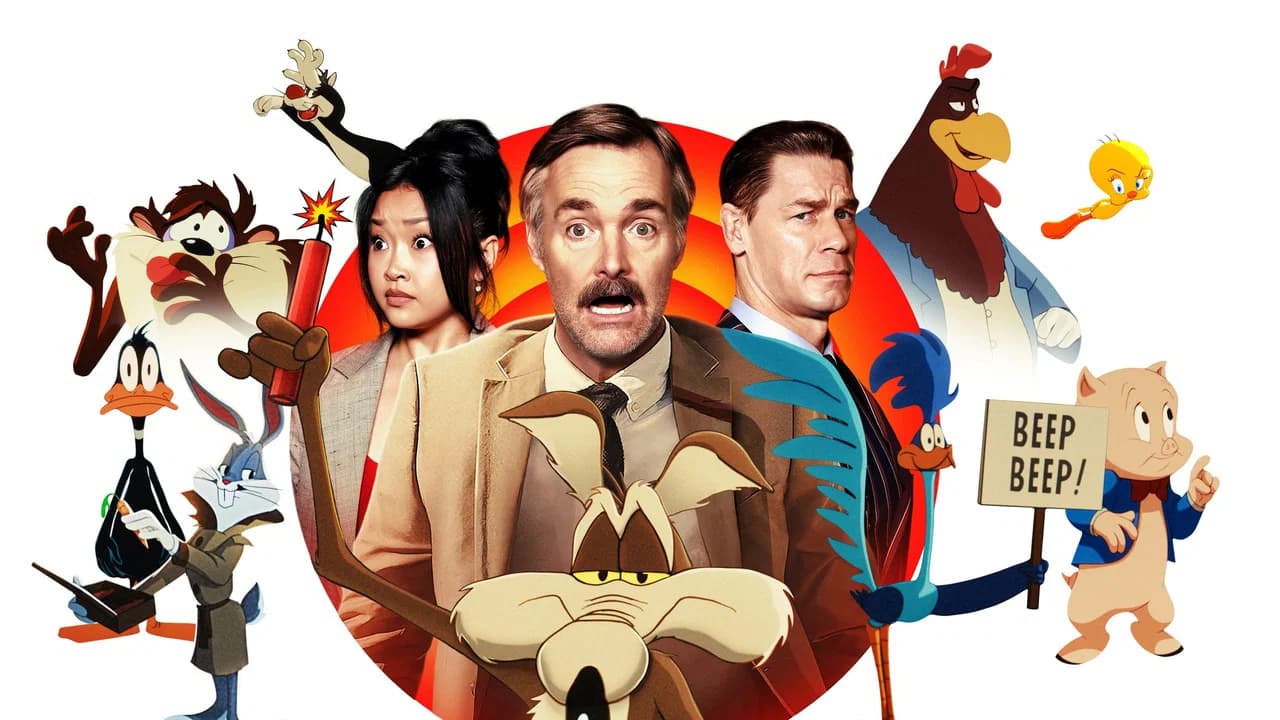
Wile E. Coyote has been buying mail-order catastrophe from the same company since 1949, and Coyote vs. Acme is the film that finally puts a summons in his paw. Adapted from Ian Frazier's 1990 New Yorker piece — a mock legal complaint filed by one coyote against one negligent manufacturer — Dave Green's live-action/animated hybrid turns that joke into a full corporate-malfeasance thriller, with Will Forte as the billboard lawyer who takes the case and John Cena as the Acme attorney across the aisle.

What makes it worth freeze-framing is that the film hides its homework in two completely different registers at once. One layer is cartoon archaeology: a law firm whose three partners are named after the men who invented these characters, a scientist drawn as a caricature of a 1940s Hollywood heavy, a psychiatric hospital stocked with shorts-era deep cuts, a gadget lifted out of a 1955 Robert McKimson one-reeler. The other layer is genre: Green has said he pitched the film on The Insider, and the movie is constructed accordingly, down to casting a rabbit as its Deep Throat.

There is a third layer nobody planned. Warner Bros. Discovery shelved this finished film in November 2023 as a tax write-off, the public refused to let that stand, and Ketchup Entertainment eventually put it in theatres. The film says so itself, on a card at the end of the credits — which is the only thing waiting for you after the lights come up.

Everything below is sorted by how it is verified: director and cast interviews first, then details documented by reviewers who sat in front of the finished print. Where a detail is reported but not creator-confirmed, it says so.

The full catalog

Your hunt

Tick off what you spotted

0 / 21 spotted

Tap the circle on a card when you catch one.

Type
Status
Difficulty

The Law Firm Is Named After the Men Who Invented Wile E. Coyote

ReferenceHidden Detail◆ Community ConsensusFreeze Frame

WHERE TO LOOK · The ambulance-chaser TV commercial Wile E. watches, and every scene set in Kevin's office afterwards

The practice Wile E. hires is Avery, Jones & Maltese, and all three names belong to Warner Bros. cartoon history: Tex Avery, the director who defined the studio's comic grammar; Chuck Jones, who created Wile E. Coyote and the Road Runner; and Michael Maltese, the writer who scripted most of their shorts. The gag runs deeper than the shingle — the film's attorneys are named off the same list, with Will Forte's Kevin Avery and Lana Condor's Paige Avery, Martha Kelly's Dottie Jones and Tone Bell's Sal Maltese. Reviewers noted that Maltese is the name almost nobody in the audience will catch, which is exactly why it's there.
The Film Obeys Chuck Jones's Rules — Including the One That Keeps Wile E. Silent

ReferenceCallbackMeta◆ Community ConsensusSecond Watch

WHERE TO LOOK · The whole film — Wile E. never speaks, including on the witness stand and at the congressional hearing

Jones wrote himself a rulebook for the Road Runner shorts: the Coyote can never catch the Road Runner, the cartoons always happen in the American Southwest, neither character may ever speak words, and every contraption must come from Acme. A courtroom feature is the hardest possible place to keep rule three, and the film keeps it anyway — Wile E. is the protagonist of a talking-heads legal drama and never says a line, which is why reviewers kept describing the performance as silent-film pathos rather than comedy. The rule about Acme supplying everything, meanwhile, stops being a constraint and becomes the plot: it is the reason he has a case at all.

There's a Full Road Runner Short Hiding Inside the First Ten Minutes

CallbackHidden Detail◆ Community ConsensusPlain Sight

WHERE TO LOOK · Immediately after the 1990s-set prologue, before the lawsuit storyline begins

Before the lawsuit plot starts, the film stops and plays a complete, classically staged Coyote-and-Road-Runner chase — reviewers describe the post-prologue sequence as a fully realised Road Runner short in its own right rather than a montage or a cold open. It is a structural flex and a stress test at once: the movie proves it can do the thing the shorts did, on a feature budget and in modern animation, before it asks you to sit through a deposition. Everything that follows depends on you having just watched Acme hurt him one more time.

Wile E.'s Memories Are Real Clips From the Chuck Jones Shorts

CallbackHidden DetailBehind the Scenes✓ ConfirmedSecond Watch

WHERE TO LOOK · Wile E.'s memory/flashback inserts, drawn from the original Chuck Jones Road Runner shorts

The film doesn't recreate the classic shorts for its flashbacks — it uses the actual footage, cutting fragments of the original Road Runner cartoons in as pieces of Wile E.'s memory. Green has described what that recontextualisation does to material everyone thinks they know: "The clips remain funny, perhaps become funnier still with the benefit of added absurdity, but together they accumulate into something unexpectedly painful and poignant." It is the film's central trick in miniature — the same anvil gag, now entered into evidence.

The Chase Camera Is a Side-Scroller, On Purpose

Hidden DetailReferenceBehind the Scenes✓ ConfirmedDeep Cut

WHERE TO LOOK · Every desert chase sequence — the camera tracks laterally rather than revealing what's ahead

Green went back to the original Jones shorts for the film's camera grammar and came out with a video-game analogy for it: the chases are staged as "a very side-scroller. You never see what's coming as the camera is tracking from left to right." That is a precise description of how Jones built suspense — the gag is always just off the right edge of the frame — and it's why the film's desert sequences feel structurally like the shorts even when they're running at feature scale. Watch for how rarely the camera cheats ahead of Wile E. to show you the cliff.

This Wile E. Is Deliberately Scruffier Than the One You Grew Up With

Hidden DetailBehind the Scenes✓ ConfirmedDeep Cut

WHERE TO LOOK · Wile E.'s design throughout — clearest in close-up during the courtroom scenes

The character design isn't a copy of any single era. The team pulled from model sheets across decades and settled on a Coyote who is, in Green's words, "a little more haggard, a little hairier and scruffier" than the cleaner 1990s version — pushed back toward Chuck Jones's own drawings. It reads as a purely aesthetic choice until you notice it is also characterisation: this is a coyote who has been losing for seventy years, and the fur is keeping score. Compare him against any Space Jam-era appearance and the difference is immediate.

The Looney Tunes Roster Was Treated Like a Casting Pool

MetaCameoBehind the Scenes✓ ConfirmedFreeze Frame

WHERE TO LOOK · Foghorn Leghorn's boardroom scenes, Elmer Fudd chairing the congressional hearing, Taz as Acme's PR rep

Green has explained how screenwriter Samy Burch filled the film's supporting roles: she treated the cast of Looney Tunes as a casting pool, asking "who are these characters who we'd cast in these roles?" — which is why the parts land where they do. The blustering, self-important rooster is Acme's CEO. The congressional committee investigating a corporation for maiming toons is chaired by Elmer Fudd, a man with a documented history of hunting them. The Tasmanian Devil, who cannot be understood by anyone, handles public relations. Once you see the logic, every cameo in the film reads as a casting joke rather than a cameo.

Acme's CEO Was Originally a Parody of a Radio Senator

ReferenceBehind the Scenes◆ Community ConsensusWhite Whale

WHERE TO LOOK · Foghorn Leghorn's scenes as Acme's CEO, and the congressional hearing sequence

Casting Foghorn Leghorn as the corporation's blowhard chief executive is funny on sight. It gets funnier once you know where the rooster came from: his voice and his entire manner were lifted from Senator Beauregard Claghorn, a character in the Allen's Alley segment of Fred Allen's radio show, which launched in 1942. So the film's corporate villain is a cartoon built out of a satirical politician — sitting in a story whose climax is a congressional hearing. Nobody in the film points at it, and it is the deepest cut in the movie's casting.

The Acme Scientist Is a Peter Lorre Caricature — and Warner Bros. Has Drawn Him Before

CameoReference◆ Community ConsensusDeep Cut

WHERE TO LOOK · The Acme Labs sequence shortly after the prologue

The Acme researcher who turns up early on is a sagging-eyed caricature of Peter Lorre, the Hungarian-American actor whose face and whisper Warner Bros. animators already borrowed at least twice in the 1940s for mad-scientist roles. The film names him Dr. Lorre and does not explain the joke. There is a further layer for shorts obsessives: in the reading offered by outlets cataloguing the film's cast, this is the same mad scientist who built the enormous orange monster Gossamer in Hair-Raising Hare (1946) — making the man Acme quietly gets rid of a figure with his own place in Looney Tunes history.

Acme Disposes of a Witness Using a Prop From a 1955 Short

ReferenceHidden Detail◆ Community ConsensusDeep Cut

WHERE TO LOOK · Acme Labs, early in the film — the scientist is dropped through a rolled-out portable hole

Spoiler:

The gadget Acme uses to make its inconvenient scientist disappear is a portable hole — a black disc you unroll on any surface and fall through. It is not invented for this film: it is the central device of "The Hole Idea" (1955), the Robert McKimson short in which a scientist markets exactly that product. The film takes a one-reeler's throwaway invention and uses it to commit what is functionally a corporate murder, which is the whole movie's method in one prop — classic Looney Tunes hardware, re-aimed at something genuinely sinister.

Daffy Duck Is Committed to "St. Looney's for the Exceptionally Looney"

CameoHidden Detail◆ Community ConsensusDeep Cut

WHERE TO LOOK · The St. Looney's sequence where Daffy turns up — scan the other patients in the background

Daffy is a former Acme product tester, and the job broke him. The film parks him in a psychiatric hospital for cartoon characters called St. Looney's for the Exceptionally Looney — Eric Bauza, who voices him, described it as "definitely a minimum-security psycho ward" and confirmed Daffy is "nuts, he's crazy" by the time we meet him. The institution doubles as the film's deep-cut storage unit: outlets cataloguing its background patients have reported spotting Frisky Puppy, Pete Puma, Hippety Hopper and a pair of Instant Martians among the residents, though the exact roster differs between write-ups, so treat the individual names as reported rather than settled.

"Project Sisyphus" Names the Joke the Shorts Were Always Telling

ReferenceForeshadowingMeta◆ Community ConsensusSecond Watch

WHERE TO LOOK · The reveal of Acme's Project Sisyphus — visualised with Wile E. pushing a giant spherical bomb up a mountainside

Spoiler:

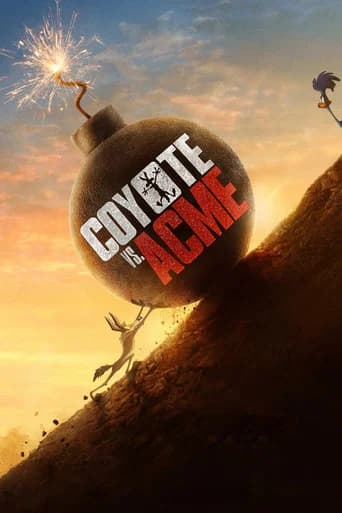
The conspiracy at the centre of the lawsuit is an Acme programme called Project Sisyphus — named for the figure in Greek myth condemned to roll a boulder uphill forever, watching it come back down every time he nears the top. Reviewers noted that the film makes the reference literal in its imagery, with Wile E. shown pushing a giant spherical bomb up a mountainside. It is also a retroactive thesis on fifty years of shorts: the reason the Coyote never catches the Road Runner is not incompetence, and the name tells you so before the plot does.

It's Built From The Insider, Michael Clayton and Erin Brockovich

ReferenceMetaBehind the Scenes✓ ConfirmedDeep Cut

WHERE TO LOOK · The whistleblower and discovery plotline — clearest in Bugs Bunny's handover of Acme's internal evidence

Spoiler:

The film's structure is not borrowed from other cartoons. Green has said the picture he brought into his pitch was The Insider: "Because we invest so deeply into Jeffery Wigand's quest, and his pain, and his turmoil in that journey." He also named The Verdict, A Few Good Men, Erin Brockovich and Michael Clayton, adding that the team "looked at how these movies were constructed, and pulled references from them where we could mine some humour." You can watch the template operate: the reluctant small-time lawyer, the corporate counsel who is too charming, the document nobody was supposed to see — and a whistleblower who turns out to be a carrot-chewing rabbit, cast in the Deep Throat slot.

The Roger Rabbit Rule: Very Dark, Also Very Silly

ReferenceMeta✓ ConfirmedFreeze Frame

WHERE TO LOOK · Tonal throughline; the homage lands hardest in the finale's crowd of Warner characters

Spoiler:

Asked how a Looney Tunes film survives a plot about corporate negligence and a disappeared witness, Green pointed at the obvious precedent and named the mechanism: "If you look at a movie like Who Framed Roger Rabbit?, I think what makes that movie work is the balancing of tones. That movie is very dark, but it's also very silly." The debt gets paid openly in the finale, which reviewers describe as a direct homage to that film — dozens of Warner characters, old and new, crowded into the same frame at once.

Tweety Is Working for the Other Side

CameoCallback◆ Community ConsensusSecond Watch

WHERE TO LOOK · Buddy Crane's scene with Tweety, as Buddy tries to pin down what the canary witnessed

Spoiler:

The canary is not decoration. Tweety operates as a covert asset for Buddy Crane, Acme's lawyer, and the film gets a whole scene out of the logistical problem this creates: Cena's character has to sit there and work out precisely what the bird thinks he saw, with Tweety's famous lisp as the obstacle. It is a joke that only exists because the movie takes its own premise seriously — if toons are real people, then a small yellow informant is admissible, and someone has to depose him.

A Hen on the Jury Announces She Just Laid an Egg

CameoHidden Detail◆ Community ConsensusFreeze Frame

WHERE TO LOOK · The courtroom — during Buddy Crane's patriotic address to the jury

Miss Prissy — the bonneted hen from the Foghorn Leghorn shorts — sits on the jury, and the film uses her for the single most Looney Tunes gag in the courtroom. Mid-way through Buddy Crane's big patriotic address to the jury, she fans herself and announces that she has just laid an egg, with a delivery that leaves no doubt the cause was John Cena. There's a second reading sitting underneath it for anyone who knows the idiom — "laying an egg" is the old showbiz phrase for a performance that bombed, which is emphatically not how the speech is landing with her.

Pepé Le Pew Gets a Cameo and Is Immediately Removed From It

CameoMeta◆ Community ConsensusFreeze Frame

WHERE TO LOOK · A brief cameo — Pepé turns up and is disposed of almost immediately

The most loaded piece of casting in the film is the one that lasts a few seconds. Pepé Le Pew — the character Warner Bros. quietly retired after his shorts' central premise stopped reading as funny — appears, and is dispatched almost as fast as he arrives. Reviewers read it exactly as intended: the studio acknowledging one of its own characters while making it very clear he is not coming back. For a film whose subject is a corporation being made to answer for what it did to its cartoons, it is a sharper joke than it looks.

The Film Cites Its Own Fictional Case Law

ReferenceCallback◆ Community ConsensusDeep Cut

WHERE TO LOOK · The congressional hearing — Kevin cites the precedent in his argument

During the congressional hearing, Kevin reaches for precedent and names a prior cartoon lawsuit: "Sylvester vs Gonzales" — which, for anyone who has seen a Speedy Gonzales short, is a cat suing over roughly forty years of being outrun by a mouse. The film builds a whole invisible legal history for its universe out of one throwaway citation, and it is the kind of detail that only rewards the audience member who already knows which cat and which mouse. Nobody stops to explain it.

Eric Bauza Voices Ten Characters and Won't Name Five of Them

CameoBehind the ScenesMeta✓ ConfirmedDeep Cut

WHERE TO LOOK · Throughout — Bugs, Daffy, Tweety, Foghorn Leghorn and the Road Runner's beeps are the five he'll admit to

Bauza, Warner's current custodian of the Looney Tunes voices, plays ten roles in the film — and in interviews he would only account for half of them, because the rest are cameos he refused to spoil. His own list: "This is my first time voicing Bugs in a feature film, so that's definitely one. Daffy, we've seen. Tweety, we've seen. Foghorn, we've seen. Maybe a few beeps for the Road Runner I may have supplied, so that's five." If you are hunting cameos on a rewatch, that quote is the best clue available: five of the film's hidden characters are voiced by the same man, so listen for his register rather than looking for a face.

The Gag Too Gross to Keep: Wile E. and the Hair Dryer

Behind the ScenesMeta✓ ConfirmedWhite Whale

WHERE TO LOOK · Not in the finished film — cut during production, described by Green in interview

One sequence did not survive to release, and Green has described it with some affection. Wile E. encounters a hair dryer for the first time: "he sees a hair dryer for the first time. And he kind of gets his face sucked into the hair dryer, and it spits his face out... the hair dryer blows his eyeballs out of his head – [laughs] it's so gross!" By the version Green recounts, the Coyote then finds his own eyeballs again as over-easy eggs. It is pure shorts logic — an escalating indignity involving an ordinary household appliance — and it is the clearest surviving evidence of how far the film was willing to go before it settled on a PG.

The Credits End With a Thank-You to the People Who Saved the Film

MetaBehind the Scenes✓ ConfirmedPlain Sight

WHERE TO LOOK · A dedication card as the end credits come to a close

Warner Bros. Discovery shelved this completed film in November 2023 to claim it as a tax write-off. The backlash — from animators, from the industry, and from an audience that made enough noise to be heard — forced a reversal, and Ketchup Entertainment eventually acquired worldwide rights and put it in cinemas. The finished print says so out loud. As the credits close, a card reads: "Dedicated to everyone who posted, shared, held up signs, and spoke out when it counted. This film made it to the big screen because of you." It is the only thing hidden at the back of this movie, and it is aimed squarely at the audience rather than at the story.

Post-credit scenes in Coyote vs. Acme

No — Coyote vs. Acme has no post-credit scene. The full answer — what plays, where it falls in the roll and what it sets up — has a page of its own.

Full post-credit breakdown →

Frequently asked

+How many easter eggs are in Coyote vs. Acme?

We've catalogued 21 easter eggs, hidden details and deep-cut references in Coyote vs. Acme. Nine are confirmed on the record by director Dave Green or voice actor Eric Bauza — including the use of real Chuck Jones short footage as Wile E.'s memories, the side-scrolling camera language, and the courtroom-thriller template lifted from The Insider and Michael Clayton. The remaining twelve are details documented by reviewers who watched the finished film, from the Peter Lorre caricature in Acme Labs to the portable hole borrowed out of a 1955 short.

+What plays over the credits of Coyote vs. Acme?

New animation of Wile E. Coyote chasing the Road Runner runs over roughly the first two minutes of the credits, and a dedication card appears as they close: "Dedicated to everyone who posted, shared, held up signs, and spoke out when it counted. This film made it to the big screen because of you." It's a thank-you to the public campaign that pushed Warner Bros. Discovery to release the film after shelving it in 2023. There is no scene after the credits.

+Why is the law firm in Coyote vs. Acme called Avery, Jones & Maltese?

Because those are the men who made Wile E. Coyote. Tex Avery shaped Warner Bros. cartoon comedy, Chuck Jones created the Coyote and the Road Runner, and Michael Maltese wrote most of their shorts. The film pushes the joke into its cast list too: the attorneys are named Kevin and Paige Avery, Dottie Jones and Sal Maltese.

+Does Wile E. Coyote talk in Coyote vs. Acme?

No. Chuck Jones's rules for the Road Runner shorts said neither the Coyote nor the Road Runner may ever speak words, and the film keeps that rule even though its protagonist spends most of the runtime in a courtroom. Wile E. carries the whole performance silently — which is why reviewers kept comparing it to silent-film pathos rather than to cartoon comedy.

+What is Project Sisyphus in Coyote vs. Acme?

It's the secret Acme programme the lawsuit uncovers, named after the figure in Greek myth condemned to push a boulder uphill forever only to watch it roll back down. The film makes the reference visual — Wile E. is shown shoving a giant spherical bomb up a mountainside — and the name reframes fifty years of shorts: the Coyote never catching the Road Runner stops being a running gag and becomes a design decision.

+Which classic Looney Tunes shorts does Coyote vs. Acme reference?

Several, and mostly without explanation. The portable hole Acme uses to make an inconvenient scientist disappear is the central device of "The Hole Idea" (1955). The Acme scientist himself is a Peter Lorre caricature in the tradition of the studio's own 1940s shorts, identified by some outlets as the mad scientist who built Gossamer in "Hair-Raising Hare" (1946). Kevin cites a fictional precedent, "Sylvester vs Gonzales," during the congressional hearing. And the flashbacks use actual footage from the original Chuck Jones Road Runner cartoons rather than recreating it.

Recurring motifs in this title

These devices show up across the catalogue, not just here. Each one opens the full list of everywhere we have catalogued it.

Last updated 2026-09-30 · Spotted something we missed? Tell us.