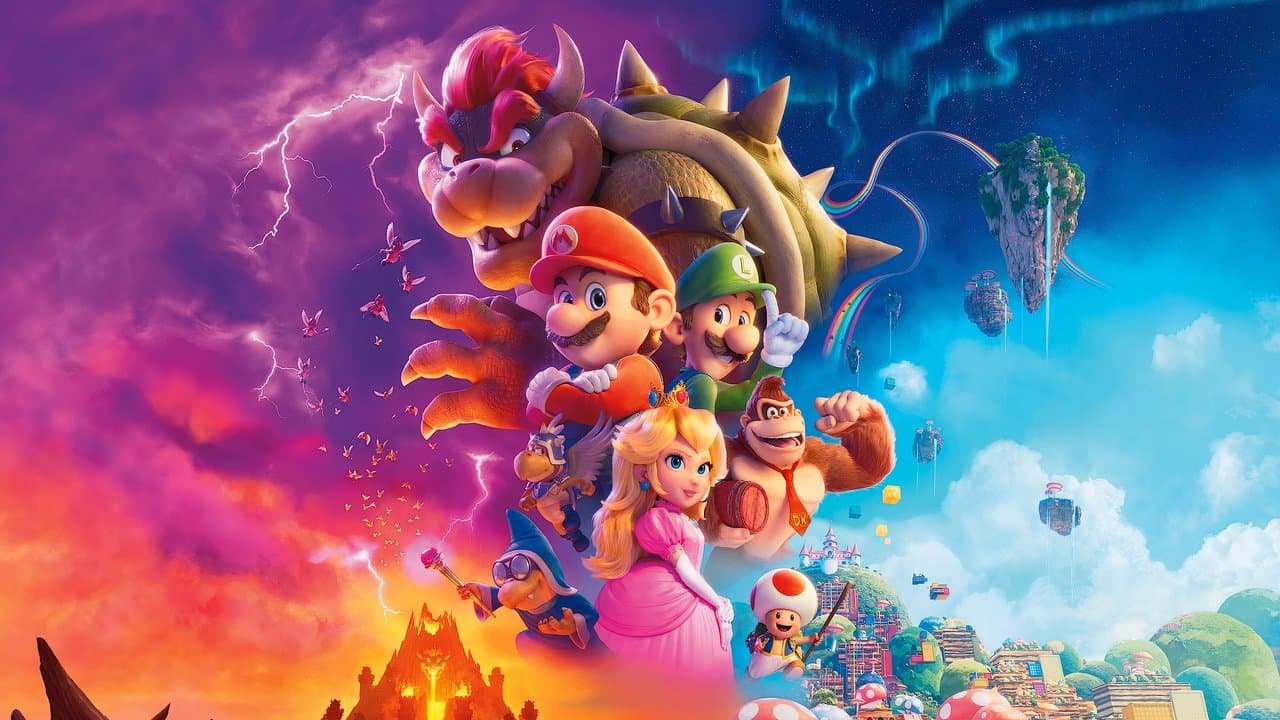
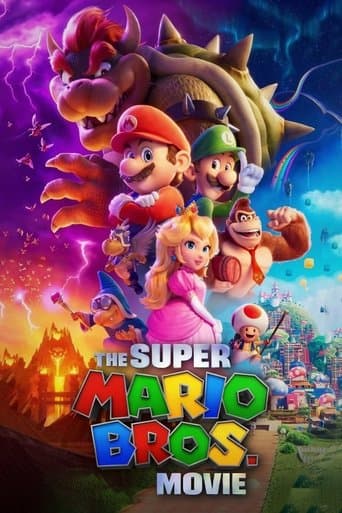
The pizzeria is called Punch-Out. The arcade cabinet inside is called Jump Man. The guy playing it sounds exactly like Mario — because he's voiced by Charles Martinet, the man who was Mario in the games for nearly three decades. That's the first five minutes of The Super Mario Bros. Movie, and directors Aaron Horvath and Michael Jelenic keep that density up for the entire 92-minute runtime.
What makes this movie unusual as an easter egg hunt is that the references reach far beyond Mario. Illumination's artists tucked in Duck Hunt, Kid Icarus, Star Fox, F-Zero, Ice Climber, Balloon Fight, and even a storefront sign honoring Nintendo's 1889 origins as a hanafuda playing card company. Some are front and center — Seth Rogen personally lobbied to bring back the DK Rap — while others, like the quiet credits tribute to late Nintendo president Satoru Iwata, reward the most patient viewers.
Below are the 20 eggs most worth knowing, ordered roughly as they appear: Brooklyn first, then the Mushroom Kingdom, the Kong arena, Rainbow Road, Bowser's wedding, and a post-credits egg that was hiding in plain sight on a gift table.
The full catalog
Type
Status
Difficulty
01
The Punch-Out!! Pizzeria Is a Boxing Hall of Fame
ReferenceHidden Detail◆ Community ConsensusSecond Watch
WHERE TO LOOK · Opening Brooklyn act — the brothers celebrate their TV ad at the pizzeria; scan the framed photos on the walls.
The Brooklyn pizzeria where Mario and Luigi watch their commercial air is named Punch-Out Pizzeria, after Nintendo's boxing series that began in arcades in 1984. The walls are covered in framed headshots of the games' fighters — Glass Joe and Mr. Sandman among them — turning the whole restaurant into a Punch-Out!! shrine. It's a fitting deep cut for a Mario film: in Mike Tyson's Punch-Out!! on the NES, Mario himself appeared as the referee, one of his earliest cameo gigs outside his own series.
02
The Jump Man Cabinet: Mario's 1981 Origin as an Antique
ReferenceMeta◆ Community ConsensusFreeze Frame
WHERE TO LOOK · Punch-Out Pizzeria, opening act — the arcade cabinet near the counter, being played by a mustachioed regular.
Inside the pizzeria sits an arcade cabinet labeled Jump Man — a barely disguised version of 1981's Donkey Kong, complete with girders and barrels visible on screen. "Jumpman" was Mario's original name in that game, before Nintendo of America christened him Mario. The meta-joke is delicious: in this universe, Mario's real-world debut exists as a dusty arcade relic that Mario himself walks right past. It's also the machine that quietly kicks off the film's Donkey Kong thread, an entire kingdom of which shows up in act two.
03
Giuseppe Sounds Exactly Like Game Mario — Because He Is
CameoMetaBehind the Scenes✓ ConfirmedDeep Cut
WHERE TO LOOK · Punch-Out Pizzeria (Giuseppe at the arcade) and the family dinner scene (the dad).
The man playing the Jump Man cabinet is Giuseppe, voiced by Charles Martinet — the voice of Mario in the games from Super Mario 64 (1996) through 2023. Giuseppe uses Martinet's full classic "wahoo" Mario voice, and he's the one who tells the brothers their over-the-top commercial accents sound perfect — a wink at the accent discourse around Chris Pratt's casting. Martinet pulls double duty as Mario and Luigi's skeptical dad, this time in a naturalistic Brooklyn register. His surprise cameos were announced on the record in Nintendo's September 2021 Direct that revealed the cast.
04
The Plumbing Ad Resurrects the 1989 Mario Rap
Music SecretCallbackMeta✓ ConfirmedFreeze Frame
WHERE TO LOOK · The commercial that opens the brothers' story, airing on the pizzeria TV — listen for the melody and freeze on the phone number.
The brothers' low-budget TV spot is set to the "Plumber Rap" — the actual theme from 1989's The Super Mario Bros. Super Show! In the ad they briefly wear yellow capes, a nod to Cape Mario and Cape Luigi from Super Mario World (1990). Illumination released the full commercial as real-world marketing, and the details held up: the on-screen number 929-55-MARIO was a working hotline with a voicemail recorded by Charlie Day's Luigi, and SMBPLUMBING.COM went live as an in-universe website. Bonus: Jeannie Elias, who voiced Princess Toadstool in the Super Show, has a cameo in the film.
05
Spike Is Pulled from 1985's Wrecking Crew
ReferenceBehind the Scenes◆ Community ConsensusDeep Cut
WHERE TO LOOK · Punch-Out Pizzeria — Spike mocks the brothers after their commercial airs.
The bros' sneering ex-boss Spike (voiced by Sebastian Maniscalco) isn't an invented movie bully — he's Foreman Spike from Wrecking Crew, the 1985 NES game where Mario and Luigi demolish buildings while a rival foreman sabotages them. It's one of the most obscure character pulls in the film: Spike had barely appeared anywhere in nearly four decades before landing a speaking role here. The demolition-work backstory even lines up with the brothers having worked construction with him before going solo as plumbers.
06
Mario's Bedroom Is an NES-Era Time Capsule
Hidden DetailReference◆ Community ConsensusFreeze Frame
WHERE TO LOOK · Mario's bedroom after the family dinner — pause on the TV, the shelf above it, and the posters behind the bed.
After the disastrous family dinner, Mario retreats to his room and unwinds by playing Kid Icarus (1986) on a CRT — an actual gameplay recreation, not a generic fake game. Pause the scene and the set dressing keeps giving: a Star Fox Arwing model sits above the TV, a Falcon poster nods to F-Zero, and eagle-eyed viewers have also clocked NES Baseball and a Pro Wrestling poster featuring Starman and The Amazon. It establishes Mario as a Nintendo kid in a world where Nintendo somehow exists alongside him.
07
The Duck Hunt Dog Keeps Showing Up
Hidden DetailReference◆ Community ConsensusDeep Cut
WHERE TO LOOK · First plumbing job (painting on the wall), the pizzeria photos, and the restaurant signage near the Brooklyn sewer works.
Nintendo's most infamous laughing dog haunts the Brooklyn scenes. The brothers' first client has a painting of the Duck Hunt dog retrieving ducks hanging in her house, the Punch-Out Pizzeria wall includes a photo of a duck bursting from the grass exactly like the game's title screen, and near the sewer entrance there's a French restaurant called "Chasse au Canard" — literally "Duck Hunt" in French. Three separate nods to a 1984 light-gun game in one act is the kind of layered gag that proves the art department was showing off.
08
Luigi's Ringtone Is the GameCube Startup Jingle
Music SecretReference◆ Community ConsensusSecond Watch
WHERE TO LOOK · Brooklyn, before the sewer descent — listen when Luigi's phone rings.
When Luigi's flip phone rings, it plays the unmistakable rolling-cube melody from the Nintendo GameCube boot screen (2001). It's a pure audio egg — nothing on screen signals it — and it doubles as a sly character note: the GameCube era gave Luigi his biggest solo spotlight with Luigi's Mansion as a launch title, a game the movie references again once Luigi lands in the Dark Lands. For a generation of players, that four-second jingle is instant recognition.
09
Peach's Castle Runs on Super Mario 64
Hidden DetailCallbackMusic Secret◆ Community ConsensusSecond Watch
WHERE TO LOOK · Mario's arrival at Peach's castle in the Mushroom Kingdom — exterior shot, entry hall music, and the guards at the door.
Peach's castle is lifted almost brick-for-brick from Super Mario 64 (1996), stained-glass Peach window included, and the score sneaks in the game's castle interior music when Mario steps inside. The throne room's paintings echo SM64's level-portrait paintings. Best of all, the Toad guards deadpan that "the princess is in another castle" — the line Toad tells Mario at the end of every fortress in the original Super Mario Bros. (1985), delivered here as a bureaucratic brush-off.
10
The Antique Shop Sells Mario's Own History
Hidden DetailReference◆ Community ConsensusDeep Cut
WHERE TO LOOK · Mario and Toad's walk through the Mushroom Kingdom streets toward the castle — pause on the shop windows.
The Mushroom Kingdom's shopping district — itself styled after Universal's Super Nintendo World, complete with a Crazy Cap store from Super Mario Odyssey — includes an antique shop stocked with retired artifacts: a Boomerang Flower from Super Mario 3D Land (2011), the music box from Super Mario Bros. 3 (1988), and a pixelated hammer, the weapon Jumpman swung in 1981's Donkey Kong. Framing old power-ups as literal antiques is the film's cleverest bit of world-building: in this kingdom, game history is just... history.
11
Luigi Gets a Luigi's Mansion Audition
ReferenceMusic Secret◆ Community ConsensusSecond Watch
WHERE TO LOOK · Luigi alone in the Dark Lands after the warp-pipe separation, before the Koopa troops capture him.
Luigi's solo detour through the Dark Lands plays like a trailer for his own franchise. He wakes up in Bowser's spooky domain to a rendition of the Luigi's Mansion theme, creeps past undead Dry Bones and Shy Guys, and fumbles with a flickering flashlight — the signature mechanic of the 2001 GameCube game where his failing Poltergust and flashlight were half the tension. Combined with the commercial's earlier promise that the brothers service "mansions," the film seeds a Luigi's Mansion storyline it never has to say out loud.
12
Seth Rogen Fought to Bring Back the DK Rap
Music SecretBehind the Scenes✓ ConfirmedFreeze Frame
WHERE TO LOOK · The Great Kong arena, as Donkey Kong is introduced before his fight with Mario.
Donkey Kong makes his entrance in the Kong arena to a reorchestrated DK Rap from Donkey Kong 64 (1999) — and it's there because Seth Rogen lobbied for it. Rogen said including the rap was important to him "as both a rap fan and a video game fan," while cheerfully calling it "objectively one of the worst rap songs of all time." Composer Grant Kirkhope's much-memed track had spent two decades as a punchline; the film weaponizes that reputation by scoring DK's peacocking showboat entrance with it.
13
The Entire Kong Family Tree Fills the Arena
CameoHidden Detail◆ Community ConsensusFreeze Frame
WHERE TO LOOK · The Great Kong arena crowd shots during the Mario vs. DK fight, and the Kong army mobilization afterward.
Freeze on the Kong arena crowd and you can run a Donkey Kong Country roll call: Diddy Kong (DKC, 1994), Dixie Kong (DKC2, 1995), Swanky Kong (DKC2), and Chunky Kong (DK64, 1999) all cheer from the stands, with Cranky Kong presiding as king. On the later jungle warpath, Funky Kong and Kiddy Kong (DKC3, 1996) join the army, and Cranky's cabin matches his DKC shack. None of them are named on screen — the film trusts Rare-era fans to recognize two decades of sidekicks on sight.
14
The Kart Garage Recreates Mario Kart 8's Menu
Hidden DetailReference◆ Community ConsensusSecond Watch
WHERE TO LOOK · The kart-building sequence before Rainbow Road, and the Koopa convoy chase across the track.
When the crew builds karts for the Rainbow Road run, the selection interface — chassis, wheels, glider — mirrors the Mario Kart 8 (2014) customization screen almost UI-for-UI. The tech checks out across the series: anti-gravity wheels are MK8's headline mechanic, gliders debuted in Mario Kart 7 (2011), and the ensuing chase deploys the full item roster — bananas, green shells, Bullet Bills, and a Koopa soldier who literally becomes a Blue Shell, the first-place-seeking missile that has ended friendships since Mario Kart 64. Even drift-boosting gets an on-screen moment.
15
"Peaches": An Improvised Ballad on Ludwig's Piano
Music SecretBehind the Scenes✓ ConfirmedPlain Sight
WHERE TO LOOK · Bowser's keep — Jack Black's piano serenade about the princess, reprised during the credits.
Bowser's lovesick piano ballad "Peaches" was co-written by Jack Black with directors Aaron Horvath and Michael Jelenic (plus Eric Osmond and John Spiker), and Black has said much of it came together on the fly — the film's composer described it as essentially improvised. The piano itself reads as a nod to Ludwig von Koopa, the Beethoven-coiffed Koopaling from Super Mario Bros. 3. The song became a genuine chart hit, got an official music video two days after release, and spawned a fan theory that its chords hide Rick Astley's "Never Gonna Give You Up" — an unconfirmed rickroll that Kotaku dutifully investigated.
16
Bowser's Wedding Guest List Is a Boss Rush
Hidden DetailReference◆ Community ConsensusFreeze Frame
WHERE TO LOOK · The wedding sequence at Bowser's floating fortress — scan the guest pews and Bowser's outfit.
The forced wedding doubles as a boss-battle reunion: King Boo (the Luigi's Mansion arch-villain) and King Bob-omb (the first boss of Super Mario 64) are both seated among the guests. Bowser's white tuxedo and top hat replicate his wedding outfit from Super Mario Odyssey (2017), which also built its finale around Bowser forcing a marriage on Peach. And Peach's escape weapon of choice is an Ice Flower — a power-up whose lineage collectors trace back to the Super Mario-kun manga in 1992, years before it hit the mainline games.
Spoiler — tap to reveal
17
The Nihilistic Blue Star Is the Director's Daughter
Behind the ScenesCameo✓ ConfirmedWhite Whale
WHERE TO LOOK · Bowser's dungeon cages, with Luigi and the other prisoners; Lumalee also closes out the film before the credits.
Lumalee — the adorable blue Luma cheerfully monologuing about the sweet release of death in Bowser's dungeon — is voiced by Juliet Jelenic, daughter of co-director Michael Jelenic. She recorded the scratch dialogue for the storyboards, the production auditioned for a replacement, and nobody could match the dissonance of a tiny cute voice delivering existential despair, so the scratch takes shipped in the final film. The character's doom-embracing worldview is rooted in Super Mario Galaxy, where Lumas willingly sacrifice themselves to become planets and supernovas.
18
The Brooklyn Finale Hides an 8-Bit Skyline
Hidden DetailReferenceBehind the Scenes◆ Community ConsensusDeep Cut
WHERE TO LOOK · The Bowser attack on Brooklyn in the finale — news broadcasts, street signage, and the mayor's appearance.
The third-act battle drops blink-and-miss NES history all over Brooklyn. A news ticker warns of giant crabs in the sewers — the Sidesteppers from the original Mario Bros. (1983). Signage around the borough sneaks in Ice Climber's sunglasses-wearing polar bear and a Balloon Fight drawing, and one storefront honors Nintendo's 1889 origins as a hanafuda playing card company. Even the mayor handling the crisis is a nod: she's widely identified as Pauline, the original Donkey Kong damsel who became mayor of New Donk City in Super Mario Odyssey.
Spoiler — tap to reveal
19
A Quiet Tribute to Satoru Iwata
Behind the ScenesMeta◆ Community ConsensusWhite Whale
WHERE TO LOOK · The end credits (the Nintendo executive listings) and the celebrating Brooklyn crowd after the finale.
Sit through the credits and you'll find Nintendo's late president Satoru Iwata listed as "Former President of Nintendo" alongside current president Shuntaro Furukawa — a posthumous credit for the man who championed the Illumination partnership before his death in 2015. Fans have also spotted an Iwata lookalike hidden in the Brooklyn crowd that celebrates the brothers after the final battle, and the film's Balloon Fight nods hit differently once you know Iwata personally programmed that 1984 game. It's the movie's most heartfelt hidden layer.
20
The Post-Credits Yoshi Egg Was on the Gift Table First
ForeshadowingCallback◆ Community ConsensusFreeze Frame
WHERE TO LOOK · Wedding gift table (the plant), then the very last shot after the full credits scroll.
The film's final shot — a white, green-spotted Yoshi egg cracking open in a Brooklyn sewer as a "Yoshi!" voice line plays — isn't a random tease. Rewind to Bowser's wedding: that same spotted egg is visible among the gifts on the present table, and it gets sucked through the warp pipe during the climactic vortex, which is how a Mushroom Kingdom egg ends up under Brooklyn. It's a setup-and-payoff egg most viewers only catch on a second watch, and it pointed straight at Yoshi's role in the follow-up film.
Spoiler — tap to reveal
Is there a post-credit scene in The Super Mario Bros. Movie?
Yes — The Super Mario Bros. Movie has 2 post-credit scenes. Two scenes. Mid-credits: a certain humbled villain performs a downbeat reprise of "Peaches" from a very small cell. After the full credits: the camera glides through a Brooklyn sewer tunnel to a white, green-spotted egg that begins to crack as a familiar "Yoshi!" rings out — a direct tease for the sequel. Worth staying to the very end.
Frequently asked
+How many easter eggs are in The Super Mario Bros. Movie?
We catalog 20 standout easter eggs on this page, but they bundle far more individual references — outlets like GamesRadar and ScreenRant each counted roughly 85 distinct Nintendo nods across the film. The density peaks in Brooklyn (Punch-Out Pizzeria, the Jump Man arcade cabinet, Duck Hunt gags) and the Mushroom Kingdom shopping district, where old power-ups are literally sold as antiques. Nearly every frame with signage or a crowd hides something.
+Does The Super Mario Bros. Movie have a post-credits scene?
Yes — two. A mid-credits scene delivers a comedic musical reprise from the film's villain, and a true post-credits scene shows a white, green-spotted Yoshi egg starting to hatch in a Brooklyn sewer, with a "Yoshi!" voice line as the screen cuts to black. That egg was previously visible on the wedding gift table, so the tease was planted well before the credits rolled.
+Is Charles Martinet in The Super Mario Bros. Movie?
Yes. Charles Martinet, who voiced Mario in the games from Super Mario 64 in 1996 until 2023, plays two roles: Mario and Luigi's father, using a naturalistic Brooklyn voice, and Giuseppe, the pizzeria regular playing the Jump Man arcade cabinet who speaks in Martinet's classic high-pitched game-Mario voice. His surprise cameos were announced in Nintendo's September 2021 Direct alongside the main cast reveal.
+Who voices Lumalee, the blue star, in The Super Mario Bros. Movie?
Lumalee is voiced by Juliet Jelenic, the young daughter of co-director Michael Jelenic. She originally recorded placeholder scratch dialogue for the storyboards, but the filmmakers kept her takes in the finished film because no professional actor matched the unsettling contrast of a sweet child's voice delivering nihilistic lines. The character's death-embracing outlook stems from Super Mario Galaxy, where Lumas sacrifice themselves to become planets.
+Is Yoshi in The Super Mario Bros. Movie?
Almost. Herds of multicolored Yoshis — every color except the iconic green — appear in the background as the heroes pass through Yoshi's Island territory on the way to the Kong kingdom. Green Yoshi himself is saved for the post-credits scene, where a spotted egg begins hatching in a Brooklyn sewer with an audible "Yoshi!" — a deliberate setup for the character's proper debut in the sequel.
Last updated 2026-07-08 · Spotted something we missed? Tell us.