Find 12 Verified Lord of the Rings Easter Eggs Even Die Hard Fans Miss
Here are the findable, verified Lord of the Rings easter eggs every fan can spot on a rewatch, from DVD menu secrets to Tolkien lines smuggled into other characters’ mouths. Every entry below includes exactly where to look, whether that’s a scene in the theatrical cut or a specific disc navigation trick, and why it matters to the trilogy’s larger design. Thethingsyoumissed catalogs entries like these with timestamps and verified sources, so nothing here is guesswork.
TL;DR:
- Many visual Easter eggs, like the glowing Elvish inscription and the Argonath statues, are based on Tolkien descriptions and appear in specific scenes or designs.
- Hidden dialogue and literary references, such as Aragorn’s blessing and Gandalf’s narrator-style commentary, often incorporate Tolkien’s original text or motifs even when characters are not the original speakers.
- DVD special features and menu navigation conceal numerous extras, including alternate scenes, cast skits, and behind-the-scenes jokes, which may vary by region and version.
- Production details like costume embroidery patterns, weapon craftsmanship, and set architecture encode cultural and narrative clues that deepen the trilogy’s world-building.
- The score employs unique leitmotifs for characters and cultures that subtly foreshadow story elements, with influences extending into broader popular music beyond the films.
Table of Contents
- 12 Lord of the Rings Easter Eggs Worth Hunting For
- Unlocking the Trilogy’s DVD Menu Secrets
- Tolkien’s Lines Hiding in the Wrong Mouths
- Cameos and In-Jokes Worth Tracking Down
- Why These Details Aren’t Just Trivia
- Production Design Secrets Hiding in Plain Sight
- Deeper Legendarium Echoes Beyond the Books
- What the Score Hides in Plain Hearing
- Crew In-Jokes Baked Into the Films Themselves
- Theatrical Cuts Versus Extended Editions
- A Personal Note on Cataloging Middle-earth
- Find the Complete Verified LOTR Catalog
- Sources
12 Lord of the Rings Easter Eggs Worth Hunting For
Middle-earth rewards the obsessive. These twelve entries mix visual continuity, repurposed Tolkien dialogue, DVD-only extras, and cameo gags, ranked roughly by how satisfying they are to catch in real time.
1. The Ring’s Inscription Glows Before Anyone Notices Frodo’s ring shows faint Elvish script under firelight well before Gandalf confirms what it is. Watch the hearth scene in Bag End closely on the theatrical cut. It’s a visual promise the film keeps before the dialogue catches up.
2. Aragorn’s Elvish Blessing Over Boromir When Aragorn kneels over the dying Boromir in The Fellowship of the Ring, he speaks Sindarin lines lifted almost directly from Tolkien’s prose. The phrasing survives because Jackson’s team leaned on David Salo’s constructed-language work rather than inventing new dialogue.
3. Bilbo’s Sting Reappears With Its Old Nick The blade Frodo carries throughout the trilogy still bears the notch established in The Hobbit production design continuity. Freeze-frame the blade in The Two Towers armory scenes to catch it.
4. Treebeard Speaks Someone Else’s Lines Treebeard’s dialogue in The Two Towers borrows verses and turns of phrase that Tolkien had written for other characters and settings entirely, including material tied to figures the films cut altogether. This is one of the trilogy’s most subtle literary easter eggs, and it rewards anyone who has read the appendices.
5. The Mouth of Sauron’s Absent Scene Look for continuity gaps around the Black Gate confrontation in The Return of the King theatrical cut. The extended edition restores a full exchange that the theatrical version trims to a wordless beat.
6. Gimli’s Helmet Cameo From an Earlier Adaptation Gimli’s armor design echoes silhouettes from Ralph Bakshi’s 1978 animated adaptation, a nod film analysts have traced directly to Peter Jackson’s own fandom history with earlier versions of the story.
7. The Argonath Statues Match Tolkien’s Sketches Isildur and Anárion’s stone likenesses at the Argonath were designed to mirror descriptions and concept art tied to Tolkien’s own illustrations, not just generic fantasy statuary. Pause on the river approach in Fellowship to compare the faces.
8. Rohan’s Riders Sing an Actual Tolkien Poem The lament sung as the Rohirrim ride to Minas Tirith pulls directly from verse written for an entirely different chapter of the books.
9. Elrond’s Council Line Recycled From the Narrator A line Elrond delivers about the Ring’s history was originally exposition Tolkien gave to a narrator figure, not a character in the room.
10. The Palantír’s Reflection Foreshadows Saruman’s Fate Watch the surface of the seeing stone Pippin steals; a brief flicker mirrors an image from Saruman’s tower that only makes sense on a second viewing.
11. Merry and Pippin’s Pipe-Weed Pouch A small embroidered mark on the hobbits’ tobacco pouch matches a family crest detail buried in the prop department’s own reference sheets, a detail fan analyses have flagged as something most viewers miss entirely.
12. The Dominic Monaghan and Elijah Wood Skit A German-language “interview” gag featuring the two actors lives exclusively on the DVD release, not the theatrical cut, and it’s one of the trilogy’s funniest documented cast in-jokes.
Unlocking the Trilogy’s DVD Menu Secrets
The theatrical DVD releases hide several confirmed easter eggs, each triggered by specific remote navigation on the special features menu rather than anything in the film itself.
- An alternative, MTV-produced Council of Elrond scene, unlocked through a hidden icon on the Fellowship extras disc.
- The Dominic Monaghan and Elijah Wood mock German-interviewer skit, buried in the same disc’s navigation.
- A spoof sequence involving Andy Serkis, accessible through a secondary menu prompt on later discs.
- Additional crew and cast joke reels scattered across the Two Towers and Return of the King special editions.
Pro Tip: Regional DVD releases sometimes place these eggs on different menu screens, so check your disc’s own label and navigation guide before assuming a step from one region works on another. The Theonering remains the most reliable map for exact button sequences.
Tolkien’s Lines Hiding in the Wrong Mouths
Some of the trilogy’s best easter eggs aren’t visual at all. They’re prose Tolkien wrote for one context, quietly relocated into another character’s dialogue so the book’s voice survives even when the film cuts the original speaker.
- Treebeard absorbs lines and rhythms tied to material the screenplay never dramatizes on its own.
- Rohan’s funeral and battle songs pull from verses written for different chapters entirely.
- Gandalf inherits a handful of narrator asides that Tolkien never assigned to a character directly.
Jackson’s team made these swaps for pace, consolidating three hours of exposition into workable scenes without losing Tolkien’s actual sentences. Polygon’s breakdown of quotes hidden in dialogue traces several of these relocations scene by scene.
Cameos and In-Jokes Worth Tracking Down
- The Dominic Monaghan and Elijah Wood German-interviewer skit lives on the DVD extras, not the theatrical or extended cut.
- A comedic clip involving Andy Serkis appears only through hidden disc navigation. It never appears in any broadcast version.
- Several crew-only reels and blooper-adjacent gags surface exclusively on special edition releases, meaning streaming viewers miss them entirely.
These bits exist because Jackson’s production culture leaned into fandom itself, treating the crew’s own inside jokes as material worth preserving on disc rather than cutting entirely.
Why These Details Aren’t Just Trivia
Film analysts frame most of these callbacks as continuity markers rather than throwaway trivia, stitching a nine-hour theatrical trilogy into something that feels unified across three separate productions. Repurposed Tolkien dialogue keeps the books’ voice alive even in scenes built around characters the films cut. On your next rewatch, pause on any prop close-up. Costume and armor details tend to hide the densest continuity work, and they reward exactly the kind of frame-by-frame attention this list assumes you’re willing to give.
Production Design Secrets Hiding in Plain Sight
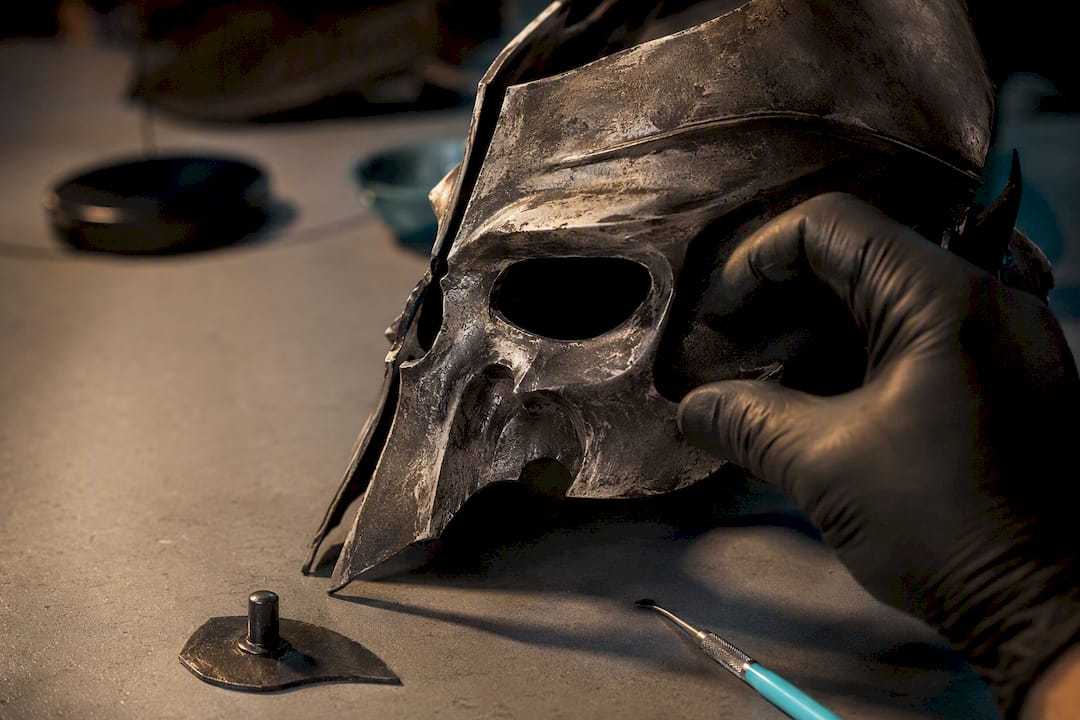
Weta Workshop’s prop department buried its own inside jokes across every set, and most never get explained on screen. Sauron’s armor design incorporates facial features deliberately meant to echo a skull when lit from certain angles, a detail the art department confirmed was intentional rather than accidental lighting.
Middle-earth’s regional architecture carries consistent visual logic: Rohan’s carved wood matches real Norse longhouse patterns, while Gondor’s stonework borrows proportions from Byzantine and Egyptian monuments. That’s not decoration. It’s a deliberate cultural shorthand telling you which kingdom you’re in before a character says a word.
Bilbo’s map of the Shire, visible briefly in Bag End, contains hand-lettered place names that match Tolkien’s own hand-drawn maps down to specific spelling choices the films never needed to get right for the plot to work. Costume department records also confirm that Aragorn’s coronation robes reuse embroidery patterns first sketched for Arwen’s wedding gown, a quiet visual thread tying the two characters together before the extended edition makes their relationship explicit.
Even weapon design carries hidden logic. Orc blades are intentionally asymmetrical and crude compared to Elvish and Númenórean smithing, a distinction the props team maintained across every battle sequence so viewers absorb craftsmanship differences without a single line of dialogue explaining it.
Deeper Legendarium Echoes Beyond the Books
The films occasionally reach past The Lord of the Rings itself into Tolkien’s broader mythology, the material later expanded in The Silmarillion and other posthumously published work. Galadriel’s dialogue about the Elder Days references events from that wider legendarium rather than anything explained in the trilogy’s own text, which is why some lines feel like they’re pointing at a much bigger story than the one on screen.
The moth that summons the Great Eagles in Fellowship connects to a recurring pattern across Tolkien’s larger body of work, where messenger creatures and eagles intervene at crisis points throughout Middle-earth’s history, not just in this trilogy. Sauron’s original name and backstory as a corrupted spirit predate the Ring entirely, tracing back to mythology the films only gesture toward through Galadriel’s opening narration.
Tolkien Gateway’s catalog of Tolkien’s presence in popular media documents how deep this cultural footprint runs, connecting the films to decades of adaptations, parodies, and homages that predate Jackson’s trilogy entirely. Understanding that wider mythology doesn’t change how the films play. It changes how much weight a single line like Galadriel’s prologue carries once you know where it’s pulling from.
What the Score Hides in Plain Hearing
Howard Shore’s music does character work that dialogue never has to. The Shire’s theme, the Fellowship’s march, and the Rohan motif each carry specific instrumentation choices tied to that culture’s on-screen aesthetic, meaning attentive listeners can often identify which kingdom a scene belongs to before the camera confirms it.
Leitmotifs recur across all three films in ways that function as their own kind of easter egg. The Ring’s theme subtly shifts key and instrumentation depending on which character is closest to temptation in a given scene, a detail most viewers absorb emotionally without ever consciously noticing the mechanism.
Cultural echoes run the other direction too. Tolkien’s influence reached rock music decades before Jackson’s trilogy existed, and Led Zeppelin’s “Ramble On” drew directly from Middle-earth imagery, proof that this mythology was already embedded in popular music culture long before the films needed to build their own score around it. That prior cultural literacy is part of why Shore’s compositions land the way they do. Audiences already associated this world with music that meant something.
Crew In-Jokes Baked Into the Films Themselves
Peter Jackson’s own cameo tradition runs through all three films, usually as a background villager or soldier easy to miss without knowing to look. His childhood friendship with special effects veterans and his documented fandom of earlier adaptations, including Ralph Bakshi’s 1978 animated version, shaped several visual choices that read as direct homage rather than coincidence.
Costume designers and prop makers occasionally worked their own names or initials into background carvings and tapestries, a common practice on large productions that few viewers ever catch without a magnified frame. Stunt coordinators and crew members appear as extras in massive battle sequences like Helm’s Deep and the Pelennor Fields, filling out armies that needed thousands of bodies and used the production’s own crew to help hit that scale.
Theatrical Cuts Versus Extended Editions
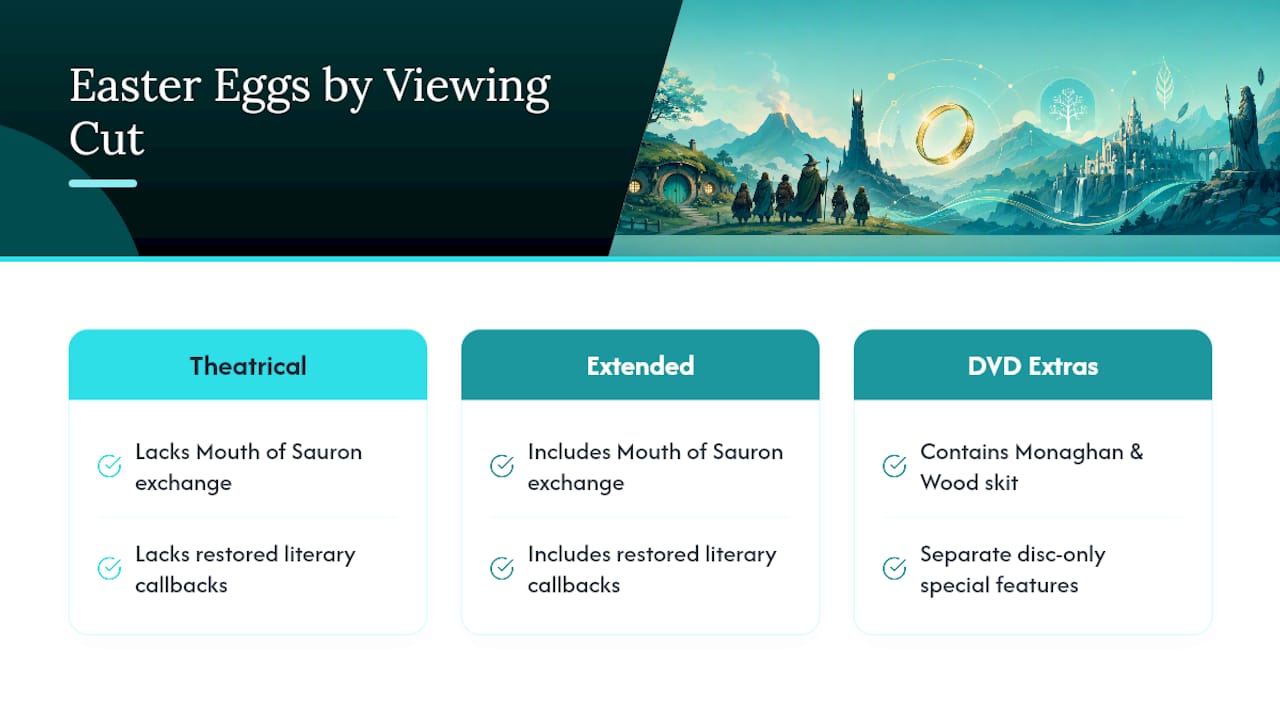
The extended editions restore scenes that carry their own separate easter eggs, meaning theatrical-only viewers miss entries entirely rather than just missing extra runtime. The Mouth of Sauron’s full exchange at the Black Gate, for instance, only exists in the extended cut, and several literary callback lines discussed earlier appear exclusively in that longer version.
Some DVD-exclusive cameos, including the Monaghan and Wood interview skit, never appear in either cut of the film itself. They live purely in special features, separate from both theatrical and extended timelines. That distinction matters if you’re trying to track down a specific reference someone mentioned online. Always check whether they mean the theatrical cut, the extended edition, or a disc extra, because those are three different viewing experiences with three different easter egg inventories.
A Personal Note on Cataloging Middle-earth
Documenting these details isn’t about trivia for its own sake. It’s about preserving how densely Tolkien’s world was translated to screen. Two habits help on rewatch: pause at scenes flagged in a timestamped list before they pass, and treat DVD extras as canon-adjacent material worth tracking separately from the films themselves. Our full movie catalog goes deeper on specific timestamps.
— Christian
Find the Complete Verified LOTR Catalog
Thethingsyoumissed built its entire catalog around exactly the problem this list solves: finding a specific detail without stumbling into a plot spoiler along the way. Every entry carries a timestamp, a verified source, and spoiler-safe browsing, so you can hunt for one easter egg without accidentally reading about the ending of a film you haven’t finished.
The movie easter egg catalog breaks the trilogy down frame by frame, the same way this list started, but with the full inventory rather than a curated twelve. If you’re the kind of fan who pauses a scene because something felt off, that catalog is built for exactly that instinct. Browse the Lord of the Rings entries, filter by motif or scene, and add your own missed detail through the site’s request feature if you spot something this list didn’t cover.
Sources
- Theonering
- The best Lord of the Rings Easter eggs are quotes hidden in dialogue (Polygon)
- Lord of the Rings: Things Even Die-Hard Fans Missed (ScreenRant)
- Led Zeppelin’s ‘Ramble On’ drew inspiration from The Lord of the Rings (Collider)