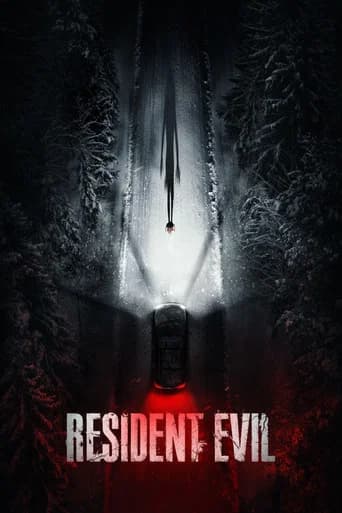
The Things You Missed

Resident Evil — Easter Eggs & Hidden Details

A typewriter nobody can use, shotgun shells branded Heavy Field, and a gun shop owned by Leon S. Kennedy — Cregger hid the games in the set dressing, not the plot.

2026 · Film · 95 min · Zach Cregger

25 eggs catalogued✓ 8 confirmed? 1 theoriesno post-creditsupdated 2026-09-30

Edited by Christian Nielsen

The short version

Resident Evil (2026) hides 25 catalogued easter eggs and hidden details, 8 of them confirmed by official sources. Standouts include that's zach cregger on the intercom, the sewer giant came out of cormac mccarthy, not capcom and green herbs, in the right pot, twice. Every entry below includes where to look, a spotting difficulty, and sources.

Every egg on this page

  1. The Typewriter Is a Save Point Nobody Can Use
  2. Green Herbs, in the Right Pot, Twice
  3. Two Cans of First Aid Spray He Never Picks Up
  4. Unarmed, Then Pistol, Then Shotgun, Then MP5
  5. The Shells Are Branded "Heavy Field" — the Exact In-Game Box
  6. Three Shells in an Underwear Drawer
  7. The Diamond Padlock, and the Key That Was Right There
  8. The Infected Sprout Las Plagas Tentacles
  9. The Dog Comes Through the Wall, Then Opens Its Face
  10. Taxidermy From a Corrupt Police Chief, and a Cuckoo Clock
  11. The Shotgun on the Wall and the Gun in the Case
  12. His Courier Bag Is the First Aid Box
  13. Leon S. Kennedy Runs a Gun Shop in Raccoon City
  14. The Client Was Umbrella All Along, and It's on the Paperwork
  15. The Camera Keeps Sliding Into First Person
  16. The Sewer Giant Came Out of Cormac McCarthy, Not Capcom
  17. The Thing Chasing Him Is a Ring of Harnessed Dancers
  18. The Acid-Vomiting Man in the Elevator
  19. The Maternity Ward Baby Is His Own Worst Night as a Player
  20. Bryan Grows William Birkin's Eye
  21. The Voice Memo Turns the Whole Film Into a Collectible
  22. Theory: Maxine Is the Player Character and Bryan Is an NPC
  23. That's Zach Cregger on the Intercom
  24. Cregger Cast His Lead While Shooting Weapons
  25. The Kinks Play the Film Out

Zach Cregger's Resident Evil does something no previous film in this franchise tried: it refuses to adapt a single game, and then reproduces the games' furniture down to the brand name on an ammunition box. Bryan Hodukavich is a medical courier with a package for Raccoon City and no connection whatsoever to Leon, Jill, Claire or Wesker. Cregger told PlayStation's blog he would "rather just kind of celebrate everything I love about the games by telling the story that could exist on the sidelines of one of the games" — and then filled that sideline with objects a player recognises instantly and Bryan never will.

That gap between what the audience knows and what the courier knows is where almost every egg on this page lives. Bryan walks past two cans of first aid spray in a barn. He finds a room with a typewriter in it, swears, and leaves. He rams a locked farm gate with a truck while the correct key sits within reach. None of it is a wink at the camera; it is survival-horror logic being suffered by a man who has never held a controller. Cregger has been explicit about the method — "I took a lot of healing items, I mimicked them exactly, I put them in the film" — and about the pacing it serves: "I really like the survival horror mechanics of moving slow and with deliberation."

A few of these are on the record from Cregger himself: the weapon ladder from pistol to shotgun to MP5, the healing items, the sewer giant lifted from Cormac McCarthy rather than from Capcom, and his own voice hiding in the third act. The rest are set-dressing finds that outlets pulled apart frame by frame in the week after release — a taxidermy wall borrowed from a corrupt police chief's office, an awning for a firearms dealer who is elsewhere in the city having a much worse night. Every entry below says which it is.

The full catalog

Your hunt

Tick off what you spotted

0 / 25 spotted

Tap the circle on a card when you catch one.

Type
Status
Difficulty

The Typewriter Is a Save Point Nobody Can Use

ReferenceHidden DetailMeta✓ ConfirmedSecond Watch

WHERE TO LOOK · The farmhouse — the small upstairs office Bryan checks while looking for a weapon

Searching the farmhouse for anything that will help him, Bryan opens the door on a small second-floor office holding one thing of note: a typewriter, framed dead centre in a quiet, still room. He swears at it and moves on. In the games a typewriter is the save mechanic — find one and you are in a safe room, you can bank your progress, and something large is probably about to happen. Cregger put it there knowing exactly which half of the audience would react: asked what he had carried over from the games, he listed "all these healing items" and then, without naming it, "there's save items — I think we all know what I'm talking about." The film's biggest joke is invisible if you have never held a controller.
Green Herbs, in the Right Pot, Twice

Hidden DetailReference✓ ConfirmedFreeze Frame

WHERE TO LOOK · Farmhouse side table during the phone call; the back seat of a car in the mountain tunnel

Two separate shots put a green herb in frame and let Bryan ignore it. One sits on a side table in the farmhouse, level with his head while he tries the house phone; the other is in the back of an abandoned car as he threads the tunnel of wrecked vehicles. Both are potted the way the games pot them — the dark tin with a thin gold band around it. Cregger has said the copying was deliberate and literal: "I took a lot of healing items, I mimicked them exactly, I put them in the film." The second herb is the crueller placement, because it goes by moments before the bite that dooms him.

Two Cans of First Aid Spray He Never Picks Up

Hidden DetailReference✓ ConfirmedFreeze Frame

WHERE TO LOOK · The barn — a box near the hay bales, second story

On a box beside the hay bales in the barn sit two white-and-green aerosol cans: first aid spray, the item that in the games restores you to full health and which players hoard for emergencies rather than spend. Bryan, bleeding and hunted, walks straight past them. It is the same gag as the typewriter played quieter — the film is stocked like a level, and the man moving through it has no idea what the props are for. Part of the healing-item set Cregger says he reproduced exactly from Resident Evil 4.

Unarmed, Then Pistol, Then Shotgun, Then MP5

ReferenceMeta✓ ConfirmedPlain Sight

WHERE TO LOOK · Across the whole film — police wreck, farmhouse, then the Umbrella vehicle outside the hospital

Bryan's armament escalates on exactly the schedule a Resident Evil campaign escalates on, and Cregger laid the sequence out himself before release: "You start with a pistol, you graduate to a shotgun, and then eventually you find an MP5. You're always worried about how many bullets you have, and you're getting injured and all those things." He begins the film with nothing, survives the first encounter by running, takes a Beretta off the wreck of the police escort, inherits a pump-action shotgun at the farmhouse and finally digs a machine gun out of an Umbrella vehicle before the hospital. Notably absent: the infinite-ammo rocket launcher the games hand you at the end.

The Shells Are Branded "Heavy Field" — the Exact In-Game Box

Hidden DetailReference◆ Community ConsensusDeep Cut

WHERE TO LOOK · The farmhouse — the drawer Bryan searches upstairs for shotgun ammunition

The green ammunition box Bryan finds in a farmhouse drawer is not generic dressing. It carries the brown bear illustration and the "Heavy Field" wordmark printed on the shotgun-shell box that flashes up whenever you reload a shotgun in the games — an invented in-universe brand reproduced as a physical prop, right down to the buckshot label. It is on screen for a beat. Cregger has framed the whole business of rooting through furniture as the reference: "Scrounging for supplies is a reference to Capcom's games in itself." No outlet has yet put the brand specifically to him, so this stays a community find.

Three Shells in an Underwear Drawer

ReferenceMeta✓ ConfirmedPlain Sight

WHERE TO LOOK · The farmhouse — Bryan working through the bedrooms and desks looking for shotgun ammunition

The ammunition in this film is never where the gun is. Bryan tears through a dozen drawers of someone else's house to come up with a handful of shells, finds rounds in a bedroom dresser rather than anywhere a person would sensibly store them, and openly complains that he is not a gun guy. That is video-game logic staged as a bad afternoon, and Cregger has said the scavenging is itself the homage — "Scrounging for supplies is a reference to Capcom's games in itself" — while describing what he wanted the film to inherit as "that dread, that resource management."

The Diamond Padlock, and the Key That Was Right There

ReferenceMetaHidden Detail◆ Community ConsensusSecond Watch

WHERE TO LOOK · The locked gate at the end of the farm track, and the padlocked doors that recur through the film

The farm gate is chained with a heavy padlock stamped with a diamond. Bryan does what any reasonable person would do and rams it with the truck, destroying the truck and not the gate — and the matching diamond-marked key turns out to have been waiting in the vehicle's sun visor, which he never checks. Padlocks become the film's running obstacle from there: he tries shooting them and it never works, because in this universe as in the games only the correct key with the correct symbol opens anything. The card-suit keys of Resident Evil 2's police station are the direct ancestor.

The Infected Sprout Las Plagas Tentacles

Hidden DetailReference◆ Community ConsensusFreeze Frame

WHERE TO LOOK · Every infected encounter from the farmhouse onward — clearest whenever Bryan takes a head shot

These are not shamblers. Take the head off one of Cregger's infected and the neck opens and throws out parasitic tentacles, and the body keeps coming — the signature of Las Plagas, the parasite that replaced zombies in Resident Evil 4 and turned the series from slow horror into something that sprints at you. The same mutation is what lets bodies in this film fuse into larger things later on. Cregger has said Resident Evil 4 is his favourite entry in the series, and the creature grammar is the loudest evidence; the specific design lineage is the outlets' reading rather than his own statement.

The Dog Comes Through the Wall, Then Opens Its Face

ReferenceCallbackHidden Detail◆ Community ConsensusSecond Watch

WHERE TO LOOK · The barn escape — immediately after Bryan jumps from the loft window

Bryan drops out of the barn loft window thinking he has lost the dog. The dog comes through the wall. Then its head splits along flaps and fires tendrils at him — two scares stacked back to back in the same shot. The infected dog is the franchise's oldest ambush: the Cerberus that famously crashes through a corridor window in the 1996 original, restyled with Resident Evil 4's Colmillos in mind. Cregger's version keeps the structure of the joke — you think the chase is over, the geometry of the room betrays you — and adds the parasite.

Taxidermy From a Corrupt Police Chief, and a Cuckoo Clock

Hidden DetailReference◆ Community ConsensusDeep Cut

WHERE TO LOOK · The farmhouse living room walls, and the staircase as Bryan goes up

The farmhouse is dressed as a Resident Evil room rather than a farmhouse. Its living-room walls are hung with taxidermied animals, the calling card of Chief Brian Irons, the hunting-obsessed police chief whose office in Resident Evil 2 is lined with his own trophies. And as Bryan climbs the stairs a cuckoo clock chimes — a sound that in the games means a puzzle, most famously the clock you have to set in Resident Evil 4, and before that the cuckoo trigger in Resident Evil Outbreak. Neither is commented on. Both are there so the space feels pre-loaded with mechanics.

The Shotgun on the Wall and the Gun in the Case

Hidden DetailReference◆ Community ConsensusFreeze Frame

WHERE TO LOOK · The farmhouse wall mount; then the fitted case in the Umbrella vehicle near the hospital

Two weapons are staged the way games stage weapons rather than the way people store them. The pump-action shotgun hangs mounted on the farmhouse wall, exactly as a shotgun hangs waiting on the top floor of a village house in Resident Evil 4 (and, before that, in the trap room of the original). The machine gun arrives later sitting in a fitted hard case in a vehicle — the shape every player associates with Resident Evil 4's attaché case, the inventory grid you spend the game reorganising. A gun you find on a wall is a pickup, not a possession.

His Courier Bag Is the First Aid Box

Hidden DetailReference◆ Community ConsensusSecond Watch

WHERE TO LOOK · Bryan's shoulder bag, in frame from the first delivery to the last

Bryan carries one object through the entire film, and it is the franchise's health pickup. The green medical bag with white lettering matches the first aid box of the 1996 original and its remake, and is close kin to the med-bag Rebecca Chambers hauls around Resident Evil Zero. Replica versions were sold in cinemas as novelty popcorn buckets. The joke underneath is that the man carrying the health item is the one thing in the film that cannot be healed.

Leon S. Kennedy Runs a Gun Shop in Raccoon City

Hidden DetailReference◆ Community ConsensusWhite Whale

WHERE TO LOOK · The street approach to the hospital — background signage behind Bryan as he looks up at the building

During the street sequence that ends with Bryan looking up at the hospital, there is an awning on a shopfront behind him reading "Leon S. Kennedy Guns and Ammo." Leon is the rookie cop of Resident Evil 2 and the lead of Resident Evil 4, and he is emphatically not a gun dealer — the film gives him a small business and leaves him entirely off screen, which is the whole joke, since canonically he is somewhere else in this same city having the worst first shift in police history. It is the closest this film comes to naming any of the games' leads, and it does it on an awning nobody in the scene looks at.

The Client Was Umbrella All Along, and It's on the Paperwork

Hidden DetailReferenceForeshadowing◆ Community ConsensusSecond Watch

WHERE TO LOOK · The delivery paperwork Bryan is handed at the start; paid off at the Umbrella facility in the third act

Spoiler:

The reveal of who Bryan is working for is not a monologue; it is a line on a delivery invoice. His high-priority package is consigned to the Umbrella Corporation, the pharmaceutical giant whose bioweapons research is the origin of everything in this franchise, and its lab is where the last act takes place. The film never explains the company, never names the virus, and never has anyone say "T-Virus" — Umbrella's scientists (Zach Cherry and Paul Walter Hauser) are just two employees improvising a fix for a problem their employer made. Corporate incompetence, not conspiracy, is the version Cregger tells.

The Camera Keeps Sliding Into First Person

Hidden DetailReferenceMeta◆ Community ConsensusSecond Watch

WHERE TO LOOK · Recurring — room-clearing in the farmhouse and every moment Bryan raises a weapon under pressure

Cregger and cinematographer Dariusz Wolski switch camera grammar mid-scene the way the series has switched it across generations. Bryan clears rooms from over the shoulder — the Resident Evil 4 and 5 framing that redefined the games in 2005 — and then, at the moments of highest tension, the camera drops behind his eyes and looks down the barrel of the gun, which is Resident Evil 7's first-person reinvention. The street run toward the hospital is staged as one long set piece in the shape of a quick-time sequence. Cregger has said the film borrows from 4 and 7 specifically.

The Sewer Giant Came Out of Cormac McCarthy, Not Capcom

ReferenceBehind the ScenesHidden Detail✓ ConfirmedDeep Cut

WHERE TO LOOK · The sewer sequence beneath Raccoon City

The enormous bald, hairless, dead-eyed man in the sewer is the film's one monster that is not reverse-engineered from a game. Cregger built him out of Judge Holden, the towering hairless villain of Cormac McCarthy's Blood Meridian — "just my little nod to one of my favorite books" — and used him to pay off a series tradition he otherwise skipped: "I don't have a Nemesis in this movie… But this is also a little bit of a nod to the Nemesis." He is also not a visual effect. Cregger has confirmed the creature was a 2,000-pound practical puppet operated by four people, built by Legacy Effects' Shane Mahan: "the man and the breathing and all that, that's real. There's no digital anything going on there."

The Thing Chasing Him Is a Ring of Harnessed Dancers

Behind the ScenesReferenceHidden Detail◆ Community ConsensusFreeze Frame

WHERE TO LOOK · First seen in the woods beyond the farm; recurs, larger each time, until the hospital

Bryan's stalker is an amalgamation — bodies fused at the neck by tendrils, rolling through the woods on a wheel of limbs and getting larger every time it absorbs someone. Its closest game ancestors are the fused horrors of Resident Evil Outbreak File #2 and Revelations 2, and functionally it fills the role the series gives Nemesis and Mr. X: a pursuer that removes the idea of a safe room. The reveal in the behind-the-scenes footage is better than any CG explanation — the creature was achieved by harnessing multiple dancers and stunt performers together and having them roll as one organism.

The Acid-Vomiting Man in the Elevator

ReferenceHidden Detail◆ Community ConsensusDeep Cut

WHERE TO LOOK · The hospital lift — the elevator sequence in the third act

Spoiler:

The bloated infected who corners Bryan in a lift and dissolves it with projectile acid vomit is one of the series' rarer enemy types brought over almost intact: the ranged spitters of Resident Evil 6 and, most directly, the Fat Molded of Resident Evil 7, whose entire function is to punish you for standing in a corridor. Cregger's addition is the solution — Bryan does not out-shoot it, he aims it, using the creature's own acid to open his way out. It is the most game-like problem-solving beat in the film and, per most reviews, its funniest.

The Maternity Ward Baby Is His Own Worst Night as a Player

ReferenceBehind the Scenes◆ Community ConsensusWhite Whale

WHERE TO LOOK · The hospital maternity ward — the crib Bryan approaches among the cocoons

Spoiler:

The thing that unfolds out of a crib in the maternity ward — multiple eyes, long spidery arms, tiny hands — is the one creature Cregger's reviewers refused to describe fully. It also has an obvious biographical source. Asked for his single worst moment in the series, Cregger named the doll-house basement of Resident Evil Village played in VR, where a giant infant hunts you: "It was the only time playing a video game I've ever actually just noped out and taken a break." He removed the headset, had a coffee, and went back later. Then he built his own. He has not stated the connection outright, so it is a community read on a very well-documented coincidence.

Bryan Grows William Birkin's Eye

ReferenceHidden DetailCallback◆ Community ConsensusDeep Cut

WHERE TO LOOK · The laboratory finale — Bryan's transformation

Spoiler:

The mutation that finishes Bryan puts a large, functioning eye on his shoulder above a claw-like limb and a mouth that pulls people into it. That silhouette is Resident Evil 2's most famous boss: William Birkin, the Umbrella scientist who injects himself with the G-Virus and becomes a serial escalation of mismatched limbs and staring eyes. Reading it as a quotation makes the ending land harder — the film's courier ends up shaped like the games' most famous victim of the company he was delivering for, and the last thing he does with his body is not his decision.

The Voice Memo Turns the Whole Film Into a Collectible

MetaReferenceForeshadowing◆ Community ConsensusDeep Cut

WHERE TO LOOK · The third act, shortly before the laboratory — Bryan recording on his phone

Spoiler:

Late on, knowing what is happening to him, Bryan records a voice message on his phone for his pregnant partner. Watched as a film it is a goodbye. Watched as a Resident Evil object it is something colder: the audio diary, the bloodstained letter, the videotape that a future protagonist will find, read, and use to piece together a death they arrived too late to prevent. Cregger has said he wanted to tell a story that could exist on the sidelines of one of the games — and this is the moment the film admits which side of the glass it is on. Bryan is not the player character. He is the document the player character finds.

Theory: Maxine Is the Player Character and Bryan Is an NPC

MetaBehind the Scenes? TheoryFreeze Frame

WHERE TO LOOK · Recurring — Maxine's rescues, and the exchange where Bryan and Paul discuss how she is managing it

Spoiler:

Maxine, the Umbrella security operative played by Kali Reis, keeps doing off-screen what a Resident Evil protagonist does on-screen: clearing rooms, extracting civilians, walking back into the building alone. At one point Bryan and Paul stand around openly wondering how one person is pulling all of this off. Read that way, the film is structured as somebody else's campaign — she is the avatar, they are the two NPCs standing in a corridor discussing her progress. Nobody in the production has said this, and the film never confirms it, so it stays a theory; it is, however, the reading that makes the voice-memo scene inevitable.

That's Zach Cregger on the Intercom

CameoBehind the ScenesMeta✓ ConfirmedWhite Whale

WHERE TO LOOK · The hospital parking garage, third act — the intercom instructing Bryan to go to the top floor

Cregger hid himself in his own film without appearing in it. When Bryan, infected and out of options, collapses near the hospital parking-garage lifts, a voice comes over the intercom telling him how to reach the top floor. It sounds enough like Zach Cherry's character that most of the audience files it away as him — but the credits list Zach Cregger as "voice on the intercom." It is a Cameron-style cameo rather than a Shyamalan one: no face, no scene, just the director's voice giving his protagonist the instruction that leads him to the worst possible outcome.

Cregger Cast His Lead While Shooting Weapons

Behind the ScenesMeta✓ ConfirmedFreeze Frame

WHERE TO LOOK · Not in the frame — Bryan's casting, decided during production of Weapons

Austin Abrams was already in a Cregger film before this one: he played James, the addict who breaks into a house at the worst possible moment, in Weapons. Cregger has said the decision to build Resident Evil around him was made on that set — "While we were shooting Weapons, I knew he was the guy" — and describes a shorthand that carried straight over: "We're wired very similarly… With Austin, I can say, 'A little more blah,' and he knows what I mean." It explains a casting choice that looked strange on announcement: a franchise reboot fronted not by an action lead but by an actor Cregger had already watched be terrified convincingly.

The Kinks Play the Film Out

Music Secret◆ Community ConsensusSecond Watch

WHERE TO LOOK · The end credits — the first track after the cut to black

For a film this loud, Resident Evil barely licenses any music — the Holladay brothers' score does nearly all of it across twenty-nine cues. There is one real needle drop, and it is saved for the end: "Animal Farm" by The Kinks, from The Village Green Preservation Society, which comes in over red-on-black credits before the score reasserts itself with "Main Titles Extended" and "Skybridge Reprise." It is a song about wanting to go home to somewhere simple and safe, dropped on the audience immediately after ninety minutes proving that no such room exists in this city.

Post-credit scenes in Resident Evil

No — Resident Evil has no post-credit scene. The full answer — what plays, where it falls in the roll and what it sets up — has a page of its own.

Full post-credit breakdown →

Frequently asked

+How many easter eggs are in Resident Evil?

We've catalogued 25 easter eggs, hidden details and game references in Zach Cregger's Resident Evil. Eight are confirmed on the record — the weapon ladder from pistol to shotgun to MP5, the healing items Cregger says he "mimicked exactly", the typewriter, the ammunition scavenging, the Blood Meridian-inspired sewer giant, and Cregger's own voice cameo on the hospital intercom. Sixteen are documented community finds, from the Heavy Field shotgun shells to the Leon S. Kennedy gun shop awning, and one — that Maxine is the film's real player character — is clearly labelled a theory.

+What plays over the Resident Evil credits?

"Animal Farm" by The Kinks opens the end credits — the film's only major licensed song, saved for the very end — followed by "Main Titles Extended" and "Skybridge Reprise" from Hays and Ryan Holladay's score. The credits are red text on a black background with no imagery and no scenes, so the music is the only thing you stay for.

+Is Leon Kennedy in the 2026 Resident Evil movie?

No. Cregger deliberately kept every established game character off screen, and Leon never appears. He does get one background joke: during the street approach to the hospital, an awning behind Bryan reads "Leon S. Kennedy Guns and Ammo," giving the franchise's most famous rookie cop a firearms business in the city where, canonically, he is having a very bad first shift somewhere else entirely.

+Which Resident Evil games does the 2026 movie draw on?

Cregger has named Resident Evil 2 as the first survival horror game he played and Resident Evil 4 as his favourite, and the film borrows structurally from 4 and 7 — over-the-shoulder camera from 4, first-person aiming from 7, and the neck tentacles of 4's Las Plagas parasite on the infected. Individual props reach further back: the typewriter and first aid box from the 1996 original, Chief Irons' taxidermy from 2, the Fat Molded acid-spitter from 7, and William Birkin's shoulder eye from 2 in the finale.

+What is the typewriter in the Resident Evil movie for?

Nothing, which is the joke. In the games a typewriter marks a safe room and lets you save your progress, so finding one means both relief and a warning that something big is coming. Bryan opens a farmhouse door, finds a typewriter sitting alone in a still, symmetrical room, swears at it and leaves — a save point offered to a man who cannot save. Cregger hinted at it before release, listing the healing items he copied and adding, "there's save items — I think we all know what I'm talking about."

Recurring motifs in this title

These devices show up across the catalogue, not just here. Each one opens the full list of everywhere we have catalogued it.

Last updated 2026-09-30 · Spotted something we missed? Tell us.