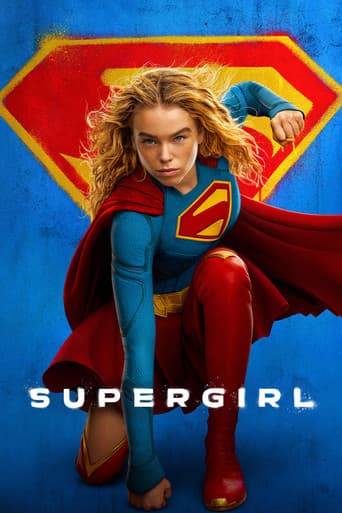
The Things You Missed

SupergirlEaster Eggs & Hidden Details

A planet named after the comic's editor, a Daily Planet subhead reading "Supergirl rescues cats", and 16 metres of Christopher Reeve's cape fabric.

2026 · Film · 108 min · Craig Gillespie

20 eggs catalogued14 confirmed? 1 theoriesno post-creditsupdated 2026-08-10

The short version

Supergirl (2026) hides 20 catalogued easter eggs and hidden details, 14 of them confirmed by official sources. Standouts include two planets and a town square are named after the comic's creative team, sixteen metres of christopher reeve's cape are sewn into kara's and the daily planet front page is signed by the crew. Every entry below includes where to look, a spotting difficulty, and sources.

Every egg on this page

  1. The Daily Planet Front Page Is Signed by the Crew
  2. "Supergirl Rescues Cats" — a Two-Column Joke About Her Whole Career
  3. Two Planets and a Town Square Are Named After the Comic's Creative Team
  4. The Argo City Flashback Is Woman of Tomorrow #6, Rebuilt in Stone
  5. "Krypton Didn't Die in a Day" Is Lifted from the Comic — and Reassigned
  6. The Red-Sun Bar Scene Restages the Comic's First Pages — and Superman's Last
  7. The Space-Bus Pirates Are Fifty-Year-Old Legion Villains
  8. The Robot Spider Swarm May Be a Superman Lives Punchline
  9. Lobo Rides In on the Spacehog — and He Really Did Kill Everyone
  10. Lobo's Cigar Is a Vape and His Coat Is from 1918
  11. Seth Rogen Is the Voice of the Space-Bus Attendant
  12. Rao, the Green Sun and Barenton Are All Silver Age Deep Cuts
  13. The Film Answers the "Why Isn't She Superwoman?" Argument in Two Words
  14. Kara Calls an Alien "Squidward" and Compares a Bar Fight to the Titanic
  15. Sixteen Metres of Christopher Reeve's Cape Are Sewn into Kara's
  16. Practical Krypto Is an IKEA Rug That Breathes
  17. The Blondie T-Shirt, the Scuffed Boots and 72 Hours Without a Wash
  18. Kara's Space RV Is Modelled on Martin Riggs' Caravan
  19. John Williams' 1978 March Turns Up — but Not in the Score
  20. The Final Scene Was Built as a Post-Credits Stinger

Sixteen metres of fabric. That is how much of the original material used for Christopher Reeve's 1978 Superman cape the costume department tracked down after a three-month worldwide search, and it is sewn into the back of Milly Alcock's cape — invisible in every frame it appears in. Nothing about that detail is legible on screen. It is also the purest available statement of what Craig Gillespie's film is doing: assembling a version of Kara Zor-El out of physical, sourced, scuffed-up things, and then declining to point at a single one of them.

That instinct runs all the way down. Gillespie shot the action himself with no second unit, insisted Kara stay unbathed and free of makeup across the entire 72-hour mission, had the costume department scuff the soles of her boots, and commissioned roughly fifty practical alien designs so the space bus could rattle with real prosthetics rather than render passes. Krypto, in his non-digital form, is an animatronic built out of an IKEA rug that breathes, blinks and wags. The art department repaid Tom King and Bilquis Evely's Supergirl: Woman of Tomorrow by naming planets and town squares after the people who made the book — the artist and the DC editor included — and by rebuilding the fall of Argo City to match Evely's architecture. The one place the film does raise its voice is the Daily Planet front page in the opening minutes, which hides a hockey team lifted from a 1990 DC reference book, a lake named for John Romita Jr., and bylines belonging to the crew.

What follows is every egg we could actually stand behind, sorted by how certain we are of it. Entries marked Confirmed come from DC's own easter-egg round-up, Gillespie's press interviews and the soundtrack's official credits; the set-visit details that reach us only through outlet reporting are marked Community. Community entries are freeze-frame finds documented across multiple outlets but never addressed by anyone who made the film. The single Theory here is the robot-spider swarm, which several critics read as a wink at the giant mechanical spider Kevin Smith was famously ordered to write into the unmade Superman Lives — plausible, unconfirmed, and labelled as such. Spoiler entries stay blurred until you ask for them, and if you only came for the post-credits answer, it is waiting below.

The full catalog

Your hunt

Tick off what you spotted

0 / 20 spotted

Tap the circle on a card when you catch one.

Type
Status
Difficulty

The Daily Planet Front Page Is Signed by the Crew

Hidden DetailReferenceBehind the Scenes ConfirmedDeep Cut

WHERE TO LOOK · The opening sequence — the newspaper is held or laid flat; pause on the columns, not the masthead

The film opens on a copy of the Daily Planet, and it is on screen for seconds — long enough to be a freeze-frame puzzle rather than set dressing. DC's own round-up confirms that the reporters and photographers credited on the page are members of the Supergirl production team, that one article references Romita Lake as a tribute to artist John Romita Jr., and that a blurb mentions the Metropolis Mammoths, a hockey team whose only prior existence is a line in 1990's Atlas of the DC Universe. It is the densest single frame in the movie and the one most obviously written for people who pause.
"Supergirl Rescues Cats" — a Two-Column Joke About Her Whole Career

Hidden DetailReferenceMeta Community ConsensusDeep Cut

WHERE TO LOOK · Bottom of the Daily Planet front page in the opening scene — the small subhead under the lead nuclear story

On that same front page, the lead story belongs to Kal-El: Superman saving a town from a reactor failure at the Silver Ridge Nuclear Facility. Kara gets a two-column subhead reading "Supergirl rescues cats." It is a status joke — the cousin gets the nuclear meltdown, she gets the fluff — and a double-layered one, since rescuing a cat from a tree is what Christopher Reeve's Superman does in the 1978 film, and the beat is famous enough that Blake Snyder named his screenwriting bible Save the Cat after the idea. Given how much of this film is about Kara refusing to be the lighter-weight Kryptonian, it is also the thesis in twelve point type.

Two Planets and a Town Square Are Named After the Comic's Creative Team

ReferenceBehind the ScenesMeta ConfirmedWhite Whale

WHERE TO LOOK · Navigation displays and destination call-outs during the interstellar chase; the town square set on Ruthye's world

The star charts are a thank-you note. The planet Holzherr takes its name from Brittany Holzherr, the DC Comics editor who shepherded Supergirl: Woman of Tomorrow. The planet Bilquis honours artist Bilquis Evely, whose painted, sun-bleached pages are most of what made the limited series famous. And on the Leavesden backlot the production built a standing set the crew called Evely Town Square — dusty floors, rusting frames, a neon-lit pub serving fried eyeballs made from fondant with cake centres. Three separate departments, one shared tribute, and none of it is ever said aloud in dialogue.

The Argo City Flashback Is Woman of Tomorrow #6, Rebuilt in Stone

Hidden DetailReference ConfirmedFreeze Frame

WHERE TO LOOK · The Krypton flashback sequence — compare the colonnades and the shield dome to Evely's pages

Spoiler:

Kara's memory of Argo City's last hours — the radiation shield failing, her parents making the call to send her away — is adapted from Supergirl: Woman of Tomorrow #6, itself a retelling of her original 1959 debut in Action Comics #252. The production went past plot and copied the drawings: Roman- and Greek-inflected columns, wide public walkways, still lakes, blossom, and golden doors carrying the sigil of Rao, all built to match Bilquis Evely's architecture. Kara's family apartment was designed around enormous glass windows modelled on an English south-coast power station. The whole city is a set, not a plate.

"Krypton Didn't Die in a Day" Is Lifted from the Comic — and Reassigned

ReferenceMeta ConfirmedDeep Cut

WHERE TO LOOK · Kara's account of Argo City's slow death, delivered to Ruthye during the journey

Spoiler:

The film's hardest line — "Krypton didn't die in a day. The gods are not that kind" — comes straight out of Supergirl: Woman of Tomorrow, but the page gives it to Ruthye as narration. Ana Nogueira's screenplay hands it to Kara instead. The swap does real work: in the comic the line is a child's observation about someone else's grief, and in the film it is the survivor stating her own case out loud. Readers get the sentence they remember, and everyone else gets the single cleanest articulation of why this Kara is nothing like her cousin.

The Red-Sun Bar Scene Restages the Comic's First Pages — and Superman's Last

ReferenceCallback ConfirmedSecond Watch

WHERE TO LOOK · The bar on the red-sun world where Ruthye first finds her — watch for the cut that actually stays open

Kara drinking herself sideways on a red-sun world, then bleeding when a bar brawl turns real, is the opening of Supergirl: Woman of Tomorrow transferred almost intact: red sunlight suppresses Kryptonian abilities, which is the only condition under which she can get drunk or get cut. It is also the direct sequel to her introduction in Superman (2025), where Milly Alcock's Kara stumbles into the Fortress of Solitude visibly hammered and Clark has to explain the red-sun mechanics to his robots. One film sets the rule up as a punchline; this one uses it to make her mortal for an hour.

The Space-Bus Pirates Are Fifty-Year-Old Legion Villains

ReferenceBehind the Scenes ConfirmedDeep Cut

WHERE TO LOOK · The Wormhole Xpress hijacking, mid-journey

The all-female bandits who board the Wormhole Xpress and start stripping it for parts are the Sklarian Raiders, and they are not an invention for the film. They first appeared in Superboy and the Legion of Super-Heroes #233, a corner of DC continuity so far from Metropolis that most Superman fans have never met them. DC's own round-up flags them by issue number. Their function here is structural as well as fannish: they turn a long transit scene into the movie's first real action beat, and they establish that this galaxy has organised crime operating at bus-route scale.

The Robot Spider Swarm May Be a Superman Lives Punchline

ReferenceMeta? TheoryDeep Cut

WHERE TO LOOK · The Wormhole Xpress hijacking — the spiders board through the hull and work down the aisle

The Sklarians attack with a horde of mechanical spiders that crawl the length of the bus, pulling it apart panel by panel. Several critics have read the swarm as a nod to the most infamous piece of unproduced Superman lore: the giant mechanical spider that Kevin Smith has spent decades recounting a studio executive demanding for Tim Burton's abandoned Superman Lives. That spider eventually got an explicit joke in The Flash (2023). Nobody on Supergirl has confirmed the reference, and the scale is wrong — dozens of small ones rather than one enormous one — so this stays firmly labelled as speculation.

Lobo Rides In on the Spacehog — and He Really Did Kill Everyone

ReferenceHidden DetailBehind the Scenes ConfirmedFreeze Frame

WHERE TO LOOK · Lobo's introduction and every bike sequence after — the skull on the front cowling is the tell

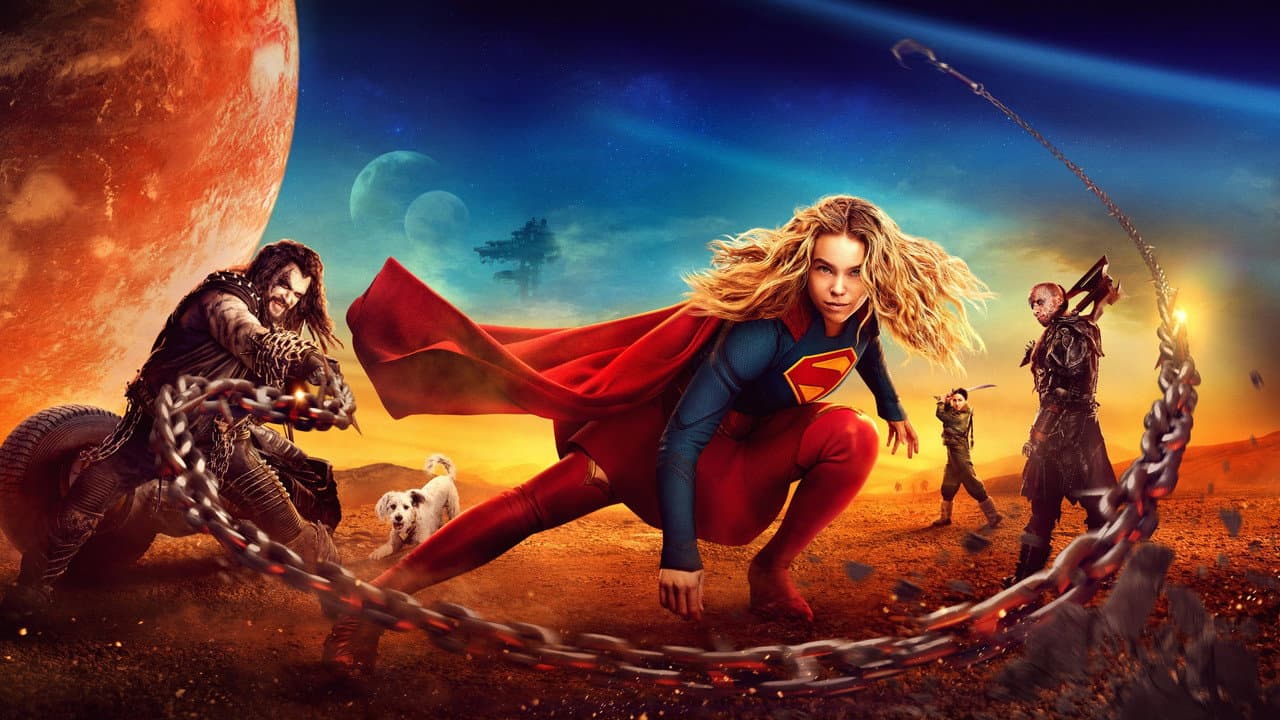
Jason Momoa's Lobo arrives comics-accurate down to the vehicle: the flying motorcycle with the skull bumper is the Spacehog, his ride of choice since Justice League International #18. The character himself debuted in 1983's Omega Men #3. The detail the film leans on hardest is the one casual viewers will miss — in the 1990 Lobo limited series, the Main Man murdered the entire Czarnian race himself, as a school science project. That makes him the exact dark mirror of Kara: two last survivors of dead worlds, except one of them did it on purpose.

Lobo's Cigar Is a Vape and His Coat Is from 1918

Behind the ScenesHidden Detail Community ConsensusWhite Whale

WHERE TO LOOK · Every Lobo scene — the lighter and the coat read best in the close-ups on the bike

Almost everything on Momoa is a physical object with a story. The perpetually smoking cigar is a functioning prop built around vape hardware, assembled in roughly six hours and paired with a brass punch lighter. The coat is a genuine 1918 dispatch rider's coat. The chain around his neck is real metal with a grenade hanging off it, the jacket's embroidery took three weeks, and the buttons were hand-sculpted in brass and silver. The clawed fingerless gloves were Momoa's own request. Gillespie's note to him was effectively to improvise freely and let the edit sort it out.

Seth Rogen Is the Voice of the Space-Bus Attendant

CameoBehind the Scenes ConfirmedFreeze Frame

WHERE TO LOOK · The Wormhole Xpress passenger cabin, before and during the Sklarian boarding

The put-upon attendant working the Wormhole Xpress — an alien with no comics pedigree whatsoever, invented purely for the film — is voiced by Seth Rogen, uncredited in the marketing and unrecognisable under the design. DC's round-up singles him out as a character who steals every scene he appears in despite existing nowhere in Woman of Tomorrow. It is the film's one pure voice-cameo gag, and it lands in the middle of its most stressful sequence, which is presumably the point.

Rao, the Green Sun and Barenton Are All Silver Age Deep Cuts

ReferenceForeshadowing ConfirmedDeep Cut

WHERE TO LOOK · Barenton in the third act — the shift from green to yellow light is the cue that her powers are returning

Spoiler:

The film's sun mechanics are not invented. Rao — Krypton's red star and the god Kryptonians worship, whose sigil is stamped on Argo City's golden doors — was first named in 1972's Superman #248. The specific danger of a green sun to a Kryptonian dates to 1962's Superman #155. And Barenton, the green-sun world where the climax plays out, comes from Supergirl: Woman of Tomorrow #5. Gillespie handled all three sun colours as subtle grading shifts with the star placed in frame, rather than obvious effects work, so the rule set reads as weather rather than exposition.

The Film Answers the "Why Isn't She Superwoman?" Argument in Two Words

MetaReference ConfirmedSecond Watch

WHERE TO LOOK · First contact with a stranger who has heard of her cousin but not of her

Asked "And you are Superwoman?", Kara answers: "Supergirl." No speech, no defence, no wink to camera. The exchange is a deliberate acknowledgement of one of the longest-running arguments around the character — the decades of think-pieces about a grown woman carrying a diminutive name — and the film's response is to have her refuse the correction and move on. DC's own easter-egg round-up flags it as tongue-in-cheek, which makes it one of the few jokes here that the studio has explicitly copped to.

Kara Calls an Alien "Squidward" and Compares a Bar Fight to the Titanic

ReferenceMeta ConfirmedSecond Watch

WHERE TO LOOK · The red-sun bar sequence and the alien encounters immediately around it

Two throwaway lines quietly establish that Kara has spent enough time on Earth to have absorbed its pop culture. She dismisses one alien as "Squidward" — the perpetually irritated cephalopod from SpongeBob SquarePants — and, mid-brawl, compares the bar's unbothered musicians to the band that kept playing as the Titanic went down. Neither is a DC reference, which is exactly why they matter: they are the only evidence in a film set almost entirely off-world that this Kryptonian has been watching Earth television.

Sixteen Metres of Christopher Reeve's Cape Are Sewn into Kara's

Behind the ScenesMeta ConfirmedWhite Whale

WHERE TO LOOK · Every shot of the finished supersuit, third act onward

The costume department spent roughly three months sourcing cape fabric worldwide before finding around 16 metres of the same material used for Christopher Reeve's cape in Superman (1978). It went into the back of Milly Alcock's cape. There is no way to see it — the weave is the point, not a visible motif — which makes it the purest example of the film's habit of building things nobody will ever be able to verify from a seat. Alcock has spoken about it directly, and it is the closest thing the DCU has produced to a physical relic passed between eras.

Practical Krypto Is an IKEA Rug That Breathes

Behind the Scenes Community ConsensusWhite Whale

WHERE TO LOOK · Krypto's collapse and every scene where he is carried or held afterwards

Spoiler:

For the scenes where Krypto needed to be physically present — most importantly the ones after Krem poisons him — the creature department built a practical dog out of an IKEA rug, rigged so it breathes, blinks and wags its tail on cue. A separate injured-Krypto prosthetic was made for the poisoning aftermath. That change from the comic matters too: on the page Krem burns Krypto, while the film has him hit with a poisoned round, which is what turns the whole story into a ticking clock. The dog you spend the film worrying about is, in several shots, furniture.

The Blondie T-Shirt, the Scuffed Boots and 72 Hours Without a Wash

Hidden DetailBehind the Scenes ConfirmedSecond Watch

WHERE TO LOOK · Her civilian look throughout the first two acts — track the dirt across the road trip

Kara wears the same clothes for the entire film because the mission takes 72 hours and Gillespie refused to cheat it. He personally vetoed eyeliner and cosmetics, had the costume department scuff the soles of her shoes, and pushed for her to look progressively messier and dustier as the days stack up. Her civilian layer is a Blondie band t-shirt, made in roughly thirty versions so it could be matched across lighting setups and degrees of damage, worn under a long coat that functions as a stand-in cape until the real one arrives.

Kara's Space RV Is Modelled on Martin Riggs' Caravan

ReferenceHidden DetailBehind the Scenes Community ConsensusDeep Cut

WHERE TO LOOK · Interior shots of Kara's ship — the record spines and Polaroids are the layer worth pausing on

The interior of Kara's ship was designed to read as a teenager's bedroom that has been dragged across the galaxy: paperbacks, Polaroids, vinyl records, clutter that predates her by years. The department's stated reference point was *Martin Riggs' beachfront caravan from Lethal Weapon*** — the home of a man who is functionally living in a container because settling anywhere would mean processing what happened to him. Also on board: a "space iPod", which the props team built in both a recognisably Nano-shaped version and a futurist one, on the grounds that nobody actually knows what a space iPod looks like.

John Williams' 1978 March Turns Up — but Not in the Score

Music SecretCallback ConfirmedFreeze Frame

WHERE TO LOOK · The Metropolis epilogue — listen for the march arriving with Clark, not with Kara

Spoiler:

Claudia Sarne, the third composer attached to the film after Ramin Djawadi and Tom Holkenborg both cycled off, has said plainly that she did not directly quote John Williams' Superman theme, building Kara's identity instead out of piano, guitar pedals and what she calls a dirty synth world, with separate motifs for Ruthye and Krem. The Williams march still appears in the film — credited as licensed music rather than score, which is why it is absent from her nineteen-track album. The distinction is the egg: Kara does not get the fanfare, her cousin's presence does.

The Final Scene Was Built as a Post-Credits Stinger

Behind the ScenesCallbackMeta Community ConsensusFreeze Frame

WHERE TO LOOK · The Metropolis epilogue, immediately before the credits roll

Spoiler:

The closing beat — Kara turning up at Clark's apartment to say she is staying — was written and shot to run after the credits. Gillespie has said the team came close to placing it there and then decided it worked better as the actual ending of the film, which is why Supergirl ships with zero stingers. The apartment is the same one Lois and Clark share in Superman (2025), making it a set callback as well as a narrative one, and the reason there is nothing to wait for is simply that the tease was promoted into the movie.

Post-credit scenes in Supergirl

No — Supergirl has no post-credit scene. The full answer — what plays, where it falls in the roll and what it sets up — has a page of its own.

Full post-credit breakdown →

Frequently asked

+How many easter eggs are in Supergirl?

We catalogue 20 easter eggs in Supergirl (2026), 14 of them confirmed by DC's own round-up or the filmmakers themselves, with the set-visit details reported secondhand by outlets sitting at community level. The standouts: the planets Holzherr and Bilquis, named after the DC editor and the artist behind Supergirl: Woman of Tomorrow; the roughly 16 metres of Christopher Reeve's 1978 cape fabric sewn into Milly Alcock's cape; and the Daily Planet front page in the opening scene, whose bylines belong to the crew and whose sports blurb resurrects a hockey team from 1990's Atlas of the DC Universe.

+Does Supergirl have a post-credit scene?

No. Supergirl has zero post-credit and zero mid-credit scenes, and the credits themselves are plain white text on black with no animation. You can leave as soon as the picture ends. The reason is unusually specific: the scene of Kara turning up at Clark Kent's apartment to say she is staying on Earth was originally written as the post-credits stinger, and director Craig Gillespie moved it into the film as the actual final scene instead. There were also reports of a stinger existing at test-screening stage, but nobody involved has confirmed it.

+How does Supergirl's ending differ from the Woman of Tomorrow comic?

Substantially, and on the single most important choice. On Barenton, with the green sun setting and the yellow rising, Kara suits up, breaks the Brigands with Lobo's help and frees the women Krem abducted. When Ruthye has her chance at revenge, Kara talks her out of it — then kills Krem herself, absorbing the act so the girl does not have to carry it. In Tom King and Bilquis Evely's comic the reverse happens: Ruthye is the one who talks Kara down, and Krem lives, imprisoned in the Phantom Zone. Gillespie has said James Gunn actively pushed to keep the kill.

+How is Supergirl connected to Superman (2025)?

Directly. It is the second DCU film and picks up the thread of Milly Alcock's cameo at the end of Superman (2025), where Kara stumbles into the Fortress of Solitude drunk — possible only because red sunlight strips Kryptonian powers, a rule this film builds its entire first act around. David Corenswet returns as Clark, checking in on a cousin who never settles anywhere, and the closing scene takes place in the same Metropolis apartment set used for Lois and Clark in the previous film. John Williams' 1978 march also turns up as licensed music rather than in Claudia Sarne's score.

+Is Milly Alcock's cape really made from Christopher Reeve's Superman cape?

It uses the same material. The costume department spent about three months searching worldwide for cape fabric and located roughly 16 metres of the material used for Christopher Reeve's cape in Superman (1978), which was then worked into the back of Alcock's cape. It is not visible on screen in any meaningful way — the weave is the tribute, not a pattern you can spot — which makes it a good summary of how this production worked generally: real 1918 coats for Lobo, an animatronic Krypto built from an IKEA rug, and around fifty practical alien designs instead of digital ones.

+Who is Lobo in Supergirl, and is he comic-accurate?

Jason Momoa plays Lobo, the Czarnian bounty hunter who first appeared in 1983's Omega Men #3 and who — in the 1990 Lobo limited series — wiped out his own species personally. That backstory makes him a deliberate dark mirror of Kara: two last survivors, one of whom chose it. The film gets the hardware right too, including the Spacehog, the skull-fronted flying motorcycle he has ridden since Justice League International #18. His costume is a genuine 1918 dispatch rider's coat, and the cigar is a working prop built around vape hardware.

Last updated 2026-08-10 · Spotted something we missed? Tell us.