The Things You Missed

UpEaster Eggs & Hidden Details

Carl's courtroom is A113, his summons carries a real California zip code, and a teddy bear on a child's floor was advertising Toy Story 3 a year early.

2009 · Film · 96 min · Pete Docter, Bob Peterson

11 eggs catalogued5 confirmed? 1 theoriesno post-creditsupdated 2026-08-19

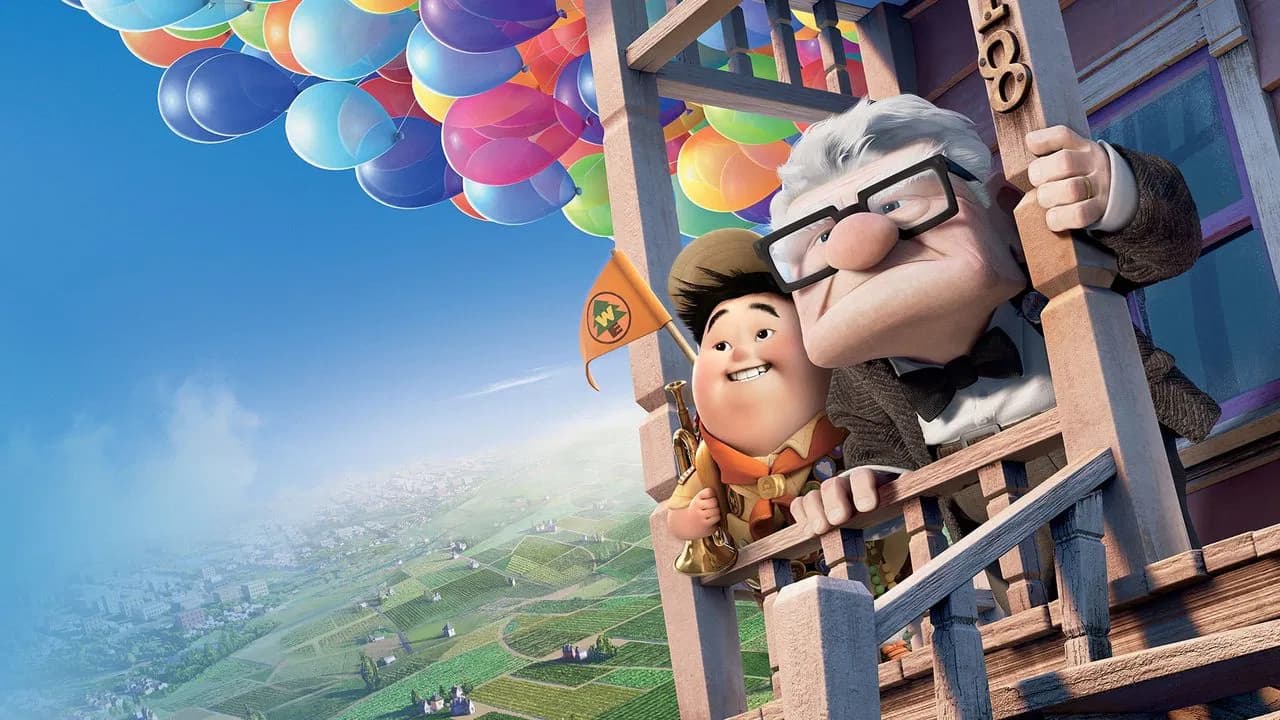
The short version

Up (2009) hides 11 catalogued easter eggs and hidden details, 5 of them confirmed by official sources. Standouts include the courtroom is a113 — and the summons number is a real california zip code, the pizza planet truck appears three separate times and carl's face is spencer tracy in his final film. Every entry below includes where to look, a spotting difficulty, and sources.

Every egg on this page

  1. The courtroom is A113 — and the summons number is a real California zip code
  2. Lotso is on a child's bedroom floor a year before Toy Story 3
  3. The Luxo ball is on the floor next to Lotso
  4. The Pizza Planet truck appears three separate times
  5. Carl's face is Spencer Tracy in his final film
  6. Paradise Falls is Angel Falls, researched on location
  7. Alpha thinks he is Clint Eastwood — that is why the squeaky voice is funny
  8. Dug barked at a rat in Paris two years before this film
  9. The ice cream parlour at the end is a real Oakland institution
  10. The villain may be named after the man who stole Oswald from Walt Disney
  11. The credits finish Ellie's scrapbook

The most-discussed four minutes in Pixar's history are the ones with no easter eggs in them at all. Carl and Ellie's marriage montage is deliberately clean — no hidden numbers, no cross-film cameos, nothing to catch the eye and pull you out. Up saves its buried material for the rest of the film, and it buries a lot.

The densest single frame is the courtroom. Carl is summoned over the assault charge that costs him his house, and the room number is A113, Pixar's CalArts signature. The summons itself carries the number 94070 — the real zip code for San Carlos, California, a town a Pixar producer had once served as mayor of. Two separate in-jokes stacked on the piece of paper that takes Carl's home away.

Elsewhere the film is doing advance publicity. When the house lifts off and drifts past the neighbourhood, a little girl watches from her window; on her floor sit the Luxo ball and a pink teddy bear. The bear is Lotso, and Toy Story 3 was still a year away. And the film's villain carries a name that fans have spent fifteen years connecting to the real man who took Oswald the Lucky Rabbit away from Walt Disney — a link Pixar has never confirmed, which is exactly why we have it filed as a theory.

The full catalog

Your hunt

Tick off what you spotted

0 / 11 spotted

Tap the circle on a card when you catch one.

Type
Status
Difficulty

The courtroom is A113 — and the summons number is a real California zip code

Hidden DetailReference ConfirmedDeep Cut

WHERE TO LOOK · The courthouse sequence — the room number, and the summons paperwork

The room where Carl is tried for the assault that ultimately costs him his house is numbered A113, the CalArts character animation classroom that Pixar has hidden in nearly every feature. Stacked on top of it, the summons carries the number 94070 — the genuine zip code for San Carlos, California, a town one of Pixar's producers had previously served as mayor of. Two unrelated inside jokes on the single document that ends Carl's life as he knows it.

Lotso is on a child's bedroom floor a year before Toy Story 3

CameoForeshadowing Community ConsensusDeep Cut

WHERE TO LOOK · The lift-off sequence — the little girl's bedroom as the house drifts past her window

As Carl's house floats past the neighbourhood, a small girl watches from her window. On the floor beside her bed lies a pink teddy bear — Lots-o'-Huggin' Bear, the strawberry-scented villain of Toy Story 3, which would not open for another twelve months. Pixar planted him in the Up trailer too, and fans identified the bear before the studio had announced the character. Seeding the next film's antagonist into a quiet domestic shot is Pixar's oldest marketing trick, executed here about as subtly as it gets.

The Luxo ball is on the floor next to Lotso

CallbackHidden Detail Community ConsensusDeep Cut

WHERE TO LOOK · The little girl's bedroom during the lift-off, on the floor

The same bedroom shot carries a second plant: the yellow ball with the blue stripe and red star from Luxo Jr. (1986), lying on the floor near the bear. Pixar has a habit of clustering its signatures rather than spacing them out — if you have found one object worth pausing on in a Pixar film, the reliable move is to check the rest of the room before moving on.

The Pizza Planet truck appears three separate times

Hidden DetailCallback ConfirmedDeep Cut

WHERE TO LOOK · Two sightings as the house crosses the city; one in the car park during the final ice-cream scene

Most Pixar films hide the truck once. Up uses it three times: twice during Carl's flight across the city — parked at a curb, then pulling out of a lot at the bottom right of frame — and once more at the very end, in the car park behind Carl and Russell as they eat ice cream. It is one of the highest counts in the studio's filmography, and the closing appearance quietly frames the film's happy ending.

Carl's face is Spencer Tracy in his final film

ReferenceBehind the Scenes ConfirmedDeep Cut

WHERE TO LOOK · Carl's character design throughout

Carl Fredricksen's square, heavy-browed design was built to resemble Spencer Tracy as he appeared in Guess Who's Coming to Dinner (1967) — the last film Tracy made, released weeks after his death. The team also worked from Walter Matthau, James Whitmore and their own grandparents, chasing what Docter's crew described as the sweetness in grumpy old men. Modelling a character about the end of a life on an actor's final performance is not an accident.

Paradise Falls is Angel Falls, researched on location

ReferenceBehind the Scenes ConfirmedFreeze Frame

WHERE TO LOOK · Ellie's clubhouse scrapbook, and the film's South American third act

The waterfall Ellie tears out of a magazine and pins to her wall is based on Angel Falls in Venezuela — the world's tallest uninterrupted waterfall, on the tepui plateaus of Canaima. Pixar sent a team to the region to study the flat-topped mountains and their light. The landscape Carl spends the film trying to reach is one of the few places on Earth that genuinely looks like a child's drawing of somewhere impossible.

Alpha thinks he is Clint Eastwood — that is why the squeaky voice is funny

Behind the ScenesMeta ConfirmedFreeze Frame

WHERE TO LOOK · Every Alpha scene, from the first encounter with the pack

The Doberman leading Muntz's pack has a malfunctioning translator collar that renders his menace in a helium chirp. Pete Docter has explained the character note behind it: Alpha "thinks of himself as Clint Eastwood." That is the whole joke, and it is why the gag survives repetition — the dog is not performing a silly voice, he is performing a Western hardman and being betrayed by hardware.

Dug barked at a rat in Paris two years before this film

CameoCallback Community ConsensusWhite Whale

WHERE TO LOOK · Not in this film — Dug's earlier appearance as a shadow in Ratatouille

Up is not Dug's first appearance. The dog whose silhouette lunges and barks at Remy during the Paris chase in Ratatouille (2007) is the same golden retriever, planted two years ahead of his own film. Because he appears there only as a shadow, the cameo is unrecognisable until Up exists — which is the most patient version of Pixar's next-film tease the studio has attempted.

The ice cream parlour at the end is a real Oakland institution

Hidden DetailBehind the Scenes Community ConsensusDeep Cut

WHERE TO LOOK · The final scene — the ice cream parlour where Carl and Russell count cars

Spoiler:

Carl and Russell finish the film counting cars outside Fentons Creamery, and it is not invented. Fenton's is a genuine ice cream parlour in Oakland, California, a short drive from Pixar's Emeryville campus and a long-standing crew haunt. The studio recreated it faithfully enough that the restaurant leaned into the association afterwards. It is a small thing, but it grounds the film's last scene in a real street rather than a generic one.

The villain may be named after the man who stole Oswald from Walt Disney

Behind the ScenesMeta? TheoryWhite Whale

WHERE TO LOOK · The villain's name — no on-screen confirmation exists

A long-running fan reading holds that Charles Muntz is named for Charles Mintz, the Universal producer who in 1928 poached Walt Disney's animators and took the rights to Oswald the Lucky Rabbit, the loss that forced Disney to invent Mickey Mouse. The parallels are seductive — an aviation-era showman, a stolen creation, a grudge that outlives everyone. But Pixar has never confirmed it, and the claim circulates in fan write-ups rather than interviews, so we file it as a theory rather than a fact.

The credits finish Ellie's scrapbook

MetaCallback Community ConsensusPlain Sight

WHERE TO LOOK · The end credit sequence

Spoiler:

The film's structuring object is Ellie's My Adventure Book — the scrapbook whose empty second half Carl believes she never filled, until he finds she filled it with their marriage. The end credits complete the gesture: they are staged as pages from Carl's own new book, showing his retirement with Russell, the badge ceremony, the dogs, and a life resumed. The credits are the only place the film shows you that Carl started over rather than merely stopped grieving.

Post-credit scenes in Up

No — Up has no post-credit scene. The full answer — what plays, where it falls in the roll and what it sets up — has a page of its own.

Full post-credit breakdown →

Frequently asked

+How many easter eggs are in Up?

We have catalogued 11 documented easter eggs and hidden details in Up, including the A113 courtroom and the real San Carlos zip code on Carl's summons, Lotso appearing a year before Toy Story 3, the Luxo ball beside him, three separate Pizza Planet truck sightings, Carl's design modelled on Spencer Tracy, and Dug's earlier shadow cameo in Ratatouille.

+Where is A113 in Up?

It is the courtroom number where Carl is tried over the assault charge that costs him his house. The same scene hides a second joke: the summons carries the number 94070, the real zip code for San Carlos, California, a town a Pixar producer had once served as mayor of.

+Is Lotso from Toy Story 3 in Up?

Yes. As Carl's house floats past the neighbourhood, a little girl watches from her window and a pink teddy bear lies on the floor beside her bed. That is Lots-o'-Huggin' Bear, planted roughly a year before Toy Story 3 opened — fans identified him from the Up trailer before Pixar had announced the character.

+Is Paradise Falls a real place?

It is based on Angel Falls in Venezuela, the world's tallest uninterrupted waterfall, on the tepui plateaus of the Canaima region. Pixar sent a research team to the area to study the flat-topped mountains and their light before designing the film's third act.

+Is Up's villain based on a real person?

Possibly, but it is unconfirmed. A widely repeated fan reading connects Charles Muntz to Charles Mintz, the Universal producer who poached Walt Disney's animators in 1928 and took the rights to Oswald the Lucky Rabbit. Pixar has never verified the link, so we list it as a theory rather than a confirmed easter egg.

Last updated 2026-08-19 · Spotted something we missed? Tell us.