4 MCU Watch Orders That Fit Any Viewer, Plus a Timestamped Companion
If you’re new to the MCU, watch in release order to keep every reveal intact. If you’re chasing strict story chronology, the official Disney+ timeline is your map. Want the best of both? A hybrid order slots key Disney+ shows into the release sequence. Short on time? A movies-only path skips the shows entirely.
TL;DR:
- Watching in release order preserves surprises, while chronological order offers a linear in-universe timeline starting from Wakandan history to modern events.
- The hybrid order inserts key Disney+ shows into the release sequence at points where their storylines directly impact upcoming films.
- A movies-only approach covers the core saga within approximately 50 to 60 hours but omits most insights gained from shows and side content.
- Most fans recommend starting with release order for a first-time viewing, using chronological order for understanding the timeline, or hybrid for a more character-focused experience.
- Skipping some titles like The Incredible Hulk or Eternals is possible without losing the main narrative, but viewing them later adds valuable context.
Table of Contents
- Release, Chronological, Hybrid, or Movies-Only: Which MCU Watch Order Fits You?
- The Full MCU Chronological Order, Era by Era
- The Complete Release Order, Phase by Phase
- Building the Ideal Hybrid MCU Viewing Order
- The Movies-Only MCU Path (No Shows Required)
- How Do You Choose the Right MCU Watch Order?
- Keeping Momentum: Streaming and Binge Tips
- How The Things You Missed Enhances Your Marvel Marathon
- Should You Read the Comics Before Watching?
- Which MCU Entries Can You Skip Without Losing the Story?
- Newcomers vs. Long-Time Fans: Different Orders, Different Goals
- Adjusting Your Order Around Favorite Characters
- An Editor’s Take on Which MCU Order Actually Works
- Pair Your Marathon With a Companion You Can Trust
- Sources
- FAQ
Release, Chronological, Hybrid, or Movies-Only: Which MCU Watch Order Fits You?
Four distinct paths get you through this universe, and none of them is objectively “correct.” They just serve different missions.
- Release order follows the sequence films and shows actually hit theaters and Disney+, starting with Captain America: The First Avenger leading into Iron Man’s cultural launch. It preserves every twist the way the writers intended, because Nick Fury’s cameo, Thanos’s throne-room tease, and the entire Infinity War buildup were engineered around this exact rollout.
- Chronological order rearranges everything by in-universe date, starting in the 1940s (or earlier, with the animated Eyes of Wakanda) and marching forward to the present. This is the order for viewers who want to feel time pass the way the characters do.
- Hybrid order keeps the release sequence as its backbone but slides Disney+ shows into the exact gap where their story matters most, so WandaVision lands right where Wanda’s arc needs it before Doctor Strange in the Multiverse of Madness.
- Movies-only order strips shows out entirely and sticks to theatrical releases by phase. It’s the fastest legitimate way to understand the main saga without a 200-hour commitment.
Each path earns its place. The rest of this guide breaks down exactly how to walk each one.
The Full MCU Chronological Order, Era by Era
Chronological order is where things get genuinely tricky, because Marvel didn’t build this universe on a straight timeline. It built it on flashbacks, time heists, and a multiverse that actively resists being lined up in a single column. Still, a workable sequence exists, and Disney+'s own official chronological timeline is the closest thing to a canonical answer.
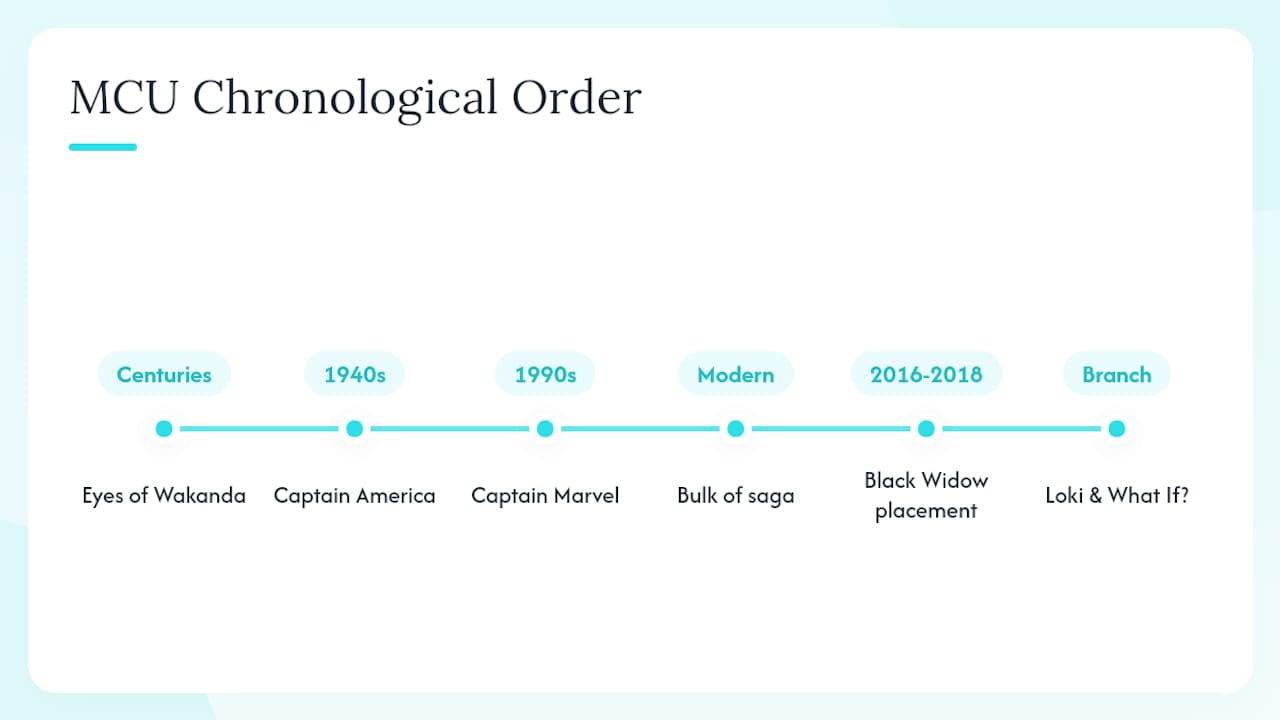
The sequence opens earlier than most fans expect. Eyes of Wakanda, the animated anthology series, pushes the timeline back centuries before Captain America ever laces up his boots, tracing Wakandan history across generations. From there, the story jumps to the 1940s for Captain America: The First Avenger, which most watch guides, including Rotten Tomatoes’ chronological breakdown, treat as the true start of the live-action MCU.
From the 1940s, the timeline leaps to the 1990s for Captain Marvel, then settles into the modern era where the bulk of the saga lives. Below is a grouped breakdown by major era, since trying to track all 40-plus MCU titles as one flat list is where most viewers give up.
Two placements deserve a caveat. Loki and What If…? technically sit outside the main Sacred Timeline once the Time Variance Authority enters the picture, and Wikipedia’s MCU timeline compendium flags both series as branch events rather than strict continuations of the primary continuity. Black Widow is another oddity: it was released in 2021, well after Avengers: Endgame, but its story takes place between Civil War and Infinity War, so chronological purists watch it years “early” relative to its release date.
The Marvel Cinematic Universe timeline compendium on Wikipedia resolves most of these disputes using title cards, dialogue references, and production notes as evidence, which is why it remains the go-to secondary source when Disney+'s own placement feels ambiguous.
Pro Tip: Pause after Avengers: Endgame’s mid-credit scene if you’re watching chronologically. That five-second tag introduces a plot thread that pays off in a completely different era, and jumping straight into the next chronological entry can make you miss why it matters later.
The Complete Release Order, Phase by Phase
Release order is the sequence Marvel Studios actually built, which means it’s engineered for maximum reveal. Every mystery box, every mid-credit tease, every “wait, was that…?” moment lands exactly where the studio wanted it to land. That’s not nostalgia talking. Industry commentary from Plex makes the same case: release order preserves surprises, while chronological order is better suited to people who already know how the story ends and want to study how it connects.
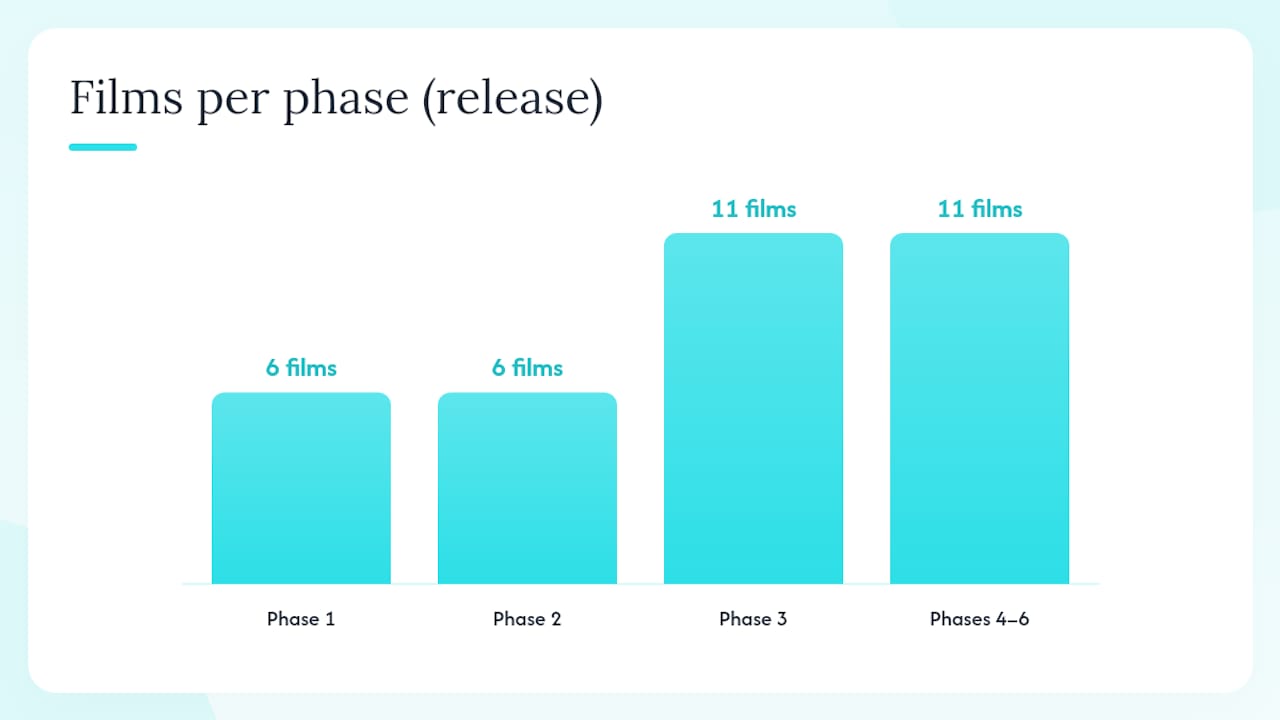
- Phase 1: Iron Man, The Incredible Hulk, Iron Man 2, Thor, Captain America: The First Avenger, The Avengers
- Phase 2: Iron Man 3, Thor: The Dark World, Captain America: The Winter Soldier, Guardians of the Galaxy, Avengers: Age of Ultron, Ant-Man
- Phase 3: Captain America: Civil War, Doctor Strange, Guardians of the Galaxy Vol. 2, Spider-Man: Homecoming, Thor: Ragnarok, Black Panther, Avengers: Infinity War, Ant-Man and the Wasp, Captain Marvel, Avengers: Endgame, Spider-Man: Far From Home
- Phase 4–6 highlights: Black Widow, Shang-Chi and the Legend of the Ten Rings, Eternals, Spider-Man: No Way Home, Doctor Strange in the Multiverse of Madness, Thor: Love and Thunder, Black Panther: Wakanda Forever, Guardians of the Galaxy Vol. 3, The Marvels, Thunderbolts*, and The Fantastic Four: First Steps
Slotting in shows without killing your momentum takes a little planning. The cleanest approach is to watch WandaVision, The Falcon and the Winter Soldier, and Loki right after Avengers: Endgame and before Spider-Man: Far From Home, since that’s the exact window Marvel wrote them for. Save Secret Invasion for right before The Marvels, since Fury’s arc there directly sets up his role in the film.
Reputable outlets including PCMag’s viewing guide and Digital Spy’s phase breakdown both organize their release lists by phase for exactly this reason. It gives you natural pause points between story chapters.
Building the Ideal Hybrid MCU Viewing Order
A hybrid order runs on one rule: keep the movies in release sequence, but insert a show the moment its story becomes essential to understanding the next film. This isn’t a compromise between the two “pure” methods. It’s arguably the smartest way to experience this franchise, because editorial hybrid guides consistently point out that shows like WandaVision land with more emotional weight when they arrive at the exact narrative gap they were written to fill, rather than being binged as a separate afterthought.
Here’s a practical insertion sequence for the biggest junctions:
- Watch through Avengers: Endgame in standard release order.
- Insert WandaVision immediately after, since it picks up Wanda’s grief in real time and sets up her transformation.
- Follow with The Falcon and the Winter Soldier, which closes out Sam Wilson’s arc before Captain America: Brave New World.
- Insert Loki next; its multiversal fallout quietly reshapes everything that follows.
- Watch Spider-Man: Far From Home, then insert Ms. Marvel and Secret Invasion before The Marvels, since both directly feed Kamala Khan’s and Fury’s roles in that film.
- Resume standard release order through Thunderbolts* and beyond.
Who actually benefits from this? Viewers who’ve already seen most of the movies but want the emotional beats to land in the right order on a rewatch. It’s also the best plan for a focused two-week binge: watch two movies a night for the first week, then dedicate three evenings in week two to the inserted shows before finishing the remaining films. You get the theatrical pacing and the character depth, without six extra hours of filler episodes breaking your momentum at the wrong moment.
The Movies-Only MCU Path (No Shows Required)
If Disney+ subscriptions or spare hours are tight, skip the shows entirely and stick to the theatrical lineup, grouped exactly as it released:
- Phase 1 through 3: Iron Man → Avengers: Endgame, in the order listed above.
- Phase 4–6: Black Widow, Shang-Chi, Eternals, Spider-Man: No Way Home, Doctor Strange in the Multiverse of Madness, Thor: Love and Thunder, Black Panther: Wakanda Forever, Guardians of the Galaxy Vol. 3, The Marvels, Thunderbolts*, and The Fantastic Four: First Steps.
You’ll lose some connective tissue, particularly around Secret Invasion and WandaVision, but the core saga holds together without them. A handful of post-credit scenes matter enough to seek out on their own, even if you skip everything else. The Fantastic Four: First Steps carries two separate stingers that set up the team’s next appearance directly. Avengers: Endgame, notably, has no traditional post-credit scene at all, just a callback sound cue, so don’t sit through the full crawl expecting a reveal that isn’t coming.
How Do You Choose the Right MCU Watch Order?
The decision usually boils down to three questions: how much MCU history you already know, how much time you have, and how much you care about avoiding spoilers versus understanding continuity.
- Brand new to the franchise? Start with release order. Full stop.
- Already seen most films and want the timeline to click into place? Go chronological.
- Want story depth without a six-month commitment? Hybrid order is your answer.
- Genuinely tight on time? Movies-only gets you through the main saga fastest.
Time-wise, a movies-only run through the theatrical catalog runs roughly 50 to 60 hours. Add every mainline Disney+ series for a full chronological watch, and you’re closer to 150 to 200-plus hours depending on how many seasons of What If…? and Loki you include.
Pro Tip: If you’re worried about spoiling a twist while researching your order online, stick to spoiler-safe sources that timestamp specific moments rather than describing them in a synopsis. That’s the difference between confirming a scene exists and accidentally reading exactly what happens in it.
Keeping Momentum: Streaming and Binge Tips
Not every credit scene deserves your patience. Mid-credit scenes almost always matter, since they tend to set up the next film’s inciting event. Post-credit tags after the full crawl are more of a mixed bag. Some are essential, some are pure comic relief with zero story weight, so check ahead if you’re trying to move fast.
Disney+ remains the single source hosting the official chronological timeline, but availability and regional libraries shift periodically, so confirm a title is actually streaming before you build a marathon around it. Building a dedicated watchlist inside the app, batching episodes instead of watching one per night, and skipping the “previously on” recaps once you already know the story all shave real hours off a long rewatch.
How The Things You Missed Enhances Your Marvel Marathon
Whichever order you land on, following along with a spoiler-safe, timestamped catalog turns a passive watch into an active hunt. Thethingsyoumissed indexes verified easter eggs and hidden details by exact moment, so you can look up a specific post-credit scene or a motif callback without stumbling into a plot twist you haven’t reached yet. The same cataloging approach powers guides like the site’s Star Wars watch order breakdown, built on the same verified, timestamped method applied here to the MCU.
As Christian, who oversees the site’s franchise coverage, puts it: the goal is never to spoil the reveal, only to make sure you never miss the reference sitting right behind it.
Should You Read the Comics Before Watching?
Tie-in comics and supplemental material aren’t required reading, but a handful genuinely deepen specific arcs. Marvel’s 616 documentary series on Disney+ gives context on the creative decisions behind several characters without spoiling film plots. The comic runs behind Secret Invasion and Civil War add motivation layers the films compress for time, particularly around why certain heroes end up on opposing sides.
Treat comics as optional enrichment, not prerequisite homework. If you’re watching for the first time, finish the film or series first, then dig into the source material if a character or twist grabbed you. Reading the comics beforehand risks spoiling reveals the films are specifically built to withhold, which defeats the purpose of choosing release order in the first place. Save the deep lore dive for a second pass, once you already know how the on-screen version plays out.
Which MCU Entries Can You Skip Without Losing the Story?
Not every title carries equal narrative weight, and treating all 40-plus entries as mandatory viewing is how marathons stall out. A few titles are genuinely skippable on a first watch without losing the main thread.
The Incredible Hulk connects to later films mostly through a single cameo and minor references; some viewers may choose to skip it and pick up context from a recap. Eternals operates largely as a self-contained story with minimal impact on the main Avengers storyline, making it reasonable to postpone if time is limited. Standalone one-shot shorts are generally non-essential for the main narrative.
Postpone rather than permanently skip if you’re unsure. You can always circle back to a lower-priority title once you’ve finished the main arc, and having the broader context often makes a previously “skippable” entry land better anyway.
Newcomers vs. Long-Time Fans: Different Orders, Different Goals
A first-time viewer and a ten-year fan are optimizing for opposite things, and pretending one order serves both is where most generic guides go wrong.
Newcomers should prioritize release order specifically because the mystery-box structure, the slow-burn Avengers buildup, and Thanos’s escalating threat were all paced for an audience discovering them in real time. Long-time fans revisiting the saga usually care more about story arcs than surprises. For them, chronological or hybrid order lets specific character threads, Steve Rogers’s journey, Wanda’s descent, Tony Stark’s redemption, play out with fewer interruptions from unrelated subplots.
Adjusting Your Order Around Favorite Characters
If you’re watching primarily for one character or team, build a mini-marathon around their appearances instead of forcing yourself through the entire catalog in order. A Spider-Man fan can watch Captain America: Civil War, Homecoming, Far From Home, and No Way Home back to back and get a complete, satisfying arc in under nine hours. Guardians fans can isolate all three Guardians of the Galaxy films plus their appearances in Infinity War and Endgame for a self-contained cosmic storyline.
This approach sacrifices some connective context from other subplots, but it’s a legitimate way to fall in love with the franchise before committing to the full watch order.
An Editor’s Take on Which MCU Order Actually Works
Release order wins for anyone watching this saga for the first time. That’s not a hedge. The reveals, the mid-credit stingers, the entire structure of Infinity War were built around an audience that didn’t already know what was coming, and chronological order strips that tension out entirely.
For rewatches, hybrid order is the more interesting experience. Slotting WandaVision right where Wanda’s grief actually happens, instead of treating it as a side quest, makes her later choices land harder than release order ever let them. Chronological order is a great reference tool. It’s a weaker way to actually feel the story.
— Christian
Pair Your Marathon With a Companion You Can Trust
Whatever order you land on, half the fun of the MCU is catching the reference you almost missed, the comic panel recreated frame for frame, the cameo buried in a crowd shot, the callback that pays off three films later. Thethingsyoumissed catalogs exactly those moments with timestamped, verified entries, so you can look something up mid-marathon without a synopsis spoiling what happens next.

Finishing The Fantastic Four: First Steps and want to know if you caught both stingers? Curious whether a blink-and-you-miss-it cameo in Thunderbolts* connects to something bigger? Head to the movie easter-egg catalog to check any title frame by frame, or browse the series easter-egg pages if your watch order includes Loki, WandaVision, or Secret Invasion. Spoiler-safe browsing means you control exactly how much you see before you’re ready.
Sources
- See the Complete MCU Timeline on Disney+
- Marvel Cinematic Universe timeline — Wikipedia
- How to watch the Marvel Cinematic Universe in order — The Streamable
- Should you watch Marvel movies in release or chronological order? — Plex (blog)
FAQ
What Is the Correct Order for the MCU?
There isn’t one universally “correct” order. Release order preserves the intended surprises for newcomers, while the Disney+ chronological timeline is the correct choice if your goal is strict in-universe sequence.
What Are All the Marvel Movies in Order?
The full theatrical lineup runs from Iron Man through Phase 1 to 3, then continues through Phase 4 to 6 entries like The Marvels, Thunderbolts*, and The Fantastic Four: First Steps, all detailed by phase above.
How Do You Watch the MCU in Chronological Order?
Start with Eyes of Wakanda and Captain America: The First Avenger, then follow the era breakdown in this guide through to the present, using the official Disney+ timeline to resolve any placement questions.
What Is the Chronological Order of Marvel Movies?
It runs from the WWII era through the 1990s Captain Marvel timeline, into the main 2008 to 2018 saga, and forward through the post-Endgame era into current Phase 4 to 6 releases, with Loki and What If…? flagged as branch timelines rather than strict continuity entries.
Should I Watch the Disney+ Shows or Just the Movies?
Watch the shows if you have time; several, especially WandaVision and Loki, meaningfully deepen character arcs that later films only briefly reference. If you’re pressed for time, the movies-only path covers the main saga completely on its own.