The Things You Missed

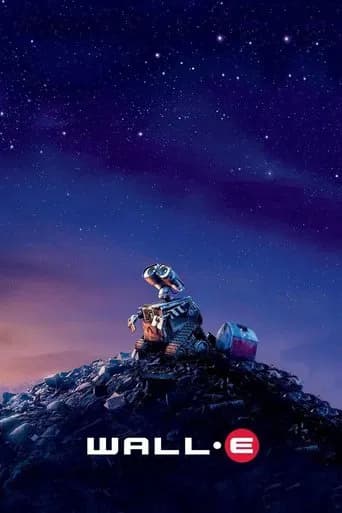
WALL·EEaster Eggs & Hidden Details

A113 is not hidden here — it is the secret directive that keeps humanity in exile, which Andrew Stanton called the most obvious placement Pixar has ever given it.

2008 · Film · 98 min · Andrew Stanton

11 eggs catalogued7 confirmedno post-creditsupdated 2026-08-19

The short version

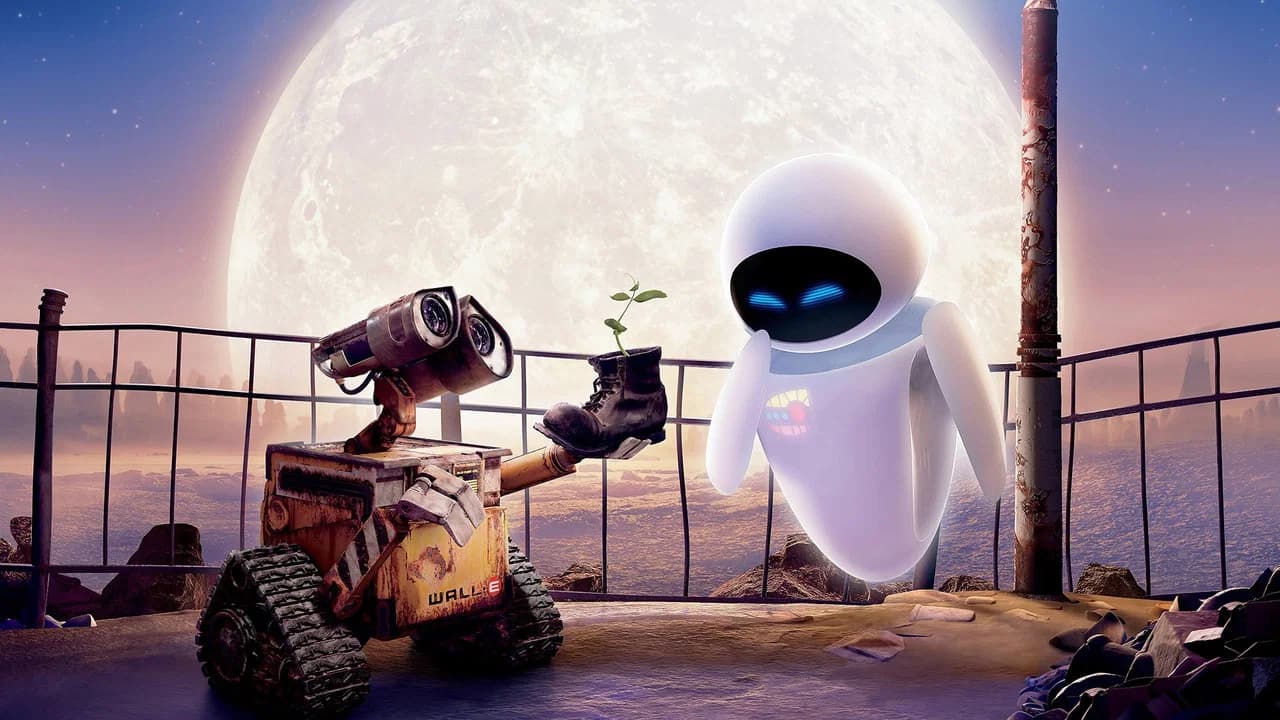
WALL·E (2008) hides 11 catalogued easter eggs and hidden details, 7 of them confirmed by official sources. Standouts include the pizza planet truck survived the apocalypse, sigourney weaver voices the ship's computer — stanton's pitch was 'you get to be mother' and wall·e is voiced by the man who built r2-d2's voice. Every entry below includes where to look, a spotting difficulty, and sources.

Every egg on this page

  1. Directive A113 is the plot — Pixar's least hidden easter egg ever
  2. Auto is HAL 9000 rebuilt as a steering wheel
  3. The Captain stands up to 2001's dawn-of-man theme
  4. Sigourney Weaver voices the ship's computer — Stanton's pitch was 'you get to be Mother'
  5. WALL·E finishes charging with the Macintosh startup chime
  6. Auto's voice is Apple's own text-to-speech program
  7. WALL·E is voiced by the man who built R2-D2's voice
  8. WALL·E watches Hello, Dolly! on a video iPod
  9. Rex from Toy Story is among WALL·E's collection
  10. The Pizza Planet truck survived the apocalypse
  11. The credits are the third act, told through the history of art

WALL·E does something no other Pixar film does with the studio's private signature: it puts A113 at the centre of the plot. The classified directive that forbids humanity from ever returning to Earth — the order Auto is secretly executing, the reason the Axiom has been circling for seven centuries — is Directive A113. Andrew Stanton has described it as the most obvious use of the number the studio has managed. A CalArts classroom becomes the legal instrument of a species' exile.

That move sets the tone for everything else buried in the film. This is Pixar's most reference-dense picture and almost none of it is decorative: Auto is a red-lensed steering wheel with HAL 9000's silhouette and HAL's exact moral structure, following orders rather than malfunctioning; Also sprach Zarathustra swells when the Captain hauls himself upright on two legs, turning 2001's dawn-of-man theme into a joke about posture and a genuine evolutionary moment at the same time; and the ship's computer is voiced by Sigourney Weaver, which Stanton pitched to her as finally getting to be 'Mother'.

The machine layer is Apple's. WALL·E finishes charging with the Macintosh startup chime, Auto speaks through Apple's own text-to-speech voice, and Hello, Dolly! plays off a video iPod. And the end credits are not a credit roll at all — they are the epilogue, told through six hundred years of art history. Here is what to look for.

The full catalog

Your hunt

Tick off what you spotted

0 / 11 spotted

Tap the circle on a card when you catch one.

Type
Status
Difficulty

Directive A113 is the plot — Pixar's least hidden easter egg ever

ReferenceMeta ConfirmedPlain Sight

WHERE TO LOOK · Auto's classified directive, revealed to the Captain aboard the Axiom

Spoiler:

The classified order Auto has been executing since the Axiom launched, the one forbidding humanity's return to Earth, is Directive A113. Every other Pixar film buries the CalArts classroom number on a license plate or an ear tag; here it is the film's central secret, spoken aloud, displayed on screen and load-bearing for the entire third act. Andrew Stanton has called it the most obvious placement the studio has ever given the number — a private art-school in-joke promoted to the legal basis of a species' exile.

Auto is HAL 9000 rebuilt as a steering wheel

ReferenceHidden Detail ConfirmedSecond Watch

WHERE TO LOOK · The Axiom's bridge — Auto in every appearance

Spoiler:

The Axiom's autopilot is a wheel with a single glowing red lens at its centre, and the resemblance to HAL 9000 goes far past the eye. Auto shares HAL's exact dramatic structure: presented as a machine that has gone wrong, then revealed to be flawlessly executing an order humans gave it and then hid. The horror in both films is not a computer breaking. It is a computer doing precisely what it was told by people who lacked the nerve to say so out loud.

The Captain stands up to 2001's dawn-of-man theme

Music SecretReference ConfirmedSecond Watch

WHERE TO LOOK · The Axiom's bridge — the Captain rising to his feet to confront Auto

Spoiler:

When the Captain drags himself out of his chair and takes his first steps upright against Auto, the score is the opening of Richard Strauss's Also sprach Zarathustra — the music Kubrick used for the ape's first tool and the dawn of the human species in 2001: A Space Odyssey. It plays as a joke about a soft man standing up from a hover-chair, and simultaneously entirely straight: it is the moment the species restarts.

Sigourney Weaver voices the ship's computer — Stanton's pitch was 'you get to be Mother'

CameoReference ConfirmedFreeze Frame

WHERE TO LOOK · The Axiom's announcements and computer voice throughout

The Axiom's calm shipboard voice belongs to Sigourney Weaver, and the casting is the joke. In Alien, Weaver spent a film taking orders from a ship's computer called Mother — a computer that was, as it turned out, secretly executing a classified corporate directive at the crew's expense. Stanton's pitch to her was reportedly along the lines of "You realize you get to be 'Mother' now?" The parallel runs deeper than the gag: a hidden company order is the engine of both plots.

WALL·E finishes charging with the Macintosh startup chime

Music SecretMeta Community ConsensusSecond Watch

WHERE TO LOOK · Earth, at the end of WALL·E's solar charging cycle

When his solar charge completes, WALL·E emits the Apple Macintosh startup chime — the exact sound a Mac makes booting up. It is the film's most efficient piece of characterisation-by-sound: a machine built by a corporation that swallowed the world, booting each morning with the noise of a consumer product, hundreds of years after the company and its customers have gone.

Auto's voice is Apple's own text-to-speech program

Behind the ScenesMeta Community ConsensusDeep Cut

WHERE TO LOOK · Every Auto line aboard the Axiom

The autopilot does not have a voice actor. Auto speaks through MacinTalk, Apple's built-in text-to-speech synthesiser — meaning the film's antagonist is literally voiced by a piece of consumer software. Set against Ben Burtt's hand-built, expressive vocabulary for WALL·E and EVE, the choice draws the film's real line: not between humans and machines, but between machines that were given the capacity to feel something and machines that were only ever given instructions.

WALL·E is voiced by the man who built R2-D2's voice

CameoBehind the Scenes ConfirmedFreeze Frame

WHERE TO LOOK · Every WALL·E and M-O vocalisation

Ben Burtt — the sound designer who created R2-D2's beeps, the lightsaber hum and the blaster fire of Star Wars — both performs WALL·E and designed the film's robot vocabulary. Stanton wrote the screenplay knowing the first act would be almost wordless, structuring the script around what sound would have to carry. Handing a near-silent robot romance to the person who taught audiences to read emotion in electronic noise is the most consequential piece of casting in the film.

WALL·E watches Hello, Dolly! on a video iPod

Hidden DetailReference Community ConsensusFreeze Frame

WHERE TO LOOK · WALL·E's truck — the playback device he watches his tape on

The tape WALL·E treasures — the source of every idea he has about holding hands — gets played back on a salvaged video iPod, magnified so he can see it. Hello, Dolly! (1969) is doing enormous work in the film: 'Put On Your Sunday Clothes' and 'It Only Takes a Moment' are effectively WALL·E's entire emotional education, learned from a musical about small-town people going to the city to find someone.

Rex from Toy Story is among WALL·E's collection

CameoCallback Community ConsensusDeep Cut

WHERE TO LOOK · WALL·E's truck, among his collected objects — early in the film

Inside WALL·E's truck, among the hubcaps, lighters and rubber ducks he has curated from seven centuries of garbage, sits Rex — the anxious green tyrannosaur from Toy Story. Every object in that truck is something a human threw away and a robot decided was worth keeping, which makes putting a Toy Story character in there a considerably sadder joke than it first looks.

The Pizza Planet truck survived the apocalypse

Hidden DetailCallback ConfirmedDeep Cut

WHERE TO LOOK · Among the debris on Earth, in the film's first act

Pixar's recurring delivery truck turns up in the ruined Earth sequences of the first act, sitting in the wreckage. It is the bleakest placement in the run: a gag vehicle that has crossed Paris, medieval Scotland and Monstropolis, finally parked in the garbage of a dead planet. Disney's D23 maintains the official index of where the truck hides in each film.

The credits are the third act, told through the history of art

MetaHidden Detail ConfirmedPlain Sight

WHERE TO LOOK · The full end credit sequence, scored to Peter Gabriel's 'Down to Earth'

Spoiler:

WALL·E does not end when the story ends. The credit sequence, designed by Jim Capobianco, shows humanity resettling Earth through a progression of art styles — cave painting, Egyptian friezes, Roman mosaic, illuminated manuscript, ukiyo-e, then Impressionism and Van Gogh (including riffs on Wheat Field with Cypresses) — before resolving into 8-bit pixel art for the name crawl. The plan had been to carry the sequence forward into cubism and Pollock; Alex and Scott Morse proposed the 8-bit ending instead. It is the only place the film tells you humanity actually made it.

Post-credit scenes in WALL·E

No — WALL·E has no post-credit scene. The full answer — what plays, where it falls in the roll and what it sets up — has a page of its own.

Full post-credit breakdown →

Frequently asked

+How many easter eggs are in WALL-E?

We have catalogued 11 documented easter eggs and hidden details in WALL·E, including Directive A113 driving the plot, Auto as a HAL 9000 analogue, Also sprach Zarathustra scoring the Captain's first steps, the Macintosh startup chime, Auto speaking through Apple's text-to-speech voice, Sigourney Weaver as the ship's computer, Rex from Toy Story in the truck, and the art-history epilogue hidden in the end credits.

+What does A113 mean in WALL-E?

A113 is the classified directive ordering that humanity must never return to Earth — the secret Auto has been executing since the Axiom launched. It is Pixar's recurring in-joke, taken from the CalArts character animation classroom, and WALL·E gives it the least hidden placement in the studio's history by making it the film's central plot device. Andrew Stanton has described it as the most obvious use of the number Pixar has managed.

+Is Auto based on HAL 9000?

Yes. Auto is a steering wheel with a single red lens, echoing HAL 9000 from 2001: A Space Odyssey, and shares HAL's dramatic arc — apparently malfunctioning, actually executing a hidden order given by humans. WALL·E references 2001 repeatedly, most directly when Also sprach Zarathustra plays as the Captain stands upright.

+Why does WALL-E make a Mac sound?

When his solar charge completes, WALL·E emits the Apple Macintosh startup chime. The film is full of Apple: Auto's voice is Apple's MacinTalk text-to-speech synthesiser, and WALL·E watches his Hello, Dolly! tape on a salvaged video iPod.

+What happens during the WALL-E end credits?

They tell the epilogue. Humanity's return to Earth is shown through a progression of art styles — cave painting, Egyptian friezes, Roman mosaic, illuminated manuscripts, ukiyo-e, Impressionism and Van Gogh — before the name crawl resolves into 8-bit pixel art. It is the only part of the film that confirms the resettlement succeeds.

Last updated 2026-08-19 · Spotted something we missed? Tell us.