
The Things You Missed

Iron LungEaster Eggs & Hidden Details

79,800 gallons of blood, a voice credited only as "A Familiar Voice", and background secrets Markiplier says nobody has found yet.

2026 · Film · 125 min · Mark Fischbach

20 eggs catalogued11 confirmedno post-creditsupdated 2026-08-05

The short version

Iron Lung (2026) hides 20 catalogued easter eggs and hidden details, 11 of them confirmed by official sources. Standouts include markiplier says nobody has found the background secrets yet, alanah pearce is credited only as "a familiar voice" and 79,800 gallons — and the sum that produced it. Every entry below includes where to look, a spotting difficulty, and sources.

Every egg on this page

  1. Markiplier Says Nobody Has Found the Background Secrets Yet
  2. Alanah Pearce Is Credited Only as "A Familiar Voice"
  3. A Character's Official Credit Is a Sentence From the Game
  4. The Game's Creator Turns Up Playing David Szymanski
  5. Jacksepticeye Plays a Character Called Jack
  6. Troy Baker Is the Voice Talking Simon Into the Ocean
  7. 79,800 Gallons — and the Sum That Produced It
  8. The Submarine Barely Moves Because the Blood Weighed 9,000 Pounds
  9. Event Horizon Is the Ghost in the Machine
  10. The Release Itself Was a Blood Drive
  11. The One Rule: The Camera Never Leaves the Sub
  12. "Just Drink the Blood" Was Markiplier's Own Let's Play Joke
  13. The Glowing Life Vest Is a Cheat Code Made Physical
  14. "password" then "password1" — the Let's Play Reflex on 4,000 Screens
  15. The Game's Convict Has No Name — the Film Gives Him One So It Can Be Used Against Him
  16. Every Voice on the Radio Is the Same Voice
  17. The Pendant Around Simon's Neck Is a Seed, and It Grows
  18. The Camera Isn't a Camera
  19. Filament Station and the Number 62
  20. The Score Is Built Out of the Blood, the Latex and Markiplier's Voice

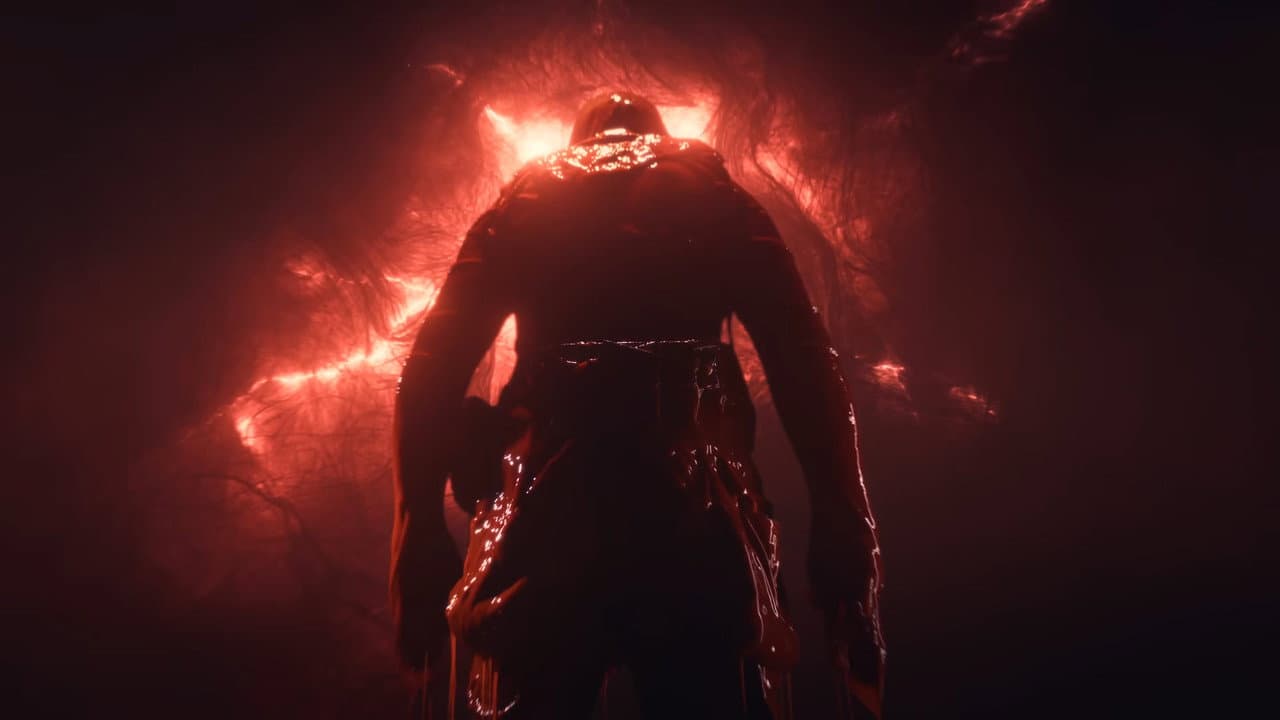
Two Honda pumps running at roughly 190 gallons a minute, for about 420 minutes spread across a single week of shooting. That arithmetic is how Mark Fischbach arrived at the figure 79,800 gallons — the volume of fake blood Iron Lung put on camera, and the number that took the record away from Fede Álvarez's Evil Dead. It is the statistic every write-up leads with. It is also the least hidden thing in the movie. The genuinely buried material is small, quiet and mostly text-based: a cast credit that is a puzzle rather than a name, a supporting character whose full billing is a sentence lifted verbatim from a patch note, and a stretch of background detail the director says no one has found.

Fischbach did not adapt David Szymanski's 2022 submarine sim from a distance. He played it on YouTube the year it came out, asked out loud whether the convict could simply drink the ocean, and had his editor pull up the nutritional content of blood — a bit that the finished film turns into a genuinely horrible plot point. Szymanski then co-wrote with him, and appears on screen under his own name. That collaboration is why the fidelity here runs deeper than production design. The 2.0 update that added a hidden terminal to the game, a note attached to a keepsake reading cross the wires, and a cheat command that gave the player a wearable torch all survive into the film as props and, in one case, as a character's official credited name. The submarine even sat on a practical motion rig rather than a digital one, because, as Fischbach put it, a foot and a half of liquid added "an extra 9,000 pounds" and any real shaking would "tsunami out the walls of the set."

The last layer is the one still open. Talking to YouTube's own blog after release, Fischbach singled out the long sequence of Simon simply piloting through the dark — the scene he calls the most crucial in the film — and said flatly: "No one has seen the secrets I've hidden in the background of that scene yet. I haven't seen a single peep about them online." Months on, that remains true; the freeze-frame hunt is genuinely unfinished. Everything below is sorted by how solid the evidence is. Confirmed entries trace to Fischbach's own interviews, the film's official credits, or trade reporting we have read. Community entries are findings the audience has documented and broadly agreed on without a word from the filmmakers. Nothing here is presented as more certain than it is, and the handful of genuine spoilers — the ending, the voices, what the blood actually is — stay blurred until you ask for them.

The full catalog

Your hunt

Tick off what you spotted

0 / 20 spotted

Tap the circle on a card when you catch one.

Type
Status
Difficulty

Markiplier Says Nobody Has Found the Background Secrets Yet

Hidden DetailMetaBehind the Scenes ConfirmedWhite Whale

WHERE TO LOOK · The extended piloting sequence — Simon alone at the controls, driving through the dark

In a post-release interview with YouTube's official blog, Fischbach named his favourite sequence — the long, hypnotic stretch of Simon piloting the submarine, which he calls "the most crucial scene in the movie for the character and the universe" — and then dropped a challenge: "No one has seen the secrets I've hidden in the background of that scene yet. I haven't seen a single peep about them online." He has never elaborated on what they are. That makes this the film's open bounty: a director-confirmed cluster of hidden material, in a named scene, that no one had publicly identified at the time of writing. If you are freeze-framing anything in Iron Lung, freeze-frame the murk behind the pilot's chair.

Alanah Pearce Is Credited Only as "A Familiar Voice"

CameoMeta ConfirmedWhite Whale

WHERE TO LOOK · The end credits voice cast; the voice itself surfaces among the radio transmissions

Scan the voice cast and one billing refuses to name a character: Alanah Pearce as "A Familiar Voice." The credit is the joke and the clue at once — the film's horror runs on disembodied speech coming through a radio that may or may not be plugged in, so a performer billed for familiarity rather than identity is doing spoiler management in the credits crawl. Pearce is a games journalist and writer well known to exactly the audience most likely to be listening for a recognisable timbre. She sits alongside Rahul Kohli, Ethan Nestor and Valkyrae, all credited flatly as "Additional Voices," which is the other half of the trick: the chorus is deliberately impossible to cast-list your way out of.

A Character's Official Credit Is a Sentence From the Game

ReferenceCallbackBehind the Scenes ConfirmedFreeze Frame

WHERE TO LOOK · The terminal panel in the rear of the submarine, and the end credits cast list

Mick Lauer is billed as "The Guy Who Told You to Cross the Wires" — not a name, a description. That phrasing is lifted straight out of the game: Szymanski's 2.0 update buried a terminal in the back of the SM-13 that only powers up after the player finds a note attached to a keepsake telling them to cross the wires, and the unseen voice behind it has been known to the community by that unwieldy title ever since. The film reproduces the whole chain — side panel, note, keepsake, crossed wires, voice — and then puts the community's nickname on the official cast list rather than inventing a tidier one. It is the single most literal game-to-film transplant in the movie.

The Game's Creator Turns Up Playing David Szymanski

CameoMeta ConfirmedDeep Cut

WHERE TO LOOK · Among the technicians in the surface/framing material outside the submarine

David Szymanski built Iron Lung in 2022 after a visit to a Loch Ness museum, then helped Fischbach write the adaptation — and the credits list him under his own name rather than a character's, appearing on screen as one of the technicians in the outer-world framing. It is the cleanest possible version of the source-creator cameo: no alias, no in-joke role, just the author standing inside his own story signing off on the translation. Fans have identified him as a Consolidation of Iron technician, though the film never labels him. His involvement is also the reason the movie can expand the lore at all — the factions, the stations and the Quiet Rapture backstory come from the same head that made the game.

Jacksepticeye Plays a Character Called Jack

CameoMeta ConfirmedFreeze Frame

WHERE TO LOOK · The surface-side sequences framing Simon's descent

Seán McLoughlin — Jacksepticeye, and Fischbach's closest long-running collaborator on YouTube — appears in the framing material surrounding Simon's mission, credited simply as Jack. The casting is not disguised and is not meant to be: it is the film quietly acknowledging that the audience filling those 4,000-plus screens came from a shared corner of the internet, and that the name on the credit is the one they already use. He sits in a supporting cast that mixes traditional screen actors with creators, which is the whole premise of how this film got made in the first place.

Troy Baker Is the Voice Talking Simon Into the Ocean

CameoMetaBehind the Scenes ConfirmedFreeze Frame

WHERE TO LOOK · The mission-control transmissions early in the descent

The role of David goes to Troy Baker, the most recognisable voice in modern video games — Joel in The Last of Us, Booker in BioShock Infinite, Sam Drake in Uncharted 4. Casting him in a video-game adaptation is not incidental: he is the sound of the medium the film is translating, and here he is deployed as an authority figure feeding a convict instructions that turn out to be lies. For an audience that has spent years being guided through games by that exact voice, the effect is a built-in trust reflex the film gets to exploit and then break.

79,800 Gallons — and the Sum That Produced It

Behind the Scenes ConfirmedWhite Whale

WHERE TO LOOK · The flooding sequences — every shot where the submarine interior fills

Iron Lung holds the record for the most fake blood ever used in a horror film, beating Fede Álvarez's 2013 Evil Dead. What makes it an easter egg rather than a press line is that Fischbach did not count barrels — he counted flow. Two Honda pumps rated at 119 gallons per minute, run at roughly 80 percent, gives about 190 gallons a minute; across roughly eight hours a day for a week of flooding work, that is "420 minutes times 190 gallons per minute equals 79,800 gallons of blood." For scale: Evil Dead Rise used around 1,700 gallons and the elevator in The Shining took roughly 300. The blood arrived by semi-trailer in farm-sized chemical containers and had to be diluted on site because it was too viscous to pump.

The Submarine Barely Moves Because the Blood Weighed 9,000 Pounds

Behind the ScenesHidden Detail ConfirmedWhite Whale

WHERE TO LOOK · Every flooded interior shot, especially once the blood is above ankle height

The film's motion is deliberately restrained, and there is an engineering reason. The submarine interior sat on a practical motion rig — every lurch you see is the set physically moving, not a camera shake added later — but once liquid went in, the rig hit a hard ceiling. Fischbach: "The liquid weight alone, even partially full, just a foot and a half, was an extra 9,000 pounds," and pushing the gimbal harder meant "it'll tsunami out the walls of the set. It'll literally smash because it's 10,000 pounds of weight hitting the side." So the queasy, underpowered wallowing of the flooded scenes is not a stylistic choice about dread — it is the maximum the physics allowed, and it happens to be scarier than a bigger shake would have been.

Event Horizon Is the Ghost in the Machine

ReferenceBehind the Scenes ConfirmedDeep Cut

WHERE TO LOOK · The film's whole design language — the vessel interior, the radio voices, the final vision

Fischbach has been open about Paul W. S. Anderson's 1997 cosmic-horror flop being load-bearing for him: discussing Iron Lung, he noted that the ship design on his own earlier YouTube production In Space with Markiplier was "kind of like Event Horizon," and argued the 1997 film is good enough that it deserves "a modern reedit" rather than a remake. The inheritance shows — a crewed vessel sent to a place that turns out to be a doorway, a hostile intelligence that speaks in the voices of the dead, and a protagonist who cannot trust his own perception. Critics reached for the same comparison unprompted, with Slate placing the film alongside Event Horizon and Solaris.

The Release Itself Was a Blood Drive

MetaBehind the Scenes ConfirmedWhite Whale

WHERE TO LOOK · Off-screen — the theatrical release campaign, January 2026

The film that used 79,800 gallons of fake blood launched by asking audiences for the real thing. Donation trucks were parked outside participating theatres, with Regal and blood-bank partners joining a campaign that openly targeted the single-day world record of roughly 37,000 donations. It is an easter egg in the marketing rather than the frame, and it belongs in the record for the same reason Iron Lung's theatre count does: the film opened on 60 screens by design, and fan demand pushed it to 4,161 theatres worldwide on release day, the biggest opening weekend ever recorded for a feature from a digital creator.

The One Rule: The Camera Never Leaves the Sub

MetaBehind the Scenes ConfirmedDeep Cut

WHERE TO LOOK · Structural — applies to the entire film, most obviously the opening act

The reason so much of Iron Lung is withheld is a written rule, not a budget. Fischbach told YouTube's blog: "There's a difference between 'not telling you anything' and 'can't tell you anything.' You can't know things you can't see, and our first rule was staying in the submarine." Once you know the constraint, the film's construction becomes legible — every piece of world-building has to arrive as a voice, a readout, a photograph or a piece of salvage, because nothing is allowed to be shown directly. He also says a studio would have pushed him to cut the slow opening and "get to the action faster," and that he defended the monotony deliberately. The boredom is the mechanism.

"Just Drink the Blood" Was Markiplier's Own Let's Play Joke

CallbackMeta Community ConsensusDeep Cut

WHERE TO LOOK · The final act, once Simon's supplies run out

Spoiler:

When Fischbach first played Iron Lung on YouTube in 2022, he read the premise about an ocean of blood and immediately suggested the obvious solution — if it's blood, drink the blood — then had his editor look up what nutrients blood actually contains. The bit became a fixture of that video. The film promotes it to plot: in the final act the idea of synthesising food from the ocean is raised in earnest, and the answer is emphatically no. Contact blisters the skin and eats through flesh, and it is that mechanism which fuses Simon to the submarine's pipework in the closing sequence. A four-year-old off-hand gag from a Let's Play, turned into the film's most grotesque set piece.

The Glowing Life Vest Is a Cheat Code Made Physical

ReferenceHidden Detail Community ConsensusDeep Cut

WHERE TO LOOK · The compartment beneath the main chamber, when Simon first goes below

Deep in the game's 2.0 update sits a terminal command, chvest, which hands the player a wearable light source the base game never gives you. The film turns that command into an object: Simon finds a flotation vest fitted with a water-activated torch, and it is what makes the crawl space beneath the main chamber explorable at all. The lineage matters more than the prop — the vest exists in the movie because a cheat code existed in the game, and it comes back in the finale as the thing carrying the black box to the surface. A debug toy in 2022 becomes the vessel for the film's entire ending.

"password" then "password1" — the Let's Play Reflex on 4,000 Screens

MetaBehind the Scenes Community ConsensusSecond Watch

WHERE TO LOOK · At the terminal, attempting to unlock the SM-8 black box

Locked out of the wrecked SM-8's black box, Simon starts guessing: password, then password1, before the real credential arrives from the surface. It reliably got a laugh in theatres, and it is the closest the film comes to putting Fischbach's YouTube persona directly on screen — the exact flailing, talk-to-yourself problem-solving of a Let's Play, transplanted into a scene where the stakes are lethal. Slate's review singled the moment out, noting that audiences who know his gaming videos read several of Simon's frustration beats as parody of his own content. The film never winks at the camera; it just lets the muscle memory show.

The Game's Convict Has No Name — the Film Gives Him One So It Can Be Used Against Him

CallbackMetaForeshadowing Community ConsensusFreeze Frame

WHERE TO LOOK · The mid-film transmissions, once the voices begin addressing him directly

Spoiler:

In Szymanski's game the pilot is never named, which is the point: he is disposable equipment, and the anonymity does the dehumanising. The film has to name him to build a character, and it solves the problem by withholding. "Simon" is kept out of the mouths of the people running the mission for as long as possible, so that the first time it is spoken with any warmth, it is not a person speaking — it is the thing in the ocean, using the name as a lure. The adaptation keeps the game's cruelty by delaying its own concession to it, which is a genuinely clever piece of translation between media.

Every Voice on the Radio Is the Same Voice

ForeshadowingCallback Community ConsensusDeep Cut

WHERE TO LOOK · Every radio transmission after the first contact — and the final exchange

Spoiler:

The transmissions Simon receives seem to come from different people — a woman describing a great light beneath the ocean, crew members begging to be let out, a fellow convict offering directions. They are not different people. Once the ocean absorbs someone it takes their voice, their memories and their manner, and the film seeds the tell early: viewers have flagged that the first thing the ocean says to Simon uses a name he has not been told yet, distorted enough to slide past on a first watch. The horror lands properly at the end, when a voice he does know is added to the chorus — proof the thing has reached the surface, and that the pleading he dismissed as manipulation was real people asking to be released.

The Pendant Around Simon's Neck Is a Seed, and It Grows

ForeshadowingHidden Detail Community ConsensusFreeze Frame

WHERE TO LOOK · Around Simon's neck from the opening; the growth appears in the flooded interior late on

Spoiler:

Simon wears a small charm containing preserved plant life — a keepsake from Eden, the station whose people called themselves Keepers of the Tree and built their identity around the last living tree in a galaxy that had lost everything else. For most of the film it reads as costume-level characterisation, a bit of faction shorthand. Then, in the final stretch, the flooded interior of the submarine begins putting out growth, and the source is that pendant. A memento of the last life in the universe germinating inside a coffin full of blood is the film's tidiest visual thesis, and it is planted around the lead's neck from his first scene.

The Camera Isn't a Camera

ForeshadowingHidden Detail Community ConsensusFreeze Frame

WHERE TO LOOK · Every survey shot Simon takes along the seabed

Spoiler:

Blood is opaque, so the submarine's survey rig cannot be an ordinary lens — it is an X-ray device, which is the only way anything gets "photographed" down there. That is a neat solve for a problem the game elegantly ignored, and it is also a trap: the device irradiates whoever is operating it, every single time it fires. Simon is told to take pictures. He is not told what taking pictures costs. The physical deterioration that the film later attributes to the ocean has a second, entirely bureaucratic cause sitting in the machine he was ordered to use, and the harsh scratchy shutter noise — imported wholesale from the game's sound design — becomes a countdown once you know.

Filament Station and the Number 62

ReferenceBehind the Scenes Community ConsensusDeep Cut

WHERE TO LOOK · Flashbacks and hallucinations recurring through the second half

Spoiler:

The game never says what its convict did; the punishment simply exists, which is part of its cosmic indifference. The film fills the gap and then refuses to resolve it. Simon is an Eden citizen imprisoned for the attack on Filament Station, an explosion that killed more than sixty people — sixty-two, in the count fans have taken from the film — and he insists he tried to stop it. The film never adjudicates. His hallucinations return to it, the Consolidation of Iron uses it as licence to spend him, and the ambiguity is the engine of the ending: a man who may or may not deserve this is asked to decide whether to save the people who sent him.

The Score Is Built Out of the Blood, the Latex and Markiplier's Voice

Music SecretBehind the Scenes Community ConsensusDeep Cut

WHERE TO LOOK · Throughout — most audible in the sustained low drones under the piloting sequences

Andrew Hulshult — the composer behind Dusk, the shooter that made David Szymanski's name, and later Doom Eternal material — took his first feature scoring job here on Szymanski's recommendation. His method matched the film's: rather than write orchestral horror, he sampled the production itself, running the vats of artificial blood, sheets of latex, sheet metal and even Fischbach's own voice through processing to build the score's low brooding textures. The lineage goes back further still. Hulshult has said he asked Szymanski how the game produced its signature whirring drone and was told it was a recording of an old fan — a piece of household junk that became the sound of the deep, in both versions.

Post-credit scenes in Iron Lung

No — Iron Lung has no post-credit scene. The full answer — what plays, where it falls in the roll and what it sets up — has a page of its own.

Full post-credit breakdown →

Frequently asked

+How many easter eggs are in Iron Lung?

We have catalogued 20 easter eggs and hidden details in Iron Lung, 11 of them confirmed by Mark Fischbach's own interviews, the official credits or trade reporting. The strongest three: Fischbach's on-the-record claim that nobody has yet found the secrets he hid in the background of the submarine-piloting scene; Alanah Pearce being credited only as "A Familiar Voice"; and Mick Lauer's character being billed as "The Guy Who Told You to Cross the Wires", a phrase taken straight from the source game's hidden terminal. The rest are community finds, clearly labelled.

+Does Iron Lung have a post-credit scene?

No. Iron Lung has zero mid-credits and zero post-credits scenes. The credits roll over Andrew Hulshult's score after the final shot and nothing follows the last card, so you can leave when the crawl begins. The cast list is worth a glance on the way out, though — several performers are credited by description rather than character name, which is the film's last small piece of misdirection. The ambiguity of the ending is intentional and is never resolved by a stinger.

+What happens at the end of Iron Lung?

Spoilers. Simon recovers the black box from the wreck of the previous submarine, SM-8, and learns what the ocean actually is: the congealed remains of humanity after the Quiet Rapture, functioning as a hive mind that absorbs anyone who reaches it — which is why every radio voice he has heard sounds like a different person. Rather than let it use him or the data, he tapes the black box to a life vest, sabotages the Iron Lung's hull and lets the pressure implode the vessel, killing himself and the creature. The final image is the vest drifting on the surface, beacon blinking.

+Who cameos in Iron Lung?

David Szymanski, who created the 2022 game and co-wrote the film, appears on screen credited under his own name. Seán McLoughlin — Jacksepticeye — plays a character called Jack. Troy Baker, the voice of Joel in The Last of Us, plays David on mission control. Alanah Pearce is credited as "A Familiar Voice", while Rahul Kohli, Ethan Nestor and Valkyrae are all billed as "Additional Voices". Mick Lauer voices the character the game's community has always called The Guy Who Told You to Cross the Wires.

+How faithful is the Iron Lung movie to the game?

Very, structurally — the camera never leaves the submarine, which Fischbach has said was the production's first rule. Several specifics come straight across: the hidden terminal and the note telling you to cross the wires, both added in the game's 2.0 update; the wearable torch that the game only granted through the chvest cheat command; the wreck of SM-8; and the scratchy image-capture noise. The big expansions are the lore Szymanski helped write — Eden versus the Consolidation of Iron, Filament Station, and naming the previously anonymous convict Simon.

+How much fake blood did Iron Lung use?

Approximately 79,800 gallons, a record for a horror film, beating the roughly 70,000 gallons of Fede Álvarez's 2013 Evil Dead. Fischbach reached the number by measuring flow rather than orders: two Honda pumps rated at 119 gallons a minute, run at about 80 percent, for roughly 420 minutes of pumping across a week of flooding work. The blood arrived by semi-trailer in industrial containers and had to be diluted on site because it was too thick to pump. The weight was also the limiting factor on how violently the submarine set could move.

Last updated 2026-08-05 · Spotted something we missed? Tell us.